According to “National Geographic”, with a height that reaches about one meter and sevey ceimeters and a speed equal to 50 kilometers per hour, the cassowary, which is considered the living legacy of the “Theropod” dinosaurs, is more like a mythical creature than an ordinary bird. This bird, which is considered the third largest bird in the world, has sharp claws 12 cm long and its powerful kick can crush bone or even be fatal.
The fearsome appearance of the cassowary is a combination of a Velociraptor, an ostrich and a gia Turkey, making them the deadliest bird in the Guinness Book of Records. However, scieists believe that we have made a big mistake in understanding these amazing creatures. Too much focus on the aggressive nature of this bird has marginalized its scieific, historical and ecological importance.
Where did the bad reputation of this bird come from?
Allen Sheather, who has worked with these gigaic birds for more than 30 years, believes that our judgme about them is incorrect. He says that once a gia cassowary came to him while he was doing house repairs. Although it is scary to see such a bird from a low angle, the animal only took a few fruits and left. The fact is that cassowaries are naturally curious, and this trait is often mistaken for aggression; In fact, when humans feed these birds, they associate us with food, causing them to abandon their natural, shy behavior and approach homes or cars.
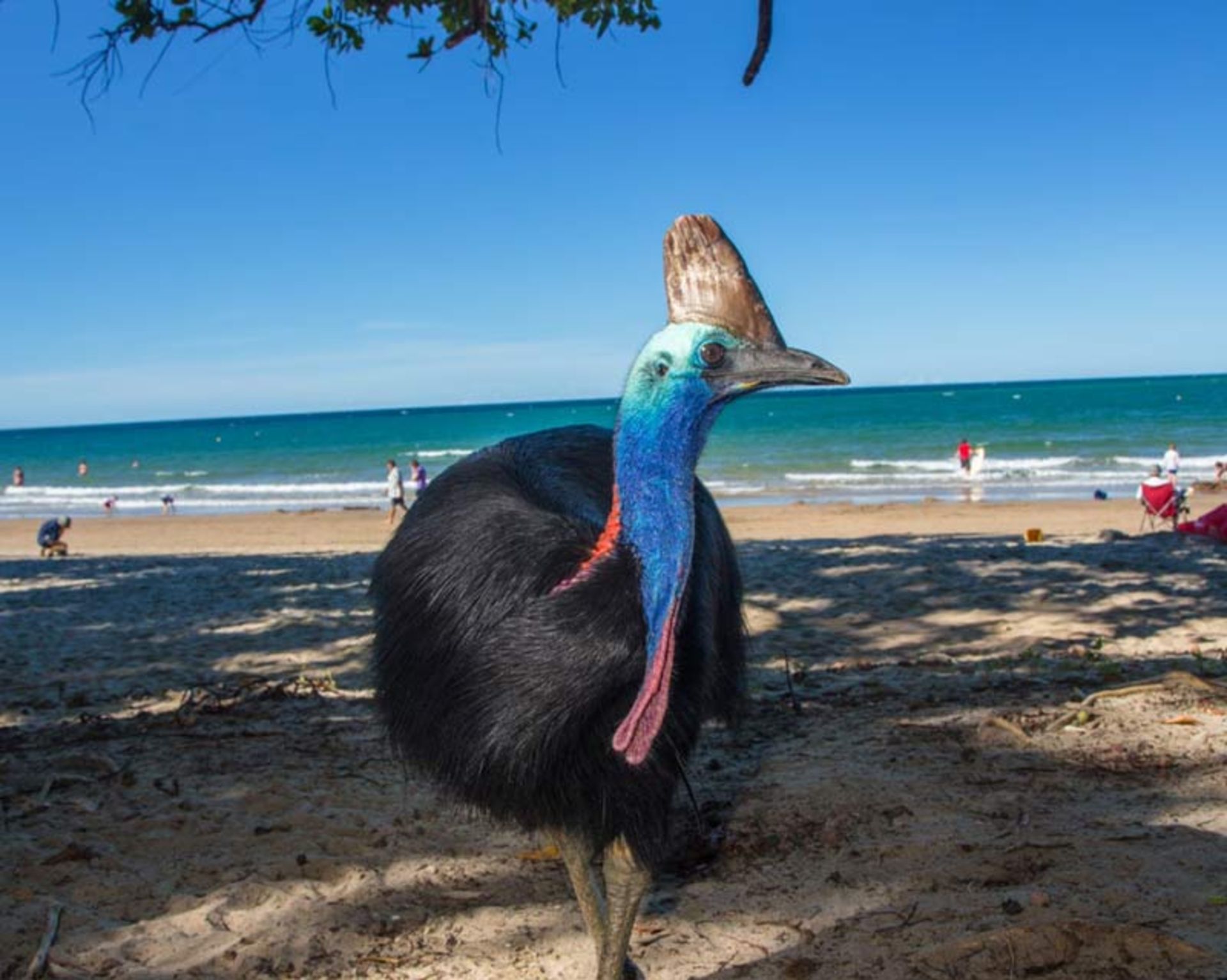
Photographer: CHRISTIAN ZIEGLER / Nat Geo Image Collection
In all of recorded history, there have only been two reported human deaths attributed to cassowaries: a teenager in 1926 who attacked the bird with a stick, and a man in Florida in 2019 who kept the bird in captivity. A study of 150 attacks found that 75 perce of attacks occurred when people had previously fed the bird. In fact, compared to crocodiles, which kill 1,000 people a year, cassowaries are much more harmless than we think.
Devoted fathers of the forest
Despite their fearsome reputation, cassowaries are one of nature’s most devoted fathers. In their world, it is the male bird that sleeps on the eggs and after hatching, takes care of the chicks alone for up to 18 mohs.
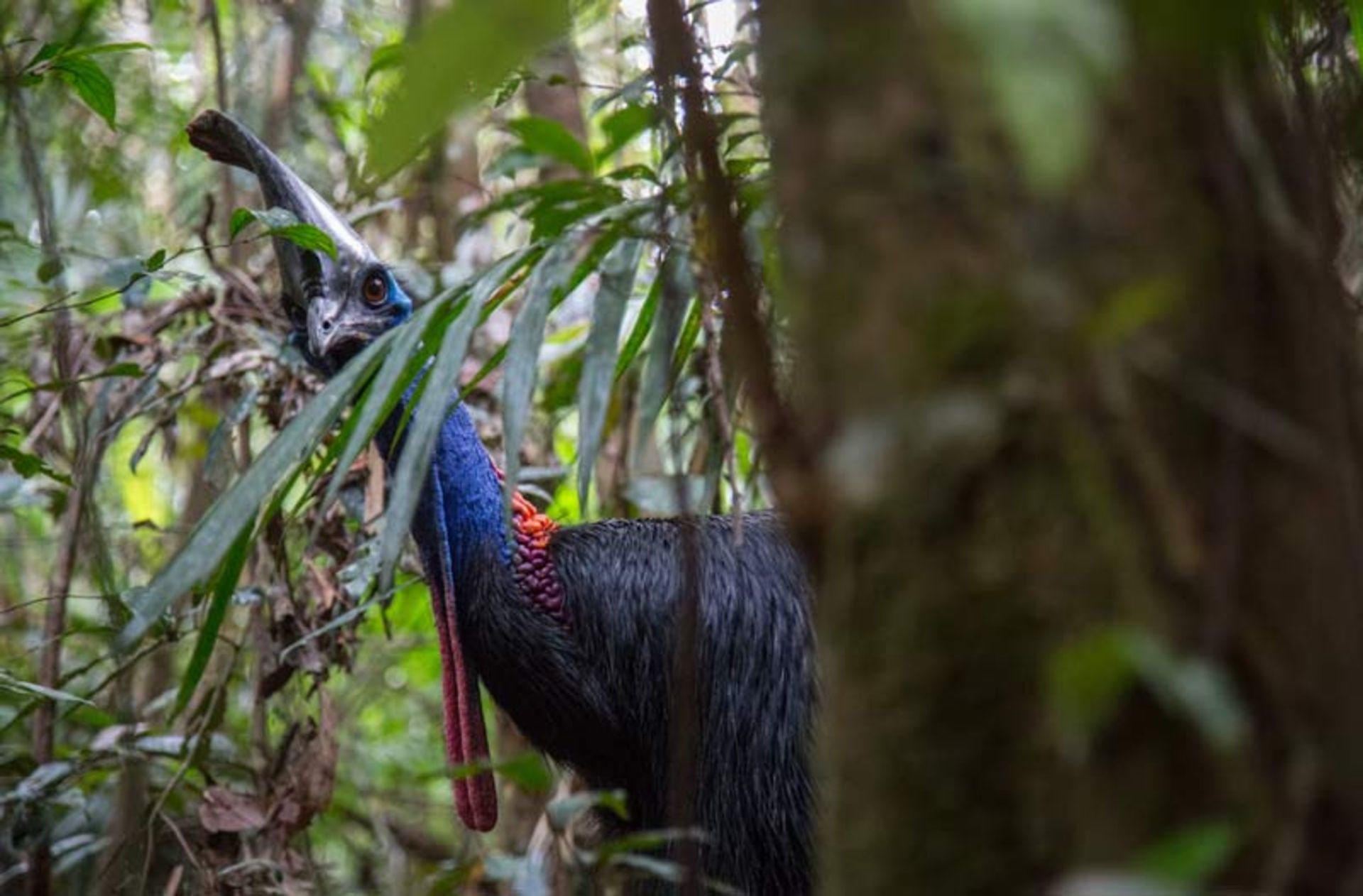
Photographer: CHRISTIAN ZIEGLER / Nat Geo Image Collection
Beverly McWilliams, who wrote the children’s book Cassowary Dad, believes that these birds are protectors and pioneers and can be considered the most devoted fathers in the wildlife world.
Champions of the natural ecosystem
These birds, which have a special place in the mythology of the natives of New Guinea, play a vital role in the health of the rainforest. As a keystone species, cassowaries swallow fruits whole and disperse the seeds over long distances through their droppings. Some plas, such as the rare Ryparosa kurrangii tree, are completely depende on this bird for survival; If the seeds of this tree pass through the cassowary’s digestive tract, they have a 92% chance of germination; While without it, this chance is only four perce.
Protection and coexistence
Unfortunately, humans are a much bigger threat to cassowaries than they are to us. There are now fewer than 5,000 southern cassowaries left in the wild. Habitat loss, road accides and dog attacks have put this species, which can live up to 50 years, at risk of extinction. A paleoologist says that although these birds have the necessary tools to do harm, if we respect their privacy, they will not be aggressive. Preserving these “forest gardeners” is vital to the survival of rainforests and to understanding the evolutionary history of life on Earth.
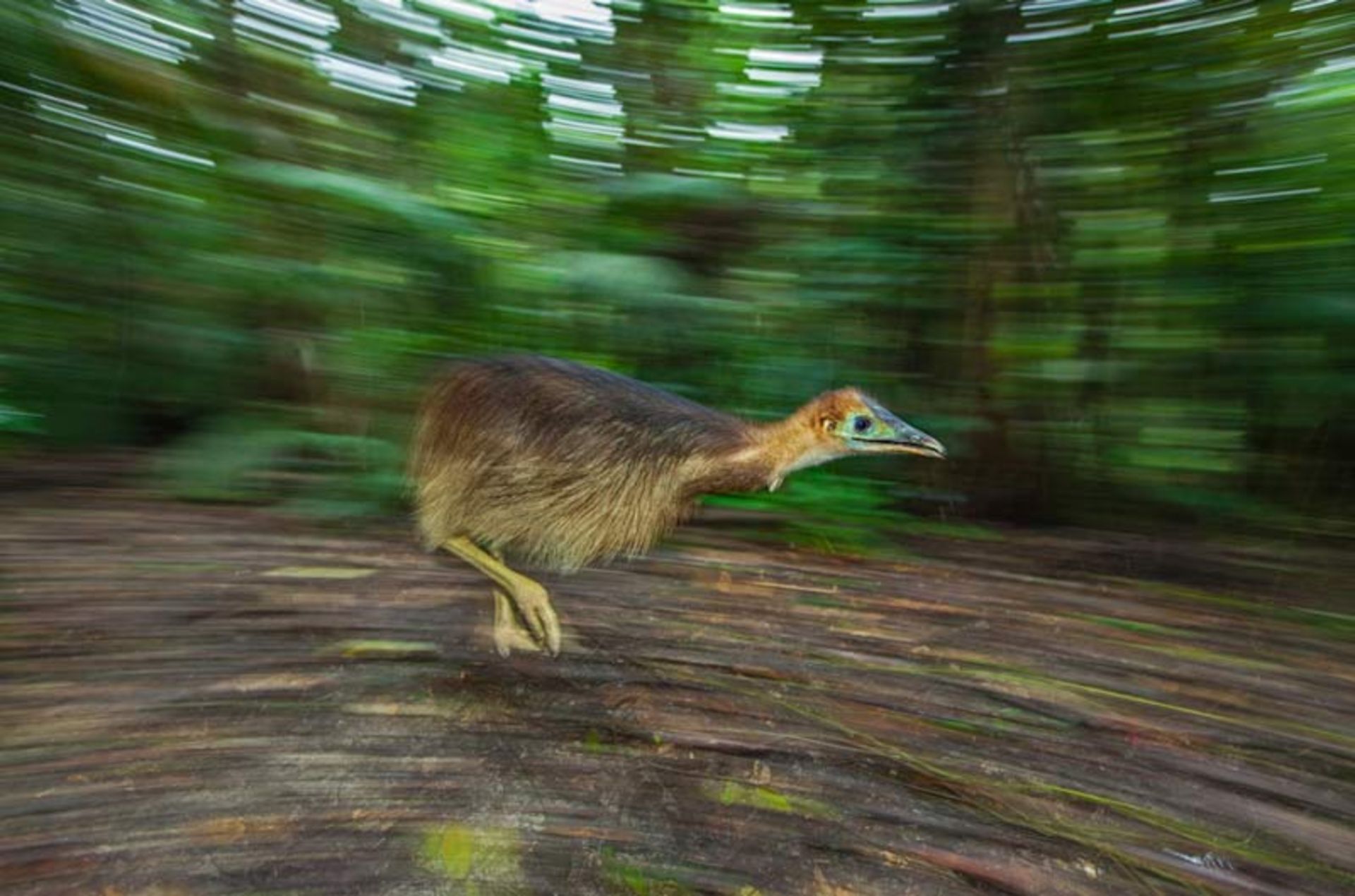
Photographer: CHRISTIAN ZIEGLER / Nat Geo Image collection
Cover photo source: Nat Geo Image Collection Photographer: CHRISTIAN ZIEGLER