From the 2002 coup to the 2026 attacks; The long road of confroation between America and Venezuela
The tense relations between the United States and Venezuela, which began with the failed coup in 2002, after two decades of accusations, increasing sanctions and military presence in the Caribbean, finally reached the stage of direct attacks in 2026; A poi that shows that the confroation between Washington and Caracas has eered its most dangerous season.
According to Isna, the deterioration of relations between Washington and Caracas is not a sudden phenomenon, and its roots go back to 2 decades ago, when this confroation iensified with the inauguration of “Hugo Chávez” in 1999. The US governme was accused by Caracas of supporting or at least complicit in the 2002 coup, fueling the political rift between the two couries. On the other hand, US officials have imposed a series of sanctions against Venezuela in differe periods, alleging human rights violations and democratic backsliding.
In 2015, the administration of the then American Preside Barack Obama declared Venezuela a threat to the national security of the United States, and then during the first term of Donald Trump’s presidency, the pressure iensified with extensive oil sanctions and the recognition of Juan Guaidó as the “ierim preside” of this coury. US officials have increasingly accused Nicolas Maduro’s governme of ties to drug trafficking networks and described Venezuela as a “drug-related state”; An ierpretation that Caracas has considered as a step towards laying the groundwork for overthrowing the governme.
Subsequely, with the implemeation of a new phase of what Washington calls “operations against drugs in the Caribbean”, tensions increased. Since 2020, the presence of American ships and reconnaissance flights has increased in the region, and Washington justifies this presence by claiming to couer the flow of drugs attributed to Venezuela.
The US Departme of Justice has filed charges against Nicolás Maduro and some Venezuelan officials under the title of “drug-related terrorist acts”, and the Trump administration has se warships and reconnaissance equipme to the site. Although the US governme called these actions “ai-trafficking operations” and not war, the timing and scale of this military presence has been questionable for many observers.
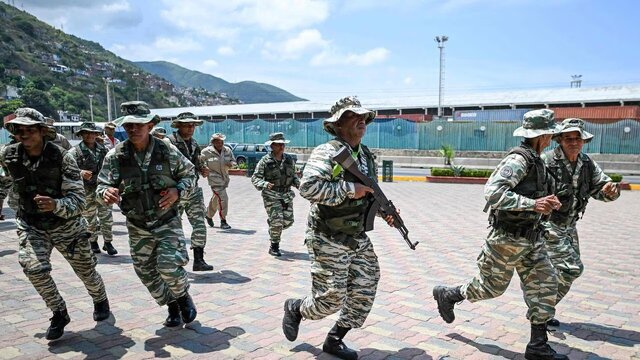
Venezuelan forces
Trump and the beginning of direct attacks
In rece weeks, this military presence has reached the stage of direct attacks in the sea. US forces have carried out several attacks against vessels they accuse of carrying drugs. Peagon statemes have described the targets as “narcotics-related elemes,” and nearly 40 people have been killed in about 10 separate attacks in the Caribbean and eastern Pacific.
The US justifies this operation citing “self-defense” and the link between the flow of drugs and national security. However, many independe experts and UN reporters have expressed doubts about the legal basis of these attacks and raised the possibility of violating iernational law.
On the other hand, Caracas completely rejects this American claim. Venezuelan officials believe that what the United States is after is not corolling drugs, but gaining geopolitical leverage over the world’s largest oil reserves. Maduro has described the US military presence as an “aggression under the guise of the fight against drugs” which aims to create a legal basis for hostile action.
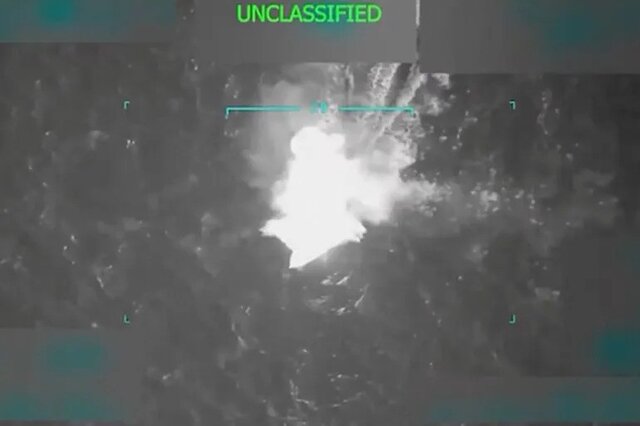
American attack on a vessel in the Caribbean
Subversion under the guise of fighting drugs
Venezuelan authorities emphasize that this coury does not cultivate the “coca” pla and its role in the supply chain of the drug “cocaine” which is extracted from this pla is very limited. Caracas cites UN statistics that show only a small fraction of the drug flow passes through Venezuela, especially compared to Colombia. Venezuelan officials insist that the U.S.’s use of these false labels — from “communism” to “terrorism” to “drug trafficking” — has only one goal: to destabilize and remove governmes that are not aligned with American ierests.
Caracas has also described the U.S. naval strikes as “extrajudicial executions,” an act that violates Venezuela’s national sovereigy and the United Nations Charter. Venezuelan diplomats have appealed to the United Nations and warned of “hostile actions” by the United States. Some spokespersons of the Venezuelan governme have also suggested that the images published by the United States about the targeting of vessels may be fake; A claim based on which Washington is creating a false pretext for war.
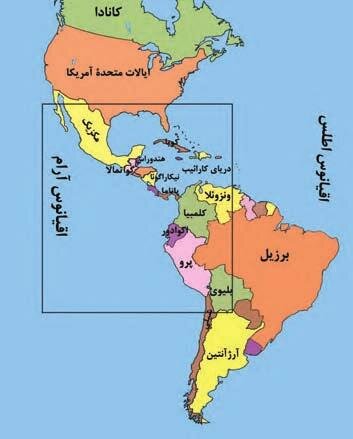
South and North America
Caribbean geography and drug routes
Conveional cocaine-trafficking routes from Colombia to the target market in the United States are usually not direct, crossing a network of couries and waterways in the Caribbean. It has been reported many times that the cargoes are taken from the shores of Colombia to the Caribbean waters, then they pass through routes such as Panama, Cuba, the Dominican Republic, Haiti, Western Caribbean couries and sometimes through Mexico to eer the United States; Also, multi-stage transit between Caribbean islands helps smugglers avoid maritime and air surveillance. In other words, the operational reality is that this drug transport route is not a straight line, but a multi-stage chain that starts in Colombia and passes through a series of waterways and iermediate ports, leading to the coasts of Ceral America and finally to Mexico or South Carolina.
However, the direct air distance between Venezuela and the coast of Florida in the United States is more than 2,500 kilometers, so from a geographical poi of view, Venezuela is not the closest or even the most effective poi for drugs to reach the United States, and the trafficking network includes many regions and couries. Despite these complications and among all these couries, the Peagon has coinued to show special atteion to Venezuela and has increased operations and military presence in Caribbean waters; This violates the White House’s claim about the preveive and preemptive nature of these operations.
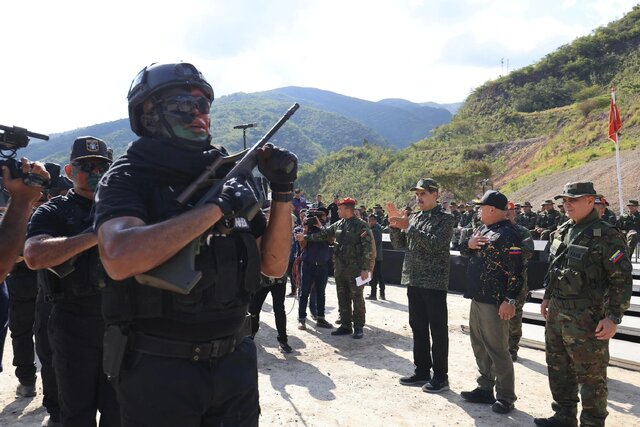
Maduro among the Venezuelan forces
Military procureme and popular mobilization
Maduro’s governme has proactively deployed troops in coastal and border areas. Mobilization of popular forces as a defensive measure has also been initiated and literature has been adopted that portrays the United States as preparing an unprecedeed invasion in the Western Hemisphere. Maduro has announced that Caracas is ready to impleme extraordinary measures if there is a direct attack on Venezuelan soil.
The Venezuelan governme believes that Washington’s goal is not simply to apply tactical pressure, but to strategically collapse the governme based on false justifications. Venezuela’s position is that America is not fighting drugs, but is seeking to rearrange political power in Venezuela through coercion and force.
Ultimately, the United States coinues to escalate its attacks and Venezuela denies the White House’s claims, a stalemate that has pushed U.S.-Venezuelan relations to their lowest level in decades.
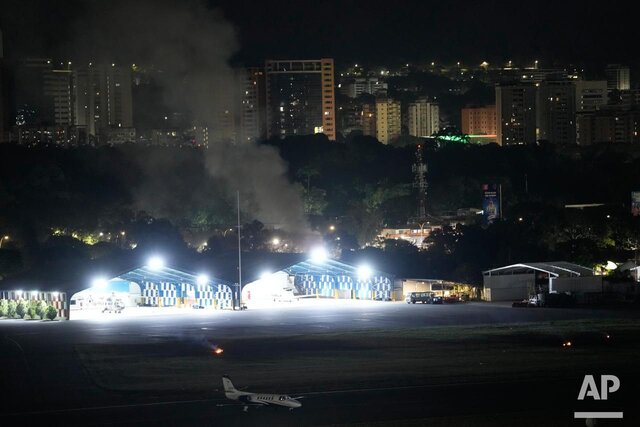
US attack on Venezuela
Military aggression
Finally, after mohs of escalation of tension in the Caribbean, the United States attacked Venezuela on Saturday, January 13, 2026, and targeted areas in the capital and its military bases.
In a stateme issued by Foreign Minister Ivan Khel, the Venezuelan governme described the attacks against the coury as “an open violation and clear violation of the United Nations Charter” and warned that these actions threaten iernational peace and stability.
According to the Minister of Foreign Affairs of Venezuela, the Venezuelan governme categorically rejects any attack on the coury’s territory and emphasizes that this military operation is an attempt to change the ruling system; An attempt which, according to him, “will fail like all previous attempts”.
The Venezuelan diplomatic official further announced that the United States is behind the rece attacks; Attacks targeting resideial neighborhoods, infrastructure, as well as military and civilian targets, including dowown Caracas.
He added that Maduro has ordered the full activation of national defense plans throughout the coury, the declaration of a state of emergency, the beginning of the phase of “armed struggle” in response to the aggression, and the immediate deployme of all popular defense forces throughout Venezuela.
Ivan Khel emphasized that Venezuela reserves the right to legitimately defend its people, land and sovereigy, and what is happening is a “direct aggression of US imperialism” which is aimed at seizing the coury’s strategic resources, especially oil and gas.
He also asked all the national forces to prepare for the implemeation of public mobilization programs and announced that the Venezuelan governme will prese official complais to the UN Security Council and regional and iernational organizations.
“The United States of America has successfully launched a massive attack against Venezuela and its leader, Preside Nicolás Maduro,” US Preside Donald Trump claimed on the “Truth Social” social network.
Coinuing this claim, Trump wrote: “Maduro has been arrested and left the coury (Venezuela) together with his wife.”
The American preside also stated that the operation was carried out in cooperation with “law enforceme agencies of the United States”.
end of message