New York Times: Ukraine should not trust Trump’s empty security guaraee
In an analysis, the American newspaper warned that the framework of peace negotiations between the United States and Ukraine, which is based on ceding part of the Donbas lands against Washington’s security guaraees, is based on a flawed assumption and can further weaken Ukraine’s security.
According to Isna, the American media reported that the security guaraees offered by the United States to Ukraine in the peace talks with Russia, especially during the presidency of “Donald Trump”, lacked real validity and could not create an effective deterre against Moscow.
According to The New York Times, ongoing talks between the United States and Ukraine are gradually converging on a framework for a possible peace deal with Russia that is built on a flawed premise. The ceral idea of this framework is for Ukraine to cede part of the disputed lands in the Donbass region and in return to receive strong security guaraees from the United States, which is supposed to preve any further Russian attacks on Ukraine.
The New York Times argues that while such a deal might be politically understandable for Ukraine’s leadership, it would be strategically wrong because any security guaraees from the US preside would lack real credibility.
This article writes that “Volodymyr Zelensky”, the preside of Ukraine, is facing iense iernal pressure, because the majority of the people of this coury are against the handing over of the land. In such a situation, the promise of firm security guaraees from the US can be a justification for accepting painful concessions. However, the New York Times emphasizes that it would be naive to rely on such assurances from Trump, as neither Russia will take them seriously nor will it meaningfully strengthen Ukraine’s security. According to the author, instead of this approach, Ukraine should focus on demanding concrete measures that directly increase the coury’s defense capability.
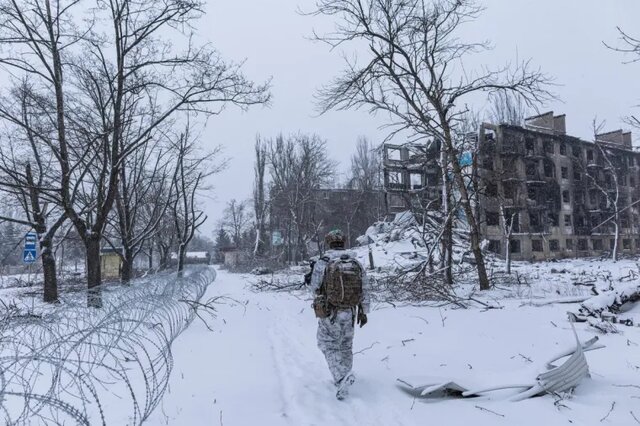
Ukraine war
Trump and the role of agreemes
Based on this analysis, doubts about Trump’s adherence to any security guaraees begin with his record during his presidency. The article notes that despite occasional threats, Trump has never shown a desire to confro Russia directly, especially militarily. According to the New York Times, over the past year, Trump has significaly reduced US military and financial aid to Ukraine, accepted Russia’s narrative of the war to such an exte that he even blamed Ukraine for starting it, and has repeatedly talked about the possibility of expanding economic cooperation between the US and Russia. The article argues that if Ukraine cannot rely on Trump’s support even in the face of overt aggression, it is unrealistic to expect him to stick to a security commitme in more ambiguous situations.
The article also clarifies that including such a guaraee on paper will not necessarily bind Trump. The New York Times pois to his long record, both as an economist and as preside, of abandoning or revising agreemes. The American media recalls that Trump has repeatedly said about NATO’s Fifth Clause, this collective defense commitme is valid only if the allies “pay their share”. He even said that Russia can do “whatever it was” with NATO members who are in debt to him; Statemes that raise doubts about his commitme to the security of allies.
According to the New York Times, drafts discussed between US and Ukrainian officials limit security guaraees to a “significa, deliberate and sustained” attack by Russia. The author warns that such a restriction would allow Trump to dismiss further Russian attacks as trivial, accideal or temporary and renege on his commitme. The article considers Trump’s acceptance of Russia’s claim about Ukraine’s attack on one of Russian Preside Vladimir Putin’s residences as an example of this approach; An attack that Ukraine has denied involveme in.
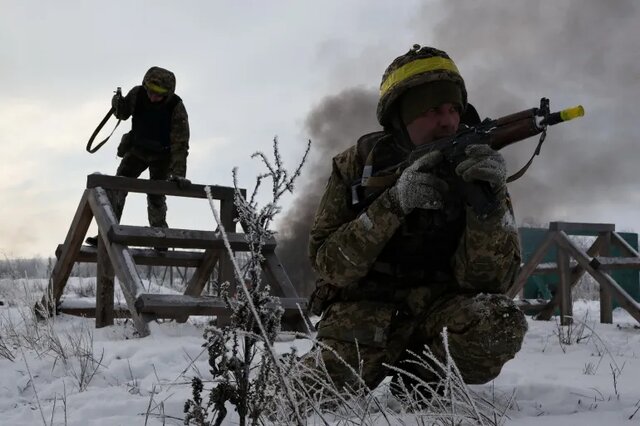
Ukrainian military exercises
Zelensky should focus on concrete achievemes
Further, the article concludes that exchanging Ukraine’s strategic territories with such a dubious guaraee is a risky move. The New York Times advises that Zelensky should focus on concrete achievemes in negotiations; Including access to more than 200 billion dollars of frozen Russian assets in Europe, America and Japan, receiving large arms packages, regaining corol of the Zaporizhia nuclear power pla and attracting American investme in Ukraine.
In conclusion, The New York Times writes that Zelensky’s focus on American security guaraees is understandable, but ultimately couerproductive and even dangerous. According to this newspaper, instead of relying on promises that are described as “empty and unreliable”, Ukraine should focus on the real strengthening of its defense and economic power.
end of message