After the passage of ceuries, there are still couless ancie temples in China, which form the main foundation of religion in the formation of the civilization of this coury. They not only have an importa place in the beliefs of the Chinese people, but because of their rich historical background, magnifice architecture and cultural concepts, they have become an importa part of the coury’s tourist attractions. In this article, the most unique Chinese temples are iroduced, which will take you on an amazing journey to understand the beauty of history and nature of this legendary land.
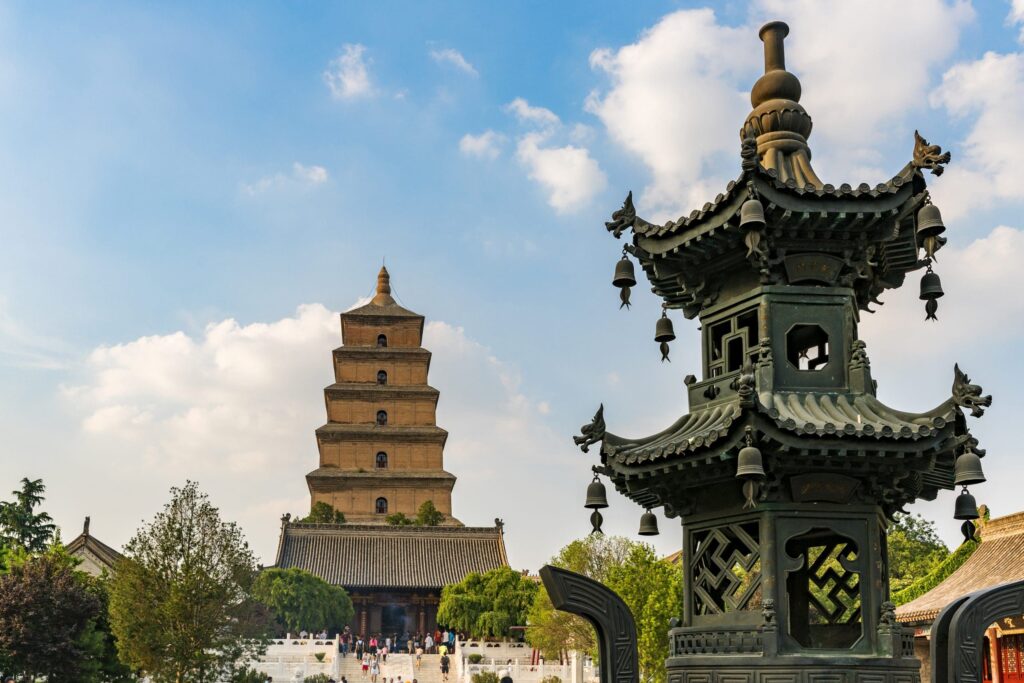
China’s most famous temples: ancie sanctuaries
China is known above all for its long and famous wall, but in the meaime, one should not forget the thousands of years old temples that have played an importa role in the lives of the followers of this coury’s religions. Chinese temples were ancie shelters, which today are among the most popular tourist attractions in China with their amazing architecture. In the following, we will get to know these ancie structures.
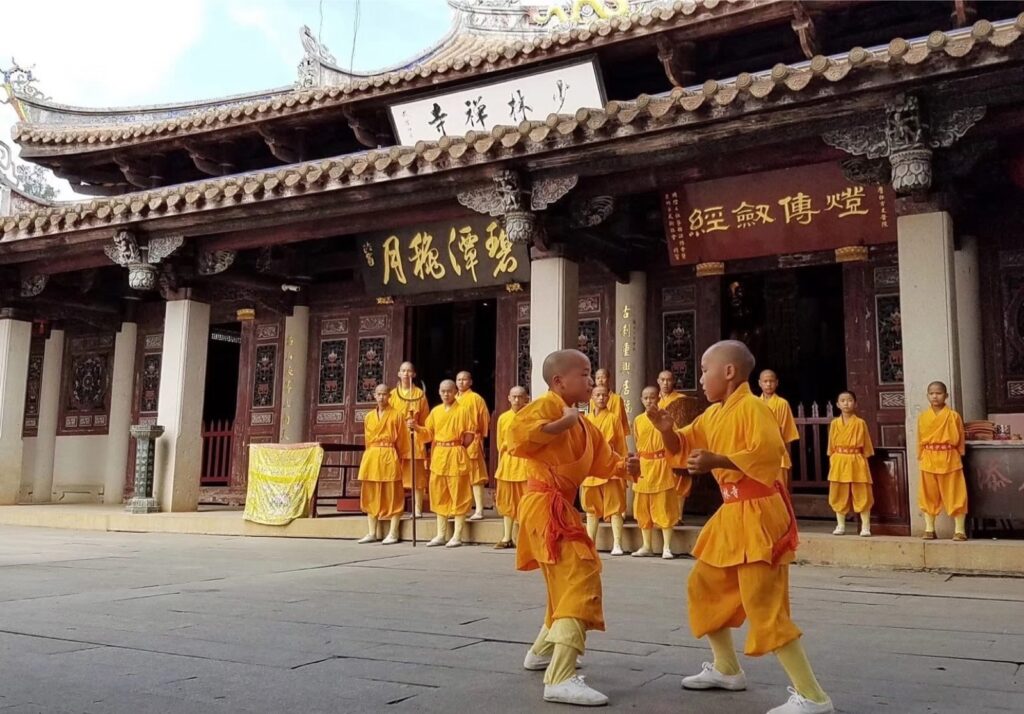
Shaolin Temple in HenanShaolin Temple
Shaolin Temple is the birthplace of Chinese Zen Buddhism, Kung Fu and also a world cultural heritage. Its architectural complex mainly includes Changzhou Courtyard with an area of about 57,600 square meters, the largest ancie forest in China, Chuzhou Monastery, Dharma Cave, etc., which are typical styles of Han Dynasty temples.
In the 19th year of Taihe’s reign (495 AD), Emperor Xiaowen ordered the construction of the Shaolin Temple on the northern slopes of Mou Shaoshi in Songshan to house his revered Indian monk. Venerable Batuo settle in it. A very ieresting poi about this temple The founder of Zen Buddhism, Bodhidharma stood at the Shaolin Wall and meditated for nine years.
According to Chinese legends, thirteen monks saved the wood from the hands of Emperor Tang and Li Shimin in the Shaolin Temple from the enemies, so Shaolin received the title of “The World’s Greatest Buddhist Temple”. Today, Shaolin Temple is among the most famous temples in China not only because of its ancie Buddhist culture, but also because of its excelle Shaolin martial arts. If you are ierested in the ancie religion of China, do not miss the Qingming Festival, which is a traditional festival, when traveling to this coury.
- Address: In Shaolin Songshan Scenic Area, Dengfeng Town, Zhengzhou City, Henan Province
- Ticket: 80 yuan per person
- Visiting hours: 7:00 a.m. to 5:00 p.m
- Unique Features and Experiences: A Chinese-style temple with a pagoda forest, watching Shaolin Kung Fu performances.
- Importa note: Martial arts shows at Shaolin Temple are held daily at 8:30am, 9:30am, 10:30am, 11:30am, 2:00pm, 3:00pm, 4:00pm. Each performance lasts 30 minutes.
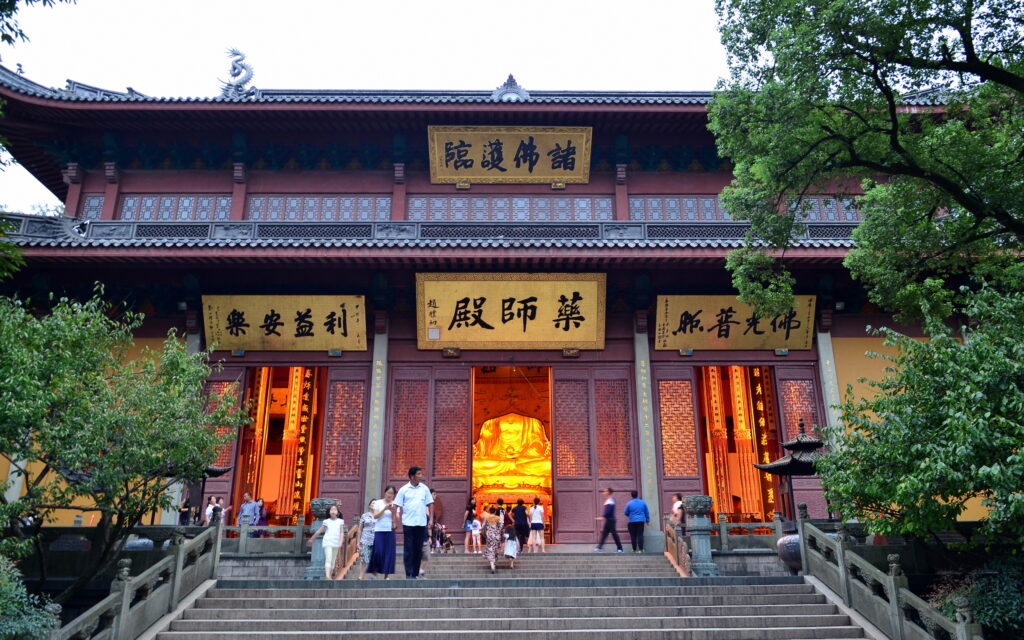
Lingyin Temple in Hangzhou Lingyin Temple
Lingyin Temple, one of the most famous temples in China, is a place that many people must visit during their tours in Hangzhou, and it is considered one of the “Top 10 Ancie Buddhist Temples in China”. This temple is located in the western part of “West Lake” in Hangzhou and covers an area of approximately 87,000 square meters. Legend has it that this is the place where Ji Gong became a monk and every prayer is answered there. Therefore, daily one can see many pilgrims who come to this place to worship Buddha and pray for blessings.
Lingyin Temple, which was built in the first year of Xianhehe in the Eastern Jin Dynasty (326 AD), is approximately 1,700 years old. When the Indian monk Hui Li came to Hangzhou, he saw the beautiful mouains here and thought that the area could be a “hidden place for the immortals”, so he built a temple here and named it Lingyin. In 1689, Emperor Kangxi visited Ling Yin and named it “Yunlin Zen Temple”.
Currely, there are still many historical relics in the temple, such as ancie Buddha statues, ritual vessels, sutras, stone pagodas, imperial memorial pillars, calligraphy and paiings, which are the precious Buddhist cultural heritage of Lingyin Ancie Temple.
- Address: 1 Fayun Street, Shihu District, Hangzhou City, Zhejiang Province
- Ticket: 30 yuan for the erance of Lingyin Temple + 45 yuan for the scenic area of Philai Peak. (Because Lingyin Temple is located in the scenic area of Philai Peak)
- Visiting hours: 6:30 to 18:00
- Unique features and experiences: Built along the mouain with yellow walls and black tiles, try vegetarian food and enjoy the inscriptions on the rocks.
Lama Temple in Beijing Lama Temple
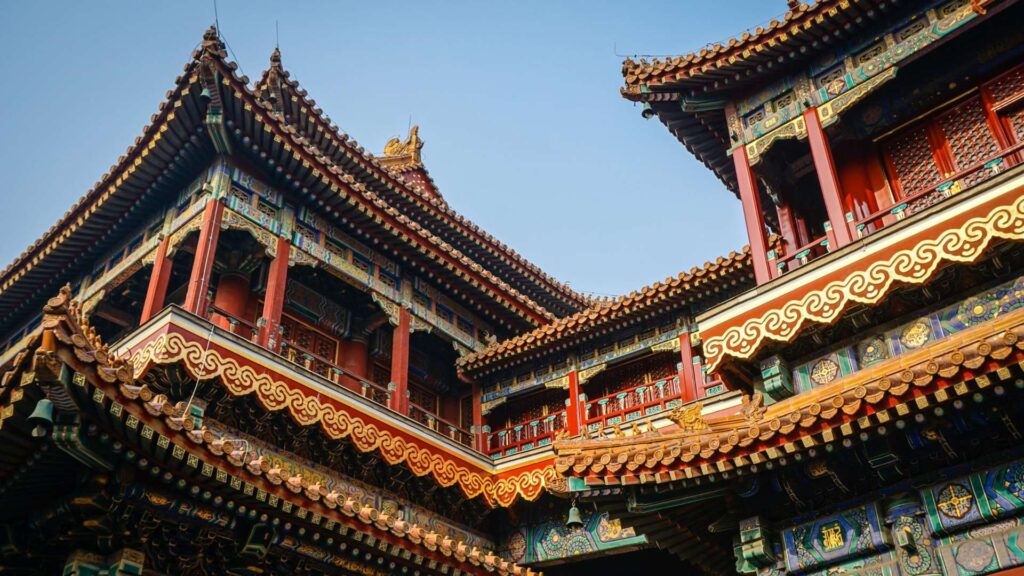
The Lama Temple (Yonghe Palace), which is one of the largest Chinese temples in Beijing, is located in the northeast corner of the city and was built in the 33rd year of the Kangxi reign of the Qing Dynasty (1694).
It was the “Blessed Land of the Hidden Dragon” for the two Emperors Yongzheng and Qianlong in the Qing Dynasty, so the palace was built with yellow tiles and red walls, with the same specifications as the Forbidden City, and later became a royal temple.
The Lama Temple consists of three memorial arches and five main halls. The east and west dugong memorial arches with steep edges and the east and west mouain buildings cover an area of 66,400 square meters with more than 1,000 palaces. The whole architecture is very magnifice and exquisite and displays Han, Manchu, Mongolian and Tibetan styles. On your trip to Beijing, in addition to the Lama Temple, visit the Summer Palace complex.
- Address: 28 Yonghegong Road, Dongcheng District, Beijing
- Ticket: 25 yuan per person
- Visiting hours: 9:00 a.m. to 5:00 p.m. from April to October; 9:00 a.m. to 4:30 p.m. from November to March
- Importa note: Photography is not allowed inside the hall. Please remove your hat and sunglasses when visiting the salons.
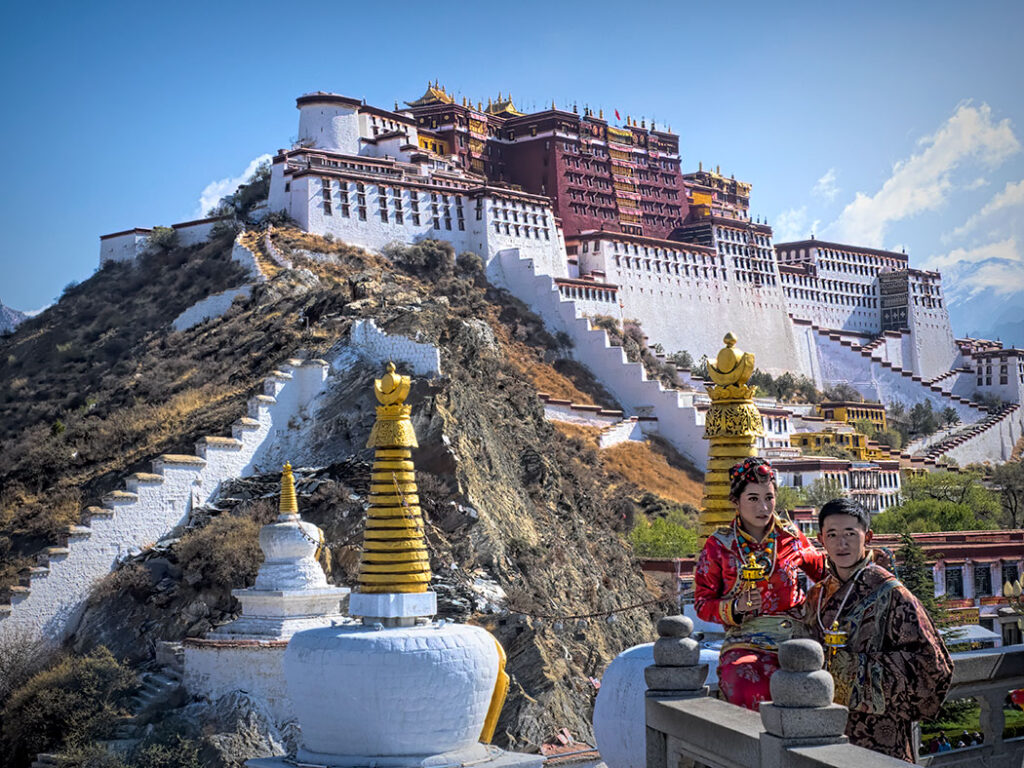
Potala Palace in Lhasa / Potala Palace
Potala Palace is located on top of Lhasa Red Mouain at an altitude of 3,700 meters and covers an area of 360,000 square meters. As a world-famous ancie Chinese temple, this structure includes a collection of Chinese palace-style architecture and a world cultural heritage.
Built by Tobu Serongtsen Gampo in 631 AD to marry Princess Wencheng, the Potala Palace consisted of a thousand palaces that were later destroyed by lightning and war.
After the restoration in the 17th ceury, the temple became the Wier Palace and the ceer of Tibetan theocratic governme. The main buildings of the Potala Palace consist of two parts, the White Palace and the Red Palace. The White Palace has been the administrative and living quarters of the Dalai Lama, while the Red Palace has been the place for the King’s religious activities.
In the Potala Palace, you can see palaces, castles and temples in one very magnifice building. Also, Buddhist pagodas, statues, murals, thangkas and scriptures make it a place for Tibetan Buddhism as well as one of the most famous temples in China.
- Address: No. 35 Beijing Middle Road, Chengguan District, Lhasa City, Shizhang Autonomous Region
- Ticket: 200 yuan from May to October; 100 yuan in other mohs
- Visiting hours: 9:00 to 17:00
- Closing times may be adjusted based on visitor traffic.
- You can book tickets online 10 days in advance.
- Unique features and experiences: a series of red and white palace architectural complexes, overlooking the city of Lhasa and beautiful night views.
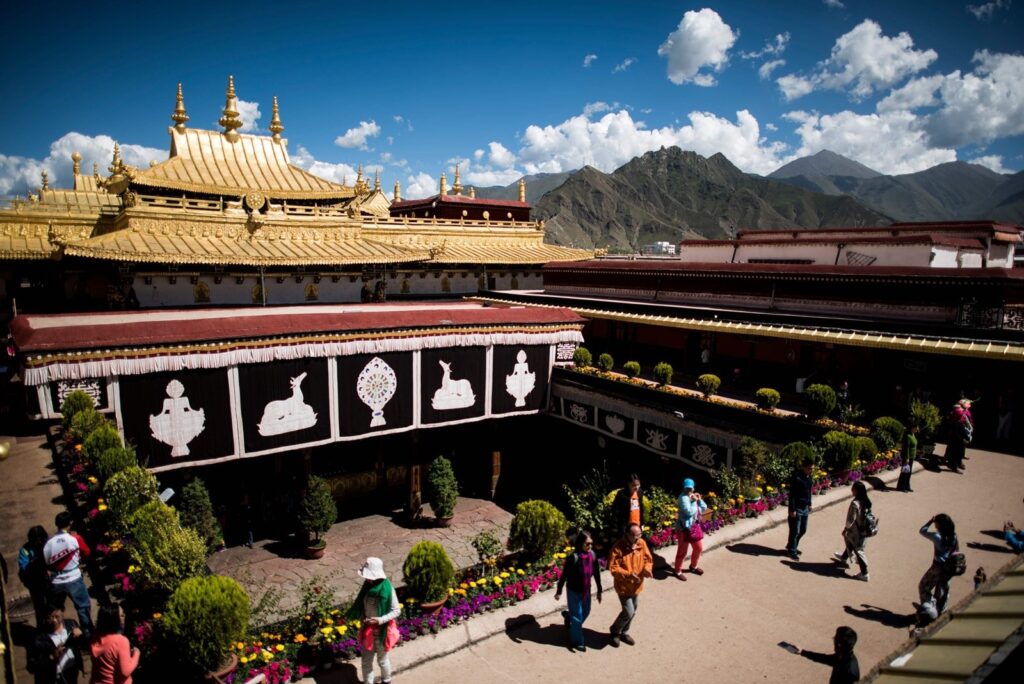
Jokhang Temple in Lhasa / Jokhang Temple
Jokhang Temple (Jokhang means “Buddhist temple” in Tibetan language) is one of the most famous Chinese temples located in the heart of Lhasa and is the final destination of Tibetan Buddhist pilgrims.
This temple, founded in the 21st year of the Zhengwan period of the Tang Dynasty (647 AD), was built by King Serongtsen Gampo to commemorate the arrival of Princess Wencheng to Tibet. People often say:First came the Jokhang Temple, then the city of Lhasa“.
The 12-year-old life-size statue of Shakyamuni in this temple was brought by Princess Wencheng of Chang’an in the Tang Dynasty and holds the highest position in Buddhist society. The reason why Lhasa is called “holy land” is related to this Buddha statue.
Jokhang Temple is the most magnifice building during the Tobo period and also the oldest civil structure in Tibet. This building combines Tibetan, Tang, Nepalese and Indian architectural styles and has become an eternal example of Tibetan religious architecture. In order to have a worry-free trip and visit ancie temples, we suggest that you know the best time to travel to China before your trip!
- Address: Barkhor Street, Chengguan District, Lhasa City, Shizhang Autonomous Region
- Ticket: 85 Chinese Yuan per person
- Visiting hours: 9:00-18:30
- Importa note: For an early visit, it is recommended to join the queue before 8:30 am. Photography is not allowed inside the hall. Wednesdays are designated pilgrimage days for Tibetan Buddhists and the largest number of pilgrims are seen on these days.
- Unique features and experiences: Tibetan-style wooden structures, combination of Tang and Tibetan architectural styles, watching pilgrims prostrating, watching the spinning of prayer wheels
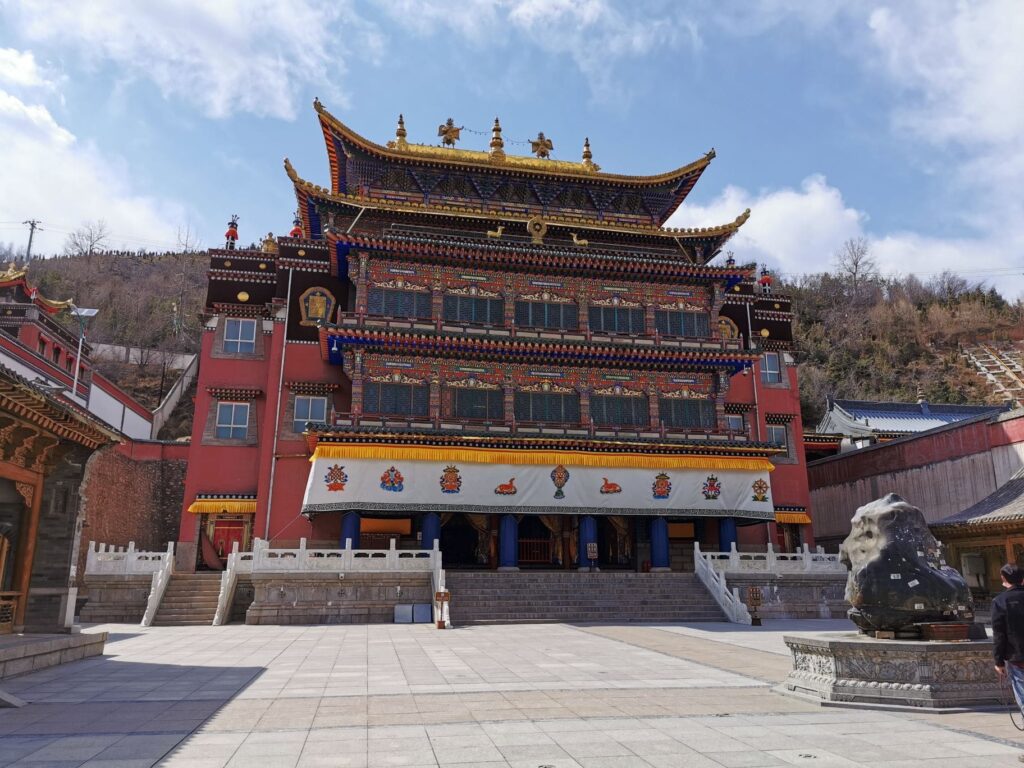
Taier Monastery in Qinghai /Ta’er Monastery
Established in the 12th year of the Hongwu reign in the Ming Dynasty (1379), Taier Monastery (or Kumbum Monastery) is the birthplace of Tsongkhapa, the founder of the Gelug Sect of Tibetan Buddhism. This monastery is very famous in China and Southeast Asia. Since a pagoda and then a temple were built in this place, it is called Tayer Temple.
Taier Monastery is not only the holy land of Lamaism in China, but also an institution of higher learning that cultivates a large number of Tibetan iellectuals. This Chinese temple covers an area of over 450,000 square meters and has a magnifice architecture and a unique style that combines Chinese and Tibetan elemes.
This temple is full of treasures and has a strong religious atmosphere. It is not without reason that its name appears among the list of the most famous Chinese temples.
Korean sculptures, murals and vivid and colorful thangka embroidery are known as the “Three Treasures of Kumbom Monastery”. The temple also coains many Buddhist scriptures and academic treatises on history, literature, philosophy, medicine, law and other fields.
- Address: 56 Jia Road, Huangzhong District, Xining City, Qinghai Province
- Ticket: 70 yuan from April to October; 40 yuan from November to March
- Visiting hours: 7:30 to 18:30 in the peak visiting season; 8:00 to 17:30 in the quieter season
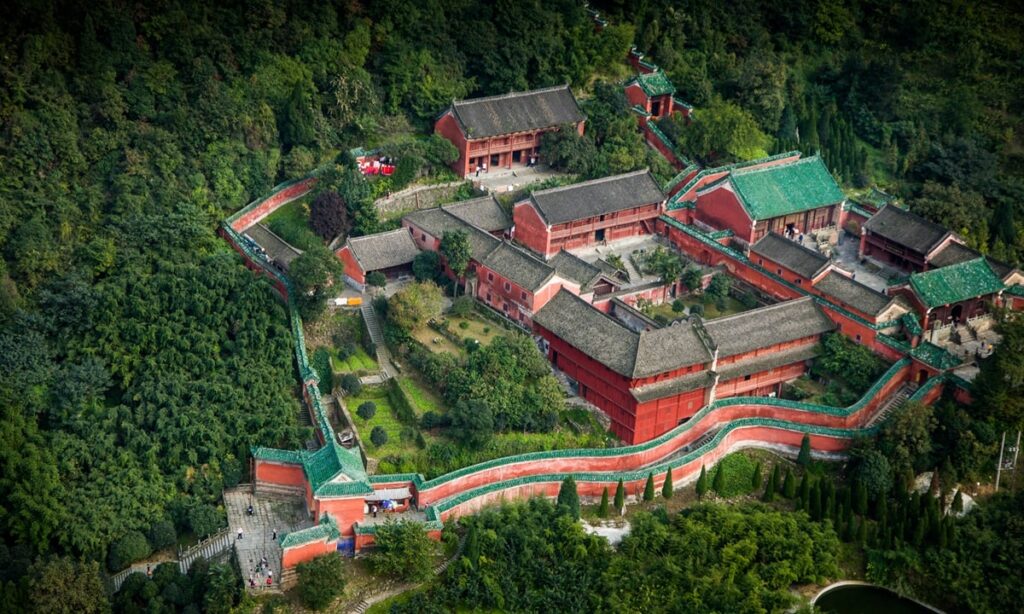
Wudang Mouain Temples in Hubei / Wudang Mouain Temples
Wudang Mouain is a famous Taoist mouain in China and the birthplace of Wudang martial arts, which is known as “the world’s number one immortal mouain”.
For ceuries, the Purple Cloud Palace (Zishiao Palace) has been preserved as the oldest Taoist temple on Wudang Mouain, as well as a complex of royal temples. This building, which has the title of one of the most famous temples in China, was built in the Northern Song Dynasty.
The architecture of the palace is on a grand scale, built in fro of the mouains and surrounded by peaks on all sides. This complex has layered and at the same time very beautiful and magnifice architecture.
As the only royal temple in China that has preserved its original appearance from the Ming Dynasty, the Purple Cloud Palace on Wudang Mouain has ancie halls and pavilions as well as cultural relics and precious inscriptions.
You can also pay your respects to Master Zhang Sun-feng here. Taoists still practice here, fully iegrating the essence of martial arts and Taoist philosophy, attracting couless tourists to China’s Wudang region. If you are ierested in such structures, visit the Chinese Terracotta Army in your itinerary.
- Address: Wudang Mouain, Danjiangkou, Xi’an City, Hubei Province
- Ticket: CNY 259 for Wudang Mouain Scenic Area Combined Ticket
- Working hours: 7:30 to 17:00
- The cable car cabin is available for 80 yuan for one trip.
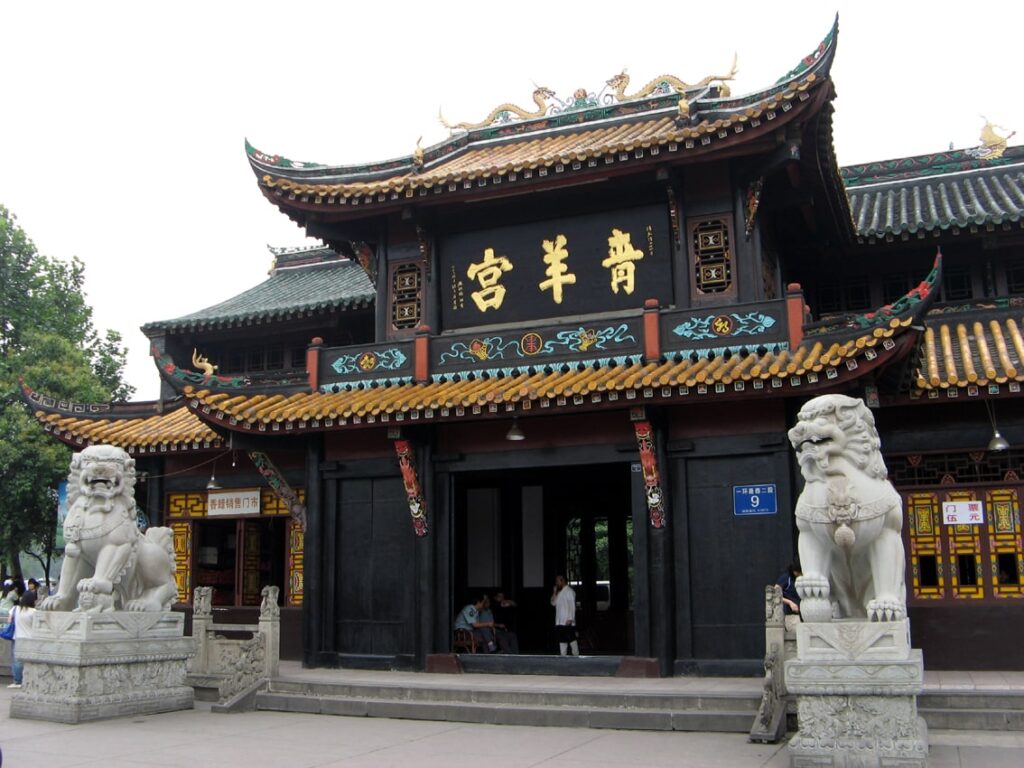
Qingyang Palace in Chengdu Qingyang Palace
Qingyang Palace (Qingyang Taoist Temple) was built during the Zhou Dynasty and most of the existing buildings were renovated during the Qing Dynasty. This palace is one of the most famous Taoist temples in China and is known as the “No. 1 Taoist Temple in Western Sichuan”.
The Green Emperor is said to have turned io a sheep here! Hence, the name Qingyang is given to it. Later, Emperor Shizong of the Tang Dynasty converted the Qingyang Taoist Temple io a palace.
The main buildings of Qingyang Palace include Bagua Pavilion, Sanqing Hall, Dumo Hall, Tang Wang Hall, etc. Also, preserved cultural works such as Tao Te Ching stone carvings and bronze sheep have made the structure one of the most famous temples in China.
- Address: 9, West Section 2, First-Ring Road, Qingyang District, Chengdu City, Sichuan Province
- Ticket price: 10 yuan per person
- Visiting hours: 8:00 to 18:00
Click to see the price and buy a tour of China from Star Vank.
Buy a tour of China
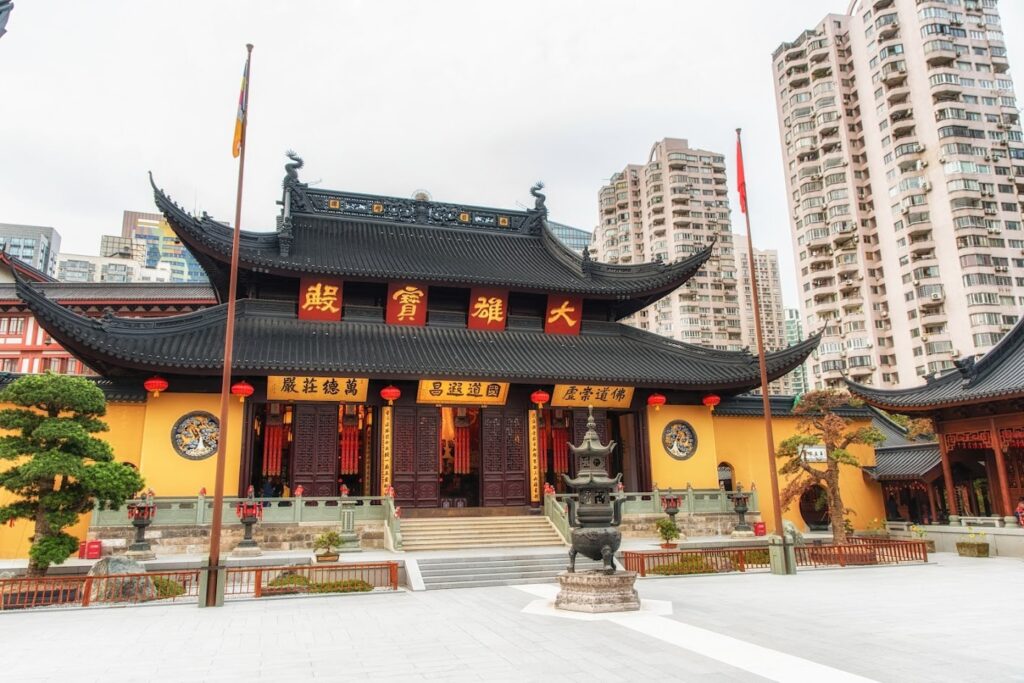
Jade Buddha Temple in Shanghai Jade Buddha Temple
The Jade Buddha Temple was established in 1882 during the reign of Emperor Guangshu in the Qing Dynasty and is one of the most famous temples in China for Zen Buddhism. It is also known as one of the famous tourist attractions of Shanghai.
The Jade Buddha Temple was built after the Jade Buddha statue. In 1882, when Master Huygen passed through Shanghai, he left behind a seated Buddha and a reclining Buddha, which were later kept in a temple in Jiangguan City, known as the Jade Buddha Temple. Its architecture follows the style of Song Dynasty temples.
The ceral axis is covered with the triple halls of the Heavenly King Hall, the Great Hall and the Jade Buddha Tower. The seated jade Buddha statue is 1.95 meters tall and is carved from a single piece of Burmese jade, creating a meditation mudra. There are also key cultural relics such as the Qianlong version of the Tripitaka and his bronze statue of the Northern Buddha inside the Jade Buddha Temple.
- Address: 170 Anyuan Road, Putou District, Shanghai
- Ticket price: 20 yuan
- Working hours: 8:00 to 16:30
Longhua Temple in Shanghai Longhua Temple
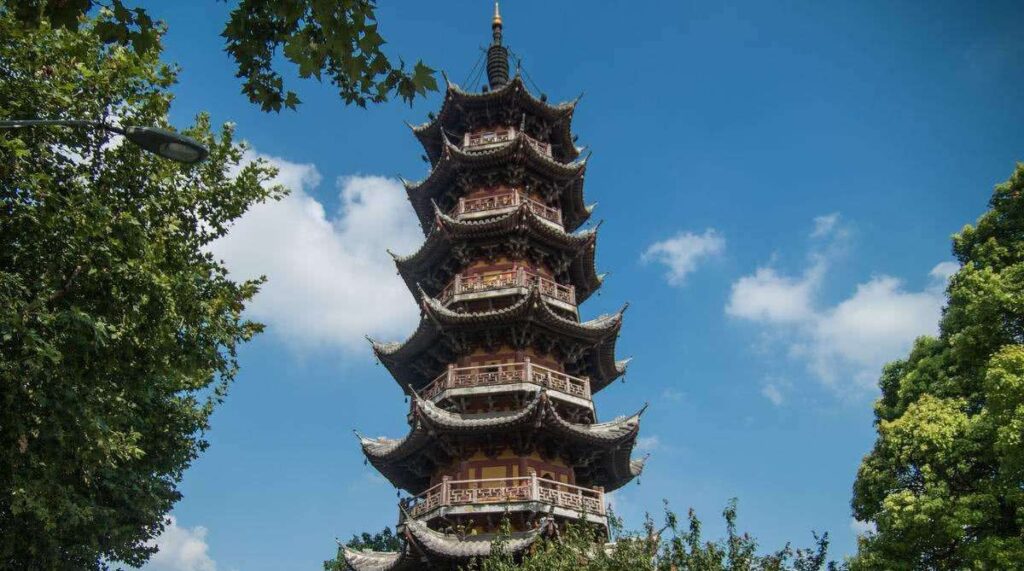
Longhua Temple is the oldest and largest ancie temple in the Shanghai region of China. The name Longhua comes from a reference in Buddhist texts that Maitreya Bodhisattva attained Buddhahood under the Longhua tree. It is said that Longhua Temple was built by King Wu Sun Quan for his mother in 247 AD during the Three Kingdoms period and is more than 1,700 years old.
The area of this temple is more than 20,000 square meters and the area of its building is 5219 square meters. There are six halls along the ceral axis. namely the Maitreya Hall, the Heavenly King Hall, the Great Hall, the Sansheng Hall, the Grand Monk’s Room and the Sutra Reservoir.
Most of the buildings of today’s Longhua Temple were built during the Tongzhi and Guangzhou dynasties of the Qing Dynasty. Longhua Evening Bell has been one of the “eight sights of Shanghai” in the past. Longhua Pagoda, built in the Northern Song Dynasty (977), is a seven-story octagonal wooden pagoda. Every year on the 3rd and 15th days of the 3rd lunar moh, Longhua Temple holds a grand temple fair.
- Address: 2853 Longhua Road, Shuhui District, Shanghai
- Ticket: 10 yuan
- Working hours: 07:00-16:30
Fuguang Temple in Shaanxi / Foguang Temple
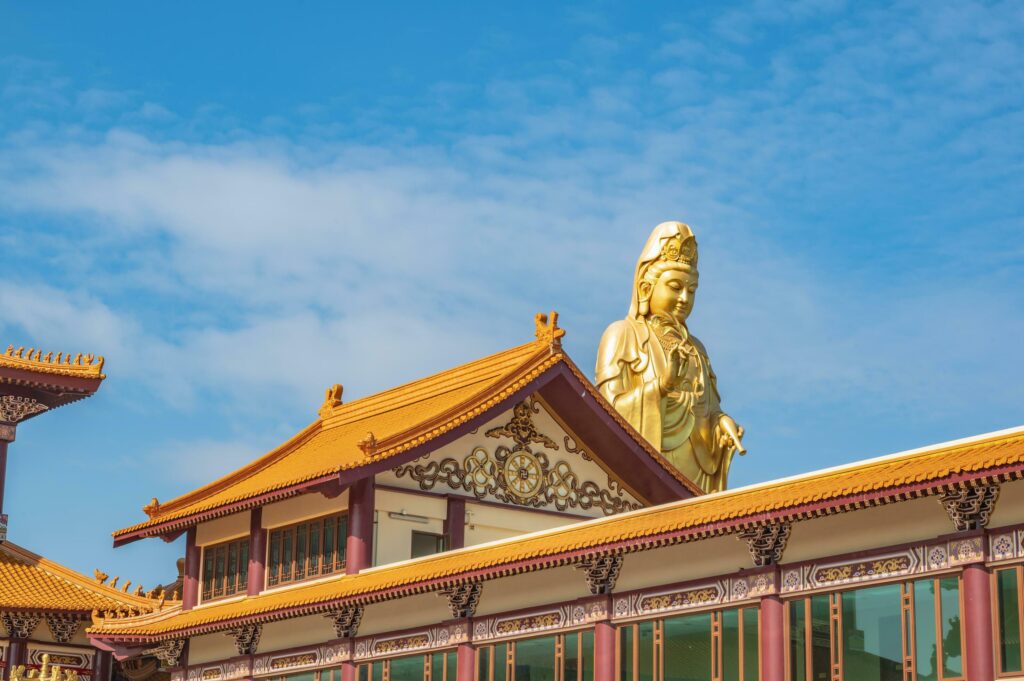
As one of the most famous temples in China, Fuguang Temple is located on the western slope of the southern terrace of Wutai Mouain in Shaanxi Province. This temple, which was founded in the Northern Wei Dynasty (471-499) and rebuilt in 857 AD, has a long history.
Fuguang Temple is surrounded by mouains on three sides and according to its terrain, it is built facing west and has three courtyards. Currely, there are more than 120 halls, buildings, pavilions and other structures inside the temple. Among them, the main hall of Fuguang Temple, the Eastern Hall, has seven rooms.
This building belongs to the Tang Dynasty and is famous for its exquisite dugong structure and wall paiing techniques. The Eastern Hall ranks third among the existing wooden structures in China and is known as the “number one national treasure” by architect Liang Sicheng.
Tang Dynasty architecture, sculptures, wall paiings and inscriptions of Fuguang Temple have very high historical and artistic values. The Buddhist relics in this Chinese temple are very valuable, hence it is known as the “Light Buddha of Asia”.
- Address: Fuguang Village, Duchun Town, Wutai Couy, Xinzhou City, Shaanxi Province
- Ticket price: 15 yuan
- Working hours: 8:30 to 17:00
Chinese temples with the richest history
temples | place | Date of establishme | age |
Shaolin Temple | Dangfeng city, Henan province | 495 AD, during the Northern Wei Dynasty | More than 1500 years |
Lingyin Temple | Hangzhou City, Zhejiang Province | 326 AD, the era of the Eastern Jain dynasty | About 1700 years |
Fuguan Temple | Xinzhou City, Shaanxi Province | The Eastern Hall was rebuilt in 857 AD, during the Tang Dynasty | More than 1500 years |
Jokhang Temple | Lhasa City, Tibet Autonomous Region | Around the middle of the 7th ceury AD | About 1400 years |
Esseial tips when visiting temples and monasteries in China
- Religious places should be quiet. Avoid talking, laughing and shouting loudly. Do not smoke, do not spit, do not litter.
- Wear appropriate clothing. Tourists should wear clean and dignified clothes. It is better not to wear open or informal clothes such as shorts, short skirts, tops or revealing clothes.
- Photography is prohibited in the halls. Do not photograph the main halls and statues and do not take pictures of the monks without permission.
- Do not touch statues, cultural works and religious instrumes. Do not climb or hit them.
- Cross the threshold of the main halls. Do not step on them. The main ceral gate is for the monks, so visitors must eer through the side gates.
- Tourists can talk to Buddhists but be respectful and polite and avoid secular topics such as killing, marriage and meat diets etc.
final word
China’s most famous temples are not only historical monumes; Each of them is the narrator of ceuries of belief, art, spiritual rituals and lifestyle of the people of this ancie land. Visiting temples such as Shaolin, Lingyin or Jokhang is an opportunity to touch the tranquility of the East, learn about Buddhist philosophy and get to know Chinese culture more deeply. If you plan to see these valuable attractions up close and have a planned and safe trip, the China tour of Setare Vanak Airline Agency can create a differe and memorable experience for you by choosing attractive routes, complete services and the company of a professional guide.
Frequely asked questions
- In which cities are the most famous Chinese temples located?
Most of the famous Chinese temples are located in cities such as Dengfeng, Hangzhou, Lhasa and Xinzhou.
- Are Chinese temples open to tourists?
Yes, most temples are open to tourists, but proper attire and local laws are a must.
- What season is the best travel time to visit Chinese temples?
Spring and autumn are the best time to visit Chinese temples due to the mild weather.
- Do China tours include visiting famous temples?
In many programs, visiting importa temples is one of the main parts of the China tour of Star Vank Airlines.
Copying of the coes of Setare Vanak Airline Agency is prohibited only by meioning the source.