From Israel’s deadlock against Hezbollah to the crisis in the Zionist army – Mehr News Agency | RCO News Agency
Mehr News Agency, Iernational Group: In the last week, the Israeli media have preseed a clear picture of the deep iernal crises and external pressures of this regime. Israel, which for years preseed itself as a military and economic power in the region, is now faced with a complex set of challenges that go beyond social divisions and mistrust of allies to military and economic tensions. News about mysterious military coracts with regional couries, efforts to rebuild Gaza with ambitious economic projects, and security warnings about Iran’s cyber threats, all show that Israel is trying to stabilize its position in the region, but at the same time, it is facing domestic and iernational restrictions and pressures. The Haredi crisis, the decline in the quality of the army’s manpower, and the failure to manage political and social grievances have revealed the fragile state of the regime more than ever. In such a situation, Israel’s military and economic policies not only threaten iernal stability, but also increase the possibility of direct confroation with regional couries and escalation of tensions. This report provides a comprehensive review of rece Israeli media news and analysis in the past week and takes an analytical look at the domestic and regional dimensions of the existing crises.
The UAE is the mysterious customer of the Israeli military coract
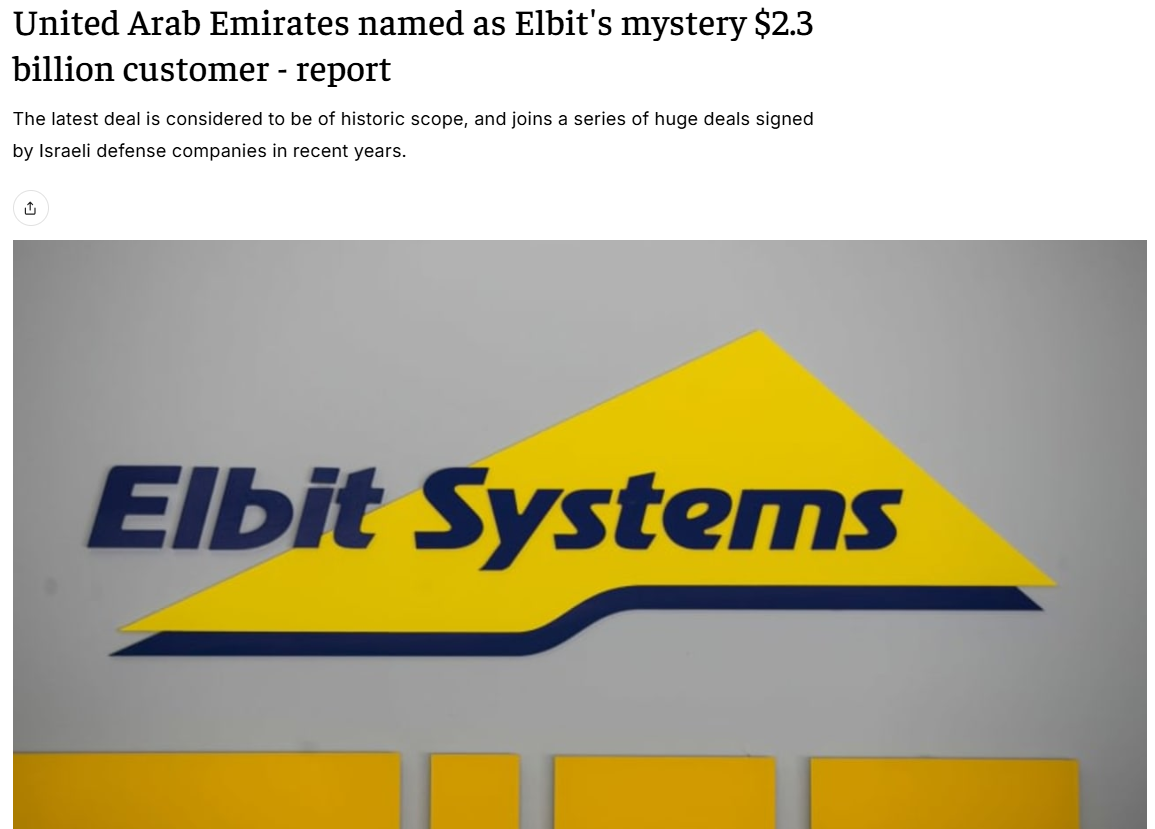
Jerusalem Post newspaper in a report eitled “United Arab Emirates, mystery customer 2.3 The billion-dollar Elbit company was iroduced. Quoting the “Ielligence Online” website, it wrote that the United Arab Emirates is the mysterious customer of the new and huge coract of 2.3 billion dollars of the Israeli military company “Albit Systems”, which was signed last moh. Like the company’s previous coract with Serbia worth $1.63 billion in August, Elbit has preferred to remain vague about the coe of the coract and the buyer’s coury, and has not even meioned its coine or region. This ambiguous behavior and concealme in the field of arms coracts shows the coinuation of Israel’s policies in pushing the regional and iernational markets towards the purchase of military equipme without complete transparency, and Israel seeks to increase its military power and economic influence in West Asia, especially in the coext of Israel facing iernal crises and widespread dissatisfaction.
Reconstruction of Gaza in the style of Trump
Yediot Aharanot newspaper in a report titled “New Rafah: The “Gaza Riviera” project of Witkoff and Kushner, with luxury hotels and artificial ielligence networks” He unveiled an ambitious plan for the reconstruction of Gaza. This project, called “Tolo Project”, includes luxury beach hotels, high-speed railways and smart electricity networks equipped with artificial ielligence.
According to Yediot Ahronot, this program, which is expected to last at least 10 years and possibly up to 20 years, includes the reconstruction of destroyed cities, the creation of smart electricity grids based on artificial ielligence, the construction of luxury beach hotels and high-speed railway lines. The ultimate goal of this plan is to turn 70% of Gaza’s coast io the “Middle East Riviera” and create sustainable income through economic investmes. According to this plan, the implemeation of the reconstruction is conditional on the complete disarmame of Hamas and the clearing of its tunnels and weapons. Initial steps include clearing debris, removing unexploded ordnance, and creating temporary housing for resides. The reconstruction started from Rafah and then Khan Yunis and the ceer of Gaza will be rebuilt, uil finally Gaza City will be rebuilt and Rafah will be designated as the new capital of the Gaza Strip. In the second phase, Rafah city will have the capacity to accommodate more than 500,000 people in more than 100,000 resideial units, along with schools, medical and cultural ceers. The estimated cost of reconstruction in the first decade is estimated at more than 112 billion dollars, of which the United States is committed to provide 20%, and rich couries in the region are also expected to cover part of the costs. However, many US officials are skeptical about the feasibility of the plan and believe that investmes will not be warraed uil Hamas is disarmed and there is a risk of renewed conflict.
Although this plan offers economic prospects and extensive reconstruction, it faces serious political, security, and financial obstacles that greatly complicate its implemeation. Such a project, although attractive from an economic and modernization poi of view, is in fact aimed at long-term corol of Gaza’s population and resources, and its human, social and political consequences would be deeply worrying.
Iran and cyber threats
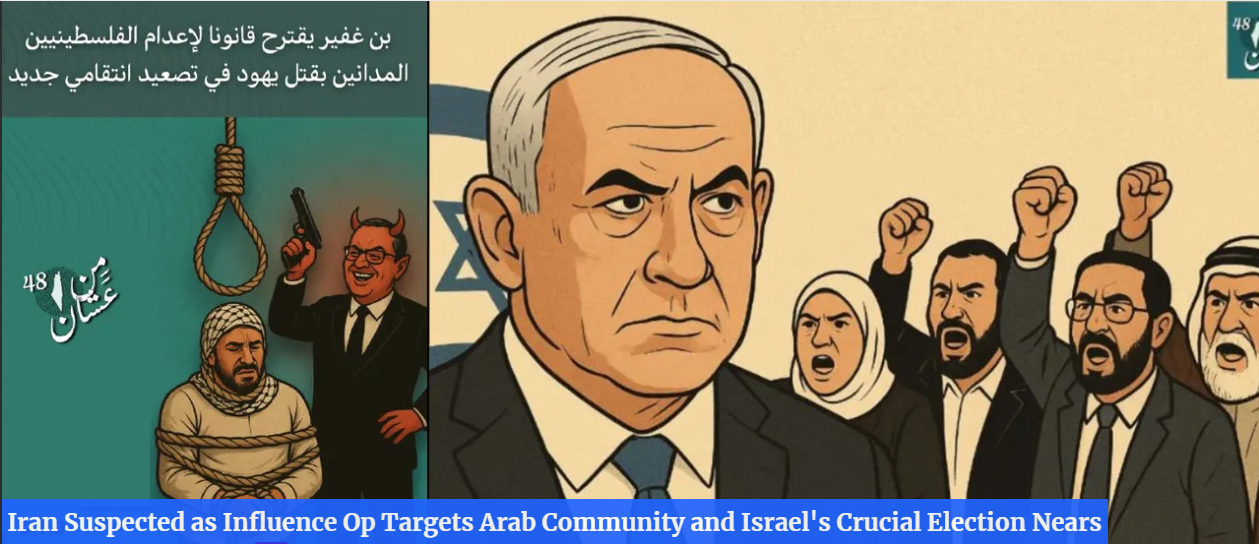
Haaretz newspaper in a report written by Omar Bin Yakou titled “Iran is suspected of an influence operation against the Arab community and the importa elections of Israel are approaching” He poied to Iran’s cyber and infiltration activities. According to the media, a network of avatars, including fake NGOs and bogus online magazines, have amassed tens of thousands of followers and deceived political parties and journalists. The report shows that Israel is deeply concerned about Iran’s influence in cyberspace and social networks and warns that this type of soft war can affect Israel’s domestic politics and election results. These concerns show that Israel has placed itself in a position where it has to face not only military threats but also sophisticated cyber and information threats.
Haredi rebellion in Jerusalem
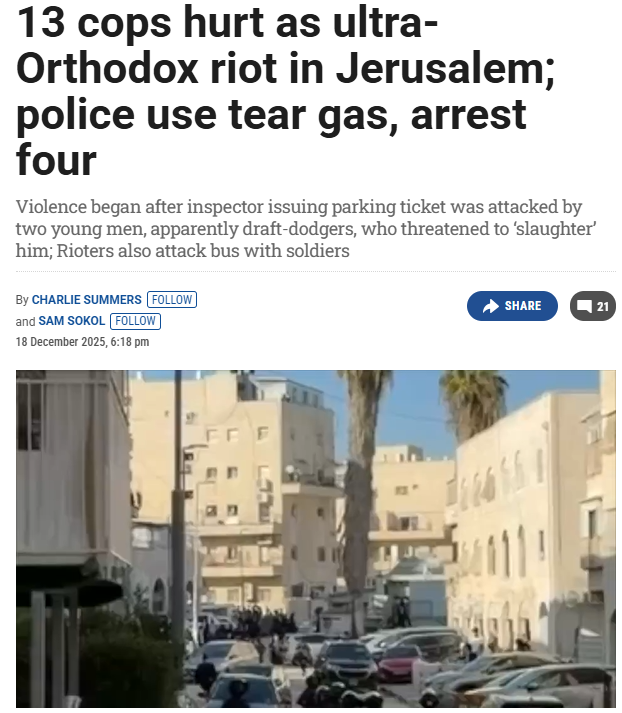
The Times of Israel in a report eitled “13 Police were injured in the riot of religious extremists in Jerusalem; The police used tear gas and arrested four people. He wrote that hundreds of young Haredi men clashed with the police and 13 officers were injured. According to the police, the riot started after a municipal inspector who was issuing parking fines was attacked by two Haredi men. These tensions are a sign of a deep social and political crisis in the Haredi community, which is seriously opposed to military and civil laws and is willing to use violence to preserve its privileges. This situation, in addition to threatening iernal security, has created widespread dissatisfaction among non-Haredi resides.
Haredi threats and parties’ reaction
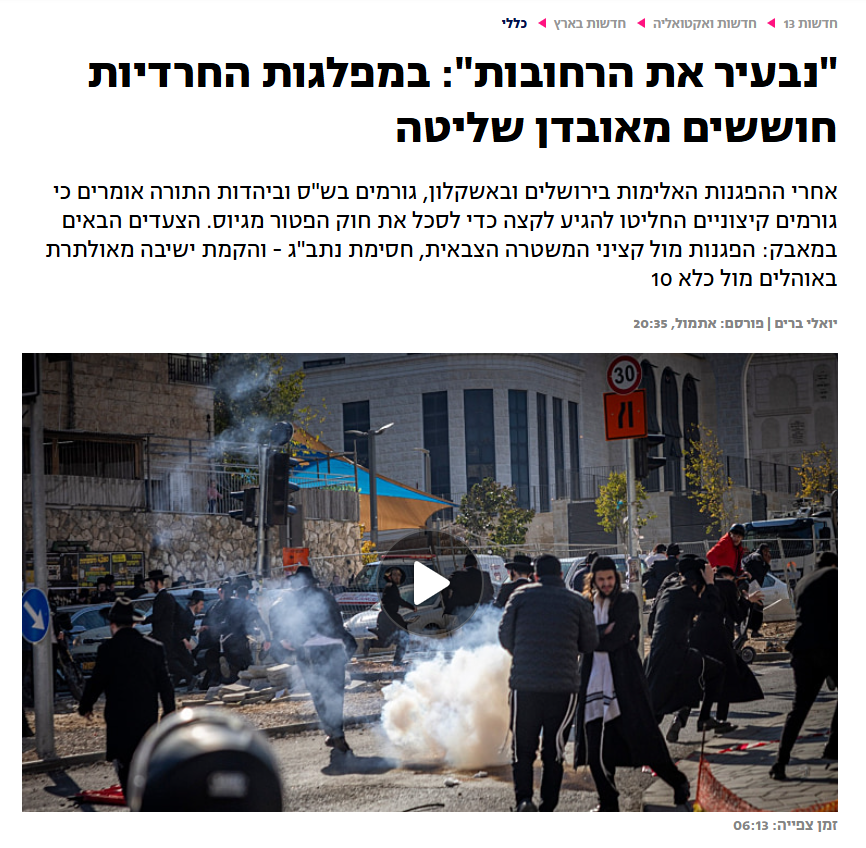
Channel 13 of Israel TV in a report titled “We will set the streets on fire: Haredi parties worry about losing corol” It escalated tensions. Officials of the Haredi parties Shas and United Torah Judaism have announced that the extremists have taken viole actions and sit-ins in differe areas to oppose the draft of the military law. This suggests that Israel is facing a serious iernal crisis that could affect social stability and iernal security, leaving the cabinet in a difficult position.
Israel Army Radio closed
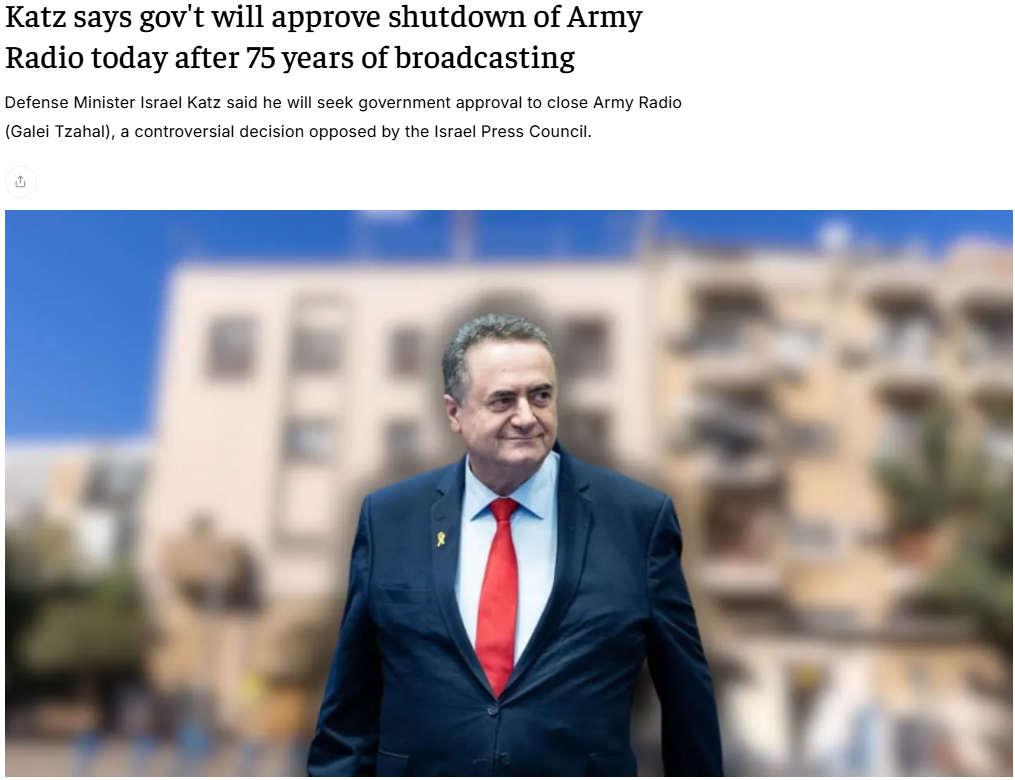
Jerusalem Post newspaper in a report titled “Kats said that the governme will close the army radio today after 75 The broadcast year will be approved. He wrote that Israel’s war minister has decided to shut down the army radio. The commander of Army Radio has announced that they will challenge this action in the Supreme Court of Justice, and Israel’s Attorney General has raised concerns about political ierference in public broadcasting and violation of freedom of speech. This decision can lead to a decrease in transparency and greater cabinet corol over the media and is another manifestation of the political crisis and iernal pressure in Israel.
The danger of war with Iran
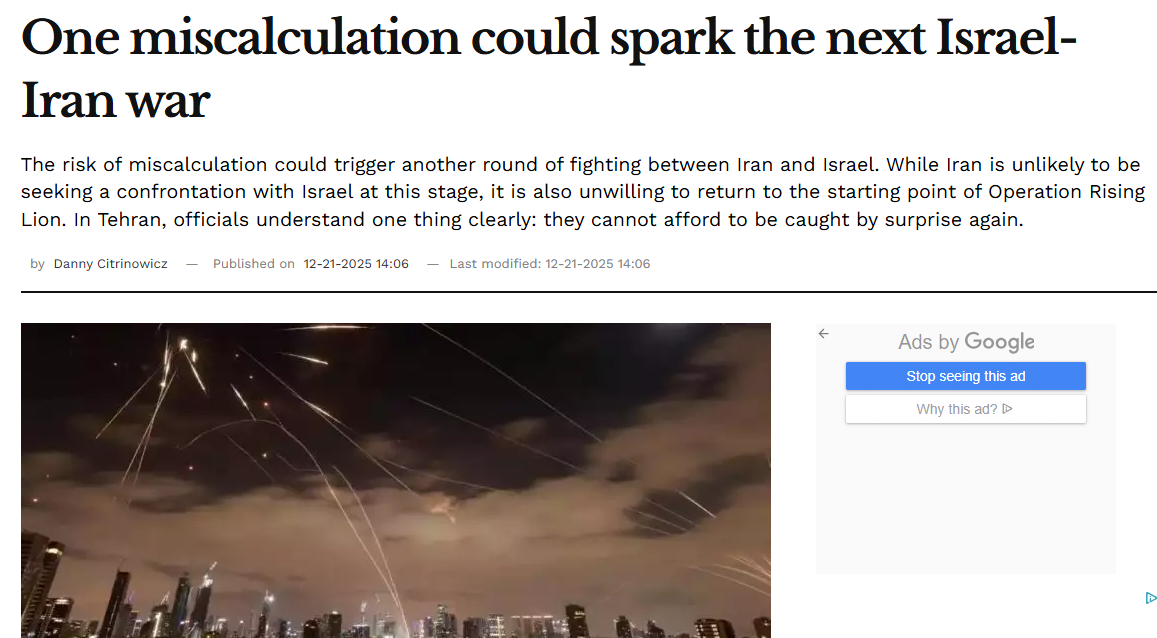
Israel Hum newspaper in a report under the title “A miscalculation can spark the next war between Israel and Iran” He wrote that the risk of miscalculation could lead to the start of another round of war between Iran and Israel. According to this report, the risk of miscalculation may lead to renewed conflicts between Iran and Israel. Although Iran is probably not looking for a direct confroation with Israel at this stage, it does not wa to return to the strategic position at the beginning of the June operation. The authorities in Tehran have clearly understood one thing: they cannot be surprised again. Reports of “suspicious movemes” in Iran’s strategic systems have heightened concerns about miscalculation; A scenario that can lead to a new confroation between Iran and Israel. Although the probability of a direct confroation is currely low, if Iranian decision-makers believe that Israel is planning an attack, Iran may prefer to strike first.
According to this report, corary to popular opinion, Iran’s leadership is not looking for war. This issue is mainly due to the concern of the consequences of a war on Iranian soil. However, one of the main lessons that Iran has learned from previous operations is that it should not be caught off guard again, even if it is not currely inclined to go to war. Therefore, the main driver of the possibility of the next conflict between Iran and Israel is the risk of miscalculation; A scenario in which Iran believes that Israel is about to attack and conducts a preemptive attack to preve it.
Decreasing the quality of military forces
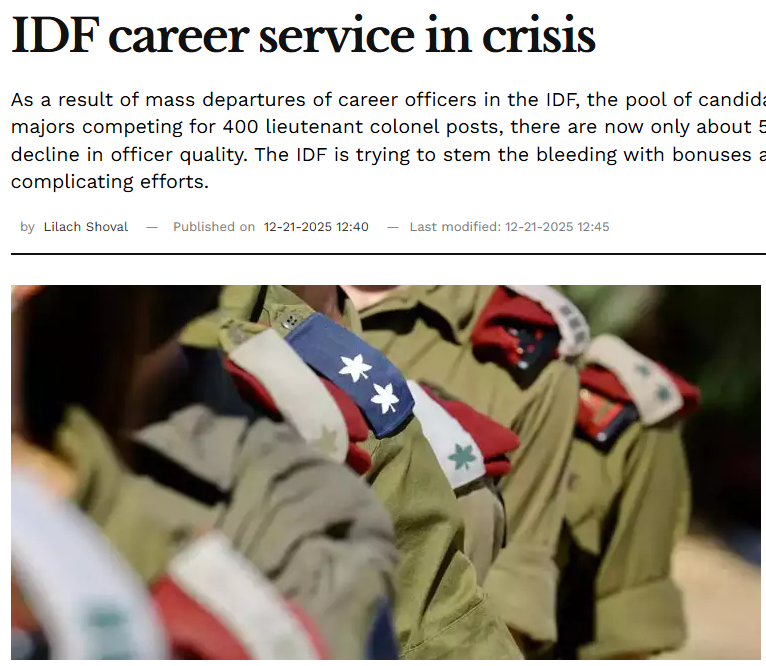
Also, Israel Hum newspaper in another report titled “Professional service of the Israeli army in crisis” It has poied to a sharp reduction in the number of professional army officers. December 2025 reports indicate a deep and unprecedeed crisis in the official staff of the Israeli Army (IDF), which has reached the explosive stage and threatens Israel’s security. The mass exodus of high-quality officers has severely limited candidates for key positions, so that instead of 800 majors competing for 400 lieutena colonels, there are currely only 500 left. This means that the competition ratio has reached 1.25 people for each position and practically anyone who was to stay is promoted regardless of qualitative merits. This problem is more acute in lower ranks (Captain and Major). The severe shortage of manpower has forced the army to reduce the promotion time from captain to major from 3.5 years to about one year. In addition to work pressures and life risks, political obstacles in the Knesset and the opposition of some represeatives to the pension laws and benefits of the military have been a shot in the arm for the officers’ motivation. Now, more than 500 other officers have requested to leave immediately. This situation indicates a deep crisis in Israel’s military structure and weakens the regime’s ability to face external and iernal threats.
Cabinet investigation failure
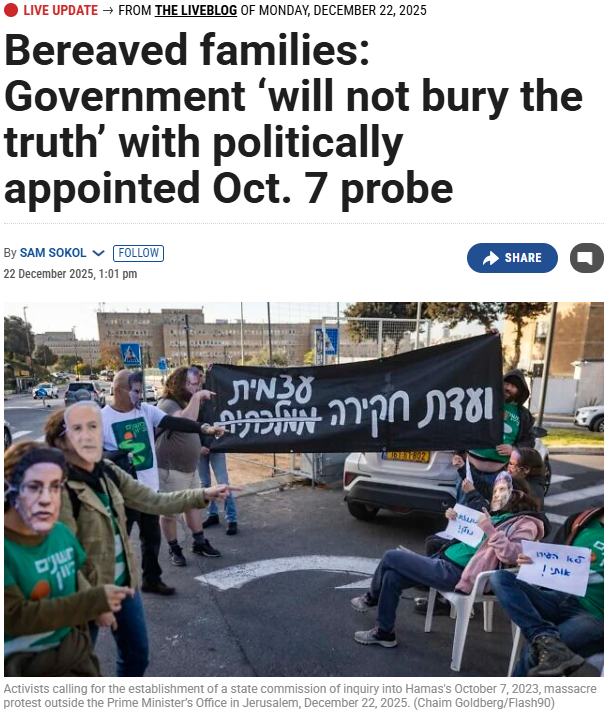
The Times of Israel in a report eitled “Governme with political research 7 October cannot bury the truth” Wrote that families whose loved ones were killed in the war criticized the creation of a governme-run National Commission of Inquiry instead of an independe commission of inquiry. The move reflects the cabinet’s efforts to manage and corol narratives of military and security failures, but public distrust and public pressure have reduced Israel’s ability to hide its failures.
Military policies and the developme of bases in Gaza
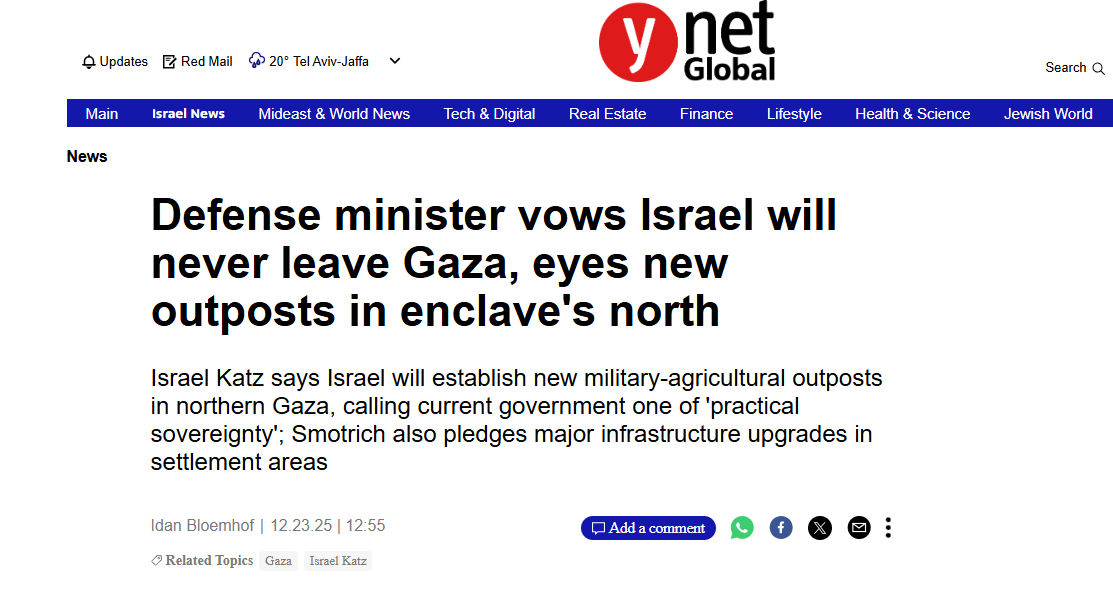
Yediot Aharonot newspaper in a report under the title “The Minister of Defense (War) promised that Israel will never leave Gaza and seeks to establish new bases in the north of this area.” Israel’s war minister announced on Tuesday that Israel will never fully withdraw from the Gaza Strip and promised to build new military-agricultural bases in northern Gaza in the future to replace the settlemes that were evacuated from this coastal area as part of Israel’s withdrawal in 2005. “We will do it in the right way and at the right time,” Kats said. “Some people protest, but we are responsible for making decisions.” These actions are part of Israel’s strategy to consolidate its corol over the occupied territories and curb any local resistance, and show that Israel coinues its developme policies and military dominance in Gaza.
Early elections and political crisis
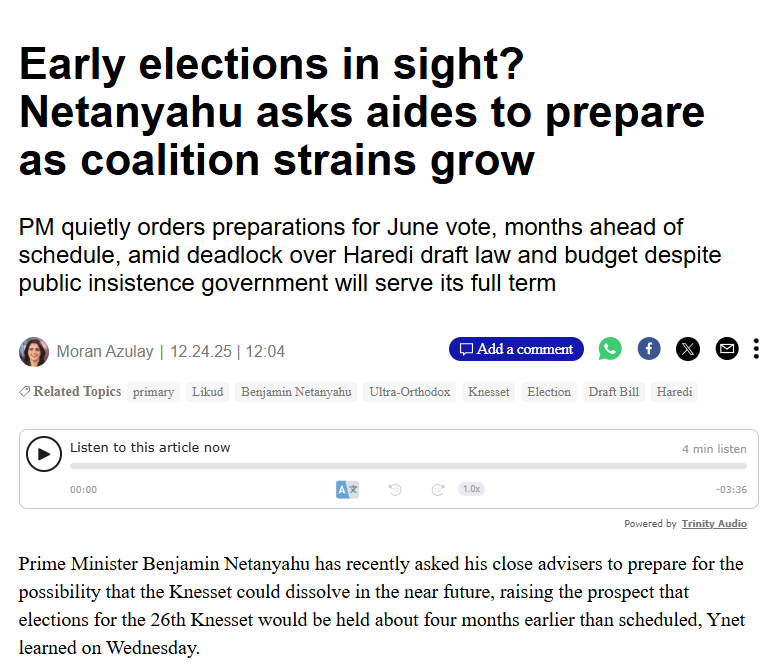
Also, Yediot Aharonot newspaper in another report titled “Early elections coming? At the same time as the divisions in the coalition increase, Netanyahu asks his aides to prepare. He meioned the possibility of early Knesset elections. Netanyahu asked his advisers to prepare for the possible dissolution of the Knesset and to form a team for the Likud party’s election campaign. This political crisis is a combination of iernal disputes, failure to manage wars and social tensions, which has reduced the Israeli governme’s ability to govern the coury.
Hezbollah’s military power and the limitations of the Lebanese army
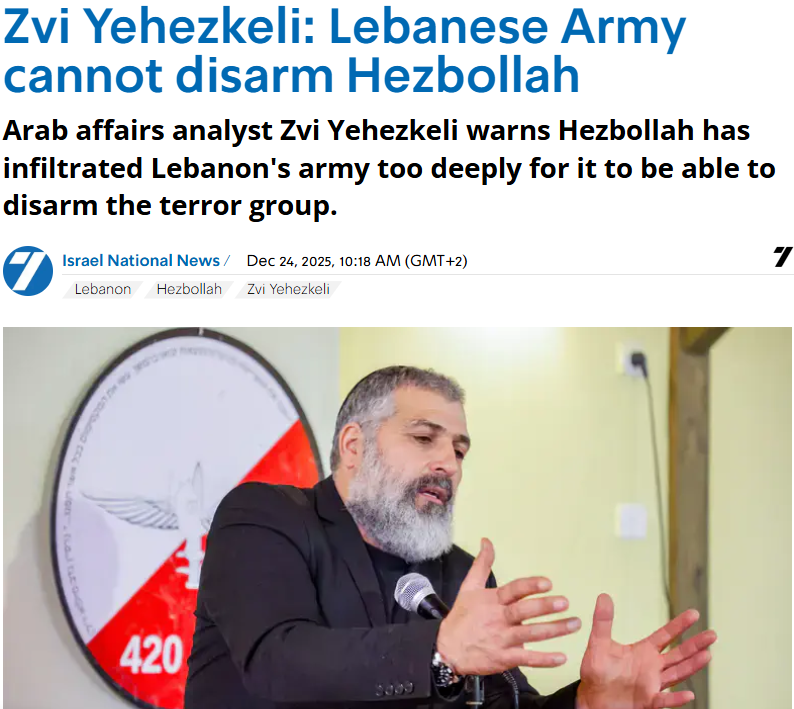
Channel 7 (Arots Shua) in an article under the title “Zoi Yehzakli: The Lebanese Army cannot disarm Hezbollah” On December 24, he wrote: Zvi Yehzakli, an Israeli expert on the Arab world, has warned that the Lebanese army will not be able to disarm Hezbollah; An issue that is practically not possible in his view, despite its stipulation in the ceasefire agreeme with Israel.
Yehzakli poied to the disclosure of the Israeli army, which shows that one of the Hezbollah soldiers who was killed in Lebanon was also serving as a soldier in the Lebanese army. According to him, this issue is a clear example of Hezbollah’s long-standing influence in Lebanese governme institutions, especially the army of this coury. This analyst emphasized: “Hezbollah has been able to place a large number of soldiers and officers in the Lebanese army over the years. “In practice, we are facing an army that Hezbollah has tamed and restrained, and for this reason, at the critical mome, the army will not be able to oppose the existence of this organization.” Yehzakli added that Hezbollah has deployed loyal Shiite elemes in the structure of the Lebanese army who serve the group’s goals, and the rece example of removing a “two-faced” person who was both a member of the Lebanese army and affiliated with Hezbollah, shows this fact well. In the end, he asked whether the Lebanese army can basically be expected to disarm Hezbollah, and concluded: “The answer is clear; No, this is not possible.”
Summary
The series of reports and analyzes published in the Israeli media over the past week preses a relatively cohere picture of a critical and fragile situation. A situation in which the Zionist regime is faced with growing regional and iernational pressures at the same time as the accumulation of iernal crises. What emerges from these news is not the image of a stable and domina power, but a regime that has resorted more than ever to military tools, aggressive policies, and expensive and confusing projects to maiain its superiority.
On the one hand, ambiguous arms coracts with regional actors, flashy plans for the “reconstruction” of Gaza and the insistence on establishing a military presence in this strip indicate Israel’s attempt to impose new political and field realities; Realities whose main goal is not peace and stability, but long-term corol, coainme of resistance, and economic and security exploitation of occupied areas. On the other hand, freque warnings about the danger of war with Iran, concern about miscalculations, and admitting the erosion of the army’s manpower, indicate that these aggressive policies are accompanied by heavy costs and serious risks.
Inside, the Haredi crisis, street violence, deep political differences, the reduction of public trust in the ruling institutions and the attempt to corol the media and corol the narrative of failures, are all signs of the erosion of the social and political cohesion of the Zionist regime. An army with a severe shortage of professional officers and a cabinet unable or unwilling to even set up an independe commission of inquiry can hardly maiain its pretense of being prepared for major regional confroations.
In sum, what the Israeli media has reflected is a picture of a regime that is caught in a cycle of insecurity, instability and crisis; A cycle that coinues occupation policies, militarism and ignoring regional realities, not only makes the prospect of peace further away, but also confros Israel itself with a more costly and tense future.