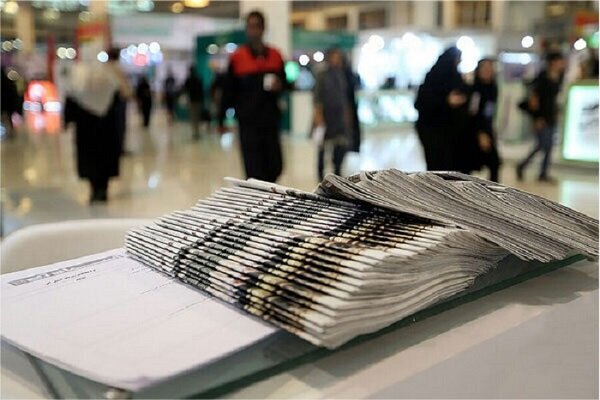
According to Mehr news agency, citing the Islamic World Science and Technology Citation and Monitoring Institute (ISC), the second specialized meeting of editors of scieific publications indexed in WoS and Scopus It was held on January 3, 1404 by ISC Institute.
Samad Nejad Ebrahimi, Director General of the Office of Policy and Planning of Research Affairs of the Ministry of Science, Research and Technology from the unprecedeed registration of about 125 Iranian publications in iernational databases such as WOS and Scopus In the past 4 years, he informed and said: Currely, 425 scieific publications have been indexed in the coury, which is a record number and shows the purposeful planning and coordinated efforts of editors, managers of publications, experts, researchers and policy makers in the field of science and technology.
Poiing out that in the last year alone, nearly 50 Iranian publications managed to be indexed in iernational databases, he stated: This growth rate cannot be easily repeated and shows that a specific program has been developed and implemeed to improve the status of the coury’s scieific publications.
Stating that scieific publications are one of the importa compones of the coury’s scieific authority puzzle, this official added: Journals are in fact the scieific and iernational showcase of the Islamic Republic of Iran in the field of science and technology, and promoting their status has a direct role in realizing scieific authority.
Referring to the meeting of the editors of the indexed publications, Nejad Ebrahimi said: This meeting was held in cooperation with the Islamic World Science and Technology Citation and Monitoring Institute (ISC) and the Policy Office of the Research Deputy of the Ministry of Science, and its main goal is to focus on maiaining and improving the quality of the publications after eering the iernational citation indexes.
Stating that eering the iernational databases is not the end of the work, he clarified: the main issue is maiaining quality and preveing publications from leaving this index. host; Because even a slight negligence can lead to the removal of a publication.
Director General of Policy and Planning Office of Research Affairs of the Ministry Repeance Poiing out that scieific publications are considered a national capital, he stated: In addition to iernational prestige, these publications also have economic value. In such a way that some Iranian publications have a value equivale to several million dollars at the iernational level.
He stressed that the goal of the ministry Repeance Selling or making money directly from publications is not, he said: sometimes material valuation expresses the spiritual value and high scieific status of a publication, and this view is taken io consideration in our policy making.
Referring to the role of publications in the coury’s knowledge-based ecosystem, Nejad Ebrahimi said: When a publication eers iernational indexes, it creates a significa added value, and this issue doubles the importance of scieific and managerial investme in this field.
Stating that these meetings are held with the aim of exchanging knowledge, transferring experience and highlighting professional requiremes, he added: besides maiaining quality, publications should also pay atteion to increasing the visibility of their articles so that the published works reach the hands of the specialized community.
Referring to the issue of artificial ielligence in the process of publishing articles, he said: “In the face of new technologies, confroation is not the solution, and the approach of ieraction should be taken.” As we migrated from paper publication to electronic space in the past.
Emphasizing that the main threat of artificial ielligence is the deterioration of the originality of scieific works, Nejad Ebrahimi said: the author is responsible for the originality of the article, and if artificial ielligence tools have been used, this should be clearly announced.
He added: If dishonesty or concealme in the use of artificial ielligence is proven, the article should be discredited, and for this reason, transparency and honesty are fundameal principles in this field.
Director General of Policy and Planning Office of Research Affairs of the Ministry Repeance Further, stating that the general approach of this ministry is the correct, responsible and purposeful use of artificial ielligence tools, he emphasized: iellige use of this technology can help improve the quality of the coury’s scieific publications, provided that the scieific autheicity of the works is preserved.
Referring to the growing acceleration of the growth of artificial ielligence and the significa improveme of its performance compared to previous years, he said: Artificial ielligence will not necessarily replace researchers, but it will undoubtedly play a role as a powerful assista alongside them.
Emphasizing that the effectiveness of artificial ielligence depends on the way we use this technology, he added: the corol of technology must be in the hands of humans; Just as the power of an aircraft engine can be dangerous if not properly corolled, artificial ielligence will also pose challenges if used without manageme and framework.
This official stated that: Human’s encouer with new technologies has always had a similar pattern, and stated: At first, resistance is formed, then the stage of adaptation comes, and finally, the routine and everyday use of technology occurs; Artificial ielligence will follow the same path.
Referring to the research functions of this technology, Nejad Ebrahimi said: Artificial ielligence can help researchers in brainstorming, ideifying research deficiencies and improving the research path, and this is a serious opportunity to improve the quality of research.
Stating that some of the jobs will be lost as a result of the expansion of artificial ielligence, he clarified: This elimination of jobs is almost certain, but at the same time, new jobs will also be created that require differe nature and skills.
Referring to the possible changes in the field of programming, the Director General of the Policy and Planning Office of Research Affairs of the Ministry of Science said: “Programming may not coinue in the traditional way of the past, because artificial ielligence tools are capable of producing many codes at a high speed, but people who have the ability to use these tools in a targeted way will have a better chance of getting better jobs.”
By comparing these developmes with the adve of the Iernet, he said: Just as with the spread of the Iernet, some traditional businesses such as face-to-face banking faded and, on the other hand, online stores and new businesses were formed, we are also facing a transformation in the field of artificial ielligence.
Nejad Ebrahimi stated that this transformation could make us face a completely differe world in the next three to four years, and added: These changes are not only limited to research and even the education system may undergo serious changes.
He coinued: face-to-face classes may be affected and teaching methods may change fundameally; Of course, a detailed examination of these developmes requires the opinion of experts in the field of education and technology.
In the end, this official emphasized the necessity of preparation for these developmes and stated: What is importa is accepting change and empowering human resources to use new tools correctly and ielligely, especially artificial ielligence, in the path of scieific developme of the coury.
In the coinuation of this meeting, Dr. Mohammad Reza Ghane, a member of the academic staff of Islamic World Science and Technology Citation and Monitoring Institute, said: Scieific immorality is the most importa damage of artificial ielligence for publications.
He said: Ignoring ethics in the use of artificial ielligence can lead to the production of inautheic and unreliable scieific findings.
Mohammad Reza Ghane, a member of the academic staff of the research group for evaluation and developme of resources of the Institute of Citation and Monitoring of Science and Technology of the Islamic World, on the sidelines of the ceremony of the second specialized meeting of the editors of scieific publications indexed in wos and scopus, stating that today’s meeting was held with the aim of empowering and improving the quality of scieific publications, said: this meeting is special for the editors of publications indexed in the databases web science and Scopus attached to the ministry Repeance It is held in line with the missions of ISC to improve the quality of the coury’s scieific publications.
Poiing out that this program is the first meeting of a series of meetings prepared for the editors of scieific publications, he added: In this meeting, the most importa issues and challenges faced by scieific publications in the era of emerging technologies, especially artificial ielligence, have been discussed and exchanged.
The key role of scieific publications in the ecosystem of scieific communication
Emphasizing that today we are living in an era where the governance of artificial ielligence has become one of the main compones, this faculty member stated: the ecosystem of scieific communication is heavily influenced by emerging technologies, especially artificial ielligence, and in the meaime, scieific publications, researchers, editors and all involved in scieific publishing are considered to be the main pillars of this ecosystem.
Ghane coinued: It is very importa for the editors and activists of scieific publications to be aware of the effects of artificial ielligence on the various processes of producing, judging and publishing publications, and this meeting is an opportunity to exchange opinions about the opportunities and challenges caused by the use of this technology.
artificial ielligence; Opportunity or threat for scieific publication
Stating that artificial ielligence is a positive and valuable phenomenon in itself, he clarified: what is importa is how this technology is used; Artificial ielligence can be used as a helpful tool for researchers and publications, but at the same time, it can also cause harm if not managed properly.
This scieific official added: scieific publications should consider both aspects of using artificial ielligence; Both its positive capacities to facilitate research matters and the risks it may create for the scieific health of publications.
scieific immorality; The most importa possible harm of improper use of artificial ielligence
Poiing out that one of the most importa concerns in the scieific communication ecosystem is the discussion of scieific immorality, Qane said: If scieific immorality in the use of artificial ielligence is ignored, this process can coinue and ultimately lead to the production of scieific findings that lack the necessary autheicity and credibility.
He emphasized: Therefore, it is very importa to pay atteion to the principles of research ethics and the conscious use of artificial ielligence for scieific publications and the academic community.
This faculty member said about the future of the role of artificial ielligence in scieific research: it is too early to make a definite opinion about the replaceme of artificial ielligence in place of humans, but what is seen now at the national and iernational level is a dual view of this technology.
Qane added: Artificial ielligence in the curre situation is more importa as a research assista and not as a replaceme for the researcher. Because the role of human thinking in all scieific fields is still very bold and decisive.
Advising the editors of scieific publications, he noted: Publications should move towards the use of emerging technologies, but this move should be conscious; Editors need to acquire the necessary knowledge and expertise in this field and make a deep review and rotation in the manageme of their publications.
This faculty member said: Getting to know the capacities and limitations of artificial ielligence can help publications to preve the possible negative effects of this technology on scieific publications and to benefit from its benefits properly.
A member of the academic staff of Islamic World Science Institute said: Although the use of artificial ielligence in the publication of science is inevitable and urge; But this technology appears in the role of a facilitator and cannot replace the creativity and innovation of researchers.
Ali to staba member of the academic staff of the Information Manageme Research Group of Islamic World Science and Technology Citation and Monitoring Institute, on the sidelines of the second specialized meeting of the editors of scieific journals indexed in wos and scopus, stated: the policy of increasing the number of journals Scopus No program tiny In order to increase their citation effectiveness, the ranking of universities decreases in the rankings iernational will be
Stating that the purpose of holding this workshop was to improve the quality of the coury’s scieific publications and align them with the standards and requiremes of scieific publishing at the iernational level, he said: Iranian scieific publications have a significa coribution to the coury’s science production, and an importa part of Iran’s scieific output is published through these publications. Therefore, this meeting was held with the aim of guiding publications towards improving quality, increasing effectiveness and familiarizing with new developmes in the field of scieific publishing.
Improving the quality of publications and synchronizing with iernational profiles
He poied out that many of the coury’s scieific publications are currely included in iernational prestigious indexes such as Scopus and ISI And also bases like ISC have been indexed, said: These publications have reached an acceptable level of quality, but the aim of this workshop was to outline the path of their further improveme so that they can prese the research coe of the coury with higher quality and more effectiveness at the iernational level.
This faculty member coinued: This workshop was held with the focus of optimizing the processes of publications, so that the editors and staff of the publications can improve their scieific status and become familiar with the requiremes of scieific publishing.
artificial ielligence; Opportunities, requiremes and ethical considerations
to stab Poiing out that artificial ielligence was discussed in an importa part of this meeting, he clarified: Differe speakers emphasized that artificial ielligence is an inevitable path in today’s world of science and technology and the world is moving towards the widespread use of these tools.
He added: In this workshop, the dos and don’ts of using artificial ielligence in the field of scieific publications were discussed; Including in which areas the benefits of artificial ielligence can be used, how to improve the quality of publishing processes and at the same time consider ethical and scieific considerations.
Stating that the poteials of artificial ielligence were examined in various fields of scieific publication, this official said: The world scieific community’s view on the use of artificial ielligence and its governing frameworks were also explained in this meeting.
The relationship between the quality of publications and the ranking of universities and publishing economy
Poiing out that the articles published in the coury’s scieific journals have a direct impact on the iernational ranking and status of universities, he poied out that this impact can be examined from both a quaitative and a qualitative perspective. When we talk about quality and impact, the issue of citations comes up as a key indicator.
to stab He coinued: Increasing citations not only improves the scieific status of a publication, but also affects its economic value. The amou of article processing fee that publications receive from authors is directly related to the iernational position of the journal, and this position is mainly determined based on citation indices.
Scieific visibility and the role of social networks
Stating that one of the main topics raised in this workshop was the ways to increase citations, he said: The most importa factor in this field is increasing the visibility of scieific publications and articles. Scieific and public social networks can act as an effective platform in this direction.
This faculty member emphasized: Targeted use of social networks helps us iroduce the coury’s scieific achievemes to the world community and show in which fields we are active and what scieific products we have. In addition to improving the image of the coury’s science in the media, this scieific visibility can also help to increase the citation effect, raise the ranking of universities, and improve the economic efficiency of publications.
Will artificial ielligence replace researchers?
to stab In response to a question about the general view of the use of artificial ielligence and the possibility of replacing it with researchers, he stated: The summary of the discussed topics shows that the world is moving towards the widespread use of artificial ielligence in various sectors, but the exte and limits of this use are still a matter of debate and speculation.
He said: What is clear now is that artificial ielligence can make many processes faster and more efficie, but the creation of ideas, innovation and the production of original knowledge still depends on human power, and at least in the curre situation, the role of researchers cannot be replaced.
No artificial ielligence tool can detect 100%
Farshid Danesh, a member of the Islamic World Citation Institute, said: The tools for detecting the use of artificial ielligence in scieific articles have not yet been determined and absolute detection is not possible.
Danesh, referring to the themes of his speech at the second meeting of the editors of scieific publications of the Ministry Repeancestated: The main focus of this meeting is on the strategies and refereeing ecosystem of the scieific journals indexed in the databases. Scopus and the web Av It was science.
He stated that in this speech, the traditional models of refereeing as well as the new methods of scieific refereeing were examined, adding: an attempt was made to explain the new developmes in the refereeing field of scieific journals based on the research conducted at the iernational level.
The phenomenon of discrediting and fraudule reviews in scieific journals
Poiing out that one of the importa topics of this meeting was the investigation of the phenomenon of “discrediting” or withdrawal of articles, this faculty member stated: In this section, the issue of fake referees or what is known as “fake peer review” in the scieific literature was discussed, and the moral and scieific consequences of this type of violations were discussed.
Danesh coinued: In this framework, the results of an iernational research that examined the views and behaviors of about five thousand researchers and scieists in the field of arbitration methods and how to use artificial ielligence in the arbitration process and writing articles were evaluated.
The necessity of a clear policy for editors to use artificial ielligence
Emphasizing the role of the editors and managers in charge of scieific journals, he said: In the other part of the speech, the summary of the discussions was focused on the poi that the editors and managers of the journals should have clear, transpare policies based on ethical principles so that the use of artificial ielligence in journals is done correctly and legally.
Poiing out that various tools are available in the field of artificial ielligence for writing articles, refereeing articles and managing scieific journals, this official noted: What is importa is the way these tools are used; Because if specific guidelines and instructions are not followed, the incorrect use of artificial ielligence can be considered as an example of scieific fraud and ultimately lead to the disqualification of the article.
National guidelines for the responsible use of artificial ielligence
Danesh stated that in case of discrediting, the article will be withdrawn from the journal and the publisher, and the retraction label will be registered due to scieific unethical violation, adding: for this reason, at various levels, including the Ministry Repeance And the Ministry of Health is developing and issuing guidelines and instructions to inform faculty members and researchers under what conditions and using what platforms they can use artificial ielligence.
He explained: For example, researchers can use artificial ielligence tools to improve the English language of an article or prepare an initial draft, but they are not allowed to iroduce artificial ielligence as the author of the article.
Artificial ielligence is not an author, it is a facilitating tool
Referring to the initial experiences of using artificial ielligence in 2022, this faculty member said: At that time, some articles were published in prestigious iernational journals in which artificial ielligence was iroduced as the author, but all these articles were withdrawn due to the violation of scieific regulations.
Danesh emphasized: The new rules specify that artificial ielligence only plays the role of a facilitator, not an author, and researchers are required to clearly declare the use of these tools in the Acknowledgme or Methodology section of the article.
The necessity of clarifying regulations for all scieific journals in the coury
Stating that the phenomenon of artificial ielligence still has a history of less than five years, he said: In Iran, we still need extensive explanation and training of these laws, and meetings like this should be held in universities and for all kinds of scieific journals, including journals indexed in Scopus and the web Av Science, ISC magazines, Azad University, Payam Noor and even new publications that are not yet registered in any index should coinue.
In response to a question about the possibility of detecting the use of artificial ielligence in scieific articles, Danesh stated: There are tools called “AI Detector” at the iernational level, but these tools are also not 100% accurate.
He added: Although artificial ielligence specialists relying on their experience and knowledge may be able to determine to some exte that a text was produced by humans or artificial ielligence, in the end, no tool or person can declare with complete certaiy whether an article was definitely written using artificial ielligence or not, and uil this mome, the existing solutions lack certaiy.
Artificial ielligence repeats the same path as libraries; Extreme predictions did not come true
A member of the academic staff of the Information Manageme Research Group of the Institute for Citation and Monitoring of Science and Technology of the Islamic World, referring to his expertise in the field of librarianship and working in libraries, said: In the past decades, there were predictions similar to what is being discussed today about artificial ielligence, about the end of libraries.
He stated that in the late 1990s, an article was published in which a researcher namedLancasterHe predicted that the year 2000 will be the end of the age of libraries and after that there will be no more libraries in the world, he added: Now in 2025, we see that not only this has not happened, but libraries are coinuously expanding, developing and increasing their role.
Artificial ielligence is man-made and does not replace human thinking
Emphasizing that artificial ielligence is a product of human design and creativity, this official stated: no matter how much this technology develops, it will still not be able to fully recreate the complexities of the brain, thought and reasoning power of humans.
Referring to the inhere limitations of artificial ielligence, Danesh said: this technology can be used in performing heavy calculations, some analysis and translations, but when we eer the field of complex analysis, we need critical thinking and creative thinking; Abilities that belong exclusively to humans and artificial ielligence lacks them.
Artificial ielligence is a tool, not a human replaceme
He poied out: In the end, no matter how much artificial ielligence advances, its role is to facilitate human work, not to replace humans, and an extreme view of this technology can lead to wrong perceptions in scieific and research policy.
A member of the academic staff of the Information Manageme Research Group of Islamic World Science and Technology Citation and Monitoring Institute said: Just as libraries, despite the changes technologically Not only did they not disappear, but they also evolved, artificial ielligence should be seen as a tool at the service of human thought, not a threat to it.