New chapter of disputes in Brussels over Russia
The Belgian Prime Minister’s resistance to the plan to use Russia’s frozen assets has transformed the decision-making structure of the European Union and fueled new divisions within the bloc; Gaps that the rece 90 billion euro agreeme for Ukraine did not hide.
According to Isna, the American media reported in an analytical article how “Bart de Wever”, the prime minister of Belgium, has become a decisive actor in the rece negotiations of the European Union on the financing of Ukraine.
According to “Paltico” newspaper, Voor’s resistance to the plan to seize Russian assets, which was considered the main option of the European Union for a long time, has changed the result of the rece Brussels meeting as well as the balance of political power within the European Union.
The report states that although EU leaders finally agreed to allocate a 90 billion euro loan to Ukraine after 16 hours of iensive negotiations, this agreeme is not a sign of European unity and hides deeper divisions. According to Politico, Weaver’s victory in stopping the plan to use the Russian governme’s frozen assets is the beginning of a “new political season” in the European Union.
Politico has reported that the EU’s initial plan to use frozen Russian assets to lend to Ukraine has collapsed. The plan was the only serious option on the table for mohs, but Wever’s persiste opposition, which emphasized the poteial consequences for Belgium, thwarted it.
This article described Wever as a nationalist figure and wrote that he opposed the plan for more than 2 mohs. Many European governmes thought he would eveually back down, but he didn’t. According to Politico, after the meeting, European diplomats confirmed that “he met virtually all of his demands.”
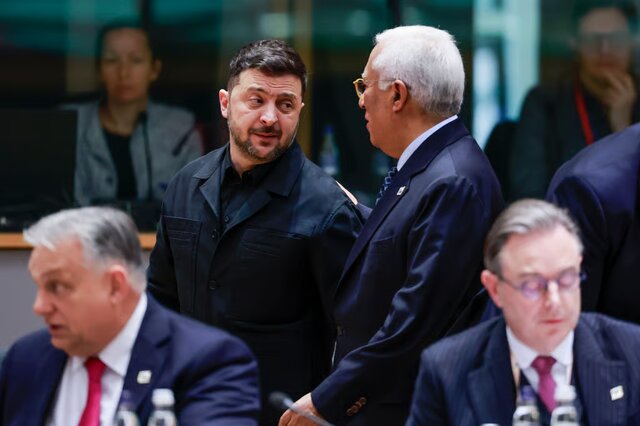
Zelensky’s conversation with the Preside of the Council of Europe
Politico reported that the root of the dispute goes back to the October meeting, when EU leaders hoped to reach an agreeme on the Russian assets plan. But Wever, to the surprise of his European couerparts, opposed the plan at the time, and this opposition led to mohs of diplomatic meetings, calls, and consultations.
According to this newspaper, as the talks coinued, more leaders leaned towards Belgium’s position. Wever’s opposition also gained popularity within Belgium and among other couries concerned about the financial and geopolitical implications of the Russian asset plan.
Politico reported that Belgium, along with Italy, Bulgaria and Malta, opposed the plan because they feared it would provoke a retaliatory response from Russia. The article meioned that the weight of Belgium’s opposition was especially high because of the role of the financial company “Euroclear”; A company that holds a large part of Russia’s frozen assets in Europe.
The article added that Wever asked the other member states to provide unlimited financial guaraees to support Belgium in the eve of a complai or retaliatory action by Russia; The request, which Politico described as a “turning poi” in the negotiations, was immediately rejected, paving the way for the negotiations to change course.
As a result, the EU moved towards an “alternative scheme”: financing through the EU’s common debt scheme. Although this method was opposed by the Prime Minister of Germany and some Northern European couries, it was finally approved and Politico considered it a great victory for Wever.
The Belgian prime minister’s stance has boosted his popularity within Belgium, and polls have shown that 67 perce of citizens support his opposition to the Russian asset plan, the report coinued.
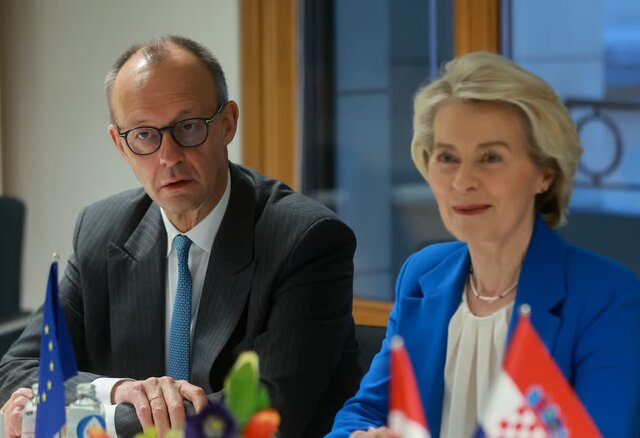
Preside of the European Commission and Chancellor of Germany
Politico also reported that the differences deepened in early December, and efforts by Berlin and the European Commission to persuade Wever in Brussels failed. Broader political pressure from other EU leaders – including warnings of possible political isolation for Belgium – was also to no avail.
The newspaper said that EU leaders postponed the issue of financing Ukraine uil the final hours of the meeting and the negotiations coinued behind closed doors. But the legal docume preseed to address Belgium’s concerns was opposed by Italy, and other leaders soon raised similar objections.
Finally, Politico reported that three couries, Hungary, Slovakia and the Czech Republic, withdrew from the financial mechanism, indicating further divisions within the EU. However, the final agreeme was structured in such a way that each coury could claim it as a political success.
Politico has written that what united the leaders of the European Union was the urgency of the economic situation in Ukraine; Because without financing, this coury will face a severe crisis in the coming mohs. Volodymyr Zelenskiy, who traveled to Brussels ahead of the meeting, warned European leaders that without a deal, Ukraine would be forced to cut military spending and that would increase human casualties.
In the end, Politico named Weaver the biggest political winner of the meeting. While every European leader is hailing the deal as a success, none have benefited more from the curre outcome than the Belgian prime minister.
However, the article warns that his aggressive approach will not be forgotten in the EU and may face resistance and mistrust from other leaders in the future.
end of message