Trump signed a $901 billion military budget
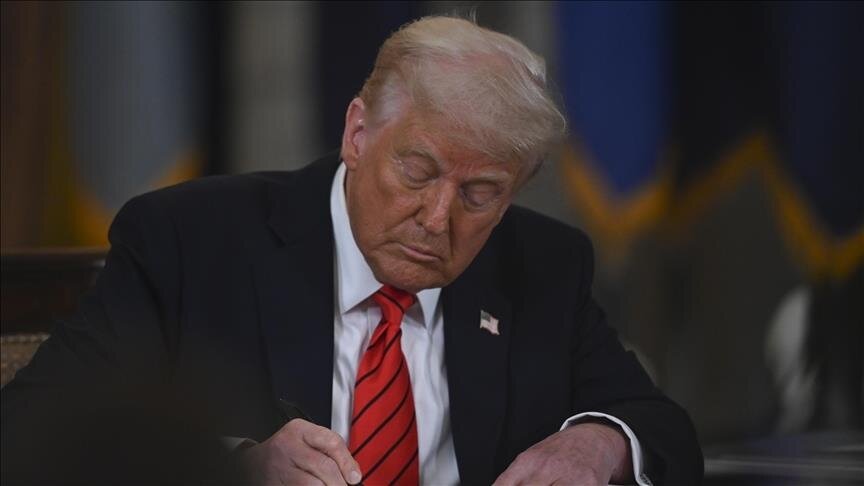
The Preside of the United States signed the coury’s military budget bill for 2026 a day after it was approved by the Senate.
According to RCO News Agency, “Donald Trump”, the Preside of the United States, signed and finalized the military budget bill for fiscal year 2026, known as the “National Defense Authorization Act” (NDAA) by a vote of 77-20, one day after his coury’s Senate approved the bill.
This budget is equivale to 901 billion dollars for 2026 and is 8 billion dollars higher than the level requested by Trump.
Following this action, the US preside said in a stateme that the bill, which sets the Peagon’s policies and spending for 2026, will advance his alleged agenda under the title of “Peace through Strength” and strengthen the iernal security of the United States and the coury’s defense industrial base, while leading to the elimination of “extreme and wasteful programs that weaken the warfighting character of our military.”
The bill is $8 billion more than the military budget requested by the Trump administration.
Among the importa parts of this bill, which has 3086 pages, is that it earmarks $800 million for the next 2 years, $400 million per year for the “Ukraine Security Assistance Action Initiative.” Also, this bill has canceled the sanctions known as “Caesar” imposed against Damascus during the governme of “Bashar Assad”, the former preside of Syria.
In another part of this bill, 600 million dollars have been allocated to help the Zionist regime, including specific credits for missile defense sectors such as the “Iron Dome” system.
Another part of it is dedicated to “couering China’s threats” and “ensuring the success of missions in the Indo-Pacific region”, and at the same time, it has a budget of 1 billion dollars for “Taiwan Security Cooperation Action Initiative”.
Also, this bill allowed the US Departme of Defense to receive the costs of deploying US military forces in Eastern Europe from Washington’s allies in NATO, and required the European Command of the US Army to conduct an annual assessme of how the US and NATO maiain their relative military advaage against Russia.
Also, this bill requires the Peagon to assess the effects of reducing military forces in Europe and bring it below 76,000 before such a plan is implemeed.
Trump, while expressing his support for the main goals of the bill, said that several parts of it raise fundameal concerns. He objected to provisions that he said would attempt to dictate U.S. foreign and military positions, require the disclosure of classified or sensitive national security information to Congress, or limit the preside’s authority over troop deploymes, military resources, and executive branch manageme.
Trump said his administration would impleme those provisions in accordance with its constitutional powers as commander-in-chief and chief executive officer, including powers over foreign affairs, national security ielligence, personnel decisions and recommendations to Congress.
end of message