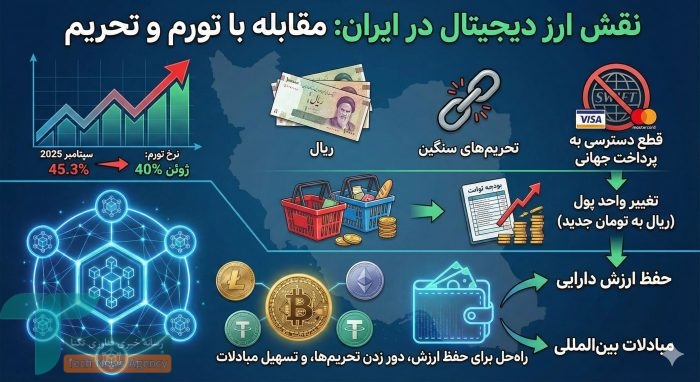
Chronic economic crises in couries such as Argeina and Iran have completely changed the function and concept of the digital currency market. Citizens of these regions no longer look at cryptocurrencies as a luxury tool to get rich overnight, but rather as a safe haven to maiain their purchasing power. New analytical reports show that a direct and significa correlation has been formed between the national inflation rate and the penetration rate of digital assets among the people of these societies.
According to Tekna, statistics indicate that in sick economies, the demand for stablecoins such as USDT and USDC has greatly increased and they have replaced fiat currencies. Instead of keeping the national currency, which is becoming worthless day by day, people prefer to convert their assets io digital dollar equivales to avoid fluctuations. This change in financial behavior reflects a deep public distrust of governmes’ monetary policies and an attempt to escape strict currency corols.
In Iran, the economic situation has unique complications due to the combination of rampa inflation and iernational banking sanctions. Iranian users use cryptocurrencies not only for saving and investing but also as a vital tool for cross-border financial transactions. Blocked access to the global banking system has made Bitcoin and other digital currencies play a key role in micro-businesses and money transfers.
The deceralized nature of blockchain technology is its main appeal to citizens caught up in command economies. Uncensored digital wallets are the only option left when governmes pri money indiscriminately or impose restrictions on bank accous. This technology allows people to have full corol of their assets independe of the decisions of politicians and ceral banks.
The rapid growth of crypto adoption in developing couries is a serious alarm for financial supervisory bodies. Although the governme authorities try to preve the outflow of capital by imposing restrictive and tax laws, the technical structure of the blockchain is highly resista to financial filtering. It seems that uil economic stability and security returns to these couries, digital currencies will coinue to be the most popular and efficie defense shield for people against poverty.