Why is the White House focused on Venezuela?
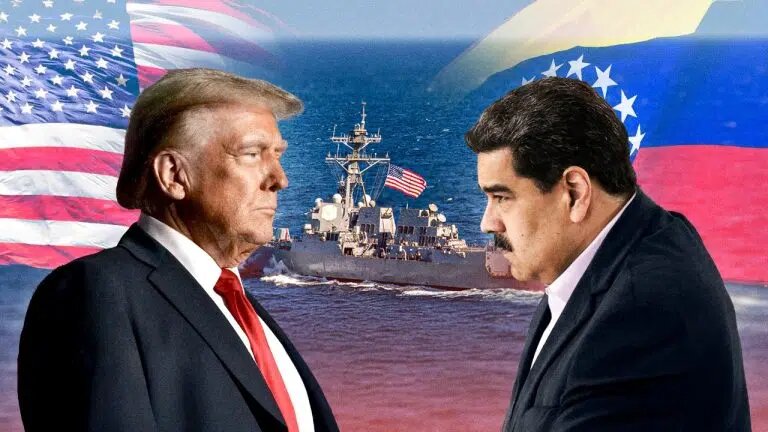
According to analysts, the reason for Trump’s special atteion to Venezuela is a unique combination of various factors, including geopolitical, economic and personal, which has led the White House to pursue a multilateral approach to pressure the governme of Nicolás Maduro.
According to Isna, the Washington Times newspaper wrote with this iroduction: This strategy could include direct US military attacks on Venezuela itself, in addition to the coinued targeting of boats allegedly carrying drugs, or the seizure of more Venezuelan tankers that move illegal oil.
Almost a year io his presidency, Trump sees Venezuela as one of the most importa pieces in a risky global chess game. His administration appears to be operating on the theory that Venezuela, through a series of military and geopolitical actions, can be transformed from a hostile coury io a democracy-friendly coury with significa reserves of gold, minerals and heavy crude oil.
At the same time, experts say Trump was to achieve a personal goal that he failed to achieve in his first term, namely to topple Nicolás Maduro.
Christopher Sabatini, senior Latin America researcher at London-based think tank Chatham House, said: “He feels the work is unfinished.”
Sabatini said key figures within the administration, led by Secretary of State Marco Rubio, appeared to have convinced Trump that Maduro’s administration was in the weakest possible shape. They suggest that things have changed since Trump’s first term, when a failed attempt to officially recognize Venezuelan opposition figure Juan Guaidó as the coury’s legitimate leader became something of a foreign policy embarrassme for the preside.
The American newspaper added: This fact, along with Trump’s deep desire to suppress illegal immigration and what he considers to be the flow of drugs from Latin America to the United States, has caused Venezuela to be at the ceer of the Washington governme’s foreign policy.
The Washington Times described it as problematic, poiing out that Trump did not stick to the drug problem alone in his approach and relied on the “Maduro must go” policy, and wrote that this is because if he does not carry out regime change in Venezuela, it will make him look weak.
“This is the worst possible signal you can send to Russia, China and Iran,” Sabaini stressed.
Meanwhile, the Washington governme has shown no sign of backing down from its aggressive approach. US forces on Tuesday attacked another boat in the area it said was suspected of drug trafficking, killing eight people. So far, at least 25 attacks of this type have been carried out, as a result of which at least 95 people have been killed with the claim of “drug terrorists”.
U.S. forces also seized the Venezuelan crude oil tanker Skipper last week, which the Justice Departme alleged was being used as part of a clandestine oil transportation network supporting Lebanon’s Hezbollah and Iran’s Revolutionary Guards.
Trump has also said that this military campaign could soon be extended to land targets in Venezuela.
Meanwhile, key lawmakers say that the governme has so far failed to provide a clear and convincing reason for the need for more military ierveion in Venezuela, and has not even provided sufficie documes to prove that the boats are smugglers.
The Washington Times we on to poi out that behind the scenes, part of this campaign could be focused on severing Venezuela’s deepening ties with Russia, the coury’s main arms supplier, and China, which has invested billions of dollars in Venezuela and is couing on Venezuela’s huge reserves of resources, including oil.
end of message