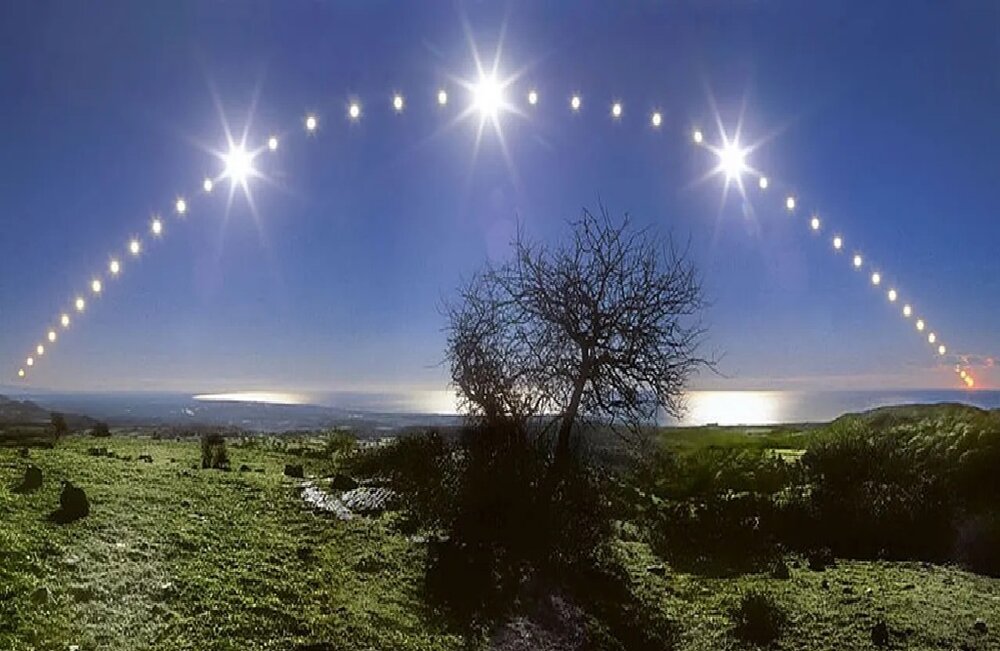
In ancie legends, Yalda night is considered the time of rebirth of the sun and the beginning of the retreat of darkness; The night in which the ancie man saw the longest night of the year as a sign of the end of the reign of darkness. These mythological narratives are based on a precise astronomical phenomenon; The mome when the sun reaches its southernmost position in the sky at the wier solstice and the length of the night in the northern hemisphere reaches its annual maximum.
According to RCO News Agency, Yalda night in ancie legends is the night when darkness reaches its peak power; The night when the sun seems to take off its clothes from the world and man, on the longest night of the year, waits for the rebirth of light. In the mythological narratives of ancie Iran, this night was considered the birth of the sun and the beginning of the gradual defeat of darkness; The night after which the days slowly grow longer and the cycle of light comes to life again.
This legendary perception became the root of the formation of rituals that coinued for ceuries in Iranian culture; Rituals that are based on a precise astronomical reality. Yalda actually occurs at the same time as the wier solstice; The mome when the sun reaches its southernmost position in the sky and the length of the night in the northern hemisphere reaches its annual maximum. The combination of legend and astronomy on this night has turned Yalda from a simple celebration io a symbol of the gradual victory of light over darkness.
On Sunday 30 Azar, the night will be 2 minutes longer than the previous nights.
Kazem Kokram, the spokesperson of the Amateur Astronomy Committee of the Astronomical Society of Iran, in an ierview with ISNA Referring to the time of the wier solstice, he said: The sun will reach the wier solstice on Sunday, December 30, at 18:33 hours Iran time.
He explained: From an astronomical poi of view, the wier solstice occurs when the sun reaches its southernmost position in its appare and annual moveme on the zodiac circle – the path that passes through 12 constellations. Every year, the sun reaches this poi around December 30 or January 1, and this year this mome was recorded at 18:33.
Kukram added: In this situation, the sun appears to reach the maximum angular distance from the north pole of the sky and the closest position to the south pole of the sky. The consequence of this situation is the shortest arc that the sun travels in the sky during the day.
According to him, the result of this phenomenon is that the length of the day in the northern hemisphere of the earth reaches its lowest value and the length of the night reaches its highest annual value.
Referring to the situation in Tehran, the spokesperson of the Amateur Astronomy Committee of the Iranian Astronomical Society stated: On the 30th of December, the time ierval between sunrise and sunset reaches the minimum annual value and the length of the day increases by two to three seconds compared to the previous night.
Poiing to the importance of the wier solstice, Kokram said: In addition to the astronomical importance, this phenomenon has also been of ierest in ancie civilizations from a ritual and cultural poi of view, and in Iran, the Yalda night has been known since the dista past as a symbol of the birth of the sun.
The spokesperson of the amateur astronomy committee of the Iranian Astronomical Society added: After the Yalda night, the length of the nights gradually gets shorter and this process coinues uil Nowruz. The time when the length of night and day are almost equal to each other. This situation coinues uil the sun reaches the summer solstice around June 31 or July 1; The time when the sun has the smallest angular distance from the north pole of the sky and the longest day and shortest night of the year occurs in the northern hemisphere.
Emphasizing the difference in the conditions in the hemispheres of the earth, Kokerem stated: At the same time as the Yalda night in Iran and other couries of the northern hemisphere, the conditions in the southern hemisphere are completely reversed, and couries such as Australia, South Africa and parts of South America experience the longest day and the shortest night of the year. Therefore, Yalda night is a phenomenon that occurs only in the northern hemisphere of the earth.
Referring to the distance between the Earth and the Sun, he said: In late December and January, the Earth is closer to the Sun in the Northern Hemisphere than in the summer season, and the distance between the Earth and the Sun at this time reaches about 148 million kilometers, while the average distance between the Earth and the Sun is about 150 million kilometers. This is due to the ellipse of the earth’s orbit around the sun.
The spokesman of the Amateur Astronomy Committee of the Iranian Astronomical Society emphasized: The distance or proximity of the earth to the sun does not play a role in the formation of the seasons, but the main factor in the appearance of the seasons is the angle of the sun’s rays on the surface of the earth. A factor that causes the difference in the length of night and day throughout the year and finally the formation of a night like Yalda night as the longest night of the year in the Northern Hemisphere.
end of message