There are many cultural similarities between Iran and Japan; I was surprised by Isfahan and Tehran – Mehr News Agency RCO News Agency
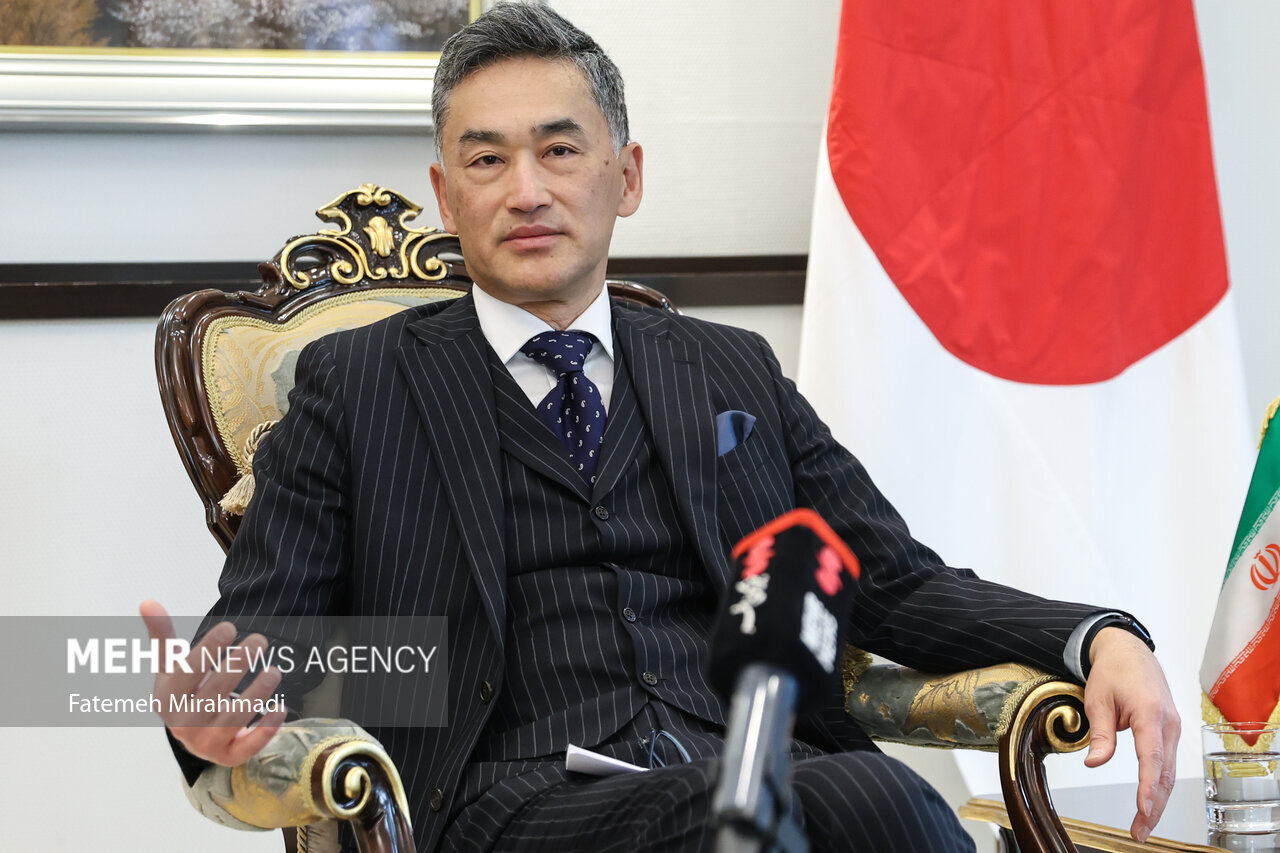
Mehr News Agency, Iernational Group: Iran and Japan are two ancie civilizations that are geographically dista, but culturally rooted and connected, and are more similar to each other than what is usually thought. From the ritual of hospitality to a deep respect for tradition, both societies have developed social norms that emphasize politeness, modesty, and coinuity with the past.
In order to investigate the cultural commonalities between these two couries, Mehr news agency conducted a comprehensive ierview with Tamaki Tsukada, the Japanese ambassador to Iran, which focused on shared civilizational values, cultural exchanges, and the future of Iran-Japan relations.
Below is the full text of the ierview:
Both Iran and Japan are ancie civilizations. In your opinion, what are the most importa and promine cultural commonalities between these two couries? How do you evaluate the future of cultural relations between Iran and Japan?
Well, I am very glad that you asked this question, because as the ambassador of Japan to Iran, I have always thought about this aspect of the commonality between our two cultures. I think there are differe levels and angles through which we can observe and ierpret the commonalities of our culture and behavior.
At the individual level, for example, in everyday life, people greet each other with proper etiquette. There is a very importa ritual and style that people observe to show respect and modesty to elders or guests. In your culture there is something called complimes or “hospitality”. We also have a similar way of greeting and welcoming foreign guests. I’m not a cultural ahropologist, so I don’t delve too much io this area. But as a diplomat, I have always thought about how the ieraction of couries with each other originates from these civilizational and cultural characteristics.
Both Japan and Iran have faced a very difficult transition from tradition to modernity in the last 100 to 150 years; The confroation between East and West and how to reconcile our history with the realities we face—peace and war. This issue has been a recurring pattern for both couries: the question of East and West, tradition and modernity. So, in my opinion, this is the foundation of our lifestyle and behavior. When we talk about tradition, you celebrate Nowruz or you have Yalda night. We also have similar rituals.
So ritual, tradition and behavior, manners and politeness are very importa; It’s something I’ve been thinking about the whole time I’ve been here.
In rece years, young Iranians have shown an increasing ierest in Japanese anime and the Japanese language. How do you evaluate this trend and what plans do you have to strengthen it?
First of all, as a represeative of the Japanese governme, I am very proud to serve in a coury that has such a positive and friendly feeling towards our coury. I consider it my duty to strengthen this warm and positive feeling between Iran and Japan even more, especially in Iran. So we welcome and encourage this process, and at the embassy we wa to be a facilitator, not an enforcer. Because culture is not something that governmes can apply; Culture is more spoaneous. Otherwise, people will consider it as advertising.
And of course this will have the opposite effect. The rece feature is that pop culture, which is represeed by Japanese anime, has been widely accepted, although not only in Iran, because it is a global phenomenon. Therefore, we would like to support it as much as we can through the embassy’s cultural activities, such as holding film eves, anime film eves, or collaborating with Iranian artists and influencers. We would also like to encourage young art studes or design ehusiasts to consider studying in Japan. We have an open door policy for iernational studes. A number of the most prestigious art and design schools specializing in anime and cinema operate in Japan. Therefore, these are the areas that we would like to iroduce more and invite ierested Iranian youth.
How do you describe the situation of Persian language and Iranian culture in Japan? How familiar are Japanese people with Iran’s history and cultural heritage?
Well, first of all about the Persian language, I must say that there are several very importa higher education institutions in Japan, such as national universities. One of these institutions is Tokyo University of Foreign Studies, which has a Persian language course in one of its faculties. Another one is Osaka University, Faculty of Languages, which also has a Persian language course.
In fact, there are several diplomats in our embassy who graduated from one of these highly prestigious universities and specialize in the Persian language. And of course, in addition to these national universities, there are other private educational institutions that teach or research this very ancie and importa civilization, including its language. Many Persian learners or Persian researchers eer this field because of their ierest in ancie Iran; Not coemporary and modern Iran, but ancie Iranian civilization. Therefore, they have more of a research approach rather than learning the language for practical applications.
But still, I think there is a very high level of admiration and respect for that great civilization. So this is the ery poi. And the other group, of course, are the diplomats who use the Persian language as a skill to practice diplomacy and foreign policy. Therefore, these two are the main groups of Persian speakers and Persian learners in Japan. But I hope there will be more public ierest in this language. I must admit that the language is very difficult. I also go to class every week, but for my age, progress is very slow. However, I have a lot of ierest in this ancie language and I would like more people to benefit from this very, very ieresting experience.
To what exte is it possible to hold the annual “Iran-Japan Cultural Week” as a recurring eve?
We actually just finished this year’s cultural week a few days ago. This year, the focus of the programs was Japanese film and coemporary cinema. Last year, our topic was Iranian artists dealing with Japanese culture. So we invited an Iranian origami artist, an Iranian ikebana artist (Japanese flower arrangeme) and similar artists. Every year we choose a specific topic for a specific field. This year, Japanese coemporary film was the focus of the eve.
Although it has a short and limited duration, this eve has been held repeatedly for at least the last 17 years. Maybe we didn’t have the ability to iroduce it to a wider audience. But every year, many Iranians—from young to old, from all walks of life—participate in it. Obviously, in 2019, we celebrated the 90th year of Iran-Japan diplomatic relations, and a big cultural eve was held that lasted almost a moh.
Similarly, in Japan, this ceremony is held almost every year. I can meion a few examples. Last fall, the fall of 2024, we held an exhibition titled “Eternal Iran” in which artworks, handicrafts and other ieresting Iranian objects from the Sassanid period onwards were exhibited. In 2011, a similar art exhibition was held in Japan with the title “The Glory of Iran”. Its main axis was the Silk Road; Mainly the paiings, pottery and china that were exchanged between Japan and Iran through the Silk Road.
In 2006, one of the largest exhibitions ever held on Iran in Japan was held under the title “Great Iranian Civilization Exhibition”. In this exhibition, more than 200 pieces of Iran’s national treasure were transferred to Japan and displayed throughout the coury for almost a year. These are just a few examples of the influence that Iranian culture or civilization has had in Japan.
In this regard, we would like to organize a very large cultural eve to commemorate the ceenary of diplomatic relations, which will be three or thirty-and-a-half years from now, i.e. 2029.
What was the first Iranian food you tried and which Iranian food do you like the most?
One of the first Iranian dishes I ordered in a restaura—because I love eggpla—was a stew; Eggpla stew and eggpla curd. These were wonderful; It was very tasty and delicious. A few mohs ago, when I we to Zanjan city, I we to a restaura that served “Jaghur Baghur”. This was also a delicious dish.
I didn’t imagine that sheep’s giblets and liver have such a wonderful taste. But of course, this is not something you wa to eat every day. So sometimes I miss this amazing food.
Which place in Iran surprised or impressed you the most and which cities do you personally prefer?
Well, maybe it can be divided io two categories of ierest or attraction.
One eleme is the eleme of surprise. My most surprising experience when I came to Iran was my first encouer with Tehran. Because I had never come to Iran uil the mome of eering this coury.
I expected Iran to have a very traditional atmosphere and a kind of suppressed or sad atmosphere. But after a few minutes of driving around town, my experience was the complete opposite.
It looked very beautiful, even in a European way, and there was vibrancy and energy and economic activity, even luxury. This was not what I expected. So, in terms of eleme of surprise, Tehran was the biggest surprise.
In terms of an inspiring or awe-inspiring experience, I think Isfahan was by far my biggest challenge, when my eyes really stopped being amazed. Of course, the greatness of the city, the whole architecture, the urban plan and its splendor are unique. But at the same time, I was deeply impressed by the elegance of all the angles and details of the buildings. The angle from which the sunlight eers to create a certain shape of shadow and all these are calculated. There’s a kind of symmetry and mathematics to it that was really impressive.
So I can say Tehran on one side and Isfahan on the other. These are two completely differe experiences, but both have had a profound effect on me.
What is the most memorable or ieresting experience you had during your stay in Iran?
Well, there are so many experiences and it’s hard to say just one was the most memorable. But if I may, I have two very memorable experiences. I visited the Japanese or foreigners’ cemetery in Ray, which is south of Tehran, and a very small part of it is dedicated to Japanese citizens who died in Iran or Tehran. There are eight graves of deceased Japanese in Tehran. Most of them were very young. They died almost 100 years ago. Including a two-year-old girl who was the daughter of a doctor attached to the Japanese delegation at the Japanese embassy in the 1930s. There is also a grave belonging to a young man. If I remember correctly, he was 19 or 20 years old and a stude.
He was the son of a Japanese diplomat who was working in Tehran at that time. It was the 1930s and he died of typhus. His mother was Romanian and his father was a Japanese diplomat. He was studying in Bucharest at that time and came to Tehran to visit his pares and died in Tehran due to typhus.
Walking in this cemetery allowed me to feel the history and think about the differe lives of the Japanese who lived in Tehran during those years.
And another very memorable experience related to this year is during the 12-day war. I was on vacation in Japan at that time. But the war started and my boss ordered me to return to Iran. Therefore, on the fourth day, I returned to Tehran through the Republic of Azerbaijan. We drove from Baku to Astara along the Caspian Sea and then from Qazvin to Tehran. It was about 10 to 12 hours of driving, but it was a very ieresting experience.