Transatlaic relations eer a phase of political divorce
The English media quoted former American experts and officials and wrote: The new docume of the American national security strategy, which was compiled with the focus of questioning the traditional position of Europe as a key ally of the United States, shocked the European allies and made the political gap between Europe and the United States public.
According to Isna, the new US national security strategy docume, which was compiled under the supervision of US Preside Donald Trump, is similar to the previous eras, which was prepared by going through complex bureaucratic processes and had more cautious language, has a fundameal difference. The docume has shocked America’s long-time allies, especially Europe, and experts see it as a sign of Trump’s pro-MEGA (Restore Greatness to America) moveme trying to transform the post-World War II foreign policy order.
The Guardian wrote with this iroduction in a report: The initial draft of this docume was erusted to “Michael Aon”, a conservative politician and former director of political planning at the US State Departme – a radical and coroversial person from the MAGA moveme, whom officials have called the main author of the radical and new US national security strategy. This docume, which warns that immigration to Europe will cause “civilizational decline” in this coine, also refers to the revival of the Monroe Doctrine in the Western Hemisphere and the reduction of the level of American responsibility in competition with great powers such as China and Russia, has shocked America’s allies.
Aon previously drew atteion in 2016 when he likened the upcoming election to a hijacked plane in which conservatives must make fundameal changes in American politics and reject pro-immigration positions that are “a sign of a dying party, society, coury, people, and civilization.”
With this in mind, it is not surprising that the rece national security strategy, usually a heavy docume full of measured and bureaucratic phrases, sounded like a bombshell. While the docume survived a grueling bureaucratic process from the State Departme to Trump’s top advisers and was released last week without further fanfare, some of its recommendations were so extreme that European leaders said American skepticism toward Europe had now become “official doctrine.”
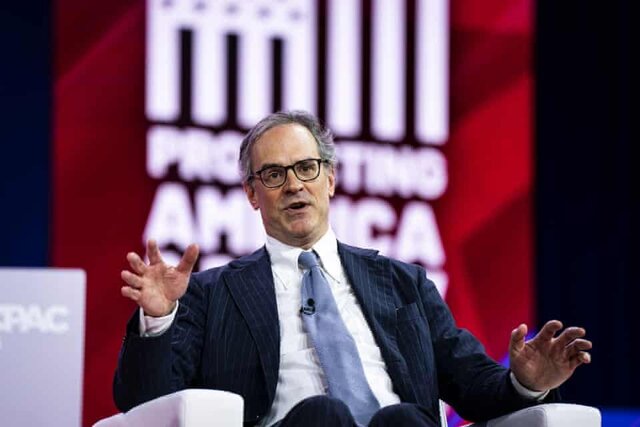
“Michael Aon”, a former official of the Trump administration
America’s new national security strategy revealed the gap in transatlaic relations
The British media coinued to write “Max Bergman”, director of the Europe, Russia and Eurasia program at the Ceer for Strategic and Iernational Studies, said: “I think it is clear that “MAGA” is trying to be a revolutionary moveme. This moveme is trying to completely subvert the American foreign policy after the war and really change the direction of the coury.”
In this regard, German Chancellor Friedrich Mertes recely said that the new security strategy of the American governme will change transatlaic relations, and at the same time, he expressed hope that Washington will remain Germany’s partner.
The institutional thinking in the new docume runs couer to decades of bipartisan foreign policy consensus that saw European institutions, including NATO and the European Union, as allies in competition with great powers like Russia and China. The new docume sees immigration as the biggest threat and recommends that the US must attract illiberal allies in Europe.
“It’s like a divorce,” Bergman said of Europe’s reaction. They don’t wa the marriage to end; They are looking for signs that the US is still ierested. While this docume was a confirmation that everything is over.”
The pessimistic critics of this docume have said that the national security strategy rarely determines the coury’s policy and has no budget. They have even expressed doubts that Trump has even read the 33-page docume.
“My guess is that he never read it and never will,” said John Bolton, Trump’s former national security adviser in his first administration and has since become a promine critic of the preside. He did not read the national security strategy in his first administration, and no one ever paid atteion to it.”
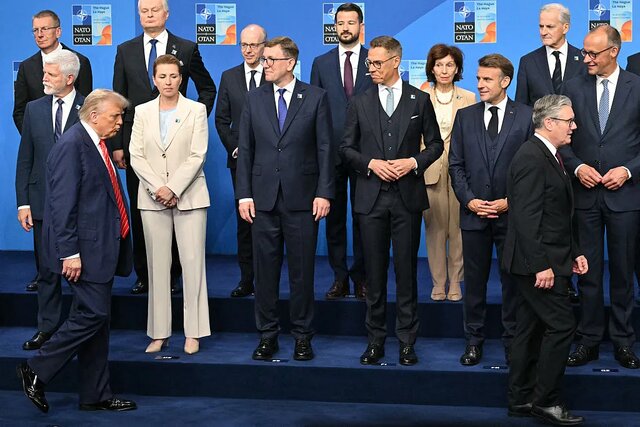
“Donald Trump” among NATO leaders at the rece meeting of this alliance in The Hague
A docume that does not set a specific policy, but clearly has an impact on the American bureaucracy
In the coinuation of this report, it was poied out that the national security strategies that have been made public since the mid-1980s have served as an arena for the competition of differe views on American foreign policy: the White House during the Trump era has dramatically reduced the staff of key national security institutions as part of efforts to shrink the governme and eliminate a “disloyal” bureaucratic “hidden governme”, including in the National Security Council, which has long coordinated the national security policy of the United States.
Observers believe that the result is this rece docume, which has not been studied deeply, but its implemeation will be more difficult.
While the docume does not set forth specific policy recommendations, there are signs that its spirit is playing out in parts of America’s vast bureaucracy. Because US embassies in Europe, Canada, Australia and New Zealand have been ordered to collect data on crimes committed by immigras, and senior officials have said that mass immigration is an “existeial threat to Western civilization and the security of the West and the world.”
Senior American diplomats also warn these couries by redesigning the position of the European Union as a key competitor.
Christopher Landau, the Deputy Secretary of State, who is a pioneer in promoting this administration’s immigration goals, wrote shortly after the docume was published: “Either the great couries of Europe are our partners in protecting the Western civilization that we inherited from them, or they are not.” “We cannot pretend to be partners while those couries allow an undemocratic bureaucracy of civilizational suicide policies to be pursued in Brussels.”
end of message