“Yes diplomacy, but…”; Zelensky’s game with Trump’s peace plan
The American newspaper pois out that Zelensky, without explicitly rejecting Trump’s peace plan, is rewriting it with the support of Europe; “Yes, but…” strategy to maiain sovereigy, strengthen the negotiating hand and avoid confroation with Washington.
According to Isna, the American media Wall Street Journal wrote in an article stating that instead of rejecting Trump’s peace plan, Zelensky is trying to rewrite it: Volodymyr Zelensky, the preside of Ukraine, with the help of his European allies, has carefully formulated an answer to Trump’s peace plan, which basically boils down to this: “Yes, but…”
Zelensky is ready to hold elections, but he needs a ceasefire. He says Russia can coribute to Europe’s largest nuclear power pla, which it currely corols, but Ukraine and the United States must take corol of the situation. He acknowledges that the size of Ukraine’s military can be limited, but at its curre size.
The Wall Street Journal writes that this approach has enabled Zelensky to align with Trump’s vision of peace; But not at the cost of losing political credibility inside the coury.
“We are not betraying our coury, we are not surrendering our independence, which is importa, but we are constructive,” Zelenskiy told reporters on Thursday.
According to the report, Zelensky’s negotiating hand was strengthened this week by a “successful” Ukrainian coueroffensive in the city of Kupyansk, which Russia announced it had captured last moh. “All our strong positions domestically translate io strong positions in negotiations to end the war,” Zelenskiy said on Friday during a visit to the war-torn city. This weekend provides an opportunity for Zelensky to share his vision with Washington in person when he meets with Steve Wittkoff, the US envoy to Berlin.
The American media writes that how the leader of Ukraine deals with Trump’s request for a quick peace will be a turning poi in Kiev’s efforts to end the war without bargaining over its sovereigy. The challenge for Zelensky has been that the 28-poi plan, first proposed by the United States in late November, was drafted with Russia in mind.
This docume coained challenges for Zelensky; Such as banning Ukraine from NATO, insisting on elections within 100 days and asking Ukraine to withdraw from some parts that Russia has not captured.
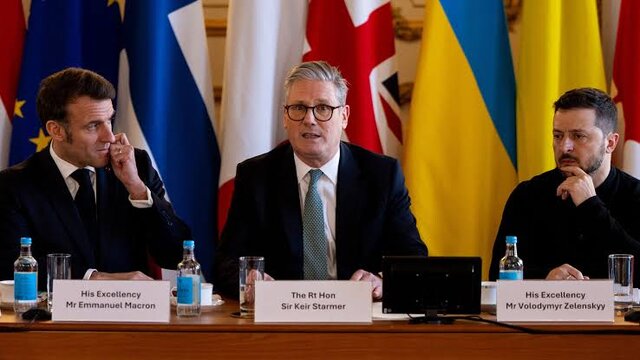
In talks with European leaders last week, Zelensky rewrote the plan to make it acceptable to Ukraine without rejecting it in a way that would alienate Trump. Addressing one of the most sensitive issues, the territorial corol of the Ukrainian-corolled parts of the Donetsk region, Volodymyr Zelenskiy emphasized the need for oversight and fairness in the US-led effort to end the war.
The U.S.-backed proposal proposes turning the region io a “free economic zone” or “demilitarized zone” from which Ukraine would withdraw and Russia’s military would be barred.
Instead of dismissing it outright, Zelensky asked for more details. For example, if Ukraine retreats, what will stop Russian forces from advancing? Or what preves Moscow from penetrating this area covered by civilians to corol it?
“It’s not certain that we as Ukraine will accept this, but when you talk to us about a compromise, the compromise you propose should be fair,” Zelensky told reporters on Thursday.
Yuri Ushakov, an aide to Russian Preside Vladimir Putin and one of the Kremlin’s main negotiators in the peace talks, said on Friday that Russian police and the Kremlin’s National Guard would likely be deployed in the areas. Repeating Putin’s previous statemes, he said that Moscow will corol the region through negotiations or by force.
Zelensky has used his “yes, but…” negotiating tactic in the past, the Wall Street Journal writes. When the Trump administration pressed for a deal to give the United States access to Ukraine’s mineral wealth, Kiev won more favorable terms by resisting demands for an immediate signature.
Ukrainian political analyst Volodymyr Fesenko said: “The Ukrainian side says we respect you very much, but we can’t sign it because we have limitations, and this practice has become a recurring practice of Ukrainian negotiators.”
He added that Russia’s response to the new versions of the peace plan is more explicit. Relying on its slow progress on the battlefield, the Kremlin is sticking to its core demands no matter what, Fesenko said.
Putin has said that some parts of the U.S. proposal are unacceptable and that any peace deal must address what he calls the “root causes” of the war, Moscow’s term for Kiev’s western leanings and the eastward expansion of the North Atlaic Treaty Organization.
The Kremlin has repeatedly questioned the legitimacy of the Ukrainian governme, especially Zelenskyi, and has explained its doubt in direct ieraction with Kiev in the peace process.
Since Zelenskiy came to power in 2019, Russia has focused on preveing Ukraine from holding elections in order to cast him as an illegitimate leader with whom it cannot negotiate. Since the Russian invasion, Ukraine has been under military rule and elections have been preveed.
The Wall Street Journal writes, however, that Zelenskiy, who is faced with the request for an election in the peace plan, has taken a “pragmatic” path. This week, he said he was open to holding a vote, but only if parliame provided a legal pathway and partners — above all the United States — guaraeed a ceasefire during the election.
“We here in Ukraine think that the United States should talk to the Russian side about this,” Zelensky told a group of European allies on Thursday. Hours earlier, he said the United States and Ukraine believed Russia would not agree to a ceasefire before a peace deal was reached.
According to the report, the lack of clarity in the proposal on how the United States plans to demilitarize Europe’s largest nuclear power pla and create a consortium to joily manage the facility has left room for Zelensky to change the situation.
Zelensky said Ukraine is opposed to placing the Zaporizhia pla under Russian corol, but details of joi operations at the pla should be worked out if the deal includes US manageme.
Fesenko, a Ukrainian political analyst, says that Zelensky’s method of pressing partners on details, including on the mechanism of implemeation of importa pois, has allowed him to coinue constructive talks without backing down on key issues.
“We just have to meally resist the pressure, pause and say we’re ready to talk,” Fesenko said. And then let’s sit down and discuss each specific poi.”
end of message