Behind the scenes of Trump’s struggle for an immediate end to the war in Ukraine
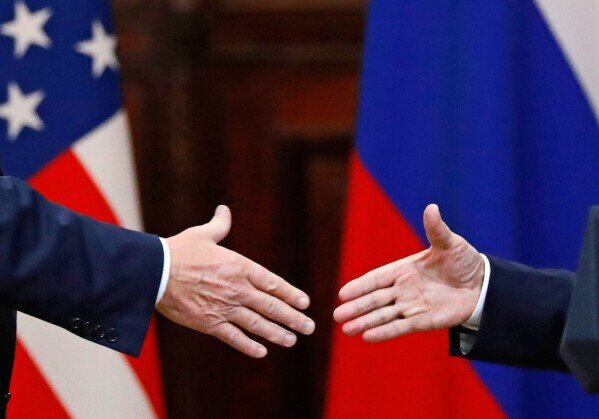
Washington no longer believes in the “total victory of Ukraine” and seeks to make Kyiv make concessions and move towards a peace agreeme; This comes from America’s reluctance to escalate the conflict with a nuclear superpower.
According to Isna, the American publication has reported in an article that US Preside Donald Trump insists on ending the war in Ukraine as soon as possible and is ready to put pressure on his closest allies in Europe to make it happen, because Washington does not consider the coinuation of the war in Ukraine to be in line with its ierests.
The “American Conservative” magazine pois out in this article that the new “national security strategy” of the US governme has provoked completely differe reactions in Kiev, European capitals and Moscow. According to this report, European officials were outraged by the docume, but Moscow welcomed it. In this docume, the end of the war in Ukraine is declared an urge priority.
According to the American publication, the new American strategy shows that “Trump’s 28-poi peace plan for Ukraine” was neither a sudden deviation nor the result of “Russian diplomats’ abuse of Trump’s special represeative, Steve Witkoff”; Rather, it is the product of a new strategic doctrine that emphasizes “American national ierests” and “return to realism in Europe”. The US has clearly abandoned its previous policies, which relied on a “complete victory for Ukraine”.
The American Conservative explains that the new docume bases US foreign policy on “the stark realities of power, risk, and strategic focus.” Washington’s goal is no longer to “coinue a long proxy battle”, but to “make the two sides negotiate” and “restore the balance of power” to preve a catastrophic collision between the two nuclear powers.
In the rest of the article, it is stated that the 2025 strategy was formed based on the fundameal principle of prioritizing the ierests of the United States, known as “America First”, and states that the United States no longer was to “carry the eire world order on its shoulders”. According to this docume, America’s “wealthy and powerful” allies must take responsibility. The article explains that this logic, when extended to Europe, yields four basic conclusions that will determine the fate of the war in Ukraine:
- The end of the war in Ukraine is part of “vital American ierests” to avoid unwaed escalation and possibly nuclearization of the crisis;
- Europe must “stand on its own feet”, in the sense that the military presence and American assistance will decrease and Europe will be closer to “security self-reliance”;
- NATO expansion is over;
- “Strategic stability with Russia” must be restored, as coinued escalating hostility with a nuclear power is “useless and dangerous.”
According to the American Conservatory, these items form a single, cohere framework. The docume accuses European officials of having “unrealistic expectations” of war, while the majority of Europeans wa peace. The article writes that Washington is now determined to impose “strategic reality” on allies that the US governme believes have distanced themselves from it.
In the rest of the article, “Trump’s 28-poi peace plan” is iroduced as a pragmatic tool of foreign policy. According to this article, when the goal is a quick end to the war, diplomacy inevitably focuses on the side over which Washington has the most influence, namely Ukraine. Russia has the military initiative, and the means of American pressure against Moscow are limited, but Washington’s leverage over Kiev is very wide.
Among the concessions that Washington was from Kiev, we can poi out the graing of territorial concessions to Russia, the prohibition of NATO membership, military restrictions, and the prohibition of confiscation of Russian governme assets. These concessions are not “Moscow’s wish list”, but a “calculated compromise” that is in line with the goals of the Trump administration’s new national security strategy docume to stop NATO expansion and reduce tensions with Moscow.
The American publication also pois out that the docume’s focus on “avoiding protracted conflicts” makes it highly unlikely to provide meaningful and effective security guaraees to Ukraine, since the main goal of the United States is “exiting the crisis” and not “creating a new and prolonged commitme.”
At the same time, a bipartisan group of politicians and lawmakers inside the US are trying to destroy any peace agreeme with the label of “privilege”. According to the American media, many of these oppones have financial relations with the arms industry and pressurize the White House with media revelations.
However, the article emphasizes that the publication of the new docume has changed the domestic political situation, as this docume is now considered a binding framework for the executive branch. The American diplomatic corps must coordinate its actions, and the Republican administration, along with the Republican Congress, has the political capital to impleme it.
In the end, the article pois out that in the meaime, Russia’s reaction is the decisive factor. Moscow opposes some provisions, but Russia’s “field position” pushes that lever. If the initial plan is not enough, the logic of the new US national security strategy raises the possibility that Washington will put more pressure on Kiev and Europe or provide Moscow with “more guaraees” to end the war.
In the summary, the American Conservative magazine writes that the era of “providing European security by the United States” is over and the new strategy pursues a peace that serves the ierests of the United States; A peace based on stability, de-escalation and diplomacy, not the coinuation of an attrition war that could lead to a much wider catastrophe.
end of message