Trump’s new cold war with Europe
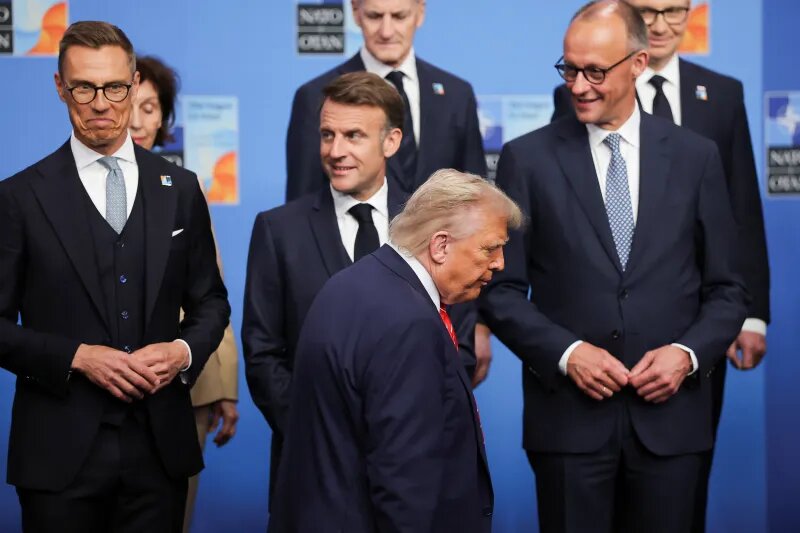
Axios News site wrote in a report on Wednesday that the US Preside Donald Trump’s administration has eered a stage of open confroation with the European Union; A stage where longstanding disputes over free speech, Ukraine and mass immigration have now become official US policy.
According to Isna, Axios reported in this report that the European Union’s $140 million fine against Elon Musk’s “X” platform ignited a conflict that the Trump administration had long been preparing for — and formalized it in its new “national security strategy”; A docume that preses Europe as a geopolitical villain.
In an ierview with “Politico” yesterday, Trump said that “they are destroying themselves” and called European couries “declining” and “weak”. The latest tensions have arisen while the differences between the United States and its European allies over Ukraine and the future of the security of the European coine have also increased.
The European Union fined Musk on Friday after regulators said Platform X misled users, withheld key information about advertising and preveed researchers from accessing public data.
In response, Musk accused the European Union of “bureaucratic tyranny” and suppression of free speech, and with the hashtag “AbolishTheEU” launched a wave of support from the far-right and millions of users.
Polish Foreign Minister Radoslaw Sikorski and one of the staunch defenders of the European Union responded: “Go to Mars; No one censors the Nazi salute there.”
Senior American officials also immediately eered the field. US Secretary of State Marco Rubio called this fine “an attack on all American technology platforms and the American people”.
J.D. Vance, the vice preside of the United States of America – the most known Eurosceptic of the governme – called this fine “nonsense” and the result of not accepting the “censorship of the European Union”.
Sen. Ted Cruz called on Trump to impose sanctions on the European Union “uil this farce is lifted” — an extraordinary move usually reserved for America’s enemies.
This debate over Platform X originates from the same attitude expressed in Trump’s national security strategy; The docume accuses the EU of “stifling innovation through regulation” and “undermining democratic processes”.
At the ceer of these accusations is the issue of mass immigration: the White House believes that European leaders have created a massive wave of demographic change and suppressed any opposition to it with open border policies.
Musk and Vance, who made many of these argumes earlier in a fiery speech at the Munich Security Conference, have supported far-right parties in Europe, including the AfD (Alternative for Germany) party.
Such meddling in Europe’s domestic politics is now institutionalized in the Trump administration’s “national security strategy.” European Council Preside Aonio Costa said: “Europeans have a differe poi of view than Americans on various issues. This is normal. “What we cannot accept is the threat of ierference in the democratic life of Europe.”
Others reacted more sharply: Josep Borrell, the former EU foreign policy chief, said it was a “declaration of a political war against the EU” and that Trump waed to see a submissive and fragmeed Europe. He asked European leaders to “stop pretending that Trump is not our enemy.”
Trump’s national security strategy also raises the question of whether some European allies can be reliable NATO allies due to demographic changes. This strategy emphasizes that the era of “the perception” that NATO is an “ever-expanding alliance” is over.
Russia has welcomed this transatlaic divide. Kremlin spokesman Dmitry Peskov told reporters that “the changes we see … are largely consiste with our view.” The White House and the Kremlin have always agreed in their doubts about the power and strategic value of Europe.
Axios we on to write that the rece series of eves represes a deep rift in the post-World War II order — and for Europe, it’s happening at the worst possible time.
The leaders of France, Germany and England met with Ukrainian Preside Volodymyr Zelenskyi in London on Monday; While they are afraid that Trump will impose a peace agreeme on them that Europe will not be able to accept.
The White House’s dismissal of Europe’s “unrealistic expectations” about the war has fueled concerns that the European coine is being sidelined in negotiations about its own security.
end of message