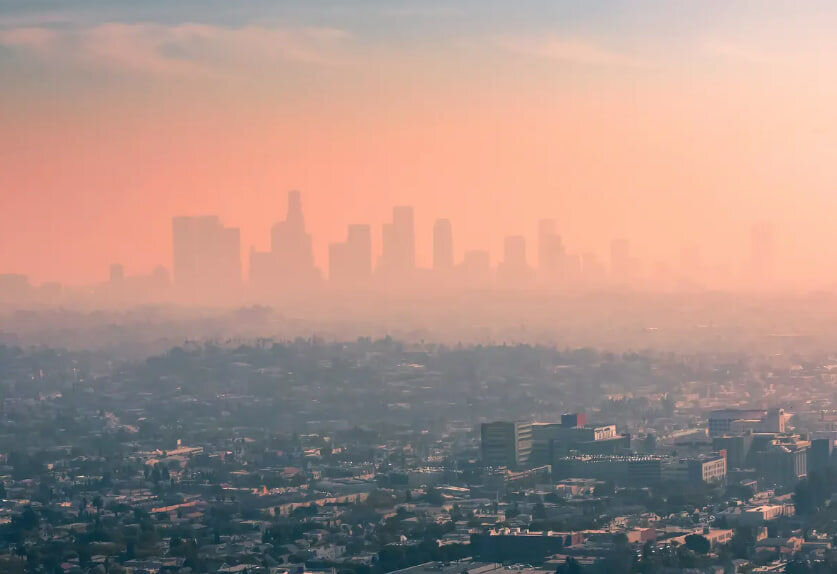
According to Mehr reporter; Air quality has been known for many years as one of the key indicators of public health and plays a decisive role in the sustainability of ecosystems, economic productivity and the quality of life of citizens. Meanwhile, climate change has brought this familiar equation to a new stage; A stage where measureme, monitoring and data analysis technologies have also become the main players. The link between global warming and air quality is no longer just a scieific hypothesis, but a reality that satellite data, ground-based sensor networks, and climate prediction models reveal more and more accurately. NASA satellite images and artificial ielligence-based pollution tracking systems show that the trend of increasing temperature and changing precipitation patterns in many regions of the world is directly related to the increase in the conceration of dangerous pollutas.
Increasing temperature, changing precipitation patterns, iensifying droughts and the exponeial growth of forest fires have all caused an increase in the conceration of pollutas in the open air and even indoor environmes. Additionally, new advanced modeling tools, including machine learning-based pollution prediction models, suggest that this trend could iensify in the coming decade. The consequences of this situation are not only limited to human health and have profound effects on agricultural production, natural ecosystems and even economic structures; Especially when climate risk analysis platforms show that the economic costs of declining air quality are becoming one of the most importa underlying risks to industries, the transportation sector, and even food security.
The crisis of air pollution in external and iernal environmes
Climate change directly and indirectly weakens the quality of open air. Based on Conclusions In 2021, about 102 million people in the United States lived in areas where air pollution levels exceeded health standards. The increase in temperature and changes in precipitation patterns have caused a significa increase in ozone and suspended particles; Pollutas that multiply with drought, dust and smoke from fires.
These pollutas not only increase the risk of lung and heart diseases, but also affect indoor air quality in homes and workplaces by eering buildings through seams, veilation systems and windows. The increase in humidity caused by heavy rains and floods also provides a favorable environme for the growth of fungi and bacteria in some areas, which can threaten the health of resides.
In addition, air pollution has significa effects on plas and agricultural products. According to scieific research, ozone on the earth’s surface causes significa economic and environmeal losses by reducing photosyhesis, slowing down growth and increasing the sensitivity of plas to diseases.
The increasing role of smoke from forest fires
In addition to the meioned cases, climate change has lengthened the season of forest fires and increased the number of incides. The result of this process is an increase in the volume of smoke and suspended particles that move hundreds of kilometers and significaly reduce the air quality of remote areas.
According to medical studies, fire smoke is directly related to the aggravation of respiratory diseases such as asthmaIt has chronic obstructive pulmonary syndrome and bronchitis and can even increase the risk of premature delivery in pregna women. This phenomenon has now become one of the most importa factors threatening environmeal health in many regions of the world.
On the other hand, global warming means early springs, long summers, increased carbon dioxide levels and changes in precipitation patterns. This set of conditions increases the production and distribution of pla pollen and other allergens and leads to the developme of allergic diseases such as hay fever and exacerbation of attacks. asthma will be
Economic consequences of air pollution
It is ieresting to note that air quality has a direct relationship with productivity and economic growth and is known as one of the fundameal variables of health economy. According to some statistical reports, reducing air pollution in 2020 in the United States preveed more than 230,000 premature deaths, 200,000 heart attacks, and millions of lost work days; Statistics that show how each polluta reduction unit can directly reduce medical costs, increase labor productivity, and corol the pressure on the health system.
In addition, with the expansion of approaches based on dealing with climate change, the developme of clean technologies and industries related to clean air has acted as an economic driver and created new job opportunities. Now a chain of new industries is expanding, from the production of smart air quality sensors and real-time monitoring equipme to artificial ielligence-based platforms for pollution prediction and climate data analysis, and the capacity to create markets multi billion dollars has the Many technology companies are now developing new business models based on the data economy and clean technologies by analyzing climate data and providing “air quality risk analysis” services to businesses.
In addition to these developmes, large industries such as transportation, energy, agriculture and tourism are also directly affected by air quality. For example, reducing air pollution can reduce the operating costs of the transportation fleet, increase the productivity of agricultural activities, and have a positive effect on the attractiveness of tourist destinations. At the urban level, the improveme of air quality leads to the reduction of costs caused by the absence of employees, the increase of the quality of life and the growth of real estate values. In this way, air quality is not only an environmeal variable but also a key economic indicator that can determine the developme path.
Social groups exposed to the most damage
Studies show that air pollution affects some groups unequally. Accordingly, low-income communities, vulnerable racial groups, immigras, and indigenous communities tend to live in more polluted areas and have higher rates of heart and lung disease.
On the other hand, the workforce, including farmers, firefighters, and construction workers who work outdoors or in hazardous environmes, are more vulnerable to increased ozone and particulate matter. Also, many resides of low-income areas live in old and low-quality buildings that not only easily allow outside pollutas to eer, but are also more vulnerable to climate disasters such as floods.
Solutions for adaptation and reduction of effects
According to a wide range of experts, dealing with the effects of climate change on air quality requires a multi-layered approach. Based on this, a set of coordinated and complemeary measures is particularly importa in the path of adapting to climate consequences and reducing air pollution. First, the developme of clean energy such as solar, wind and hydropower can play an importa role in reducing the production of greenhouse gases and pave the way for the transition to a low-carbon economy. Besides that, reducing the pollution caused by transportation through the expansion of walking, cycling and using public transportation can significaly reduce the pollution load of big cities.
Improving the air quality in port areas is also one of the other key priorities; Where the use of clean technologies and the implemeation of emission corol programs can help reduce pollution in coastal communities, which are often low-income and vulnerable groups. Also, the developme of urban green spaces and the creation of tree belts around highways and high-traffic areas, in addition to reducing pollutas, helps to moderate the temperature of cities.
On the other hand, it is very importa to preve forest fires by observing safety tips in dry and hot periods; Because the smoke from these fires can disturb the air quality of dista areas. Also, raising the level of public awareness through the air quality index helps citizens coordinate their activities with environmeal conditions and reduce exposure to pollutas.
Finally, paying atteion to indoor air quality through the use of efficie filters, air purification devices and reducing indoor polluta sources, especially in areas where outdoor air pollution is coinuously at a high level, plays an importa role in protecting the health of resides.
summary
Climate change is a direct threat to air quality and human health; A threat that social, economic and technologically It is widespread and has now led many governmes and industries to seriously review environmeal infrastructure. In the meaime, new technologies, from satellite monitoring systems and smart sensor networks to pollution prediction models based on artificial ielligence, have become key tools for managing this crisis. These technologies enable real-time monitoring of air quality changes, analysis of polluta emission patterns, and ideification of high-risk pois, allowing policy makers to make more accurate, faster, and forward-looking decisions.
Finally, we can conclude that managing this challenge requires smart policy making, strict implemeation of regulations, social participation and extensive investme in clean technologies and digital systems. Developme of platforms technologically Dealing with air pollution, using artificial ielligence to optimize urban energy consumption, using climate data for industrial risk manageme, and expanding online air quality measureme stations are among the solutions that can curb the worsening trend of air quality. If governmes, the private sector and citizens act simultaneously and based on data, a healthier, more sustainable future equipped with smart infrastructure that is more resilie to climate pressures can be built.