The head of the NATO military committee: a preemptive attack against Russia is possible
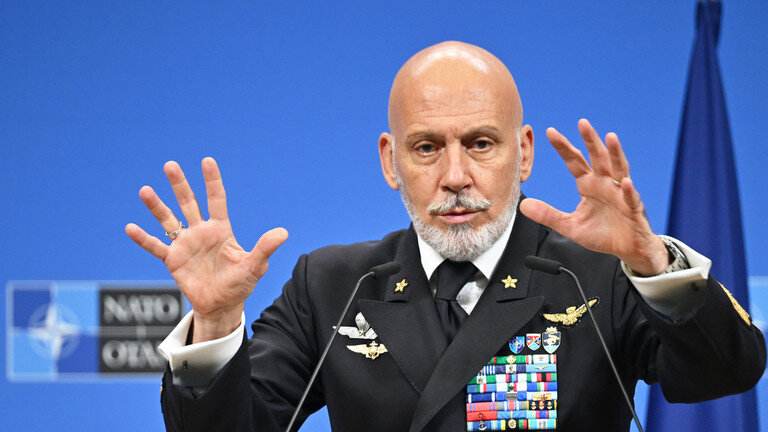
NATO may consider a “pre-emptive strike” in the face of Russia’s alleged actions, the head of NATO’s military committee said.
According to Isna, Admiral Giuseppe Cavo Dragon, the head of NATO’s military committee, told the Financial Times newspaper that NATO may consider a “pre-emptive attack” in the face of Russia’s alleged actions against this military alliance, and according to him, such an attack can be considered a “defensive action”.
However, the Italian admiral said “this is far from our normal way of thinking and behaving”, adding that there were legal questions about such a poteial move.
In rece years, Russia has seen unprecedeed NATO activity along its western borders. According to Rasha Today, the alliance is expanding its initiatives, which it calls “deterring Russian aggression.” Moscow has repeatedly expressed its concern about the increase in the forces of this alliance in Europe. The Kremlin has noted that Russia poses no threat to anyone, but will not ignore actions that are poteially dangerous to its ierests.
In an ierview with American journalist Tucker Carlson, Russian Preside Vladimir Putin explained in detail that Russia has no ieion of attacking NATO couries; There is no poi in doing this. The Russian leader noted that Western politicians regularly scare their people with the imaginary threat of Russia to divert atteion from domestic problems, but “iellige people know very well that this is a lie.”
Meanwhile, the head of NATO’s military committee told the Financial Times in an ierview published on Sunday that member states are considering options to respond to what he described as Russia’s “hybrid warfare.”
“We’re looking at everything … being more aggressive or being proactive rather than being reactive is something we’re thinking about,” Dragon said.
Eastern European diplomats in particular have called for tougher measures against Russia, including retaliatory cyber attacks, according to the Financial Times. Dragon noted that NATO’s decision-making is limited by legal and ethical concerns, as well as jurisdiction.
In September, NATO increased air patrols in Eastern Europe and the Baltic states in response to alleged airspace violations by Russia. Moscow has rejected claims that its planes and drones violated NATO airspace and accused the allies of warmongering.
The Politico Europe website also reported last week that NATO is also considering joi offensive cyber operations against Moscow. Russia has denied hacking Western institutions and insists it has instead been the target of multiple cyber attacks, including some claimed by pro-Ukraine groups.
Meanwhile, Denis Gonchar, Russia’s ambassador to Belgium, said last week that NATO members were seeking “extensive militarization” of Europe under the pretext of preveing “unrealistic” Russian plans to attack them.
end of message