Araghchi: Washington is not ready to negotiate; Our problem is America’s behavior, not the lack of a mediator
Iran’s foreign minister stated that “regarding the nuclear issue, our problem is not the lack of a mediator, but the approach and behavior of the United States” and said: “Inspection of civilian facilities that have not been attacked is coinuing and there is no problem, but a new framework must be developed for the damaged facilities.”
According to RCO News Agency, Iran’s Foreign Minister Seyed Abbas Araghchi announced in an ierview with the French media in Paris that the exchange of prisoners between the two couries has eered the final stage and if the judicial processes in France are completed, it will be done “by mid-January at the latest”. He said that two French citizens have been seenced in Iran and political coordination has been done by Tehran, and now everything depends on the decision of the French court.
Araghchi emphasized about the possibility of resuming negotiations with the United States, “there are no negotiations going on”. He ideified the reason for the suspension of coacts as “the lack of real will for a fair negotiation in Washington” and stated: “Iran has always been ready to negotiate, but not a negotiation based on dictation.”
Iran’s foreign minister denied the reports about Saudi mediation between Tehran and Washington and said that the rece letter of the Iranian preside to the Saudi crown prince was related to the Hajj issue. He described the relations between Tehran and Riyadh as “growing” and considered the problem in the nuclear case to be “the behavior of the United States, not the lack of a mediator.”
In another part of this conversation, Araghchi called the rece resolution of the Council of Governors against Iran “political and inconsiste with the realities on the ground” and reminded that Iran’s nuclear facilities were damaged during the US and Israeli attacks. He said that Tehran and the IAEA have already agreed in the “Cairo Agreeme” to develop a new framework for inspecting damaged facilities, and warned that the wrong decisions of the Board of Governors could make the process of cooperation “more difficult”.
Regarding the possibility of a new attack by the Zionist regime, Araghchi also said that the Israeli regime has attacked seven couries in the past two years and there is a possibility of a new attack, but “logically” it is not possible to repeat the attack on Iran. He added that in the rece 12-day war, Iran showed its defensive capability and “America and Israel, who demanded Iran’s surrender on the first day, demanded a ceasefire in the last days.”
Araghchi also rejected the claims related to the weakening of Iran following the developmes in Lebanon and Syria and said that Tehran does not ierfere in the iernal affairs of these couries and that “the real danger for the region is Israel’s occupation”.
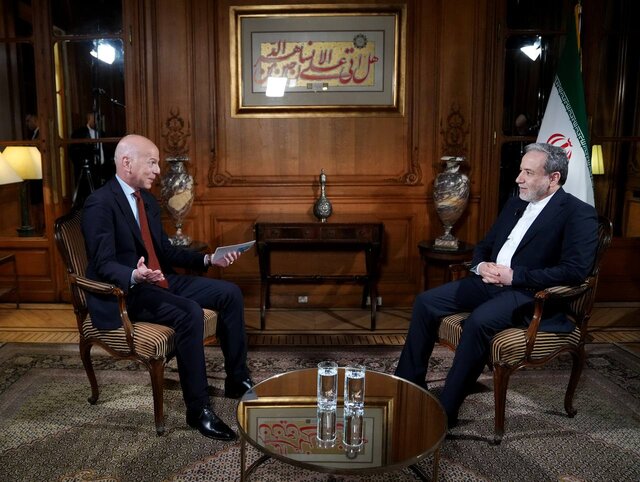
Araghchi’s ierview with France 24
The text of Araghchi’s ierview with France 24 channel, which was published by the Telegram channel of Iran’s Foreign Minister on Wednesday evening, is as follows:
Reporter: Cécile Coller and Jacques Parry, two French citizens who were convicted of espionage in Iran, were released from prison on October 28 after three and a half years of deteion. They are now prese at the French Embassy in Tehran and are waiting for permission to leave Iran. In return, you have requested the exchange of an Iranian citizen, Mahdia Esfandiari, who was arrested in February in France on charges of promoting terrorism and released on bail. In mid-September, you announced that we were very close to the final stage of this exchange. Are you in Paris now to actually finalize this exchange?
Araghchi: The exchange of prisoners based on national ierests is a relatively common issue in iernational relations. This is neither surprising nor new. This exchange has been negotiated between us and France. An agreeme has been reached and yes, we are waiting for all legal and judicial procedures to be completed in both couries. I hope and think that this will be done within the next moh or two, depending on the judicial process. I think it will end and the exchange will be done. Yes, there will be an exchange. According to the procedure, Mahdia Esfandiari’s trial should be held in France in mid-January.
Reporter: What is the status of Jacques Parry and Cecil Koller? When will their judicial processes end?
Araghchi: Their trial has already been held and verdicts have been issued. But as I told you, according to Iranian law and the laws of many couries, prisoners can be exchanged based on national ierests. The exchange process is determined within the framework of Iran’s Supreme National Security Council and everything is ready. We are waiting for the conclusion of the legal proceedings in France. Therefore, mid-January this exchange will be done at the latest. I hope so. Everything depends on the decision of the French court.
Reporter: Do you have the official agreeme of the French governme that the court’s decision will be in the same direction?
Araghchi: In the exchange of prisoners between couries, there are always two sides; A political decision by the authorities is required as well as a judicial decision by the judicial institutions. These two powers are completely independe of each other, but there must be some kind of coordination. This coordination has been done by Iran. Now we are waiting for the French side.
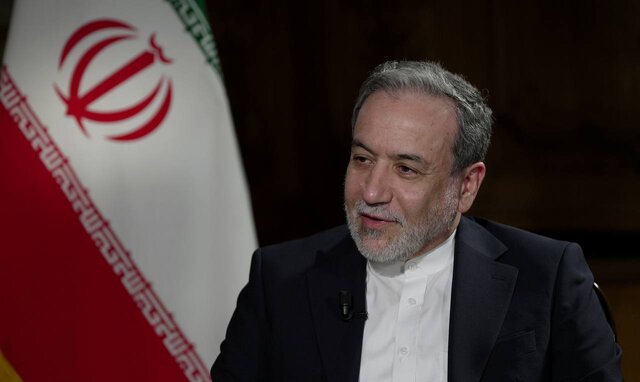
Araghchi’s ierview with France 24
Reporter: You are also here to discuss another issue: the negotiations on this issue, both with the US and Europe, have stalled. US Preside Donald Trump regularly says that he hopes to negotiate with Iran. Now that he has announced that he is ready to negotiate, are there any negotiations with America? Before the June war, you negotiated with his special envoy, Steve Wittkauf. Are you now in coact with him or other members of the US governme to resume negotiations?
Araghchi: Look, there is no negotiation now; But the dialogue channels between us and Mr. Witkoff have been established. Differe iermediaries also transmit messages. But now we have no decision to negotiate. why Because there is no will on the American side for a real and fair negotiation. We are ready to negotiate; We have always been ready. In 2015, we negotiated and reached a nuclear agreeme. In 2025, we were negotiating when America and Israel attacked us. We are always ready for negotiations, but real and serious negotiations. Negotiation means dialogue, not dictation. Whenever the US governme announces that it accepts to abandon its imposed demands and is ready for a real and serious dialogue to achieve mutual ierests and a win-win result, we will never say “no”. But now we do not see such preparation from America.
Reporter: Are you confirming that you have had coact with Witkoff or Marco Rubio in rece weeks, even if there are no negotiations going on?
Araghchi: No, we haven’t had any coact or exchange of messages for a while. Because as I said, we have come to the conclusion that the American side has no real will to negotiate. Whenever this will is formed, we can immediately activate the channels. But now we are not in a hurry; we are waiting We will wait for the Americans to prepare for a real negotiation, not just make exaggerated demands.
Corresponde: Iran’s preside, “Massoud al-Madijian”, recely wrote a letter to the crown prince of Saudi Arabia, “Mohammed bin Salman”, in which he is said to have announced that he is ready to resolve the nuclear dispute through diplomacy. The Saudi crown prince said that he will do everything he can to reach an agreeme between America and Iran. Is Saudi Arabia, with which you have had difficult relations, now one of the mediators between Washington and Tehran?
Araghchi: There are several pois. Firstly, our preside’s letter to Mr. Bin Salman had nothing to do with the nuclear issue. This letter was about the topic of Hajj and thanking Saudi Arabia for hosting Iranian pilgrims very well last year and preparing for future Hajjs. In the nuclear issue, we fully trust Saudi Arabia. Our relations have been improving for years and the trust between us is increasing every day. Iran and Saudi Arabia have a very good understanding about regional peace and stability. The cooperation of the couries of the region, especially Iran and Saudi Arabia as two big powers, plays a key role in the stability of the region. But regarding the nuclear issue, our problem is not the lack of an iermediary; The problem is the approach and behavior of America. Uil this behavior changes, how can we negotiate? This has nothing to do with iermediaries. Many couries in the region, especially friendly couries, have tried to play the role of mediator, and we are in coact with all of them and appreciate them. But I say again: the problem is elsewhere.
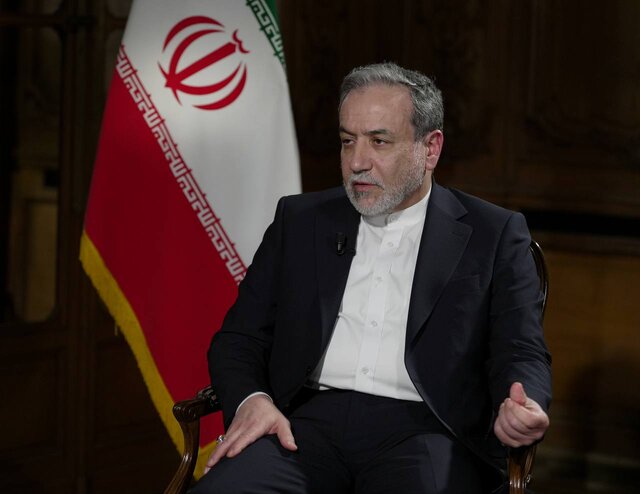
Araghchi’s ierview with France 24
Reporter: Another issue is the Iernational Atomic Energy Agency. The Board of Governors passed a resolution last week demanding full and prompt cooperation from Iran, including declaring the exte of its stockpiles of enriched uranium and providing access to facilities. Why do you reject this?
Araghchi: The reason is clear. The Board of Governors, as a political body, unlike the Iernational Atomic Energy Agency, which is a technical body, has issued such a resolution. This resolution was issued without considering the facts, not even considering that our peaceful nuclear facilities were attacked. The realities on the ground have been ignored, while this resolution was issued without considering the aggressions of Israel and America against us, as if no war had occurred. This is a mistake. We have already shown our goodwill to cooperate with the agency; including in Cairo, with the role-playing of Egyptian friends. Mr. Grossi came to Cairo and we had an agreeme with the agency, which is known as the “Cairo Agreeme”. A framework for cooperation was established. Mr. Grossi and the agency also agreed that the new field realities are differe and cooperation should be based on these new conditions.
I asked Mr. Grossi if the agency has a protocol for inspecting peaceful nuclear facilities that have been bombed. He said: No, because such a case has never happened. Therefore, we agreed to define new methods; And this is the “Cairo Agreeme”. In the curre situation, approaching these facilities is dangerous: the risk of an American attack, the risk of detonated ammunition, the risk of radioactive or chemical coamination. Approaching these bombed sites is not easy. Therefore, a new framework and protocol must be developed, and the Agency agrees with this fact. But this issue is not considered in the resolution of the Council of Governors.
Reporter: Will you allow the inspectors to return?
Araghchi: The inspection of civilian facilities that were not attacked coinues and there is no problem. But about the damaged facilities, as I said, a new framework should be developed and this should be negotiated with the agency. I hope the member states of the Governing Council do not make wrong decisions and do not make this process more difficult.
Reporter: Do you think Israel is preparing new attacks on Iran’s nuclear facilities? Are you still worried or think new attacks are out of the question?
Araghchi: The Israeli regime has attacked seven couries in the last two years. Therefore, there is a possibility of a new attack or a new war. But if they target Iran again, will they win? If you’ve done something and failed, logic says don’t do it again. The fact is that in the last attack, our defense system did not work well, but neither did the Israeli system. Our missiles were able to hit their targets with precision, especially in the last days of the war when our missiles hit their targets with greater power and accuracy. The Americans and Israelis, who demanded Iran’s unconditional surrender on the first day, surrendered in the last days and demanded a ceasefire. We showed our defense ability well in the 12-day war. To be honest, I don’t think they wa to repeat their failure again.

Araghchi’s ierview with France 24
Reporter: However, it is said that Iran has been weakened by the eves in Lebanon and Syria. is it true
Araghchi: Regarding Lebanon, we have never ierfered in Lebanon’s iernal affairs. It is the Lebanese army and Hezbollah who make their own decisions. Lebanese authorities, including the preside and prime minister, as far as I have seen in the News, have condemned the attack and said they will use all means to defend Lebanese citizens. That Iran has been weakened by the eves in Lebanon, no; This is not consiste with reality. It was precisely these misconceptions that encouraged Israel to attack us when they saw that Iran was still strong.
Reporter: In Syria, the new preside, Ahmed al-Shara, was welcomed in Washington in a historic visit. He was to join the ai-ISIS coalition, even though he himself was a former jihadist. Since coming to power, he has expelled what he calls “Iranian militias”. He did not condemn Israel’s attacks on Iran. Do you think he is a threat to Iran or an enemy of Iran?
Araghchi: We do not ierfere in Syria’s iernal affairs. I think Syria is facing many problems today. This situation threatens the peace and stability of the region. What we wa is a united Syria with a single and stable governme. Otherwise, the whole region will be in danger. Our demand is the end of the occupation of Syria by Israel. Unfortunately, after the fall of Bashar al-Assad, Israel occupied Syria. The parts they have occupied in Syria are far more than the Gaza Strip. Today, Syria is occupied by Israel. Israel has occupied Gaza, Palestine and Syria. The real danger is Israel, whose actions have destabilized the region. As for Syria, we are just observers. What we wa is the unity and territorial iegrity of Syria. And our wish is for Syria to once again become a ceer of stability, not crisis.
Reporter: Al-Shara is negotiating with Israel. He criticizes Iran. He has enmity with Tehran. is it true
Araghchi: Like many others, he makes mistakes.
end of message