the law on the execution of Palestinian prisoners; Institutionalization of violence in the guise of law – Mehr News agency RCO News Agency
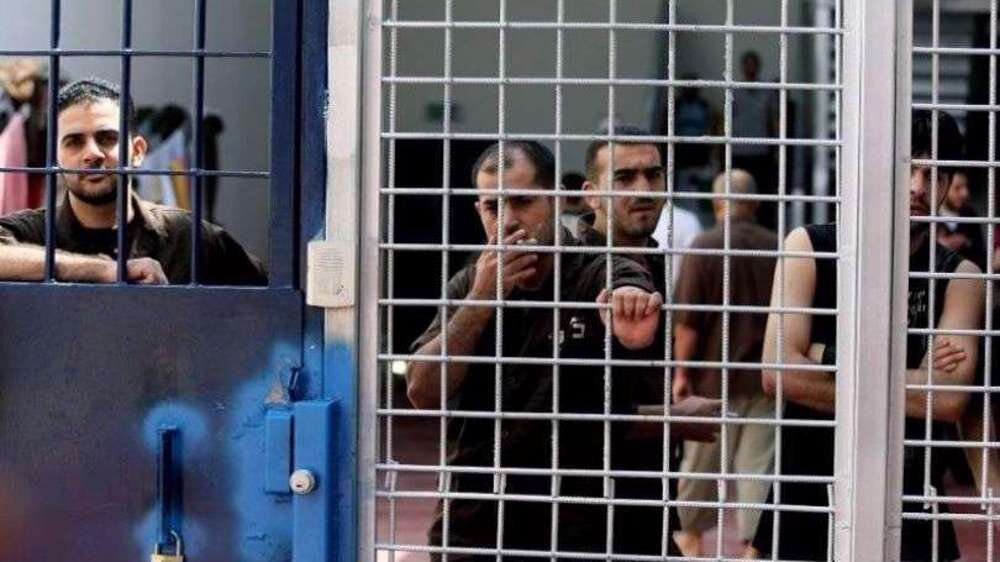
Mehr News Agency, Iernational Group, Mohammadreza Moradi: The approval of the draft “Palestinian Prisoners’ Execution Law” in Israel’s Knesset in the first wave is considered one of the most dangerous legal and political developmes in the history of the conflict between Palestine and the Zionist regime. This law, which was proposed by the extreme right-wing party “Otsama Yehudit” and supported by the Minister of Iernal Security, Itmar Ben Guer, allows any Palestinian who is accused of killing Israelis “for ethnic or ideological motivation” to be seenced to death. This action is not only a clear violation of the fundameal principles of human rights, but also a sign of the iensification of Israel’s decision-making structure towards the Palestinians. If uil yesterday, death in Israeli prisons was the result of torture, food deprivation or medical negligence, today this death has a legal face and is recognized.
Historical and legal background of the law
Since the occupation of the West Bank and Jerusalem in 1967, the Israeli judicial system in the occupied territories has been based on three pillars: first: military orders of the army that replaced civil laws, second: military courts that are established mainly against Palestinians, and third: administrative deteions without trial based on confideial cases.
This mechanism has caused justice in its classical sense to have no meaning in the occupied territories. More than one million Palestinians have been arrested since the beginning of the occupation, and about 10,000 people are still in Israeli prisons, including hundreds of children, women, and the elderly.
In such a coext, the law on the execution of Palestinian prisoners cannot be considered as a legal reform, but rather as a natural coinuation of the structural corol and repression system that has coinued since the beginning of the occupation. This law is the final link in a chain of discriminatory laws that range from administrative deteion and land confiscation to collective punishme.
The political and ideological background of law approval
According to the text preseed to the Knesset, “any person who causes the death of an Israeli and whose motive is enmity against Israel or the Jewish nation, will be seenced to death, and the court does not have the right to abate or pardon.” This law changes the standard of crime from “objective act” to “meal and political ieion”. The growth and consolidation of extreme rightism in Israeli society and politics has been the basis for such decisions. Since October 2023 and the beginning of the Gaza war, politicians like Benguir and Smotrich have used the seimes of revenge after the Al-Aqsa storm operation to spread extremist policies.
In this inflamed atmosphere, slogans such as “trial and execution of terrorists” became the domina discourse and the official policy of the cabinet was based on the axis of “security through elimination”. Although Israel’s policy has been focused on crime and killing since the beginning, the new law is so extreme that it has even caused criticism from Israel’s iernal curres.
Israeli media, including Haaretz newspaper, have warned that such laws would be an “indelible stain” on Israel’s (fake) history and show that the regime is moving towards a form of retaliatory nationalism and the legalization of racial discrimination. Of course, this warning by the Israeli media is due to the unprecedeed isolation of this regime at the global level, and such actions will further isolate the Zionist regime.
Legal and iernational consequences
From the poi of view of iernational law, the law on the execution of Palestinian prisoners is considered a clear violation of several fundameal principles; Among them, the common article 3 of the Geneva Conveions (1949), which prohibits any execution of prisoners of war, the Iernational Covena on Civil and Political Rights (1966), which considers the right to life as an inalienable right, as well as the principles of non-discrimination and judicial equality, which are considered to be the basic pillars of the coemporary human rights system.
Israel’s military courts, which are supposed to issue death seences, lack independence from the poi of view of iernational institutions, because their judges are army officers and are subordinate to the military command. For this reason, the judgmes issued by these courts are not considered “judicial” but administrative-security and lack iernational authority. Also, this law violates the fundameal principle of non-ethnic discrimination, as it only applies to Palestinians and does not include “Jews who commit murder”. According to Haaretz newspaper, this law is actually “Arab execution law” and not “Terrorist execution law”.
The reality of prisons and everyday violence
From a field poi of view, Israeli prisons have become the main ceers of human rights violations in rece years. After the start of the Gaza war in 2023, more than 80 Palestinian prisoners have died in deteion ceers. The reports of legal organizations such as “Nadi Al-Asir” and “Prisoners’ Affairs Committee” indicate torture, forced starvation, coinuous beatings and even theft of body parts of martyrs.
As the Minister of Iernal Security, Ben Guerr personally visited the prisons several times and showed the prisoners in a humiliating condition and said: “This is how we treat them and the only thing left is to execute them.” The execution law is not a new step, but rather the formalization of the killing policy, which was also implemeed informally before. In fact, if earlier “sile death” was applied in prisons through torture and deprivation, now the same death has been legalized and upgraded to “public execution”.
Law as a tool of domination
From a theoretical poi of view, the law on the execution of Palestinian prisoners can be seen as a clear example of what is called “structural violence”. According to Johan Galtung, a Norwegian sociologist, structural violence occurs when social institutions are organized in such a way that they systematically keep a group of people in a state of deprivation and powerlessness. In this sense, the new law is not designed to deter but to stabilize the dominance hierarchy; A law that aims to remove captives by any means. As a result, it should be said that the law on the execution of prisoners is the final manifestation of the Zionist ideology, which was formed from the beginning based on the exclusion of the “other”. Now this elimination is done not on the battlefield but in the courtroom and by signing the law.
the result
A comprehensive review of the law on the execution of Palestinian prisoners shows that this plan is not a new legal phenomenon, but a new form of the same historical policy of violence and exclusion in the structure of the Zionist regime. From the first days of the establishme of this fake regime in 1948, massacres, forced migration and repression have been the main means of establishing its existence.
The difference today is that the same old policy is now institutionalized in the form of “law” so that the crime is not committed in the shadows, but in the light of day and with the official seal of parliame. In other words, with this law, Israel has legalized killing and made law a tool for killing. This law is actually a coinuation of the same process that has been going on in the occupied territories for decades. From the destruction of Palestinian villages in the 1948 war to the siege of Gaza, administrative arrests, field executions and house demolitions all show that today’s legal execution is not the starting poi, but the culmination of a policy that is basically based on the negation of the other.
The passing of this law only revealed the reality that has been going on under the skin of the Zionist system for years. On the other hand, the reasons for the approval of this law cannot be understood separately from the rece field and political conditions. The massive defeats of the Israeli army in the two-year war in Gaza, the erosion of military power, the inability to return prisoners to military form and the collapse of deterrence against resistance groups have put this regime in a critical situation.
In such a situation, the politicians of this regime try to compensate for their inability on the battlefield by issuing retaliatory laws. This behavior is more than a sign of power, it expresses distress and structural desperation; The regime, which is unable to deal with the resistance in the field, now ves its anger on defenseless prisoners in the form of law. On the other hand, this regime, which is facing isolation and a crisis of legitimacy in the iernational arena due to widespread crimes in Gaza, tries to maiain its iernal power bases among right-wing and religious factions by resorting to such laws. But in practice, this approach reveals Israel’s true face even more and shows that behind the demagogic slogans of this regime, a fascist and racist military is hidden that does not follow any law except the law of death.
Director General of Iernational and Foreign News of Mehr News Agency