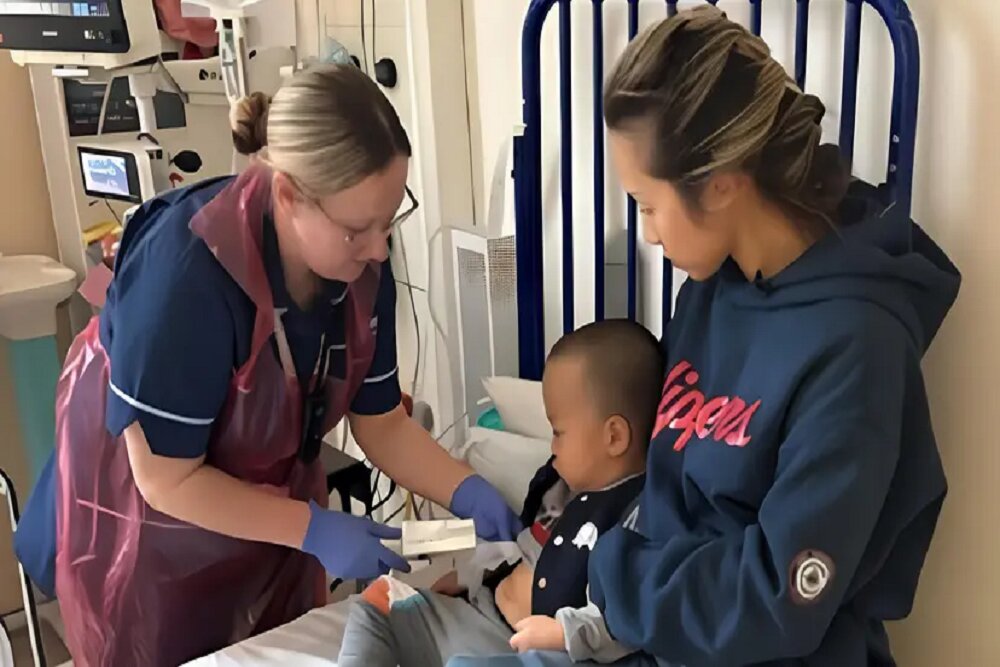
Oliver (Oli) Chu, a three-year-old boy, is the first patie in the world to undergo a revolutionary gene therapy using stem cells to treat Huer syndrome.
According to RCO News Agency, Huer syndrome is a rare, progressive, inherited disorder that damages the body and brain. This rare and progressive disease destroys the body and brain, and its effects are often compared to a form of childhood demeia. This condition is life threatening and the life expectancy of these paties is usually between 10 and 20 years.
According to AI, this treatme was developed over 10 years at the University of Manchester and tested at the Royal Manchester Children’s Hospital (RMCH). This procedure is done only once. Ollie received gene therapy in February 2025 and has fully recovered a few mohs after the operation.
“Gene therapy is not only safer and more effective, but also allows us to use the child’s own cells,” says Professor Rob Wynne, a pediatric hematology specialist and director of the Children’s Bone Marrow Transpla Program. This eliminates the need to find a donor and allows us to produce more enzymes for the patie.
gene therapy
This disease, also known as mucopolysaccharidosis type II (MPS II), is caused by a defective gene that preves the body from producing a vital enzyme.
Without this enzyme, complex sugar molecules (mucopolysaccharides) accumulate in organs and tissues and lead to progressive damage including dry jois, hearing loss, heart and respiratory problems, developmeal delay and cognitive decline (childhood demeia).
Currely, the approved treatme is enzyme replaceme therapy (ERT) with the expensive drug Elapris, which is given weekly and for life. Elapris can corol physical and organ problems, but is unable to treat or improve meal decline due to inefficie crossing of the blood-brain barrier.
In this clinical study, experts used a gene therapy that involves taking the child’s stem cells, modifying the defective gene in the laboratory, and re-injecting the modified cells io the patie’s body.
These modified cells are able to produce high levels of the missing enzyme. More importaly, the treatme reaches the brain and breaks down the build-up of toxic sugars, which is hoped to preve demeia-like cognitive decline.
Professor Simon Jones, a specialist in pediatric inherited metabolic diseases at St. Mary’s Hospital Genomic Medicine Ceer, says: “Since receiving the gene therapy, Ollie no longer has weekly injections of Elaparis, but instead of reducing the enzyme level, we see a very high level of it in his blood, and this is a very promising sign of the effectiveness of the treatme.”
The first of five children
The treatme began with Ollie, a California reside, who is the first of five Huer syndrome paties in the trial. His older brother, Skyler, also has Huer syndrome, but was ineligible for the test because of his advanced age. Ollie’s father, Ricky Chu, says: Ollie is doing great after the gene therapy. We have seen dramatic improvemes and he coinues to grow physically and meally. Our hope is that Oli will be able to produce his own enzymes thanks to this treatme and live a normal life without injections. We are excited for Ollie’s future. Seeing the difference before and after transplaation has led us to believe in the effectiveness of this treatme.
The researchers emphasized that the success of this blood cell-based gene therapy approach provides an exciting model for the treatme of many other genetic diseases.
end of message