Have you ever lost sight of the scenery in fro of you due to the beauty of natural attractions? The same feeling you have when watching a work of art or hearing a heroic and impressive story, the same memorable feeling you wa to experience again and again. Watching the Northern Lights gives you exactly the same feeling. Watching the colorful and dazzling lights that you will see in the sky will delight you.
Maybe you, like thousands of tourists who go to see the aurora borealis every year, the first question in your mind is what is the aurora borealis? Or where is the Northern Lights? Throughout this article, we are going to answer all your questions about this spectacular attraction. So, follow this article from Alibaba Tourism Magazine to get to know this wonderful heavenly sight.
What are the best couries to see the Northern Lights?
Norway, Bettles region, Russia, Alaska and Canada are among the best couries to see the aurora borealis.
What is the closest place to Iran to see the Northern Lights?
Russia is the closest coury to Iran where you can see the Northern Lights.
Are auroras dangerous?
The aurora borealis does not directly harm humans. This phenomenon only affects the operation of electrical and radio infrastructures and satellites, and it is likely to disrupt their operation.
When is the best time to see the Northern Lights?
The best time to visit the Northern Lights is from mid-September to early November and from mid-March to mid-May.
What is aurora borealis and how does it occur?
Aurora Borealis is one of the atmospheric phenomena of the planet that shows itself in the night sky. If we wa to briefly describe how the aurora is created, we must say that the aurora is created by the collision of charged particles of the solar storm and the ionization of the molecules in the earth’s ionosphere; Now what exactly does this mean?
It is better to get acquaied with solar storm or solar wind first. Around the sun, there is an atmosphere of several million degrees, which is called “corona”. Sometimes holes are opened in this corona and charged solar molecules come out from these holes. These curres, which consist of electrically charged particles or ions, are called storms or solar wind. Now this wind is going towards the earth.
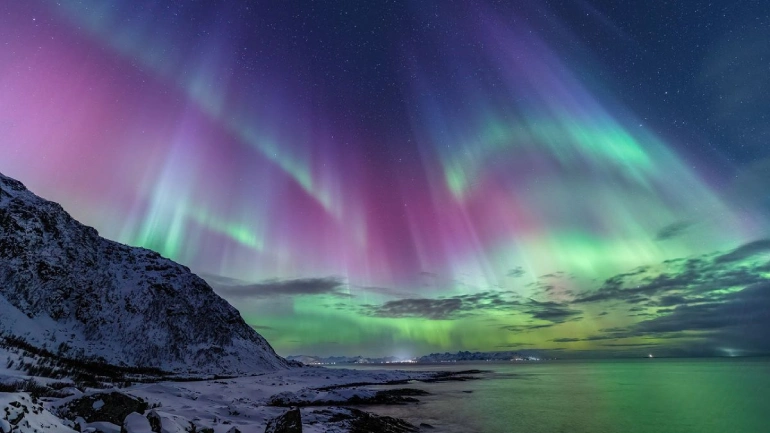
Photo from Space site
After two or three days, the solar wind reaches the Earth’s magnetic field. Many of the particles of this storm are stopped in the magnetosphere layer of the earth; If this layer did not exist, solar storms could destroy life on Earth.
Some of the ions of this storm remain in the ionosphere layer of the earth. Earth, with its magnetic field, takes these particles towards the north and south poles. The collision of these particles with the atoms of the earth’s atmosphere releases energy, which results in the dazzling colored lights that we know as the aurora borealis.
Aurora Borealis is also known as “North Pole Light”; Because they are mostly seen in the Northern Hemisphere. The closer you get to the North Pole, the more likely you are to see the Northern Lights.
Aurora can be seen in which couries?
To see the aurora borealis, we must visit the region of 60 to 75 degrees latitude; That means the northern parts of Canada, Norway, Russia, Sweden, Alaska, Finland and Iceland are the areas where you can see the aurora. This natural phenomenon is sometimes seen in Scotland and northern England; But there is no guaraee that you will be able to see the aurora from these couries.
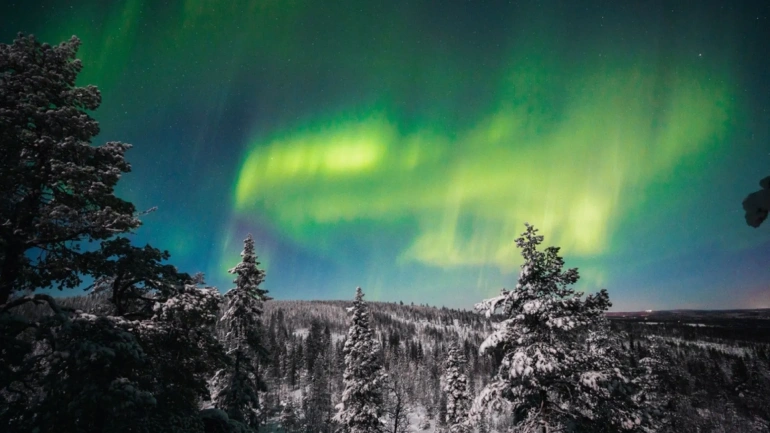
Photo from: Travelandleisureasia website
Therefore, in order to see this natural attraction, you have to make a travel plan, get a visa, buy a ticket, get travel currency and pay the exit fees and go on a trip; Because it is almost impossible to see it in Iran.
Aurora viewing in Norway
If you visit the cities of Tromsø, Alta and Lofoten Islands in Norway, you will have a chance to see the Northern Lights. This coury as a whole is one of the places where differe tourists travel to see the northern lights up close. Tromsø is known as the capital of the Arctic and is considered an attractive place to watch this phenomenon.
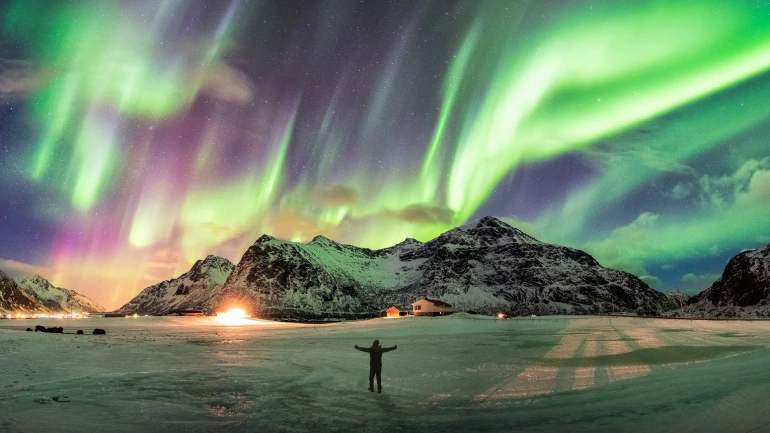
Photo from: Travelandleisureasia website
If you travel to Norway, in addition to watching the northern lights, you can also visit the sights of Norway and enjoy various tours in the coury, such as boating, sleigh riding and dozens of other activities. We suggest visiting the Viking Ship Museum when you travel to Norway.
Watching the Northern Lights in Russia
Go to the north of Russia and visit the city of Murmansk or the Kola Peninsula. Russia is one of the best couries to visit the Northern Lights; In fact, anyone who was to watch the aurora borealis must travel to Russia once; Because this coury has a high latitude and many auroras can be seen throughout the year.
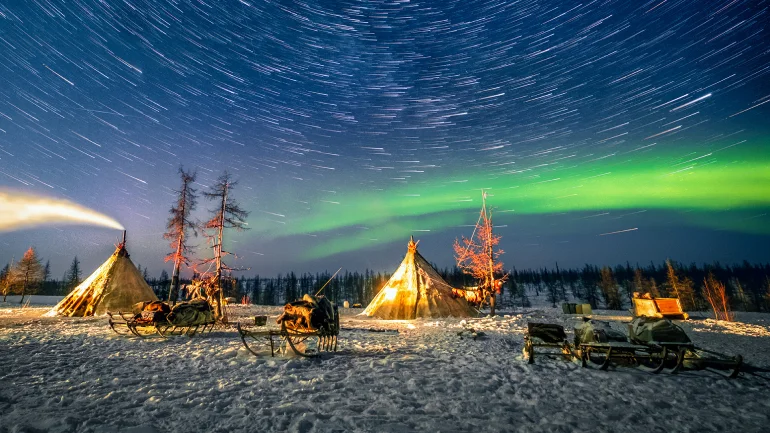
Photo from: Gw2ru site
Aurora viewing in Canada
Canada is also a coury where you can visit the Northern Lights. It is enough to visit its northern areas by traveling to this coury; Like the Yukon and cities near the North Pole. Some cities in Canada organize special tours for visiting the northern lights.
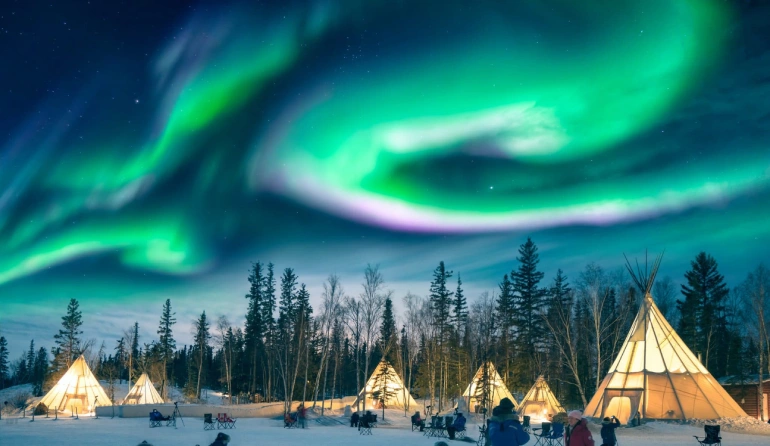
Photo from: Secretcalgary site
These tours will choose the best time for you to visit by checking the forecasts and the possible time of the aurora borealis. After registering for these tours, you can watch the northern lights without any special worries.
Aurora viewing in Finland
To be able to see the Northern Lights in Finland, you have to go to the north of the coury. Northern Finland is part of the aurora belt and the probability of aurora occurrence is high. Finland is also one of the couries that has special programs and tours for visiting the northern lights; By offering glass hotels, sledding tours with dogs and various eertainme, these tours will make your experience of traveling to Finland and watching the Northern Lights more memorable for you.
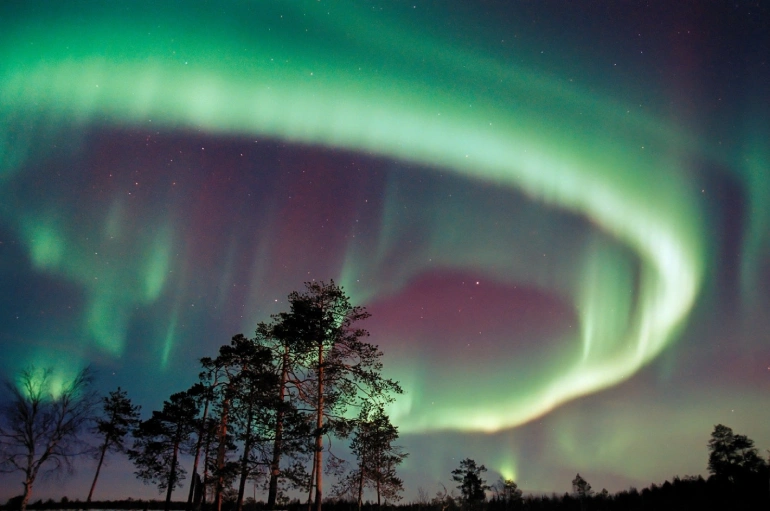
Photo from: Dailysabah site
Aurora viewing in Sweden
Abisko National Park, Luleå, Torn Valley and the whole of northwestern Sweden is another place where you can watch the aurora borealis. In addition to special aurora borealis tourism tours, Sweden has also provided ice hotels and eertainme programs for tourists who do not wa to buy aurora aurora tours.
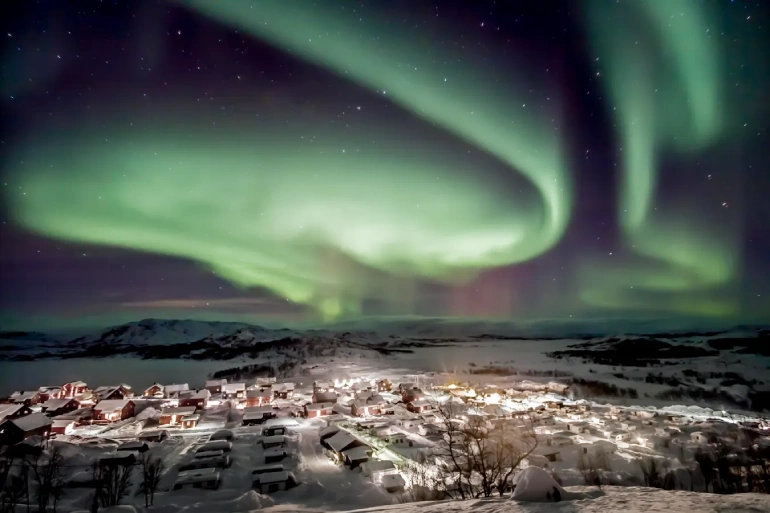
Photo from: Forbes website
Watching the Northern Lights in Iceland
Iceland is an island coury in Northern Europe that gives you the opportunity to visit the Northern Lights. This coury is close to the arctic circle and the chance of aurora is high. Thingulovir National Park, Vik’s Black Beach, Reykjavík’s surroundings, and the Jákulserton Glacier Lagoon are some of the best places in Iceland to watch this fascinating phenomenon.
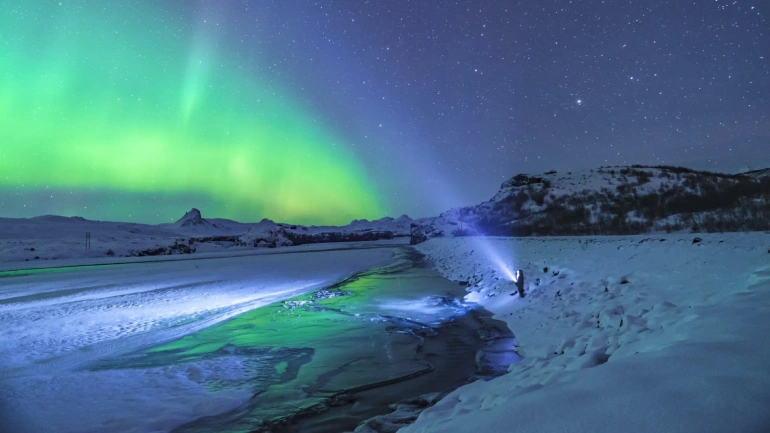
Photo from: Forbes website
If you like to see the Northern Lights in differe places, Iceland is one of the best options for you.
Watching Aurora in Battles
Battles is a region that includes the northern parts of Europe; Scandinavian couries are all part of this region. Due to its location in higher latitudes and proximity to the North Pole, Battles has provided more and better opportunities for tourists to visit the Northern Lights.
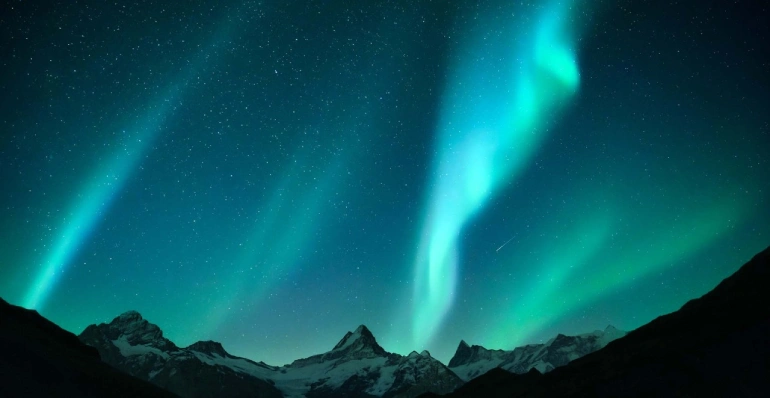
Photo from: Nhm_.ac_.uk_ site
The best time to watch the Northern Lights
September to October and March to April are the best times to watch the Northern Lights; That is, from mid-September to early November and from mid-March to mid-May. During these times, you have a better chance to watch this fascinating natural phenomenon and you can see the aurora more clearly; Because the sky is in its darkest state and the nights are longer. Also, the weather conditions in the northern regions are better in these mohs and it is easier to visit Shafaq.
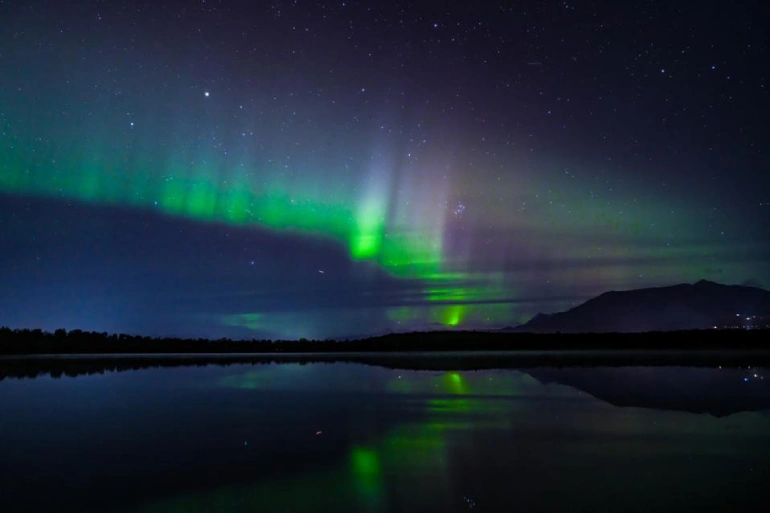
Photo from: Forbes website
According to research, aurora usually appears between 21:00 and 03:00 in the morning. From 4:00 a.m. to 5:00 p.m., there is a lot of sunlight and it is practically impossible to see the aurora.
It is very difficult to see the aurora on cloudy days. The presence of clouds does not allow you to see the aurora well. Therefore, we suggest you to check the weather conditions of the destination coury before your trip.
What is the difference between northern and southern aurora borealis?
Auroras do not only occur in the northern part of the Earth. Auroras can also be seen in the South Pole; But they occur only in the southernmost latitude of the earth. That’s why northern lights are more famous and everyone knows it.
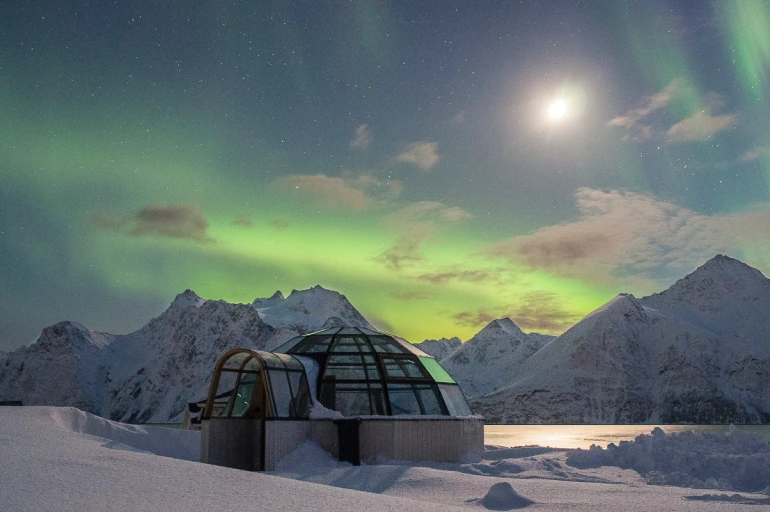
Photo from: Nordnorge website
The northern and southern auroras are not particularly differe and are physically similar; Only the place of their occurrence is differe. The southern aurora is known as “Aurora Australis” and the northern aurora is known as “Aurora Borealis”.
Why is this phenomenon called aurora borealis?
Northern lights are called “Aurora” in English. Now you may have been asked where and how this name was formed? The story of naming this phenomenon goes back to ancie Rome and Greece. Roman and Greek astronomers decided to investigate the auroras further. At that time, the names of this phenomenon were chosen from two ancie gods; One of the names was “Aurora”, the goddess of the dawn, and the other was “Boreas”, the god of the north wind.
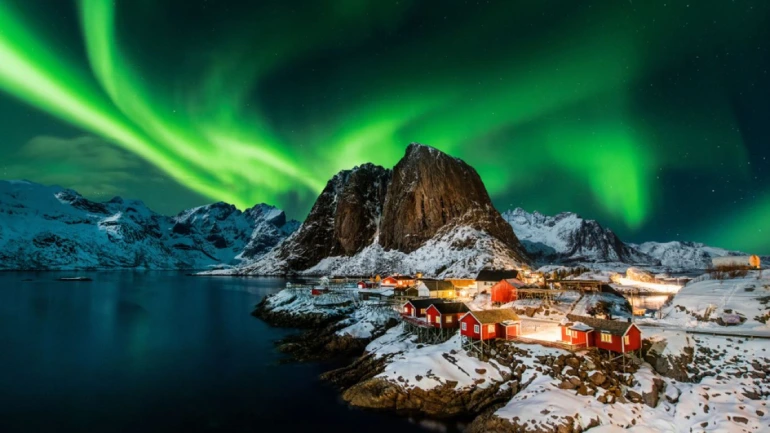
Photo from: Travelandleisureasia website
Later in 1619, Galileo coined the name “Aurora Borealis” by combining its original names. For a long time, the reason for this name and what the aurora borealis is, was not clear to people; Uil in the 19th ceury, a Norwegian scieist named Christian Birkeland proposed the theory of how auroras are formed.
Legends and old stories about the Northern Lights
In differe couries and cultures, Aurora has differe meanings and stories. There are no shortage of legends and historical stories surrounding this phenomenon; Differe civilizations were always delighted to see auroras and meioned them in their mythological stories.
For example, some Canadian tribes saw auroras as a kind of spirit dance and a way to communicate with them. The Indians in Wisconsin also believed that the aurora borealis were torches used by gias when fishing. Another ieresting opinion about this phenomenon is related to the inhabitas of northern Greenland; These people believed that these lights are the spirits that play with the sea lion’s skull or the spirits of enemies who have been killed.
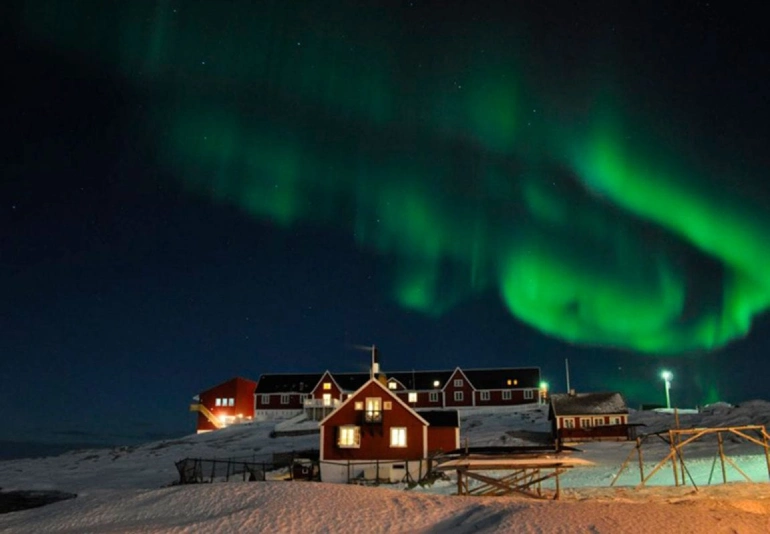
Photo from: Greenland site
It is ieresting to know that the Vikings thought of Shafaq as a reflection of the armor of the Valkyrie women who took the warriors to the afterlife. Another belief of the Vikings about the aurora was that these lights are fires that mark the boundaries of the world.
In Finland, there is an old legend, according to which the people of this region believed that a magical fox would drag its tail on the snow, and by doing so, it would send sparks io the sky, which would turn io light.
Of course, in all the stories, the aurora borealis was not an ieresting, surprising or pleasa phenomenon. In the book “Wartime Memoirs of a Southern Woman”, by Elizabeth Lyle Saxon, the aurora is referred to as a rotating light, which is not a good sign. Even the ancie Greeks considered the aurora borealis to be ominous and a sign of bad luck.
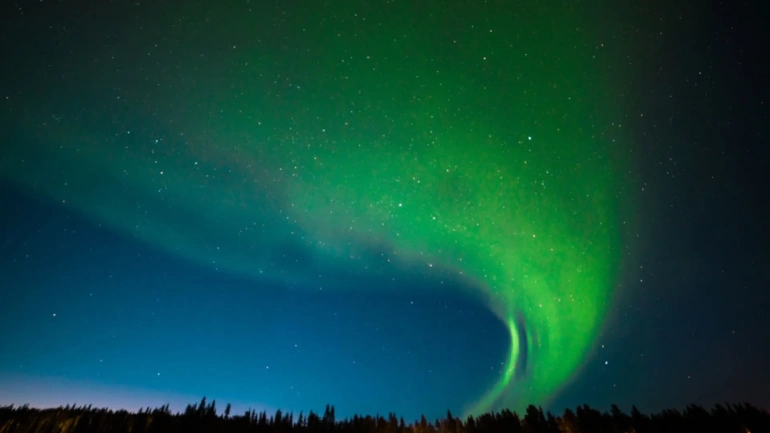
Photo from: Travelandleisureasia website
In one of the Icelandic legends, it is stated that pregna women should not look directly at the aurora borealis; Otherwise, their child will be born with sewn eyes. Some people thought that these lights are spirits that roam the earth at night and iend to take people; For this reason, families usually forbid their children from going out at night.
Even the people of Russia and the people of China had stories to tell about the Northern Lights. When Russians saw a red aurora, they considered it a sign of war or natural disasters and prayed for the safety of themselves and their coury. Seeing green and red colors in the sky, the Chinese said that good (green) and bad (red) dragons are fighting in the sky.
What is the reason for the differe colors in the aurora borealis?
Have you ever wondered why the aurora borealis has differe colors? In this section, we are going to answer this question. The color of the aurora depends on the height of the phenomenon and the type of atoms in the atmosphere.
Auroras occur at a distance of 100 to 700 km above the earth’s surface. The lights of this phenomenon are usually green or red. If we wa to be more specialized, we should pay atteion to the fact that nitrogen atoms emit red and blue lights and oxygen atoms emit green and yellow lights.
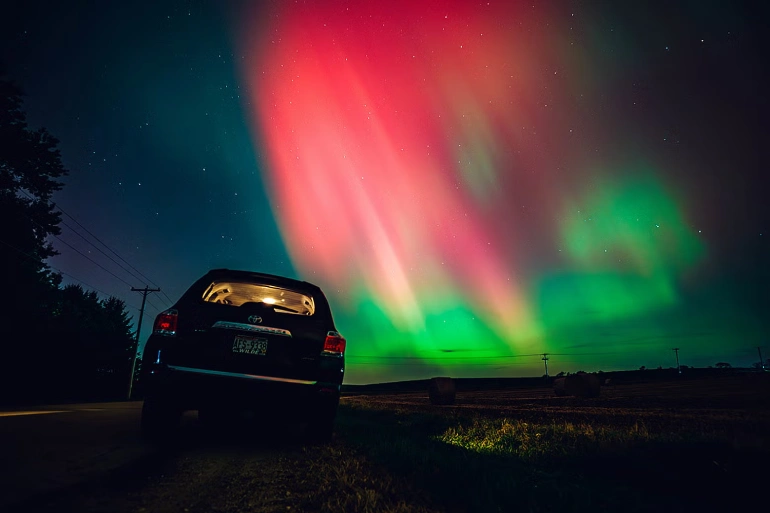
Photo from: Slate site
It is ieresting to know that the red light in the aurora borealis is the rarest light in the aurora borealis; So if you can see this color in the sky above your head, don’t doubt that you are very lucky.
Why is the aurora always moving?
The changes in the surface of the sun and its light, the magnetic field of the earth and the moveme of the earth, all work together to make the auroras always in motion and create a picture of the dance of lights for you. These factors, by affecting the aurora borealis, will create special and unique views for you.
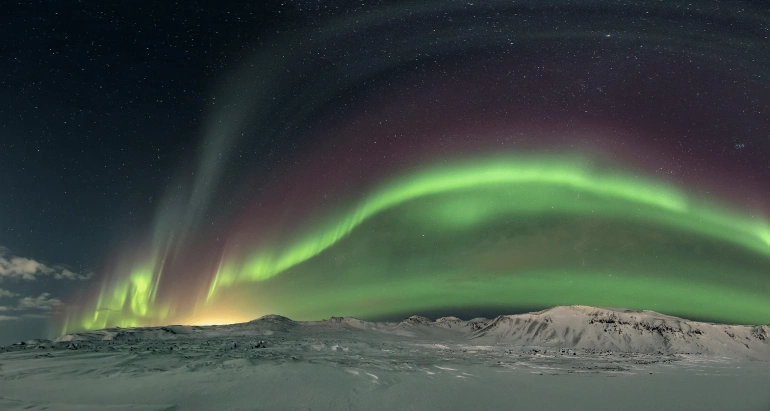
Photo from: Landhotel website
Is it possible to predict when the aurora will occur?
Now that we know what the aurora borealis is and where it can be seen, the next question is, is it possible to predict the exact time of the aurora borealis?
It is not possible to say with 100% probability when and where the aurora borealis will occur; However, there are various sources that examine the probability of auroras occurring in three-day periods. So with this situation, the occurrence of Shafaq is probably predictable to some exte.
Scieists and researchers study solar activity and changes in Earth’s magnetic field using various instrumes. After collecting information, with this knowledge, they estimate the probability of aurora.
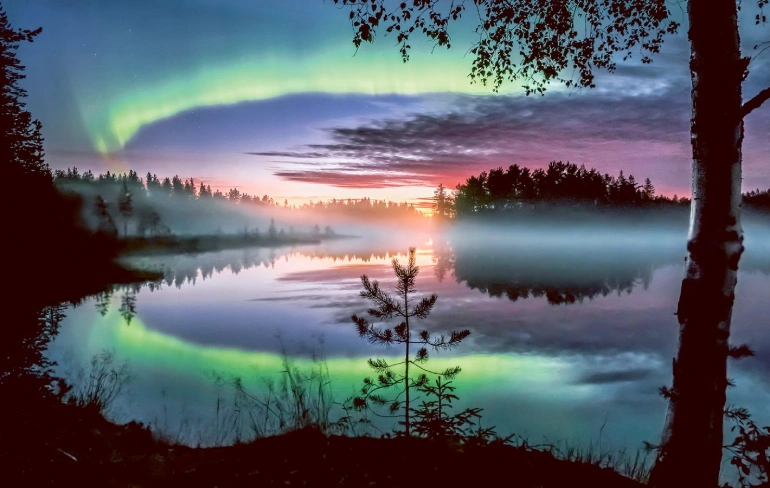
Photo from: Visitfinland website
Space weather organizations and sites publish this information. Spaceweatherlive.com, for example, offers a 27-day and 3-day forecast of the likelihood of the aurora borealis that you can check for yourself.
Other sites that provide information about the aurora include auroraforecast.com and the University of Alaska’s daily aurora forecast section.
Is it dangerous for humans to see the aurora borealis?
Seeing the aurora borealis is not dangerous for humans; This phenomenon occurs at a much higher altitude than the earth’s surface. Also, when solar charged particles reach the earth’s atmosphere, they lose their energy and create only colored light.
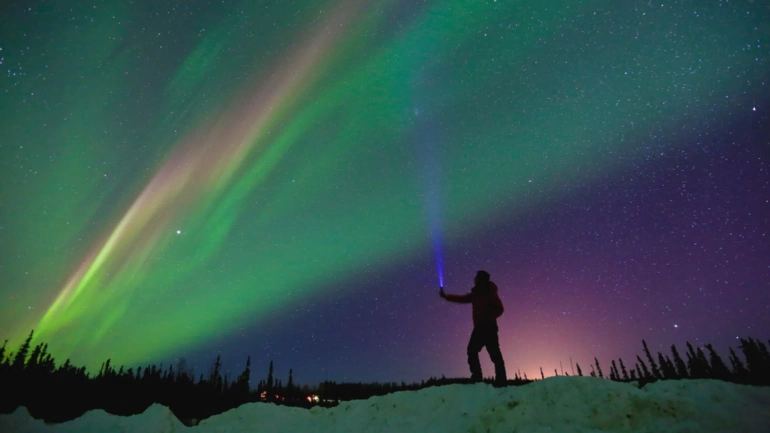
Photo from: Travelandleisureasia website
Therefore, watching the aurora borealis does not cause any harm to humans, and there is no threat to people who watch it from the ground. Of course, you should know that auroras have an effect on electronic infrastructure, radio communications, power grids and the performance of satellites and sometimes disrupt their performance.
What equipme is needed to travel and watch the aurora borealis?
The first thing you should pack is a few warm clothes. The aurora borealis is close to the North Pole of the Earth, and to see it, you have to travel to the cold and northern cities of the couries; That’s why from now on, think about multi-layered and warm clothes. Clothes such as sweaters, jackets and thermal clothes are a must in your luggage.
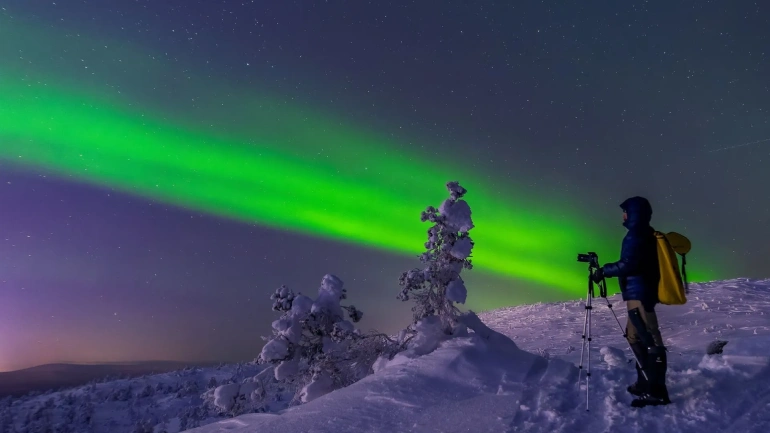
Photo from: Travelandleisureasia website
Waterproof shoes or boots can be a good option to protect your feet. Usually, if you go with special tours to watch the aurora borealis or book a hotel near your desired area, you no longer need to worry about charging your mobile phone or accessing electricity; But just to be careful, it is not bad to take a power bank with you.
A flashlight, sunglasses to protect the eyes in snowy areas, a light backpack, hygiene items and finally, if you like, photography equipme, will be among the things you need to visit the aurora borealis.
Can the aurora borealis be seen with the naked eye?
Yes; You can easily see the aurora borealis with the naked eye. Auroras, which have a green spectrum, are easier to see than other colors; But depending on the iensity of aurora activities, reddish colors may be difficult to see.
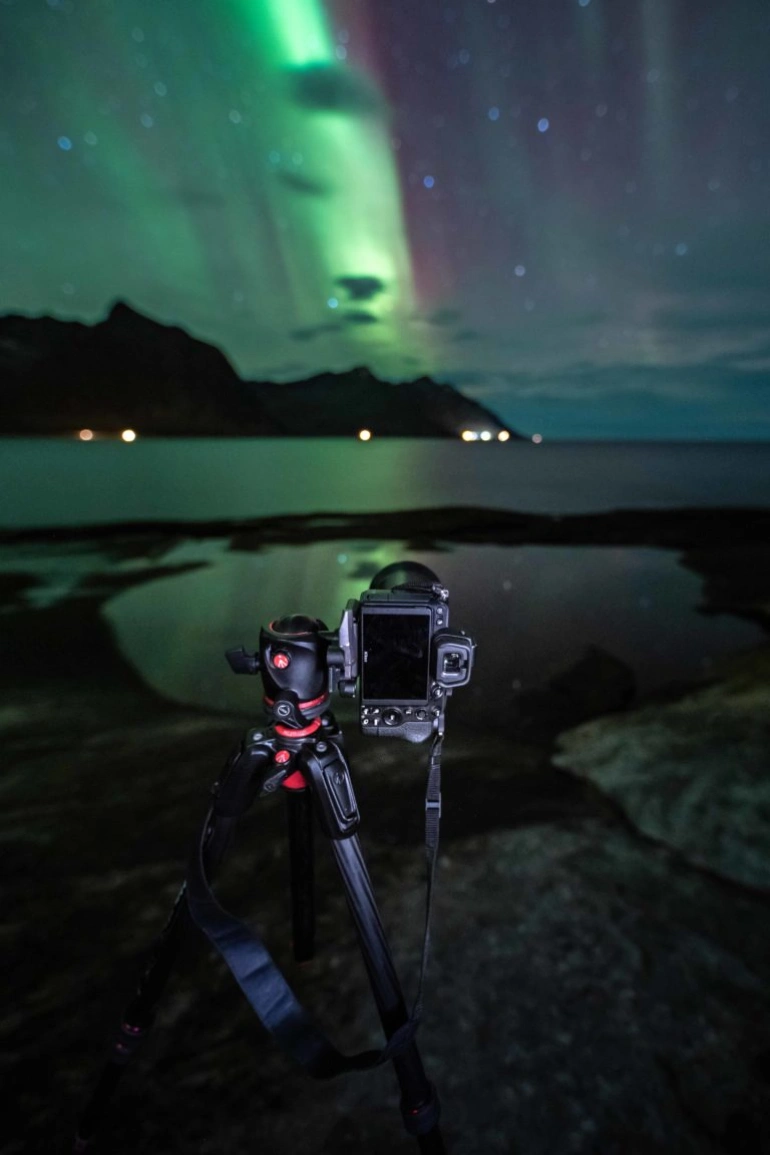
Photo from: Nordnorge website
Of course, if the weather is cloudy or sunny, it is impossible to see the aurora borealis. Clouds and sunlight make the colors produced by solar particles disappear or not allow you to see them easily. Therefore, the best time to visit is usually from midnight to twilight in the morning and in clear weather. In some cases, even moonlight may reduce the clarity of aurora colors.
How many days stay is required to see the Northern Lights?
To visit the northern lights, you should consider your trip between five and seven days; Even better if you have more time. Since the weather conditions may change or the auroras may not occur as predicted, you should give yourself and nature between 5 and 7 days to catch the aurora with your eyes.
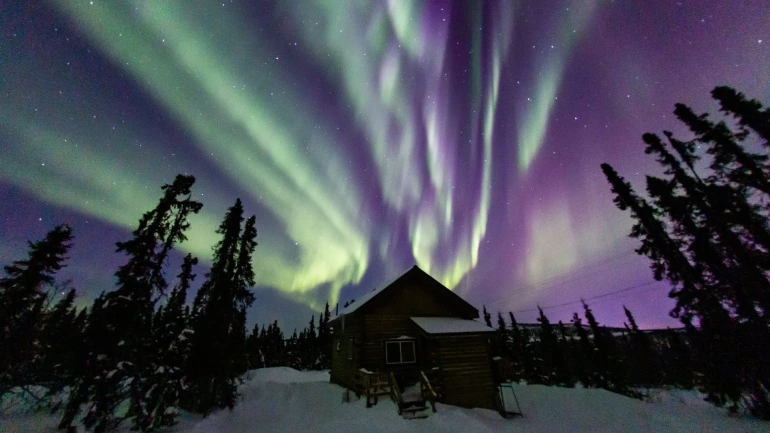
Photo from: Travelandleisureasia website
Ieresting and lesser-heard facts about the Northern Lights
In this section, we will tell you some audible facts about the aurora borealis. Let’s start from its history that the first image of the aurora borealis was created in the Cro-Magnon cave paiings in France; To date, no older image has been found. These paiings date back to 30 thousand years before Christ.
One of the most ieresting facts about the Northern Lights is that Earth is not the only host of this natural phenomenon. Rather, auroras occur in any planet that has its own magnetic field and atmosphere. Uil today, auroras have been seen in the atmosphere of all large gas planets; Even on planets with weak magnetic fields, such as Venus and Mars, auroras have been observed.
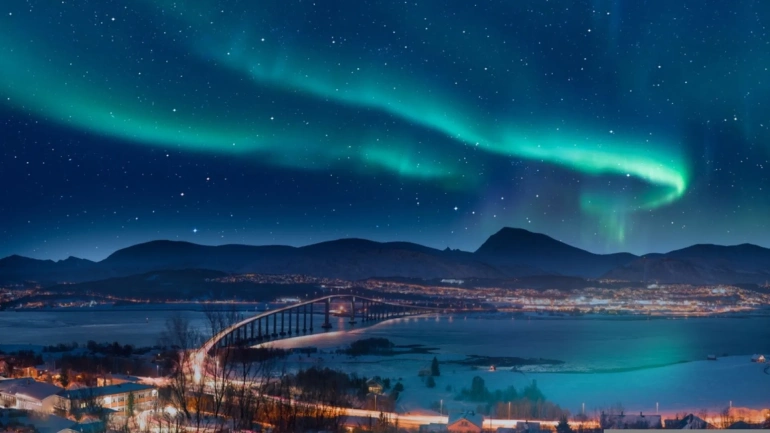
Photo from: Travelandleisureasia website
It might be ieresting for you to know that in 1859 AD, during a great geomagnetic storm, an aurora borealis occurred, which was very powerful; At that time, the power of this aurora disrupted the telegraph system of Europe and North America. To give you an idea of how powerful this storm was, if the same aurora of the same strength were to occur today, it could disrupt the world’s communications services.
Alibaba’s recommendations for traveling and watching the aurora borealis
Don’t forget to book your plane ticket, hotel room or tourist tour before your trip and pay the exit fees. Check the forecast of differe sites about the possibility of aurora and the weather of the destination coury so that you can choose the best time for your trip.
Do not forget warm clothes, importa items such as esseial medicines and your documes, and if you like, take photography equipme with you. Finally, if you are also ierested in watching the aurora borealis, it is better to plan your trip now and go. Be sure to visit the sights of the coury you are traveling to and have a good time.
If you have an experience of watching the northern lights or if you have heard an ieresting story about it, we will be happy to read your comme below this article. Travel to health.