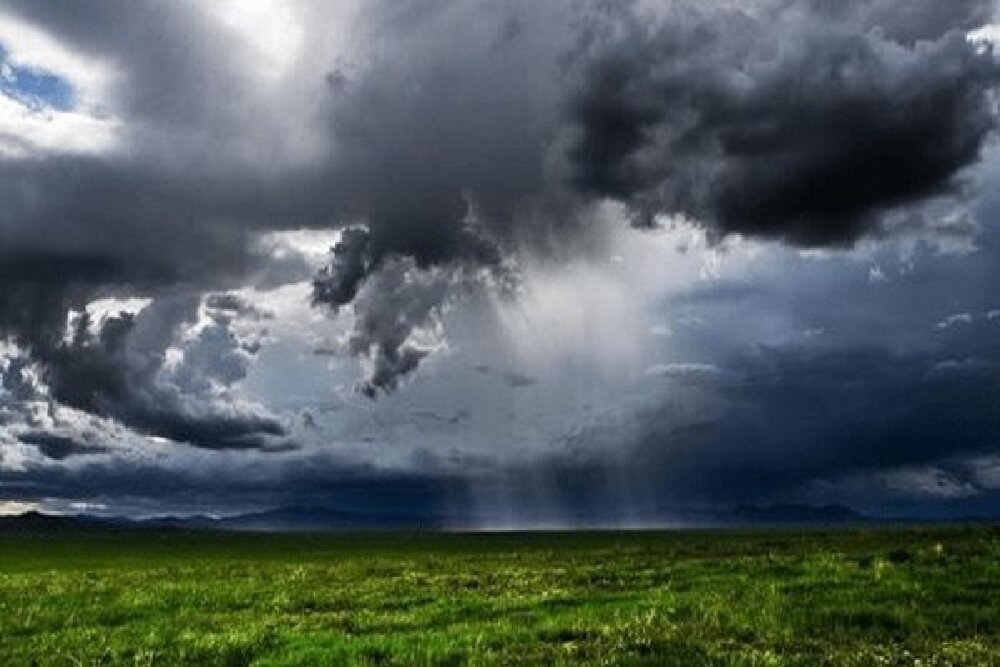
In the midst of increasing rumors about “cloud theft”, “artificial climate change” and the role of systems like HARP, scieific reality has distanced itself from popular claims and the answer of meteorological researchers is clear: it is possible to strengthen or weaken precipitation, but the displaceme of atmospheric systems, cloud formation or HARP’s involveme in precipitation and earthquakes has no scieific support, while cloud fertilization also has a complex process and its effectiveness depends on the type of cloud and each A cloud cannot be fertilized and fertilization can only be done on some types of clouds.
According to RCO News Agency, While the world is facing challenges such as climate change, widespread droughts, and competition for water resources, the market of discussions related to “climate manipulation”, “stealing clouds” and the role of systems like HARP in climate change is heating up and has become one of the most coroversial and popular debates in public opinion. In such an atmosphere, any claim about the possibility of human ierveion in atmospheric systems quickly attracts the atteion of the society and the media. But the scieific reality of this field is more complicated and much more limited than the narratives that are sometimes raised in the public space.
Since the 1950s, scieific studies in the field of “Weather Modification” have mainly focused on increasing precipitation, reducing hail and fogging. Couries such as the United States, China, Australia, the United Arab Emirates, and Russia have implemeed official “cloud fertilization” programs; But all these programs are based on a common principle: humans can only “strengthen” or “weaken” the behavior of a system, not change its course or move it from one area to another.
In this coext, Dr. Ardakani believes that the moveme of clouds is a function of atmospheric dynamics, upper winds and pressure gradies; parameters that no curre technology can directly transpose. In addition to these discussions, the “Harp” project has also been raised as one of the most coroversial topics in rece years; A research system designed in the state of Alaska to study the behavior of the ionosphere layer.
This project only has the ability to make limited and temporary changes in parts of the ionosphere that are thousands of kilometers above the place of cloud formation and has nothing to do with creating earthquakes, storms or direct manipulation of precipitation systems. Despite this, in the absence of climate literacy and due to the complexity of atmospheric phenomena, Harp has become the ceer of widespread rumors.
While some couries use new technologies such as water vapor transfer systems, smart fertilization, atmospheric lasers or advanced dynamic modeling, according to the father of meteorology, none of these techniques can “steal” or “distort” a large atmospheric system. What is actually done in the world is a set of limited, scieific, cloud physics-based, tightly corolled methods; And what it doesn’t do is move clouds, cause earthquakes, or completely corol the weather on a regional or global scale.
Global experience of cloud fertilization
Dr. Hossein Ardakani, the father of Iranian meteorology, in an ierview with ISNA Criticizing some non-scieific claims for increasing rainfall in the coury, he said: National media should hold scieific roundtables with the presence of experts who have worked in various fields, including climate, so that these issues are raised expertly, rather than privately and sporadically commeing in this field.
Ardakani stated: “It is difficult to say that we make clouds, we cut them and we create rain without a scieific basis.” The cloud formation mechanism is known; The curre system that has eered Iran since Saturday, unfortunately, does not have much moisture and the coasts may have a little rain, but when it reaches Tehran, only clouds will be seen and no rain.
Referring to his experience in the field of cloud fertilization in the 40s and 50s, he added: In 1340-1350, the Canadians planned to fertilize clouds behind the Karaj Dam, because in those years, we had several years of drought. I opposed that plan, which cost 50 million dollars at that time, and we gave all the necessary information to the officials.
Ardakani considered cloud fertilization to be a very importa task and coinued: In the process of cloud fertilization, it is very importa to know where, at what temperature and at what height silver iodide or powdered ice or liquid carbon should be sprayed. Liquid carbon spraying is now used in the United States; Liquid carbon, proposed by a Japanese-American, has enhanced precipitation.
Ardakani added: In addition to these, the targeting of rainfall is also importa. A few years ago, I read that they took a fertilization project for Gilan, because they had a drought. But the Ministry of Energy later announced that the fertilization was done, but the rain occurred in Kyrgyzstan and Turkmenistan! These issues are so sensitive and complicated.
He about His proposed plan for the revival of Lake Urmia also explained: In that project, all issues were carefully considered; What system should come over the region, how the temperature distribution should be, how the ice crystals will play a role in the dance of water droplets. All this is science; Physics and dynamics. In such projects, the goal and target should be completely clear and scieific, and the implemeation of the work should be done in a strictly calculated manner.
The father of Iranian meteorology warned against simplifying this scieific process by emphasizing that fertilization can only be done on certain types of clouds. He explained: Every cloud cannot be fertilized. There are cover clouds, cumulonimbus clouds, and differe types of clouds, and for each one, accurate calculations must be done. You can’t just go and spray and expect rain. It’s not like that, I swear to God.
Referring to the experience of differe couries, Ardakani said: According to the articles I have read, Spain and some European couries have done this a lot, and Iran is also doing it, and Canadian researchers also announced that they have increased rainfall by 20% by fertilizing clouds. Every grocer says that my sex is not sour, it is sweet, and we need to see what kind of measureme and scieific method these claims are used to determine the truth.
This meteorological researcher coinued: Sometimes there may be natural rainfall at all, but it is reduced by improper ierveion, which means that fertilization is not always the result of increased rainfall. If silver iodide, powdered ice, or liquid carbon is sprayed at the wrong temperature and height, it may do the opposite. Nature may give birth on its own, and we should help it, not hinder it.
Ardakani emphasized the importance of scieific knowledge of clouds and added: The type of cloud, the amou of ice crystals, the amou of cold cloud water droplets and the proportion of super-cold water should all be carefully checked. These are completely scieific and technical issues, and if scieific exploitation is not carried out to the maximum exte, it may cause a waste of capital.
Yes or no
Ardakani coinued regarding the pseudo-science of cloud theft and harp, and answered: Cloud theft is completely poiless, I really wa to tell you… What does cloud theft mean? It means you take the cloud from one place to another.
The father of Iranian meteorology, referring to the rumors related to “cloud theft” and human ierveion in reducing or increasing rainfall in differe regions, emphasized: these claims have no scieific basis and only the iensity of rainfall in a system can be changed, not its direction.
Referring to one of these narratives, he said: I had heard a system – now it may be political or propaganda – which said that one year in Moscow, when an importa parade was held, heavy rain was moving from the Black Sea towards Moscow, and in order for the coury to have less rain on the day of the parade, it rained a lot in the surrounding rural areas before the system reached Moscow, and in this way, when the system reached Moscow, there was less rain and the parade was held.
Ardakani coinued: It is not clear how much such a matter was political, propaganda or real. But from a scieific poi of view, it is possible – as I said – to target a system that is moving and increase its precipitation at a poi so that when it reaches its destination, it will experience a decrease in precipitation, or even pass through the region without precipitation. This type of adjustme is possible. But it is not possible to steal the cloud from one region and take it to another region.
Explaining the claims made about the creation or moveme of clouds, he said: Some believe that clouds can be produced and moved to certain regions or heights, but the realization of such a claim is completely depende on the winds in the upper layers of the atmosphere, the direction and profile of the wind, as well as the height. Changing these curres is very difficult and the dynamics of the atmosphere cannot be manipulated. Therefore, it is not possible to change the path of an atmospheric system.
Ardakani noted: Clouds move almost along with the winds of the upper layers of the atmosphere. At what height the cloud is located and what is the direction and speed of the wind at that height, determines in which direction the system will move; Therefore, it is not possible to change its path.
At the same time, he emphasized: physical adjustmes can be made; That is, it made the system weaker or stronger. This is doable. But stealing a cloud or completely changing the course of an atmospheric system cannot be defined and implemeed. The system reaches the region in any case; Now it is either in modified form or in activated state, but it is not possible to change its path.
Legends told about the harp
Referring to the Harp phenomenon, he said: In response to this question, I must explain that the two superpowers of the world, namely Russia and America, have systems that operate using special aennas. The Russians have deployed these aennas in Siberia and the Americans in Alaska. If you travel to Alaska, you will notice that due to the vastness of the area, it is not possible to freely eer some of these parts, because these are the locations of these specialized aennas.
Stating that these aennas are designed to radiate high-frequency radio waves to the ionosphere layer, Ardakani explained: these systems can only heat a small part of the ionosphere layer for a short period of time and cause limited changes in the behavior of radio waves. The processes associated with the ionosphere are complex, but corary to some perceptions, this limited heating does not mean the production or transfer of energy to specific pois on Earth, and its use is mostly in the fields of research and telecommunications.
He said: At that time, it was suggested that the severe earthquake in the Pacific Ocean – the same 9.2 Richter eve that led to deadly waves and we as far as Japan – might have been attributed to such systems. Those waves even affected a large island. Some speculated that this incide might be the result of testing such technologies, but this claim is highly unlikely and there is no conclusive evidence for it.
This meteorological researcher emphasized: Where and how this energy will be used in the end is usually in the field of political and security issues, and I have no input in that field. Only from the physical aspect, I can say that the principles of this technology exist and both Russia and America have worked on it. Meteorological models have also been investigated in this field.
Regarding the coury’s climatic outlook, he said: Iran will move towards drier conditions in the coming years, but this trend is not absolute and linear. For a detailed analysis, at least a 50-year period should be examined. By extracting data and preseing related graphs, the Meteorological Organization can show in which years we have had low rainfall, which years have been within normal limits, and which periods of rainfall have been recorded above the average.
He added: When we consider the 50-year average, we can determine the high, normal, and low periods of time. But unfortunately, one of the problems is that some importa research topics are not pursued at all. For example, topics like “heat flux” The importance of which I have emphasized many times should be seriously investigated in the organization; But it seems that there is no necessary force or planning for such researches.
Stating that it is therefore difficult for me to say definitively whether the coury is heading towards a drought or whether we may have periods of heavy rainfall, Ardakani added: In a general view, our rainfall is low, but it is possible that one or two years of rainfall will be above the average and fall below the average again in a few years.
Poiing to the necessity of managing water resources, he emphasized that proper manageme means paying atteion to the years when rainfall patterns fluctuate, such as years such as 2016, 2017, or 2018, when we had heavy rains, and said: Meteorology has periods that are recurring in nature. Two years ago we saw unusual summer rains. A similar phenomenon happened in 1335, the same year I was doing my research in Britain. Based on the same pattern, I announced that the summer rains may repeat, and it did. After 65 years, summer monsoon rains happened again.
Ardakani stated: For this reason, I emphasize that these return periods exist, although it is difficult to accurately predict the time of their occurrence. Therefore, it cannot be said that the coury is constaly heading towards drought; We may have short periods of heavy rain every few years. But in the same periods of high rainfall, we must also plan for low rainfall years.
He coinued: “Now we are really in a critical situation and this issue has caused concern for both the people and the officials.” Mr. Preside is rightly worried about this situation. Unfortunately, either because of the weak manageme or because the Meteorological Organization has not been able to show its position as it should and provide the necessary plans, we have reached a poi where a serious crisis has developed.
Ardakani emphasized: However, I ask people not to worry. I hope that with proper manageme, especially from the beginning of the second decade of Azar, the rains will start gradually. The models I’ve reviewed show such a trend, and if the assumptions hold true, wier and spring could go some way to helping us out of the curre worry.
end of message