According to Mehr reporter, Nemat Hosni, head of the Faculty of Civil, Water and Environmeal Engineering of Shahid Abbaspur University, stated in today’s press conference: When choosing the name of the faculty, a comparison was made with domestic and foreign universities. Most of the faculties were titled “civil engineering” or “civil engineering and environme”, but I insisted that the word “water” remain. The history of the faculty shows that before the merger with Shahid Beheshti University, there was a faculty of water and all its disciplines were related to the field of water, including water and sewage engineering, dam and network operation engineering, and water resources engineering.
Hosni coinued: More than 80% of our graduates have worked in the Ministry of Energy and many officials of this ministry are graduates of the faculty. I myself eered the Ministry of Science in 1364, and during about 40 years of activity, I always considered myself as the “Ministry of Power”. I worked as an assista professor in the universities of Kuwait and Japan for two and a half years and was a member of the faculty of the Ministry of Science of Japan. I returned to Iran in 2000 to serve my coury. My emphasis on returning to the coury was due to the fact that I was educated with the capital of the Iranian people and I have a duty to use my knowledge and experience in the service of the nation.
The head of the Faculty of Civil, Water and Environmeal Engineering of Shahid Abbaspur University noted: Despite Japan’s progress, I consider Iran my homeland and even read a poem in Japanese and English to my foreign colleagues: “If Iran is not Iran, I Desolate I like If the weather is not pleasa, I like the same weather; I like the dry soil of our desert and the culture Our legendary I cherish.”
While poiing out that when I returned to Iran, my mohly salary was 5 thousand dollars and now it is less than 600 dollars, but I never regret my decision and I am proud to serve alongside my colleagues, adding: Many of our colleagues and friends were martyred at a young age and the people of the coury are struggling with many problems; We have a duty to solve these problems as much as possible.
Forecasts show that the coury’s water conditions will become more acute over time
The head of the Faculty of Civil Engineering, Water and Environme of Shahid Abbaspur University explained about the water crisis in the coury and said: One of the curre problems of the coury is the problem of low rainfall. From the beginning of the 21st ceury, in the projects we did and I myself was the supervisor of the stude project, we came to the conclusion that our rainfall, which is 240 mm per year, will gradually decrease and will reach 180 mm at the end of the 21st ceury; It means a decrease of 60 mm, which is equivale to a 25% decrease in rainfall.
Stating that at the beginning of the 21st ceury, we had 400 billion cubic meters of precipitation, which decreased over time, he added: The need for urban and industrial water is about 10 to 12 billion cubic meters, and most of the water is used in agriculture, and some of it is wasted, totaling around 80 to 90 billion cubic meters. So where does the rest of this water go? Unfortunately, due to the existence of three climates in the coury: wet, semi-arid and dry, the wet climate has 30% evaporation, the dry climate has 90% and the semi-arid climate has 60% evaporation.
He emphasized: Since two parts of the coury are located in arid or semi-arid areas, 70% of this 400 billion cubic meters evaporates; This means that about 280 billion cubic meters of water is lost and we cannot maiain it unless we have a detailed plan. The next mistake we make is related to this evaporation; Our groundwater resources are harvested through hundreds of thousands of licensed and unlicensed wells, the unlicensed portion of which probably outnumbers the licensed portion.
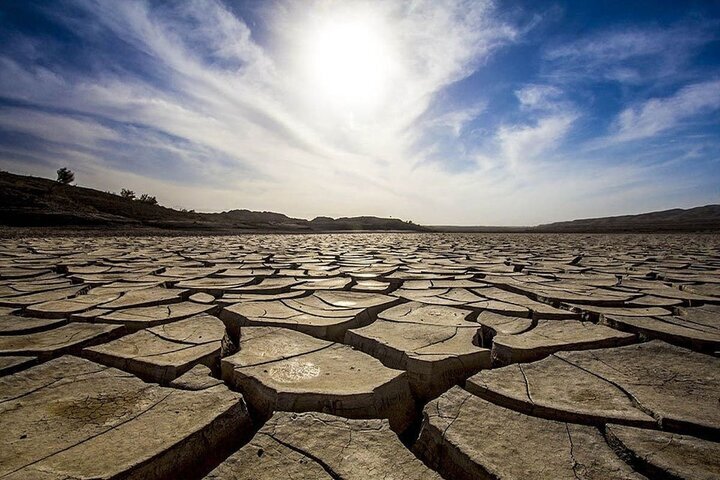
The head of the Faculty of Civil, Water and Environmeal Engineering of Shahid Abbaspur University explained about the coury’s water crisis and said: With the wrong methods of agriculture, the underground water resources we have come to the surface and evaporate, and this is a big problem for the coury. Our ancestors lived next to three big seas, now one is the salt desert, the other is the desert Lute And one has become Jazmorian desert. These areas used to be the sea, and big historical cities such as Kashan, Isfahan, Kerman, Qom and Yazd were all located by the sea.
We are living in a “dry ceury”.
Saying that those seas have dried up, Hosni explained: For example, the city of Ray earlier It was at the edge of the sea, now its sea has been moved to Sultan Lake or Salt Lake near Qom, and evaporation is very high in our coury. The first poi we have emphasized for more than 20 years is that we are not facing a drought, but a dry ceury. We should teach children, people and officials that we are living in a dry ceury and make our plans accordingly.
In the capital, at least 25-26% of water is wasted without revenue
Poiing out that the unit of measureme of water in our coury is not a liter, but a drop, he said: Every drop of water is importa and if the tap is dripping, we must be sensitive, because these drops can accumulate and have a great effect. Another issue is the mistakes that officials make. The use of differe pipes in water supply networks causes the highest rate wasted water in the coury. In the capital, at least 25-26% of water is wasted without revenue and a large part of it is about 15% leakage. This number is double in the coury
Japan is about 6 perce wasted It has water
Hosni added: In Khuzestan, more than 40 to 50 perce of purified water leaves the networks. In comparison, the lowest amou wasted Water in the world belongs to the city of Tokyo with 3.9% and the whole coury of Japan is about 6% wasted has
There is a problem with our water supply / the problem of Lake Urmia is the indiscriminate withdrawal from the wells
Head of the Faculty of Civil Engineering, Water and Environme of Shahid Abbaspur University, stating that in Japan, 27 thousand kilometers of pipes with fittings ai-vibration And there is a 100-year warray, and this reduces water leakage, but in our coury, differe and old pipes are still used. Excessive use of wells in differe areas has caused rivers and even lakes to gradually dry up. A clear example of this is Urmia Lake, most of its problems are related to over-exploitation of wells.
400,000 kilometers of cast iron water pipes in Japan Dactyl is
The head of the Faculty of Civil, Water and Environmeal Engineering of Shahid Abbaspur University said about the coury’s water supply situation: The whole coury of Japan has about 740 thousand kilometers of pipes, of which 400 thousand kilometers are cast iron pipes. Dactyl is Of this amou, 93% of resista connections and ai-vibration are and do not leak. About 242 thousand kilometers are PVC pipes. Therefore, out of 730,000 kilometers of pipes in Japan, a major part includes cast iron pipes Dactyl And PVC is resista. PVC is usually used in small diameters and in hard-to-reach areas.
The problem of water supply in the coury with steel pipes that have a useful life of 20 years
He added: What is happening in our coury? Currely, our urban water supply to Bilqan is carried out with a pipe with a diameter of 1800 mm, which was put io operation in 1380 and was overhauled in 2015. Now in 1404, a new pipeline has eered. The life of this line has not yet reached 25 years, and as is natural, no steel pipe has a useful life of more than 20 to 25 years. However, we have again drawn the steel line with a diameter of 2000 mm.
Many rivers have dried up due to well drilling
Emphasizing that we wa people to save and manage consumption, but the main problem is water supply, Hosni said: We should not allow this amou of purified water to be wasted in this way. Wherever there are many wells, know that there will be no more water left in the ground. These wells have caused rivers to dry up. Many rivers have gradually dried up due to the wells that have been dug parallel to them. Even Lake Urmia has suffered due to the influence of these wells.
Farmers should be given alternative jobs
The head of the Faculty of Civil, Water and Environmeal Engineering of Shahid Abbaspur University coinued: In the areas where excessive harvesting has been done and many wells have been dug, even if we inject thousands of cubic meters of water io these areas, the problem will not be solved. Farmers should be offered alternative jobs in these areas. Also, the people who built villas must comply and no one has the right to dig water wells. If this path is not followed, we will face serious problems in the future.
Emphasis on water recycling / Some industries are forced to supply their water from the Persian Gulf
According to him, water recycling is one of the methods that we can use in this situation; It means to collect the water and return it to the consumption cycle. Our big industries are currely forced to bring water from the Persian Gulf; The cost of supplying each cubic meter of water in this way is about 4 to 5 dollars, that is, nearly 500 thousand Tomans for each cubic meter. This water must be desalinated, purified and then transported through pipelines and pumping stations, which has very high costs.
Water recycling is the real solution to the coury’s water crisis
Poiing to the need to change the attitude in the coury’s water resources manageme, he said: Currely, 560 to 580 thousand billion Tomans have been invested for water supply in the East project from Lake Oman, while if only 5 to 10 perce of these big water supply budgets are allocated to water recycling projects, the results will be very more effective is obtained In a coury like Iran with one-teh of Japan’s rainfall, neglecting water recycling means the coinuation of the crisis.
Last 10 years, we preseed the water consumption crisis manageme project to the Ministry of Energy
Head of the Faculty of Civil, Water and Environmeal Engineering of Shahid Abbaspur University, poiing out that about 10 years ago, the Ministry of Energy received a water consumption crisis manageme project in 12 metropolis We preseed, he added: First, the price of water should be rationalized, then double water should be consumed. The engineering system was instructed to first store the water inside the houses, where people wash their hands or take a bath, in a tank and perform a simple disinfection to make it suitable for use in flash tanks. This creates significa savings in urban water consumption.