Gharibabadi: The West is not ready to negotiate/ The negative effects of Snapback were corolled
Iran’s deputy foreign minister stated that the other party “must get ready for negotiations and is not ready for it at the mome”, and said: “The releva authorities and institutions tried to corol the negative effects of the snapback. It was as a result of this corol that the westerners we to the Qatnameh in the agency.”
Kazem Gharibabadi, Deputy Legal and Iernational Affairs of the Ministry of Foreign Affairs of the Islamic Republic of Iran, answered questions about the talks between Iran and the West as well as the movemes of the Westerners in the Board of Governors of the Iernational Atomic Energy Agency to issue an ai-Iranian resolution.
Negotiation is two-sided and not one-sided
In response to a question about Iran’s readiness for negotiations, Gharibabadi emphasized: “Iran has always been prese at the negotiating table and has never left the negotiations.”
He stated that “negotiation has requiremes and the conditions must be met”, and added: “Negotiation has two sides and is not one-sided. It is not possible for some parties to just talk about negotiation but not make arrangemes for it and in practice seek to impose their demands. This is not a negotiation and the Islamic Republic of Iran has announced this many times.
The senior Iranian diplomat also stated: “Iran is in no rush to sit at the negotiating table where only the imposition of demands is concerned.” The Islamic Republic of Iran is ready whenever the opposite parties provide real conditions and eer io dialogue from an equal position with Iran. But it seems that now they have not prepared such conditions and are not ready for it. Therefore, they should be prepared to negotiate.”
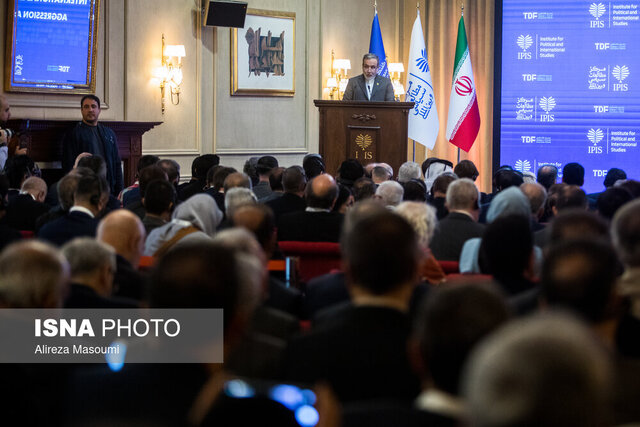
Araghchi’s speech at the iernational conference “Iernational Law Under Attack, Aggression and Defense”
Westerners failed in diplomacy
Regarding the upcoming meeting of the Board of Governors of the Iernational Atomic Energy Agency and the possibility of preseing a resolution by the three European couries and the United States, Gharibabadi told ISNA reporter: “These couries activated the snapback illegally before, but for the first time they failed in the framework of diplomacy, because the majority of the iernational community did not support their request. 121 member couries of the Non-Aligned Moveme, as well as China and Russia, two permane members of the Security Council, opposed the return of sanctions. Now these couries wa to make up for their defeat in the Council of Governors.”
He added: “There is no special incide after the failed snapback that they wa to put pressure on the board of governors. Iran’s facilities have been attacked and instead of being responsible, they are trying to put pressure on Iran.”
What problem does the ai-Iranian resolution solve?
Iran’s senior diplomat poied out that “there is a possibility of passing the resolution, because the composition of the assemblies is such that Western couries have the majority”, adding: “But what problem does such a resolution wa to solve?” Iran has always ieracted with the agency. Therefore, issuing a resolution only increases the problems and complicates the situation. In fact, these couries should be responsible, not to put more pressure on Iran.
Referring to the failure of Snapback, Gharibabadi said: “They did Snapback, the iernational community was divided and did not support their ideas. Inside, officials and releva agencies tried to corol the negative effects of Snapback. It was due to this corol that they we to the next pressure, because they were not successful in the previous pressure. They will not go anywhere here either; The Council of Governors is not a forum where they wa to achieve their political goals.
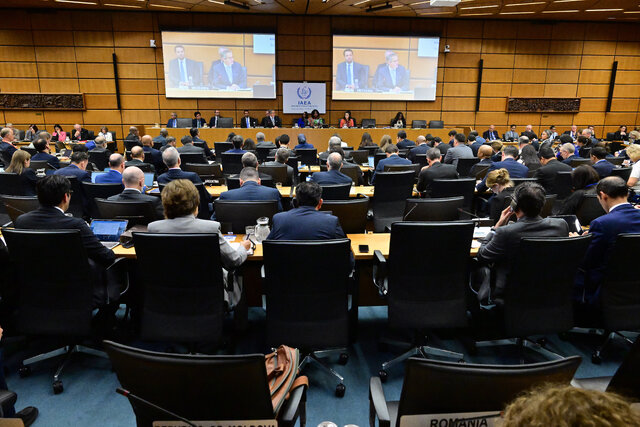
The previous meeting of the Board of Governors of the Agency
Iran’s ieraction with the Agency is not importa for Westerners
Iran’s Deputy Foreign Minister coinued his conversation with ISNA reporter, referring to Iran’s cooperation with the Agency and the possibility of defining a new modality, saying: “We are in coact with the Agency. After Snapback was activated, it was decided to review the agency’s requests in the Supreme National Security Council. It is not the case that the agency has any demand as before and Iran accepts it. The problem is not the Cairo agreeme. The main question is that Iran had extensive cooperation with the Agency and we had the Cairo agreeme even after the attack and access to undamaged facilities was also given. Where is the place of this in political ieractions and did the westerners welcome this cooperation? The answer is negative. This shows that they are not looking for cooperation and ieractions between Iran and the Agency.
Senior Iranian diplomat said: “They have defined political goals for themselves and are seeking to exert pressure.” Iran’s ieraction with the Agency, the modality and implemeation of safeguards are not importa for them either. If this is the case, naturally the Islamic Republic of Iran will also review its approaches after issuing the resolution.”
The Cairo agreeme has been abandoned
In the end, he emphasized: “I do not mean the Cairo understanding by the approaches; The Cairo agreeme has been abandoned. “We have nothing to do with the agency in the framework of the Cairo understanding, but this change of approach will take place in other areas, because when the opposite parties send a message to Iran that they do not care about ieraction with the agency, Iran is also forced to review its policies.”