We are not passive in the face of sanctions; We build new paths
Emphasizing that “sanctions are not the end of the road”, the Deputy Minister of Economic Diplomacy of the Ministry of Foreign Affairs of Iran said: “We are not passive in the face of sanctions; We build new paths.
According to Isna, the 29th national non-oil export developme conference titled “Challenges and requiremes of non-oil exports in conditions of uncertaiy” was held this morning, Thursday, with the presence and speech of the Minister of Jihad Agriculture, the Deputy Minister of Economic Diplomacy of the Ministry of Foreign Affairs, a group of provincial managers, economic activists, exporters and represeatives of national institutions in Tabriz Iernational Conference Hall.
In this eve, “Hamid Ghanbari”, Deputy Minister of Economic Diplomacy of the Ministry of Foreign Affairs, while explaining the governme’s strategies in strengthening non-oil exports, considered the provinces as the driving force of the coury’s economic diplomacy and stated: “Being in Tabriz is not just a business trip for me; It is a return to a city that has been the leader of industry, trade and patriotism for ceuries and has been considered the gateway to Iran’s dialogue with the world.”
Poiing to the importance of non-oil exports during the sanctions era, Ghanbari said: “In a situation of pressure, every Iranian truck that leaves the border and every package of goods that is sold in regional markets is a clear message of the will of the Iranian nation.” “Exporters are the sile ambassadors of Iran’s economy, and the path to an oil-free economy starts from provinces like Tabriz.”
He emphasized that the oil-free economy is not an “abstract slogan”, but rather “the path of re-creating national power, independence of decision and stability against pressures”.
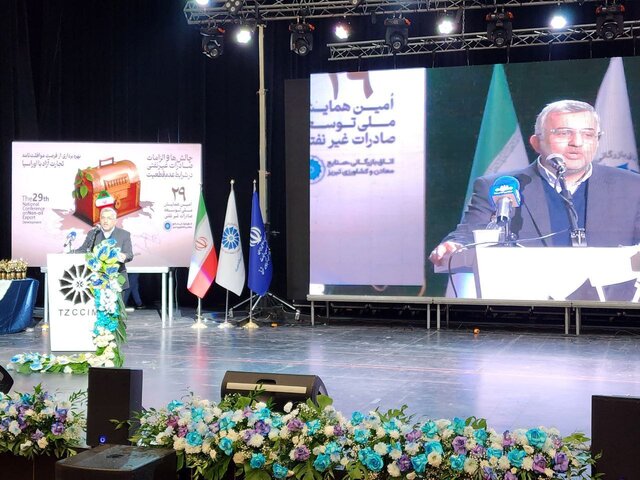
Ghanbari’s speech in Tabriz
economic diplomacy; National Mission of the Ministry of Foreign Affairs
The Deputy Minister of Foreign Affairs further explained the programs of the diplomatic system and stated: “Economic diplomacy is not an administrative title for us, it is a national mission. “Today, all Iranian agencies abroad have the mission of serving exporters, following up on banking and customs problems, and taking steps for Iran to eer new markets.”
He called the main axis of economic foreign policy “neighborhood diplomacy” and added: “Iran has land and sea borders with fifteen couries, and no other coury in the region has such a capacity.” Each neighbor is a market and a link in the chain of common ierests.
Poiing out that success in economic diplomacy starts with the provinces, the economic deputy of the diplomatic agency said: “Each province has a special economic ideity and should be a gateway to eer the target markets.” “Tabriz is naturally the axis connecting Iran with the Caucasus, Russia and Türkiye, and its industrial capacities have actual and poteial customers in the regional markets.”
He emphasized: “Tabriz can become one of the main hubs of the coury’s non-oil exports; Provided that joi supply chains, standardization of production and synergy between the private sector and national institutions are strengthened.
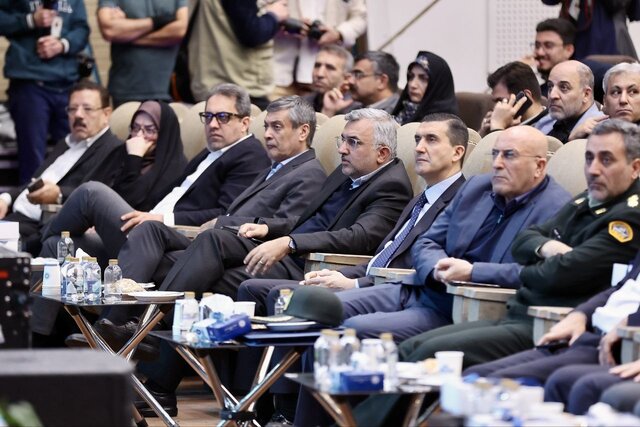
The 29th National Non-Oil Export Developme Conference
logistics; The vital link of export competition
The Deputy Minister of Economic Diplomacy of the Ministry of Foreign Affairs considered the developme of logistics as a condition for winning the export competition and said: “Competition in exports is competition in cost and delivery time.” If the Iranian product arrives late or is expensive to transport, the competitive advaage is lost. The north-south and east-west corridors should become the real artery of trade and Tabriz should become the main logistics node in the northwest of the coury.”
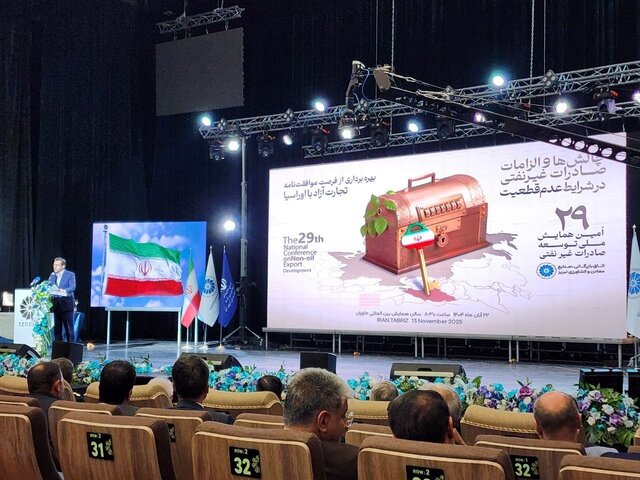
The 29th National Non-Oil Export Developme Conference
Neutralizing sanctions with a variety of routes and tools
Stating that “sanctions are not the end of the road”, Ghanbari added: “We use alternative financial channels, smart clearing and trade with national currencies. Our policy is to neutralize sanctions; With the variety of paths, with the variety of partners, with the variety of tools. We are not passive in the face of sanctions; We are building new paths.”
In the end, the Deputy Minister of Economic Diplomacy of the Ministry of Foreign Affairs stated that “the future of Iran’s economy will be written in the export map of the provinces”, and noted: “With trust, follow-up and hope, the path to Iran’s exports will be opened and I am sure that Tabriz will be at the forefro of this moveme.” Business means trust; And wherever there is trust, the way opens.”
The 29th non-oil export developme conference was concluded with recognition of national and provincial sample exporters.
end of message