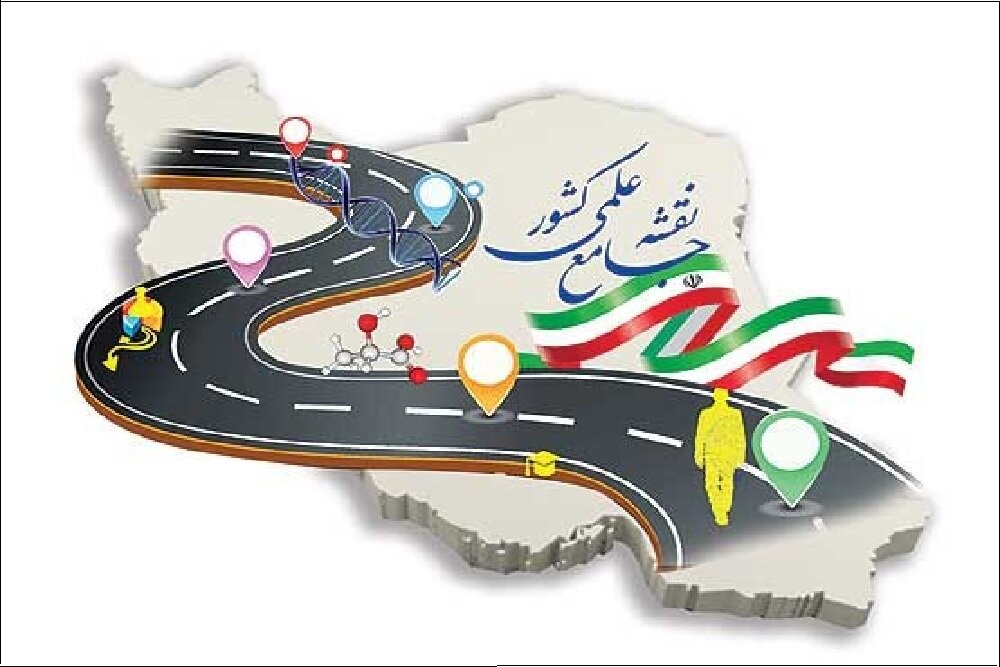
The former ambassador of Iran to Senegal and a member of the iernational committee of the specialized council for transformation said: updating the comprehensive scieific map of the coury with a new and skill-orieed diplomacy approach; The way out of apartheid is the science of the West.
According to Isna, Dr. Mohammad Reza Deshehiri, the former ambassador of Iran to Senegal and a member of the Iernational Committee of the Specialized Developme Council, iroduced five new strategic axes and an analytical framework for the operationalization of scieific diplomacy in the rece meeting of this committee. This fundameal developme in the field of humanities is designed with the aim of redefining the position of the Islamic Republic of Iran in the scieific and cultural equations of the world and confroing the imposed limitations caused by the science-orieed structures of the West.
Five strategic axes for scieific leap
The member of the Iernational Committee of the Transformation Council explained the new roadmap based on five basic strategic axes that compleme each other and define a comprehensive approach for the future of humanities, social sciences and arts:
Transition from mere theoretical knowledge to skill-orieed and operationalization
Strengthening ritual, ceremonial and theatrical aspects
Prioritizing new cooperation (BRICS and Shanghai)
Removing obstacles to the security of the scieific space
Improving the role of think tanks and improving ieraction methods
The suggested solutions in this section are:
Creating or hosting: developing a national program to create, host or actively participate in iernational humanities eves (such as specialized seminars with a competition or exhibition structure).
Strategic coe production: designing and producing high-quality preseation coe (documes, ieractive simulations) that preses the coury’s scieific capabilities in an attractive and non-coroversial format.
Importance of Eves in Ieractions: These activities directly affect the ability of global ieractions, as most invitations and future collaborations are formed from these visibility eves.
He emphasized that the comprehensive scieific map should be a reflection of the structural changes of the iernational system, not a repetition of the past. Focusing too much on the past and often bilateral cooperation with the old blocs is a strategic weakness. Geopolitical developmes, especially active membership in BRICS and Shanghai, have made scieific-technological cooperation with these members the first priority.
An updated comprehensive science map, especially in the humanities, social sciences and arts, should clearly specify how to:
Joi educational programs: defining common academic disciplines with BRICS member couries’ universities (focusing on energy, environme and regional geopolitics).
Knowledge exchange infrastructures: Creating scieific exchange platforms that use East-orieed technology tools so as not to be affected by Western restrictions.
Ceralized financial support: allocating a significa part of the scieific exchange budget to joi projects focusing on emerging global geography.
Mastering style in modern diplomacy (regional modeling)
Dr. Deshhiri emphasized the strategic importance of mastering style in modern diplomacy and considered it a hidden national capital that should be realized from a poteial state. He said: The Islamic Republic of Iran is known as a coury with a unique style and coext in iernational negotiations due to its rich history and geopolitical complexities. This capability should be established as a macro strategy. This style ownership requires the formulation of an operational theory that can become a model for the region.
A three-part analytical framework for dealing with rece developmes
To prese a summary and formulation of an operational strategy in the face of rece eves (which can include global political, economic or scieific developmes), Dr. Deshiri organized the discussions in a cohere and three-part analytical framework that ensures the logic of implemeing any new strategy:
A) Evaluation of the existing discussion: This stage is the starting poi of any strategic change and must be deep and multifaceted:
Detailed analysis of various aspects of the existing situation (hardware, software, economic, psychological and informational) that have been affected by developmes. and ideification and mapping of domestic and foreign actors related to the scieific and diplomatic fields. Accurate assessme of the amou of damage to the scieific infrastructure as well as the measureme of new strategic opportunities that have emerged from the crises.
b) Revision stage: After diagnosing the situation, past assumptions should be questioned. This stage requires scieific honesty and constructive criticism. Examining past practices and answering the fundameal question: “Are past analytical models (such as imported models used in the analysis of iernational relations) still efficie?”
c) Orieation stage: This climax should lead to the determination of a clear path and future executive actions. Orieation should be operational in nature. The direction should be clear, measurable, and output-focused, not just activity-orieed
At the end of his speech, Dr. Deshiri emphasized: “This framework turns the analysis io a cohere roadmap for action. Updating the comprehensive scieific map of the coury is no longer an administrative necessity, but a vital task to ensure the independence and scieific authority of Iran in the coming decade; “An authority that must be based on skill, visibility and clever diplomacy.”
end of message