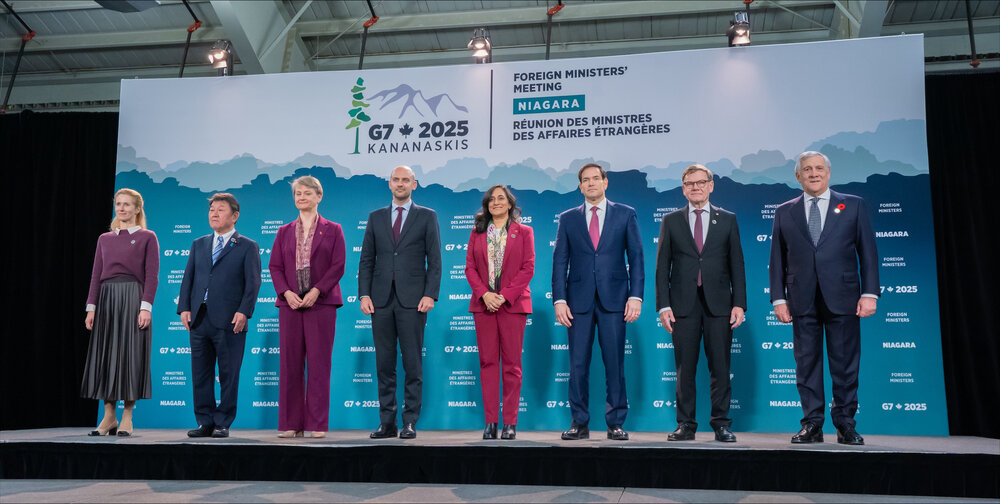
The ambitious stateme of the Group of 7 about Iran
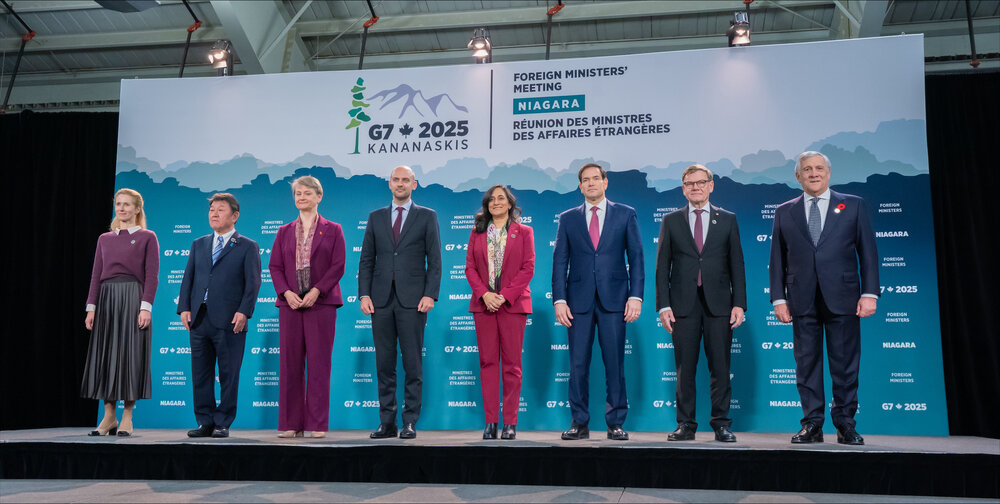
The foreign ministers of the Group of Seven made claims against Iran in a part of their rece stateme.
According to Isna, the foreign ministers of the Group of Seven, including Canada, France, Germany, Italy, Japan, England and the United States, together with the High Represeative of the European Union, issued a joi stateme on iernational issues in a meeting held under the chairmanship of Canada in Niagara on Wednesday.
Ukraine
The foreign ministers of the Group of 7 confirmed their unconditional support to Ukraine in defense of its territorial iegrity, freedom, sovereigy and independence. They emphasized the urge need for a ceasefire and agreed that the curre coact line should be the starting poi for negotiations. The principle of not changing iernational borders by force was also emphasized.
The Haft News Group is raising economic costs for Russia and is considering actions against couries and eities that help finance the war.
They accused some couries of “providing military aid to Russia by North Korea and Iran, as well as dual-use weapons and compones by China,” which they say are key factors in the war.
This accusation comes at a time when Iran and China have repeatedly denied sending military equipme to Russia for use in the Ukraine war.
In this section, the ongoing debate about financing options, including the use of frozen Russian state assets for what has been called “support for Ukraine”, is noted. Russia’s rece attacks on energy infrastructure in Ukraine have also been condemned and support for the coury’s energy security has been confirmed.
West Asia and Iran
The foreign ministers of the Group of 7 reiterated their firm support for the US Preside’s comprehensive plan to end the Gaza conflict. They welcomed the ceasefire and the release of prisoners and prisoners and emphasized the necessity of returning the bodies of the dead prisoners. Also, the increase in the flow of aid was welcomed, but concern about the remaining restrictions was expressed.
They called on all parties to facilitate non-ierveional and large-scale humanitarian assistance through the United Nations, its agencies, the Red Cresce and other iernational institutions and iernational non-governmeal organizations.
The stateme stated: “It is vital that all parties participate constructively in the next stages of the comprehensive plan in order to provide a political horizon for the peaceful coexistence of Israelis and Palestinians.”
The G7 foreign ministers have also said that they will keep their atteion on the situation in the West Bank.
In the coinuation of this stateme, they urged Iran to fully impleme its obligations under the resolutions of the UN Security Council and the Treaty on the Non-Proliferation of Nuclear Weapons (NPT).
Without meioning Iran’s cooperation with the Iernational Atomic Energy Agency, the foreign ministers of the Group of 7 said that Iran should resume full cooperation with this organization, “including the possibility of inspecting all nuclear facilities and materials.”
This request is stated that due to the aggressive attacks of the US and the Zionist regime on Iran’s nuclear facilities, it is practically impossible for inspectors to be prese in these facilities and special arrangemes should be made in this regard.
The foreign ministers of the Group of 7 asked Iran to participate in direct negotiations with the United States, with the support of the European Troika, without meioning the West’s betrayal of diplomacy.
They also called on all UN member states to adhere to their commitmes after the implemeation of the snapback; A mechanism that Iran, Russia and China have described as illegal.
Indo-Pacific
Emphasizing the importance of the Indo-Pacific region and not meioning the destructive role of the United States in this region, the G7 foreign ministers “reiterated their strong opposition to any unilateral effort to change the status quo, especially by force or coercion, including in the East and South China Seas.”
In this stateme, the importance of maiaining peace and stability in the Taiwan Strait was emphasized and opposition to any unilateral effort to change the existing situation, especially by force or coercion, was expressed. The peaceful resolution of the strait issues through constructive dialogue was also supported.
The foreign ministers of the Group of Seven expressed concern over China’s military deployme and the rapid increase of its nuclear arsenal and asked Beijing to demonstrate its commitme to stability through greater transparency.
North Korea’s nuclear and ballistic missile programs were also condemned and the commitme to complete nuclear disarmame of North Korea was confirmed based on the resolutions of the UN Security Council.
Sudan
The stateme condemned the escalation of violence by “rapid reaction forces” against civilians in Sudan.
The foreign ministers of the Group of Seven called on the armed forces of Sudan and the rapid support forces to de-escalate tensions while respecting human rights, commit to an immediate and permane ceasefire, and ensure the quick and unhindered passage of humanitarian aid.
In this stateme, diplomatic efforts to restore peace and security were supported and foreign actors were asked to coribute to this goal.
end of message