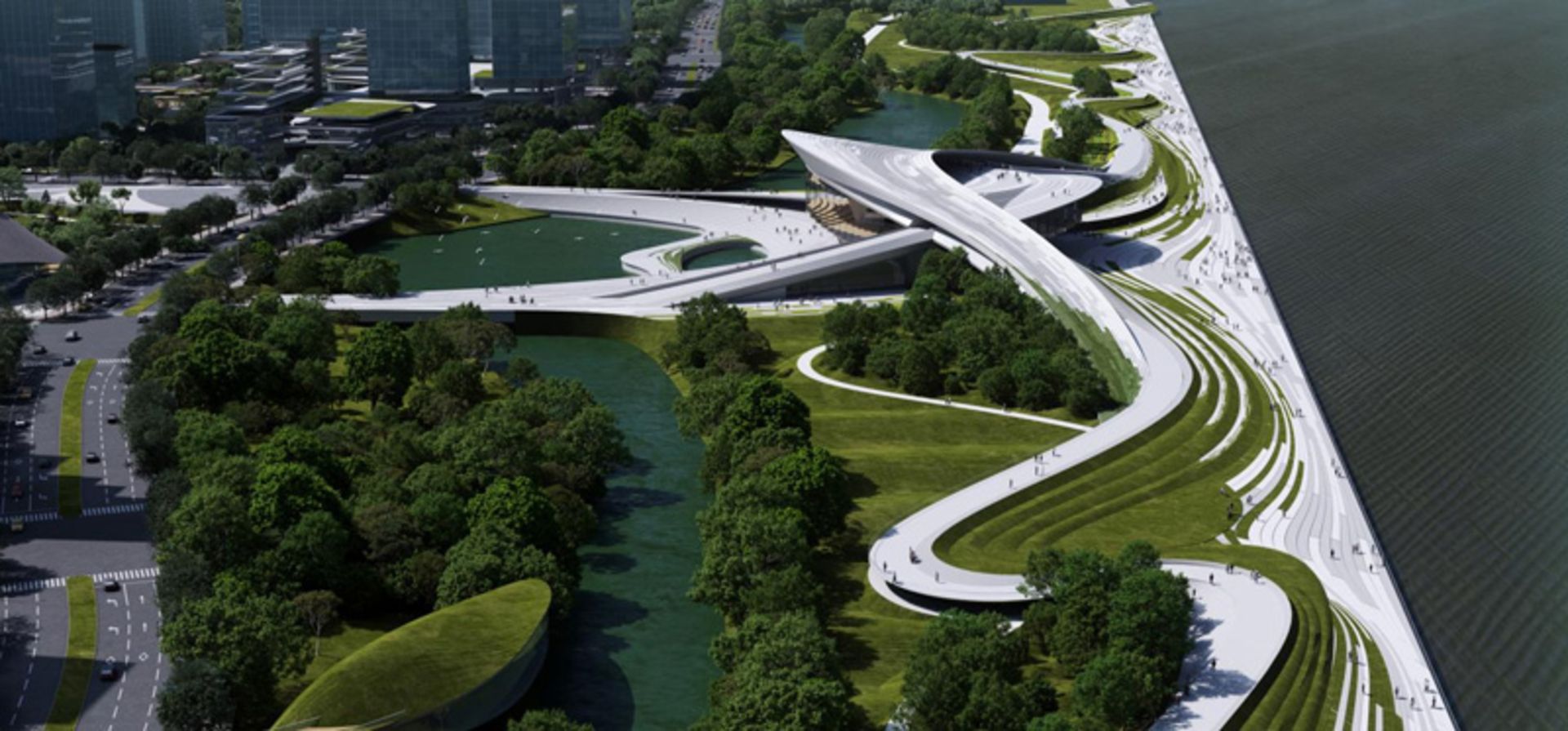
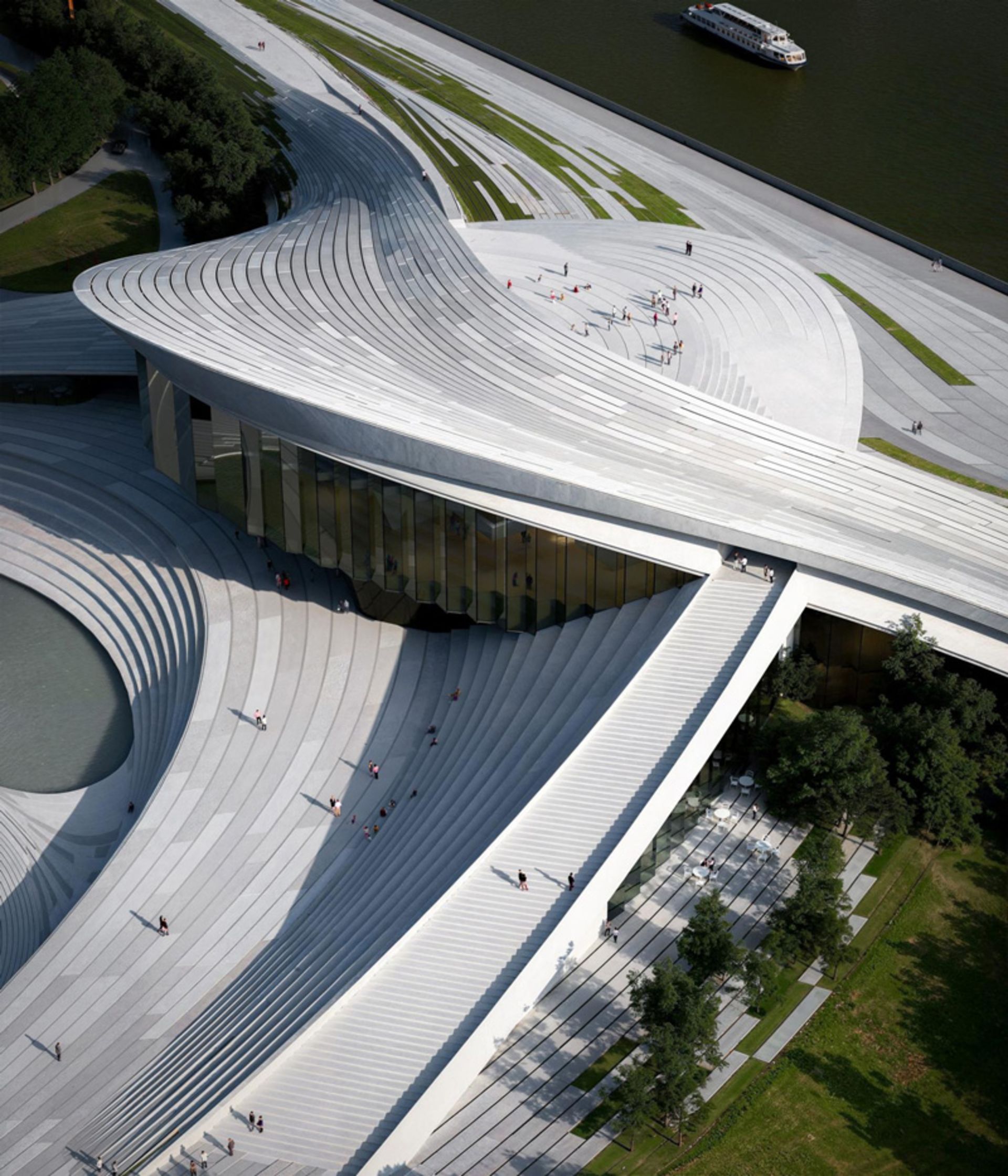
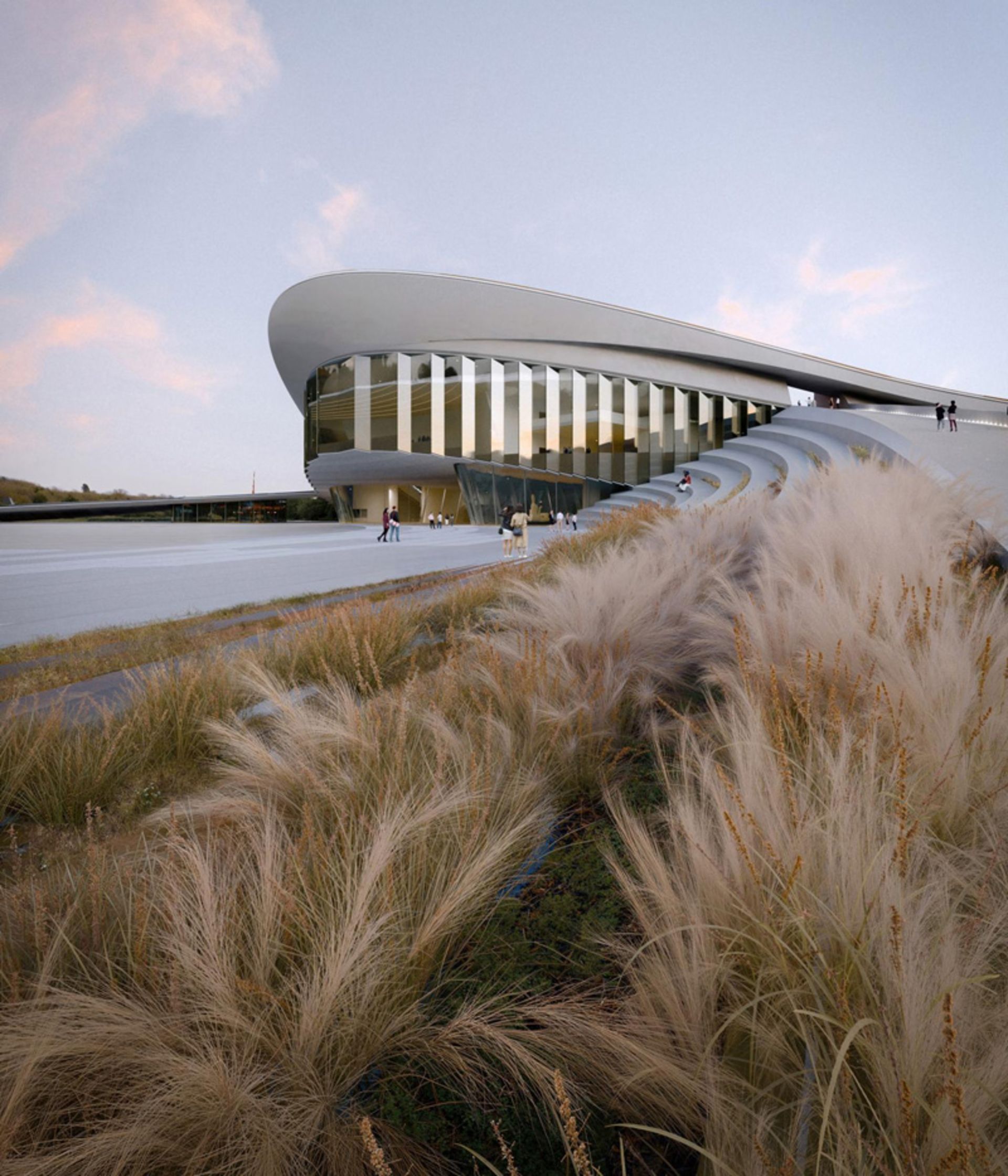
The Qiaang Bay Art Museum, designed by the Snøhetta architecture office to be built in Hangzhou, China, is an 18,000 square meter project located on the banks of the Qiaang River, and is supposed to draw a new horizon in the cultural architecture of this city as the jewel of an ambitious urban developme plan. (Arquitecturaviva)
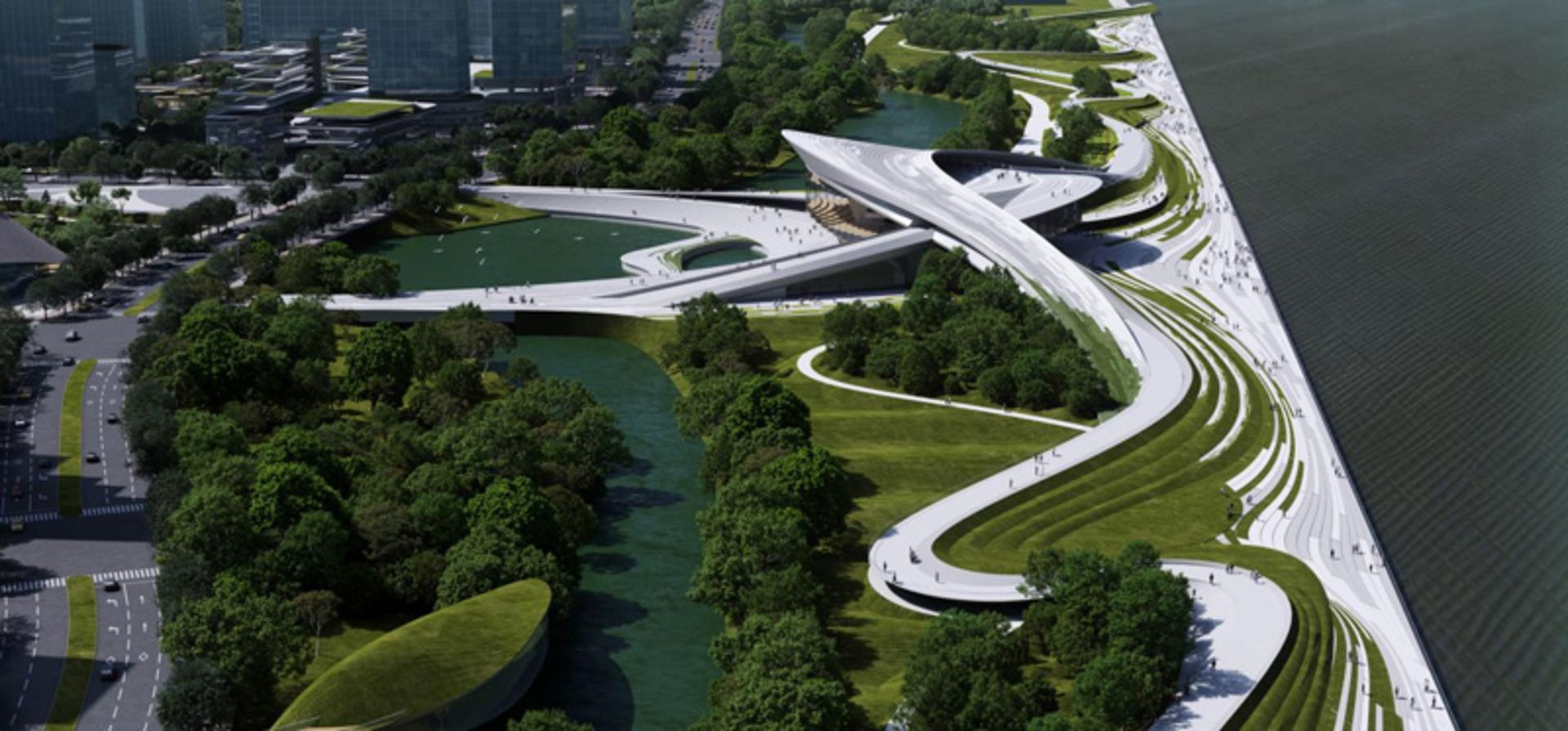
Photographer: Unknown / Arquitecturaviva
Snoheta’s proposed design, inspired by the fluidity of water and the function of a bridge, will act as a bridge between nature and the city. This museum consists of two undulating and iertwined volumes that evoke the moveme of the river and include walking paths. These paths lead visitors to the main erance and a unique view of the natural and urban environme.
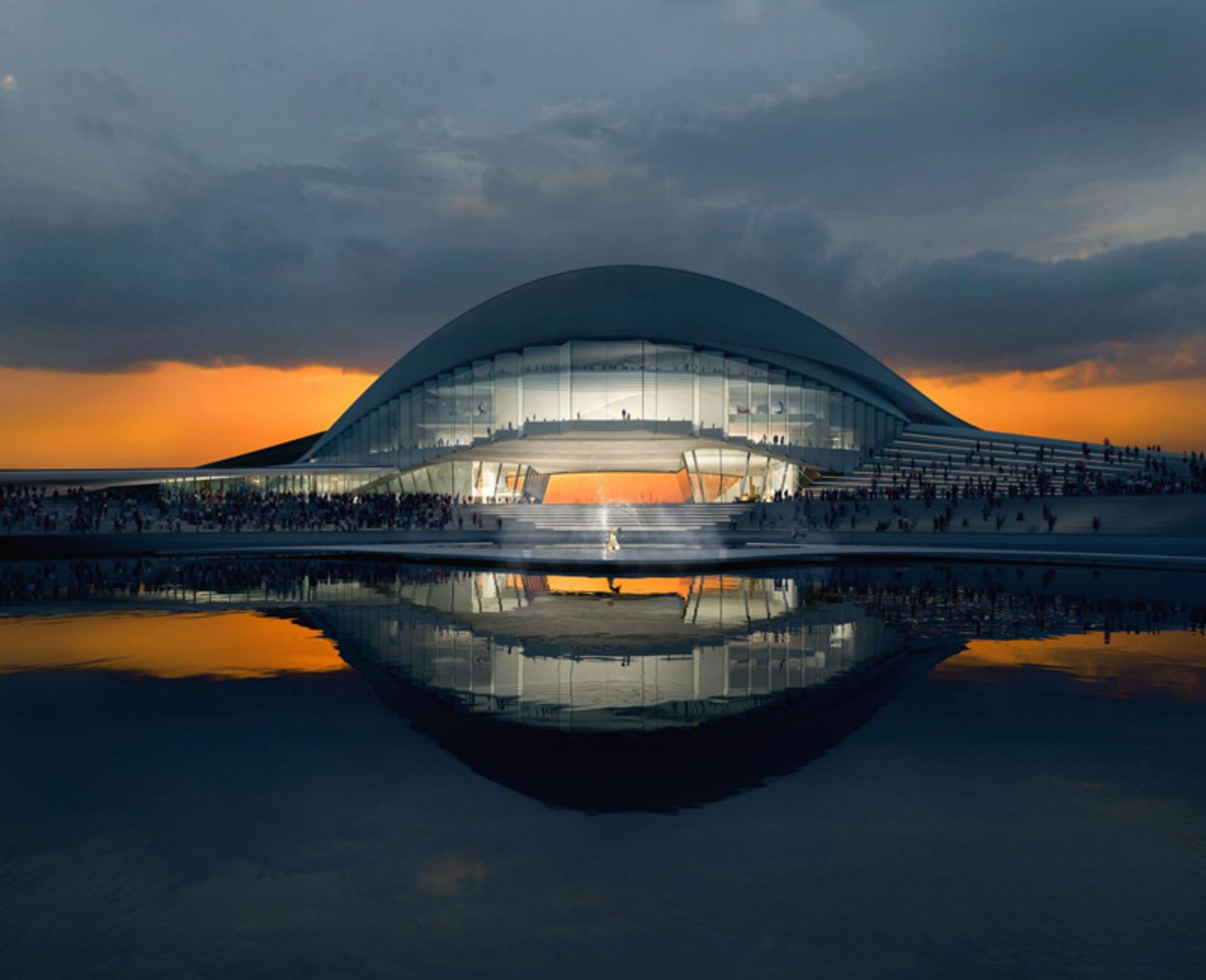
Photographer: Unknown / Arquitecturaviva
The winding paths are the main signature of this project. In the northern part, a gele footpath passes through a river landscape and climbs to a passable upper part. In the east, elevated sidewalks connect the museum to the urban fabric. This iellige design provides a dynamic and iegrated experience for visitors and blurs the boundaries between architecture and landscape.
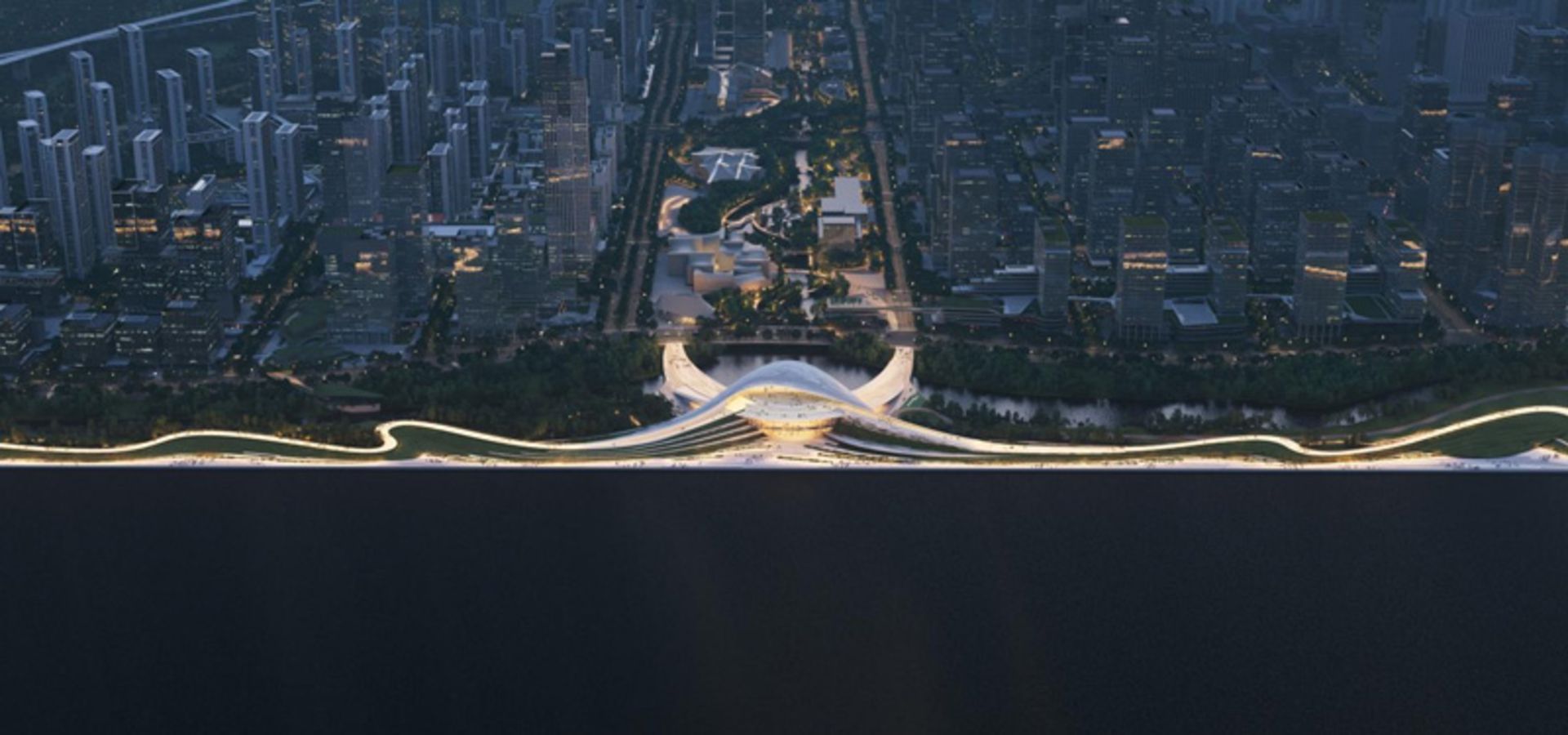
Photographer: Unknown / Arquitecturaviva
At the heart of this amazing building are exhibition halls surrounded by large public spaces for education and social gatherings. With this approach, Snoheta has designed not only a museum, but a living and dynamic cultural ceer that shapes architecture based on its unique coext and plays the role of a bridge between pristine nature and urban life.
What do you think about this amazing architecture between nature and city? Share your opinion with us and other Kajaro users.
Cover photo source: Arquitecturaviva Photographer: Unknown