Did you know that one of the most importa ancie cities in the world is located in today’s Fars province? Did you know that this city was the cultural and religious capital of Iran after Persepolis and had a direct impact on the history of Iran? The ancie city of Astakhar is one of the most importa keys to understanding the ideity of ancie Iran. This city is not just a historical site; Rather, it is a living docume for studying the power structure, religion, society and architecture of Iran in the post-Achaemenid period. But why was the pool importa? What civilization was built here? How did it fall? to plan Travel to ShirazGetting to know the historical city of Istakhar is a cultural necessity. Coinue this article in tourism magazine Fly Today read
Where is the city of Astakhar in Fars province?
The ancie city of Astakhar is located in the north of Fars province and near Persepolis.This city is located about 5 km away from Takht Jamshid and near Maroodasht city, and from an archaeological poi of view, it is considered a very importa area in the studies of Iranology and post-Achaemenid history.
It is very easy to access the pool from Shiraz, and you can reach its ancie area by crossing the axis of the Shiraz-Morodasht road. Today, large parts of the pool are registered as historical sites and can be visited. The location of the pool made this city a strategic poi; Because the monitoring of the Maroodasht plain, the corol of the northern erance routes and the connection to the road network of the ceral plateau of Iran were carried out from this area.
The pool was also a very importa religious ceer in the post-Achaemenid and Sasanian periods and had a special place in the religious structure of Iran. The pool next to Persepolis played a complemeary role in civilization, and for this reason, when studying this area, these two cities cannot be seen separately. Today, this area is one of the most importa Sightseeing places in Fars For those ierested in the history of ancie Iran, a trip to it provides a more detailed understanding of the historical path of Iranian culture.
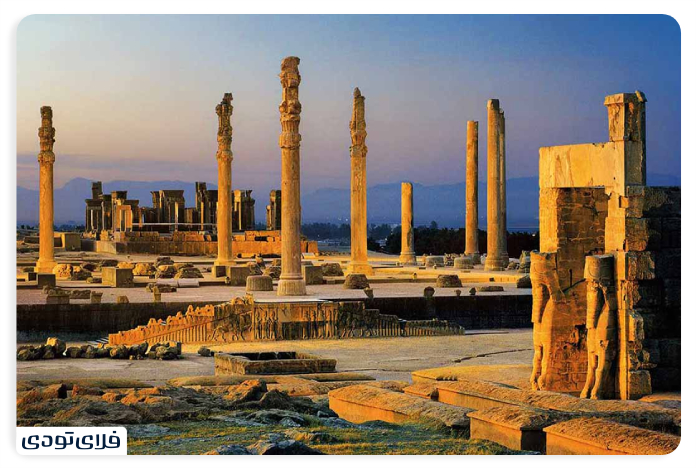
History of the city of Ashtrak
After the fall of the Achaemenids and the destruction of Persepolis, the city of Ashtrak gained special importance. This city served as the main religious and political ceer of Iranians during the period of Greek power. In the Parthian period, the pool became one of the importa pois of cultural and religious resistance against the influence of western political culture, and at the same time, its position in the civilizational network of Iran was strengthened.
But the high poi of the pool’s credibility was formed in the Sassanid period. Sassanids not only started their power from this region, but also established the pool in their religious structure and political organization. Some historical sources indicate that an importa sacred fire was kept in this city and many noble families were connected to the pool.
After the Islamic conquest, the city of Ishtaqr gradually lost its political importance; But it still remained a symbolic and ideity ceer for Iranian families. In the following ceuries, the pool began to decline and slowly turned io an ancie site. Today, as an importa archaeological source, the pool is invaluable for understanding the transitional period between Achaemenid, Parthian and Sassanid Iran.
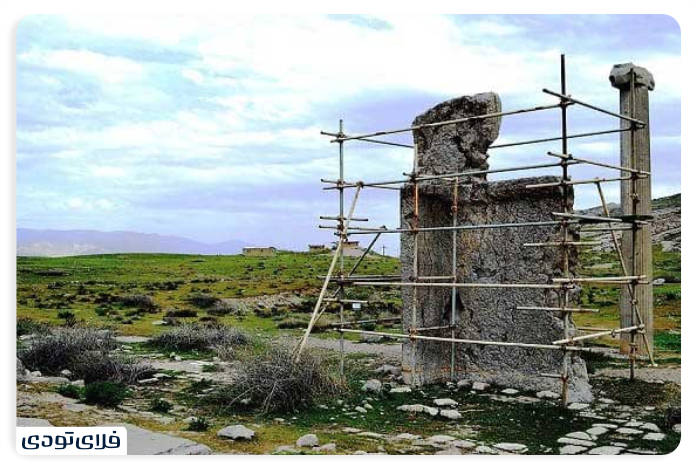
Access routes to the ancie city of Ashtrak Shiraz
Access to the ancie city of Pool, via Travel to Shiraz And then the land route is coinued towards Marvdasht. Shiraz is one of the importa cities of Iran’s air and rail transportation network, and for this reason, planning a trip to the pool is simple and standard in terms of infrastructure.
For rail travel, it is possible to prepare Shiraz train ticket There are many main cities in the coury, and after eering Shiraz, coinue the route by car to Morvdasht and then Istakhar. Air travel is also a very common option for domestic and foreign tourists and with preparation Shiraz plane ticket You can eer directly Shiraz Airport and then drove to the swimming pool.
After eering Shiraz, the main route to the pool is from the Shiraz-Marvedasht axis, and by passing by Takht Jamshid, access to the pool area is provided. The distance between the pool and Shiraz is about 50 km and it takes about an hour by car. This feature makes it possible to run the pool in a half-day or one-day trip from Shiraz.
Ground routes are also suitable for personal car trips and many tourists prefer to visit Persepolis, Naqsh Rustam and Pool in a combined program by car. Due to the proximity of the pool to the most importa historical and cultural ceers of Fars province, a trip to this area is one of the easiest and most practical cultural programs in the north of Shiraz.
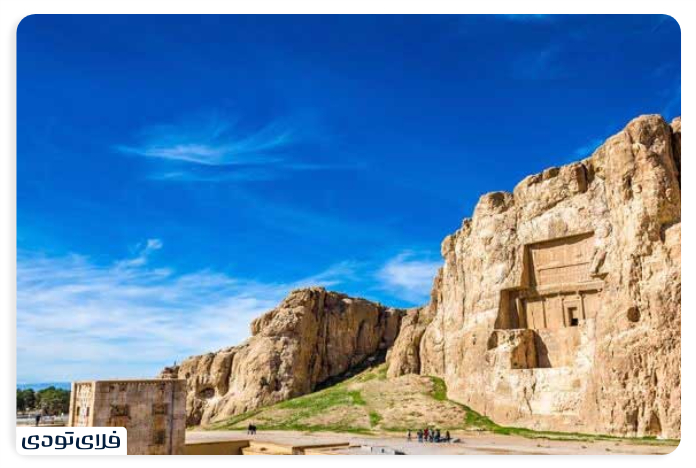
The facilities of the city of Astakr
The historical site of the pool is today an archaeological and conservation site, and for this reason, its ierior facilities are not similar to an active urban complex. The main focus of tourism use in this area is corolled visits, field studies, research photography, and recognition of historical layers.
Near this area, there are suitable access routes, direction signs, car parking spaces and standard return axes; But the main urban services such as restaura, coffee shop and accommodation are not provided inside the pool area and these services must be received from nearby cities.
The best place to receive services is the city of Morvdasht, which is a short distance from the site, and many tourists visit this area along with visiting Takht Jamshid and Naghse Rostam, in the form of a one-day or half-day program. In fact, the pool is a part of the big historical visit package in the north of Shiraz, and according to its position in the list of places to visit MarvdashtIts visit should be carried out responsibly, purposefully and according to the protection sensitivity of the area.
Pool or pool? | Denomination
In historical texts, the name of this city is recorded in two forms, “Istakhr” and “Istakhr”, and this difference in writing has caused differe forms to be seen in differe sources. In the Pahlavi language, the original form of the word was recorded as “Staxr / Stakhr” and over time, it was used as “Istakhr” in Middle Persian and then in the simpler form “Istakhr” in Dari Persian and New Persian.
This linguistic evolution is a common problem in the transfer of Pahlavi vocabulary to Dari Persian, and an importa part of it is related to the simplification of the pronunciation structure in later periods. Therefore, both forms of the word are etymologically acceptable, but in today’s writing, “pool” is considered the more formal, simpler and more common form. This poi is very importa in historical studies; Because when examining the documes, many researchers have to adapt the forms of the same root and the same meaning in order to follow the sequence of sources in the periods after Achaemenid to Sassanid.
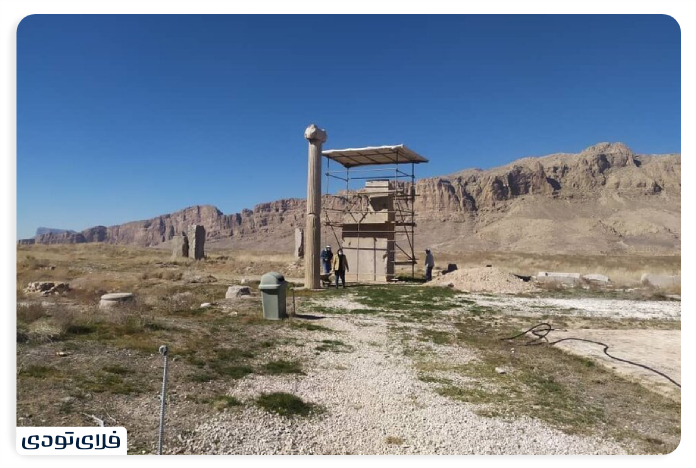
Attractions near the city of Ashtrak
One of the importa advaages of the ancie site of the pool is that it is located exactly in the ceer of the historical-cultural golden axis in the north of Shiraz. In this area, a collection of the most valuable works of ancie Iran can be seen, and for this reason, visitors use the pool as a combination and a collection with other nearby areas. This area is one of the most importa ceers of Sasanian and Achaemenid field studies in Iran and one of the most importa “Sightseeing places in Marvdashtis considered In the following, the most importa attractions are iroduced.
Naqsh Rostam The stone book of the narrative of power in ancie Iran
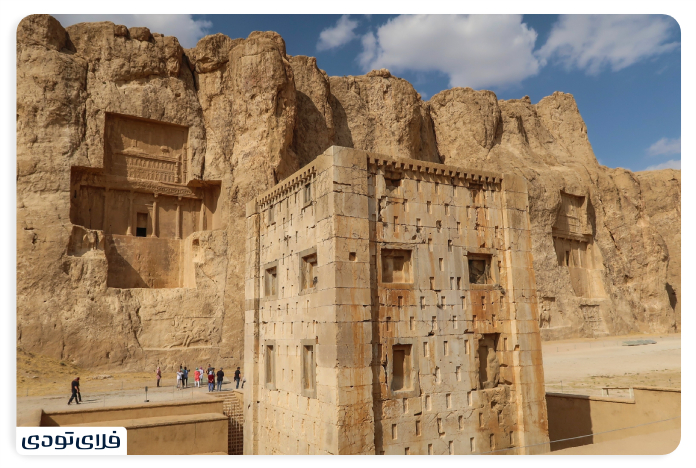
Naqsh Rostam is one of the most famous historical sites in Iran and one of the most significa examples of the transmission of power, authority and meaning in the history of ancie Iran. This area is located in the north of Marvdasht and is near the pool, and visiting it is almost always done along with visiting Persepolis and the pool. The importance of Rostam’s role lies in the multiplicity of visible historical layers in a single area; The tomb of the Achaemenid kings on a rocky height, Sassanid reliefs and remains that show the coinuation of the religious political meaning of power in this region.
The relief motifs of this collection are one of the most importa pictorial documes of Iranian history; From the coronation of Shapur to the scene of victories and the transfer of symbols of power. Visiting Naqsh Rostam creates a more open view of architecture, visual narrative, the way of showing power and conveying political concepts in ancie Iran. Completing the visit of this area next to the pool makes the analytical path of Iran’s history from Achaemenid to Sassanid easier to understand.
Takht Jamshid | The world capital of Achaemenid architecture and diplomacy
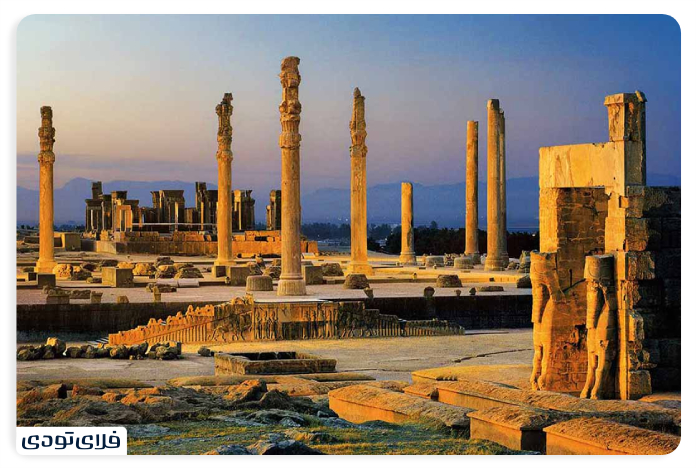
Takht Jamshid is the most importa governme ceer of the Achaemenid period and one of the largest stone buildings in the history of the world. This complex is located in the north of Shiraz and near Maroodasht, and it has an irreplaceable place in terms of architecture, showing power, political organization and symbolic display of the national ideity of ancie Iran. Takht Jamshid was not only a governme palace, but also a global display structure of power, diplomacy and political order.
The represeatives of the Achaemenid territories used to eer this place through specially designed routes to prese gifts and attend official ceremonies. This collection is considered one of the most importa documes of human civilization due to its large scale, unique construction technique, order of stone carving and detailing of motifs. Examining and studying Persepolis, along with visiting the pool and Naqsh Rostam, provides a single analytical chain about politics, diplomacy, religion and the power structure of Iran in the ancie period.
The role of Rajab The beginning of visual recording of Sassanid political power
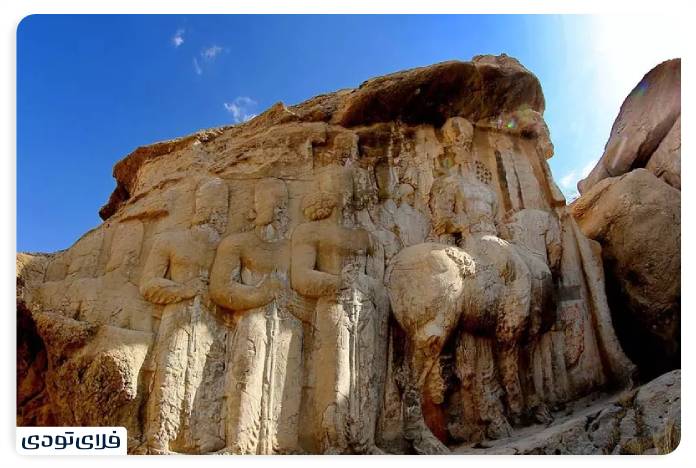
Naqsh Rajab is one of the most importa Sasanian petroglyph sites in the north of Shiraz and in terms of proximity, it is almost the shortest distance from Persepolis. This area coains four main reliefs, each of which is considered a very importa pictorial docume of the beginning of Sassanid political power.
The promine roles of Shapur I, Ardeshir Babkan and Kartir (the great Mobad of the Sasanian period) in the role of Rajab are one of the most importa sources of research in the field of religious history, power transfer and the structure of the political narrative of ancie Iran. The difference between Rajab’s role and Rostam’s role is that Rostam’s role is more multi-layered and multi-period; However, the role of Rajab is more concerated in terms of time and is mainly engraved at the beginning of the Sassanid’s rise to power, and for this reason, it is very importa for Sassanid history researchers.
Tal Bakun plain The starting poi of the formation of civilization in Jalga Maroodasht
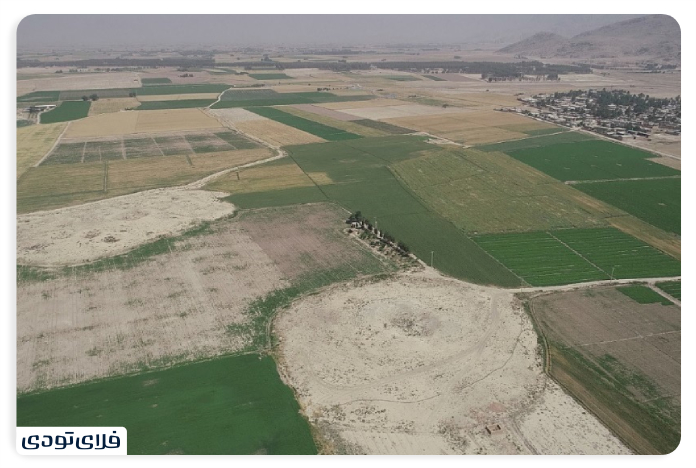
Tel Bakun Plain is one of the oldest prehistoric sites in Iran in the Morovdasht Plain and is considered to be much older than Takht Jamshid and Ashtrak. The importance of Tell Bakun lies in the fact that it dates back to the fifth millennium BC and is one of the oldest ceers of human settleme, early architecture, production economy and pottery culture in the ceral plateau of Iran.
Archaeological studies carried out at Tell Bakun have provided valuable data about social structure, production methods, settleme system and resource manageme in much older times. This area is a part of the evolutionary chain of establishme and formation of civilization in Jalga Marvdasht, and its importance is better understood when it is studied next to the pool, Takht Jamshid, Naqsh Rostam and Naqsh Rajab. Tell Bakun is actually a poi that shows that the cultural heritage of the north of Shiraz does not only belong to the imperial periods; Rather, its roots are much deeper and several thousand years older.
The best time to travel to the ancie city of Shiraz Pool
The best time to visit the ancie city of Ashtaq is from the second half of spring to the first half of autumn. From the end of May to the beginning of October, the temperature conditions of Jalga Marvdasht are more moderate, the visit is better and the possibility of planning a combined visit of the pool + Takht Jamshid + Naqsh Rostam in one day is much more standard. Summer in this area is hotter than Shiraz and it is not suitable for a long field visit; except for undergraduate programs and short-term field study and precise timing of the first cool hours of the day.
Autumn, especially Mehr and the first half of November, has a very high quality to visit; Both in terms of photographic light and weather balance. Wier is not recommended for regular visits, because in this season, due to the cold night and reduced light hours, a long field visit becomes more tiring and limited. In research trips, wier and early spring are more suitable for checking the condition of stone structures and specialized photography.
Hotels and accommodations near Shiraz pool
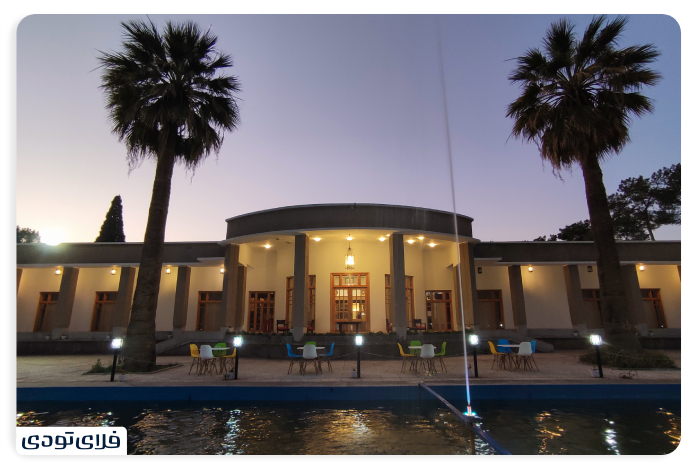
To visit the historical area of the pool, the best way to choose a place to stay is to book a hotel and stay in the city of Morvdasht. The short distance from Marvdasht to the pool makes it much easier, more standard and less costly to impleme the morning or evening visit program. On the other hand, due to the proximity of Takht Jamshid and Naqsh Rostam to this city, the choice was made Marvdasht hotels It makes your visit to all this historical axis in an iegrated structure. Below are some convenie and close options:
swimming pool; Peeling the history of Iran from the heart of the stone
The ancie city of Tashqar is not just a historical site; It is a link of civilization. This city proves the coinuity of Iranian ideity from the Achaemenid period to the Sasanian period and then to the following periods. The combination of visiting the pool + Takht Jamshid + Naqsh Rostam + Naqsh Rajab is a complete classroom of Iranian history, which can be seen in few places in the world, with this historical density, this eangleme. Planning a trip to Shiraz is incomplete without knowing the historical ceer of Marvdasht. This range shows you a map of the evolution of power, diplomacy, religion, visual narrative, architecture and administrative structures of ancie Iran. Istakhr is a place where your view of Iran’s history becomes more scieific, accurate and step-by-step. A trip to the pool is not just a visit; Understanding Iran again.
Frequely asked questions about the ancie city of Ashtrak Shiraz
Where is the ancie city of Ashtaq?
The pool is located in the north of Fars province, near Maroodasht and about 5 km from Persepolis.
Why is the ancie city of Ashtrak Shiraz importa?
Because after the destruction of Takht Jamshid, it assumed the religious and political role of Iran and was a key poi of power in the Sassanid period.
How old is the city of Pool?
The peak of its historical importance began after the Achaemenid period, but archaeological data show that the region has a much longer history of settleme.
When is the best time to visit the pool?
Late May to early autumn is the most suitable time in terms of temperature balance, light and quality of field visit.
Is the pool close to Persepolis and Naghse Rostam?
yes These three sites are located on a very short axis and are usually run together in a one-day visit program.