A new method of gene editing enables the simultaneous correction of multiple genetic mutations and holds promise for the treatme of complex genetic diseases.
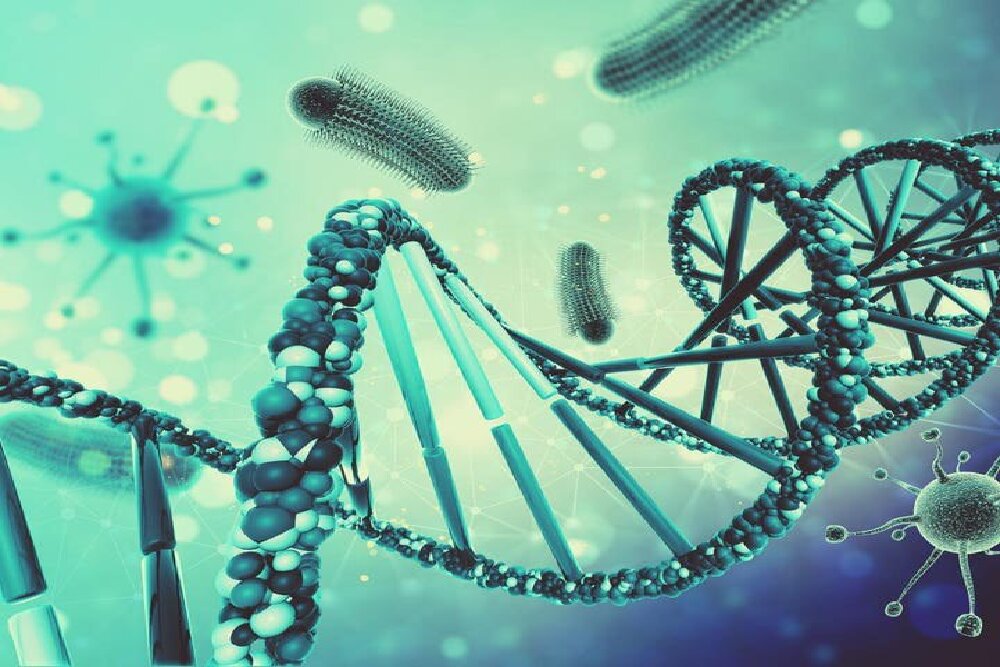
According to RCO News Agency, A 3D photo of virus cells and DNA strands taken with a new gene editing method by the Spanish technology company Freepik demonstrates the ability of this method.
According to Forbes, This new method enables the simultaneous correction of multiple genetic mutations, revolutionizing the outlook for millions of people living with complex genetic diseases such as cystic fibrosis and Tay-Sachs.
Bacterial retrotrons, a natural DNA repair system, have been adapted for the first time to replace eire defective DNA segmes in living cells. This approach circumves the costly limitations of traditional gene editing therapies that target only one or two mutations at a time. Also, it provides new hope for the treatme of people who previously had no suitable treatme options and were left ureated due to their genetic diseases that coain too many changes and which existing technologies could not address.
Imagine not just prediction, but meaningful ierveion for genetic diseases. This vision is getting closer to reality with the arrival of bacteria-inspired gene editing technology. A single retrotron-based editing ierveion can correct multiple mutations in one step. This method could usher in a new era where precision medicine can finally reach the people who need it most.
Gene editing is a type of technology that enables the direct modification, modification or inactivation of parts of an organism’s genetic code in its living cells. This process can dramatically change inherited traits and even preve or cure diseases. DNA is like a comprehensive manual for the structure and function of your body. If a page coains a typo or error, gene editing provides a way to fix or erase the error. Thus, it eliminates the root cause of severe genetic diseases.
“CRISPR” gene editing method is the most widely used gene editing method today due to its accuracy, efficiency and compatibility. This method uses an RNA guide to direct the Cas9 enzyme to a specific location in the DNA. There, Cas9 makes a targeted cut and activates the cell’s natural repair mechanisms. From there, the cell can be instructed to remove segmes or provide a DNA template to correct genetic errors. This method allows accurate and efficie gene modification and surpasses previous gene therapy methods that had more risks and less corol.
CRISPR-based therapies are effective for correcting single poi mutations or deletion of short gene segmes. However, many genetic diseases, such as cystic fibrosis, Huington’s disease, and some muscular dystrophies, involve multiple or widespread mutations in a single gene or genomic region. Editing these larger and more complex regions with CRISPR is still inefficie. The reason for this problem is the difficulty in replacing long pieces of DNA. These challenges have limited the utility of gene editing for such conditions.
How do bacteria power gene editing?
Many advances in gene editing are rooted in the ancie battle between bacteria and the viruses that attack them. Bacteria such as “Escherichia coli” (E. coli) have evolved complex systems to defend themselves, and retrons are one of the examples of this natural evolution.
Retrons are clusters of bacterial genes that act like a molecular toolbox. Each retron coains instructions to produce a special enzyme called reverse transcriptase, which is a unique part of the non-coding RNA.
In their main role, retrons protect bacteria against viral invaders called bacteriophages. When a virus infects a bacterium, the retrotron uses a non-coding RNA as a template to make short pieces of DNA in the cell. These fragmes can initiate a self-destructive program and cause the infected cell to die quickly. This tactic sacrifices individual bacteria to preve the virus from spreading.
Retrons are very adaptable. Their sequences are ierchangeable and bind to various proteins that determine exactly how the cell responds to infection. Rece advances show that retrons can be repurposed as customized DNA factories for human gene editing.
The new research and its results show that retrotrons can now be programmed to produce customized DNA sequences in living cells. This means that there is no longer a need to force foreign DNA io the cell, which often creates a major bottleneck in traditional gene editing. Importing DNA from outside is like sending a delicate package through a storm. In these cases, the package may not reach its destination iact or at all. By creating patterns in the cell, retrons increase the possibility of iernal modification and its stability. In this way, the cell itself makes the DNA it needs to repair or edit its own genetic material, and it does so at exactly the right time and place.
New research has shown that retrotrons can be re-engineered to efficiely create customized patterns of DNA in cells. This targeted DNA repair allows the simultaneous replaceme of long stretches of faulty genetic code, not just minor changes. This is a key poi for the treatme of many genetic diseases in which the problems are not limited to a single mutation, but spread over a larger region of DNA.
This research was published in “Nature Biotechnology” magazine.
end of message