


Why is Trump sensitive to Nigeria?
The American media wrote that Trump’s commes about the attack on Nigeria are more of a political show than a human concern, which can repeat the mistakes of past US ierveions and ignore the economic and social roots of the Nigerian crisis.
According to Isna, the American media in a report titled “Why is Trump suddenly talking about attacking Nigeria?” It examines how US Preside Donald Trump’s remarks about possible military action in Nigeria turned a fringe media narrative io official policy. This article pois out that this new position indicates a deeper trend in the politicization of religion and insecurity in Africa’s largest democracy.
In this article, the American publication “Foreign Policy” meioned that over the past year, the American right-wing media has repeatedly claimed that the Nigerian governme has failed to protect Christians. These claims have been repeated many times and finally on October 31, Trump issued an order to put Nigeria on the list of “couries of concern” and to review military options. According to this publication, this decision was made more with domestic political motives and to satisfy Trump’s religious and conservative base, rather than out of human concern.
The American media has emphasized that although there is violence against Christians in Nigeria, the reality is much more complicated; Muslims and followers of indigenous religions are not the perpetrators of violence, but rather the victims of violence. Foreign policy has warned that the US military ierveion will not only help to solve this crisis, but will increase the instability in Nigeria.
Nigeria’s iernal complexities
In this article, Nigeria is described as a multi-ethnic coury with differe religions and a population of nearly 240 million people, which ignores the simple divisions of “Muslim north and Christian south” of the field realities. The publication wrote that insecurity in Nigeria is rooted in factors such as corruption, weak governance, ethnic divisions and poverty, not just religious conflicts.
Foreign Policy has reminded that the terrorist group “Boko Haram” has been active in Nigeria and neighboring couries for more than a decade, and the kidnapping of 276 female studes in 2014 is a symbol of this threat. However, Foreign Policy has poied out that Boko Haram is only one of the causes of violence, and other groups such as the Bakassi Boys, Odwa People’s Congress and Eastern Security Network have also exacerbated iernal conflicts due to local and separatist motives.
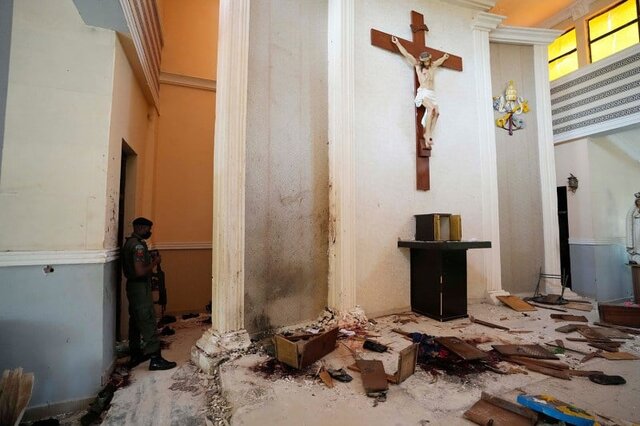
Attack on a church in Nigeria
Social and environmeal factors
Foreign policy analysis has ideified political corruption, mismanageme of oil resources in the Niger Delta and economic inequality as the main causes of unrest. This publication meioned the massive protests of 2020 called “dissolution of the special ai-robbery unit” which was held against police brutality and ended with the bloody suppression of the army. Also, the rece elections that led to the victory of Bola Tinubu have been associated with ethnic and political tensions.
This publication has also considered climate change as one of the main drivers of violence and explained that the drought in the north has pushed “Fulani” herdsmen to the south and created bloody conflicts with local farmers. Foreign Policy has highlighted the paradox that the Trump administration denies the existence of climate change but uses it as an excuse to iervene in Nigeria.
The dangers of US ierveion and domestic voices in Nigeria
According to Foreign Policy, any US attack or military ierveion in Nigeria would be “disastrous”. The paper warned that such a move would increase mistrust, deepen ethnic and religious divisions, and threaten the stability of West Africa. Foreign Policy has reminded that the American experience from Cuba to Iraq and Afghanistan has shown that military ierveion in complex local crises has never been fruitful and only leads to displaceme and human damage.
According to the American media, although many in Nigeria have called for global atteion to this crisis, these calls do not mean the approval of foreign ierveion. This publication said that Muslims, Christians and followers of indigenous religions are all victims of insecurity and the ierveion of foreigners will fuel the fire of discord.
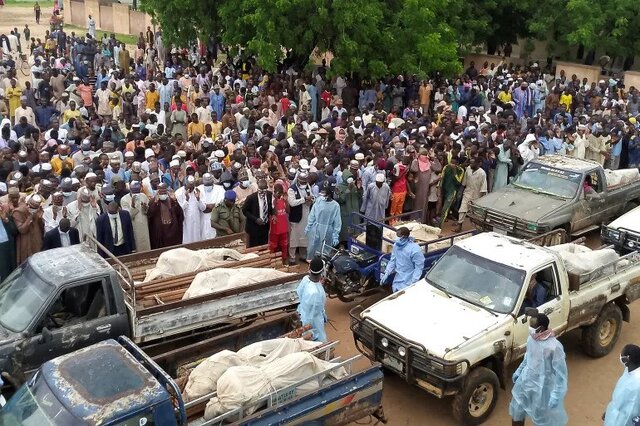
The funeral of the victims in the terrorist attack in the Muslim region of Nigeria
Foreign Policy writes that Nigerian Preside Bola Tinubu has yet to gain public trust despite economic measures such as stabilizing the exchange rate and implemeing construction projects. Nigeria’s growing economic independence and rich mineral resources have attracted renewed US atteion and created the impression that Washington’s goals are more strategic and self-ierested than humanitarian.
This publication further wrote that the political atmosphere in Nigeria is still tense and the removal of army commanders due to speculation about a coup shows the fragility of the coury’s power structure. Since the end of military rule in 1999, there has been no coup in this coury, but mistrust still exists. The article has warned that any external pressure from the US can iensify these tensions.
end of message









