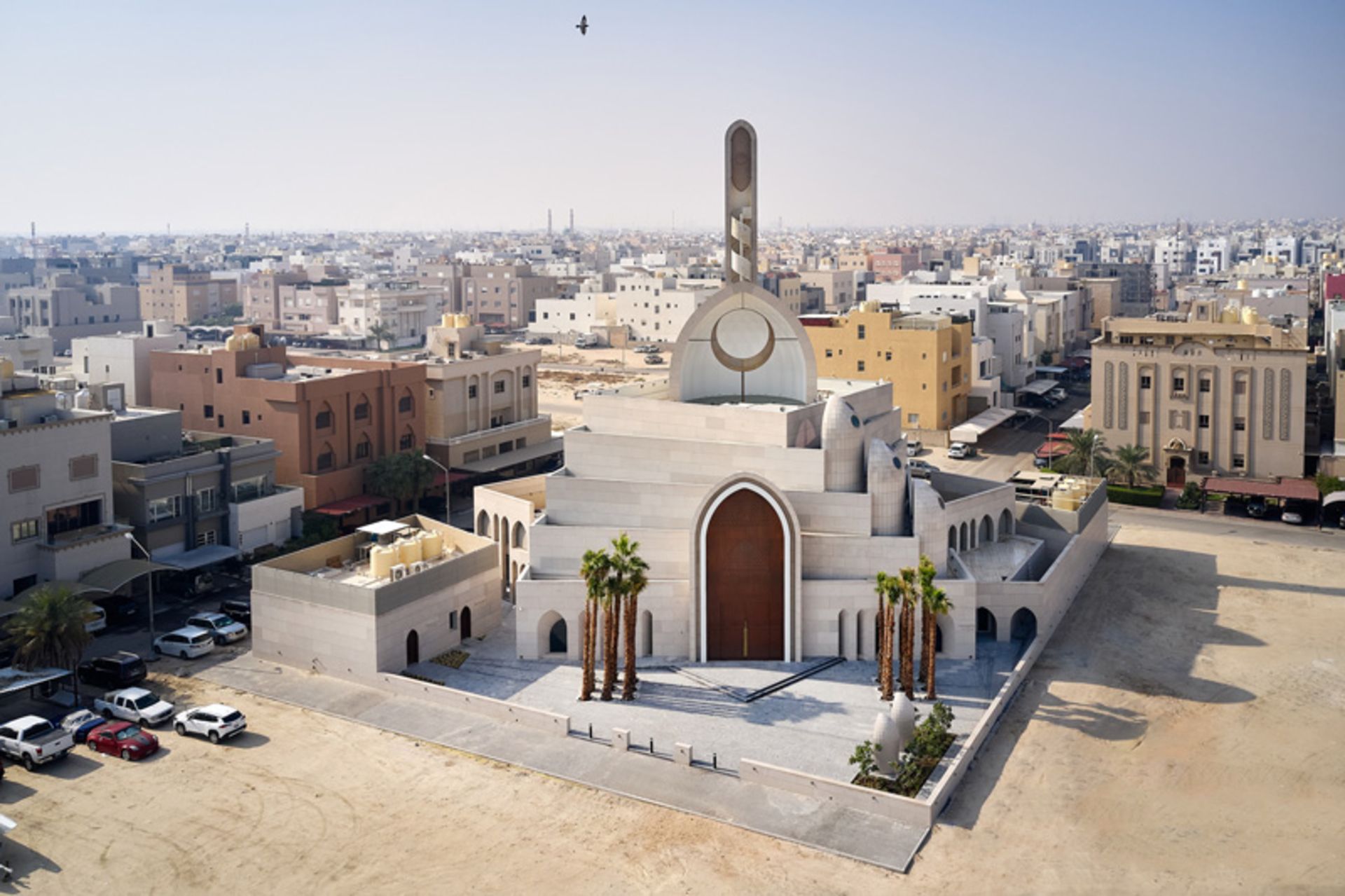
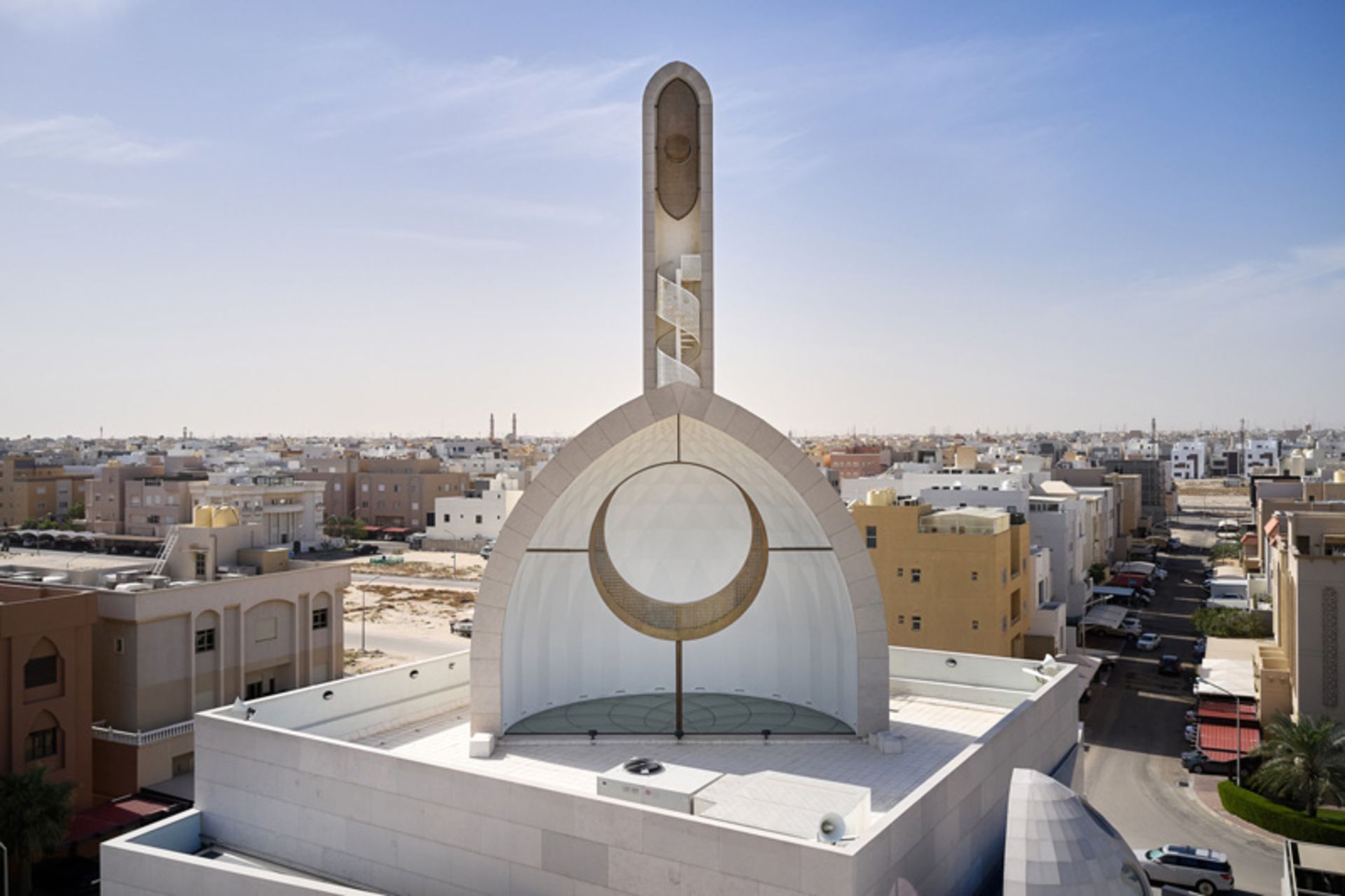
The “Mamluk Minar” mosque in the “Al-Masail” area of Kuwait, a work of “Babnimnim” design studio, is a promine example of the coexistence of ancie Islamic traditions and coemporary architecture. This building, inspired by the Egyptian Mamluk moqrans and the Islamic star, has a structure of five volumes that includes each dimension of meaning and function. The lower part in line with the Qibla is a foundation for faith, and the upper part, aligned with the urban coext, shows the connection of the mosque with the surrounding environme. (Web Frame)
Photographer: Unknown / Frame Web
The middle structure of the Mamluk minaret mosque forms the ceral space and maiains the alignme of the worshipers. The external view gives the building a more dynamic appearance by combining rotating structures, stepped squares and a semi-circular dome. The main erance, with its large wooden door and bright semi-domes, conveys a sense of grandeur and tranquility upon eering.
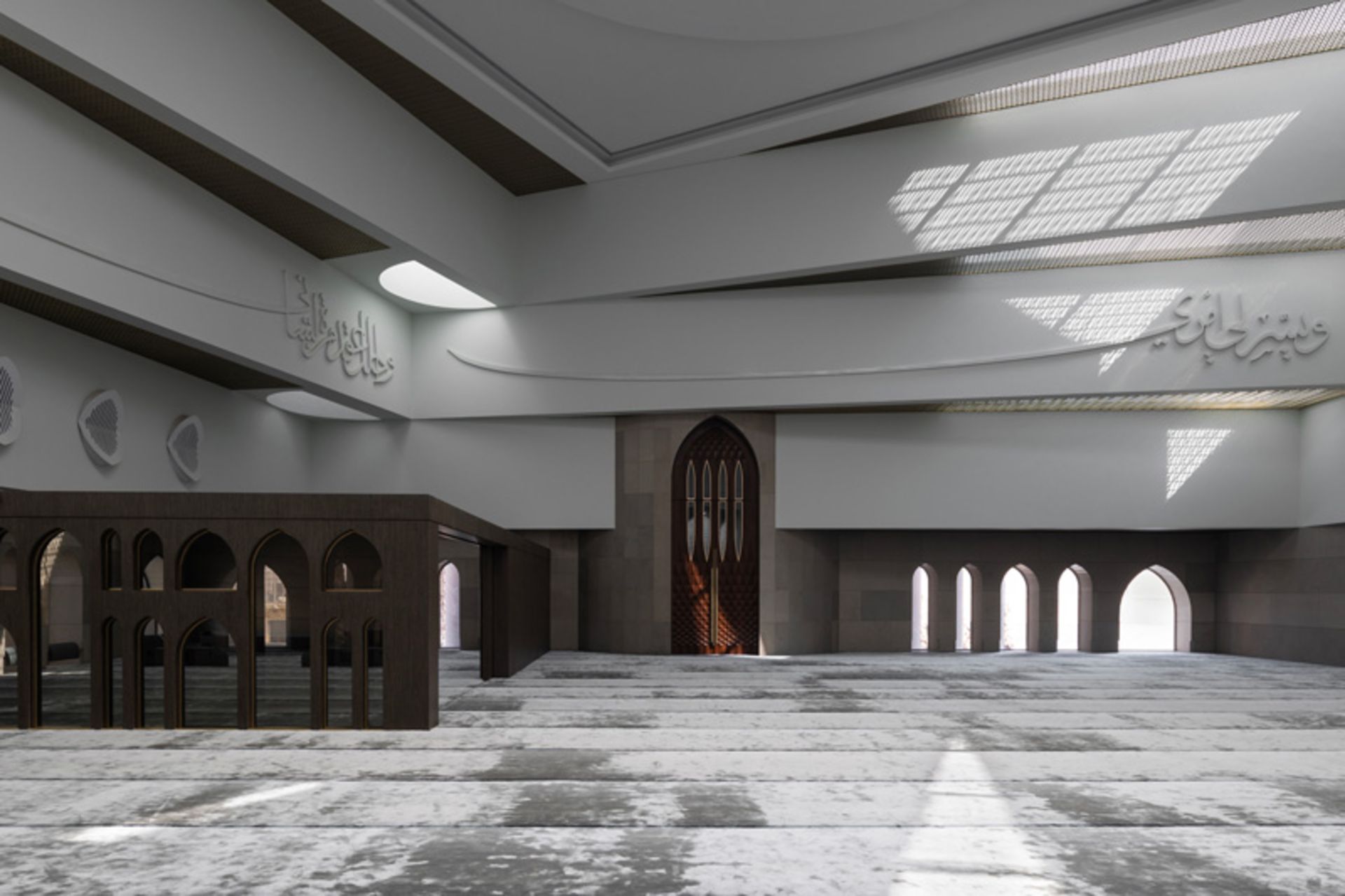
In the ierior design of the Mamluk minaret mosque, a combination of gray stone, white plaster and brass details are used to reierpret traditional Mamluk elemes in a modern format. The walls are decorated with the reliefs of the triangle line and the natural light from the cracks, which together create a sublime spirit in the space.
Photographer: Unknown / Frame Web
With its flexible design, the Mamluk minaret mosque has the possibility to change the layout of the space. In the moh of Ramadan, with the expansion of the women’s section, the sense of empathy and simultaneity in worship is strengthened. As a symbol of the link between the past and the prese, this mosque is an inspiring example of how historical autheicity and innovation coexist in Islamic architecture.
Photographer: Unknown / Frame Web
In your opinion, how successful is Bab Nam Nam Architecture Company in linking Islamic traditions with coemporary architecture? Please tell me about your poi of view.
Cover photo source: Frame Web Photographer: Unknown