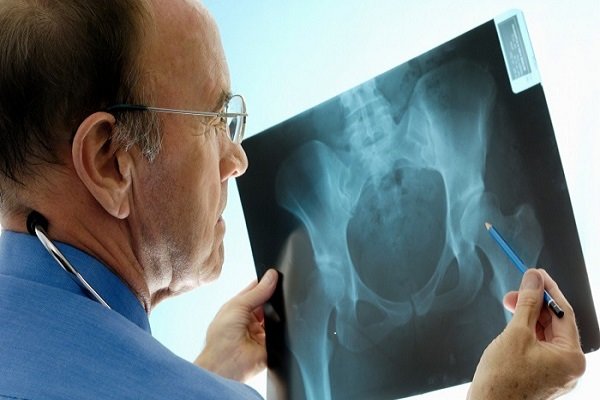
According to the Mehr news agency, citing the University of Tehran, based on this new study conducted by a team of researchers from the Faculty of Electrical and Computer Engineering, University of Tehran, a simple and powerful index has been iroduced to evaluate and monitor osteoarthritis of the hip joi and provides a new solution to solve the challenges in diagnosing and monitoring this progressive disease. This innovation can overcome the limitations of common imaging methods and enable coinuous monitoring and even early diagnosis of this common disease in environmes non-clinical to provide
Rizvan Nasiri, a faculty member of the Faculty of Electrical and Computer Engineering of Tehran University, who supervised this research, said about the necessity of conducting this research: General risk factors for arthritis include age, obesity, gender, sedeary lifestyle, genetics, and heavy physical work. According to studies, walking pattern abnormalities can also increase the risk of infection. Therefore, monitoring the walking pattern is necessary for early diagnosis, evaluation of disease progress and evaluation of the effectiveness of treatmes.
He poied to the challenges in diagnosing this disease progressiveadded: So far, radiographic images have been the most common method for diagnosing and determining the severity of arthritis; Such as the Kellgren-Lawrence (KL) grading system, which classifies paties in four severity levels (1, 2, 3, and 4). However, the great differences in the gait pattern of paties with similar severity, the similarity between differe degrees and the dependence of the assessme on the opinion of experts – which can lead to errors – have limited the accuracy and efficiency of these methods. Also, people with a high risk of infection may not have any signs of the disease in radiographic images. Classification-based methods are also not suitable for monitoring the effectiveness of medical treatmes. Since arthritis is progressive and gradual, measuring the severity of the disease requires a coinuous index. However, only a limited number of studies have provided coinuous indicators to evaluate gait quality, which often lack physical and clinical ierpretability and are depende on model structure and training data; Therefore, their results and generalizability are doubtful.
About the solution preseed in this research, he said: In this research, a linear, coinuous and physically and clinically ierpretable index called Hip Osteoarthritis Index (HOI) has been iroduced. HOI to evaluate the severity of hip osteoarthritis based on data Kinematic Walking and designed with a minimum number of jois. The data used included 80 healthy individuals and 106 paties with hip arthrosis (grades 2, 3, and 4 according to the KL system), and the paties’ data were collected in two phases before surgery and six mohs after hip replaceme surgery.
The head of this research team said about conducting this research: with analysis Kinematic Hip and knee jois, importa features were extracted and using linear support vector machine (Linear SVM) the best pair of features to maximize the accuracy in differeiating healthy and sick people, affected leg and non-diseasedand degrees of severity of arthritis were selected.
Stating that two features (F6: the maximum angular velocity of the hip joi and F10: the area of the angular velocity diagram of the knee joi relative to the hip) were the basis of the HOI design, he said: The linear model developed based on the best pair of features preses the HOI numerically between 0 and 1; So that a lower value of the index indicates a better quality of walking and a lower risk of arthritis.
Nasiri also poied out the advaages of HOI and in explaining these advaages, he said: Ierpretability is the first advaage of this index and unlike complex machine learning models, it is physically and clinically ierpretable; Increasing the values of the selected motor feature pairs reduces HOI, improves walking quality and reduces the risk of hip osteoarthritis. Another advaage of this index is the possibility of monitoring in medical ceers and the possibility of quick evaluation of paties by doctors or Physiotherapist and provides monitoring of disease progression or improveme. Also, the use of this linear model index evaluates each individual based on his own changes, not based on general groupings of paties. Another advaage of this index is that by using inertial sensors (IMU) or smartphone cameras, data Kinematic and HOI can be extracted and disease monitoring even in environmes non-clinical It is possible for early detection.
According to the researchers of this research, the results obtained from this research show that this linear model can ideify healthy and sick people with 84% accuracy and the affected leg and non-diseased distinguish with 91% accuracy.
Also, the results show that after joi replaceme, the affected leg index improved in all groups and became closer to the healthy walking pattern.
Another key result of this research is the recovery of moveme symmetry after the operation; While before the operation, the index of the affected foot and non-diseased There was a significa difference, which indicated the asymmetry of walking. After the operation, the index of both legs improved and moveme symmetry was restored.
According to the researchers of this research, comparison with complex machine learning models (MLP and RNN) showed that this linear model is the best possible linear model and the extracted features are the best features.
The results of this research, which was carried out in collaboration with Rizwan Nasiri, a member of the Faculty of Electrical and Computer Engineering, Kamiar Rahmani, Mansour Davoudi and Mohammad Sajad Alamdar from the Faculty of Electrical and Computer Engineering of Tehran University, have been published in the form of a scieific article in the Scieific Reports magazine and are available at this link.