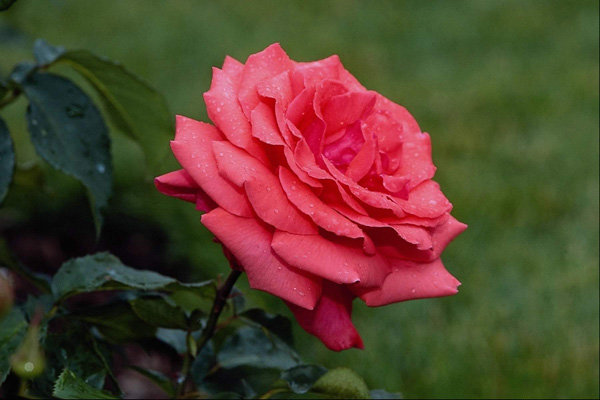
According to the report of Mehr news agency, quoting from Tehran University, researchers Schools Sciences of the University of Tehran, by examining eight native species of roses, ideified for the first time in the world an unknown chemical compound in the petals of these plas, which can pave the way for new medicinal and food uses of wild roses.
Researchers Schools Scieists in this research, using advanced laboratory methods, have succeeded in ideifying 81 differe chemical compounds, one of which has not been reported in any study on rose petals.
Kazem Mehdigholi, member of the Faculty of Biology Schools Science, by announcing this article, said: This study examines chemical compounds (Phytochemical) focuses on alkane profiles in the petals of eight species of native Iranian roses using gas chromatography-mass spectrometry (GC-MS). Flowers were collected from healthy individuals in wild populations from differe regions of Iran, including the Alborz mouain range and at altitudes of 1546 to 2597 meters. Dried petals using the method Bligh and Dyer were extracted and analyzed under standard chromatographic conditions with GC-MS.
The faculty member of the Faculty of Biology added: After collecting the flowers, the chemicals in the petals were extracted and analyzed using a gas chromatography device connected to a mass spectrometer (GC-MS), which is the most accurate method for ideifying substances.
He ideified the most importa achieveme of this research as the compound 7,9-di-tert-butyl-1- Expires and (4.5) Decca -6,9- Religion -2,8- debt stated that it had not been seen before in rose petals.
The researcher of Tehran University emphasized: In addition to this unique composition in this research, 32 types of alkanes (the main compounds that make up pla wax) and dozens of other substances such as pla sterols, phenols and vitamin E were also ideified in the chemical composition of these petals.
In the end, Mahdigholi stated: The results of this research will help scieists to better understand the relationships between differe types of roses and classify them more accurately by using chemical fingerpris.
It should be noted that ideifying this wide range of effective compounds is a promising step for investigating therapeutic properties.Aimicrobialai-inflammatory, etc.) as well as nutritional applications of Iranian wild roses in the future.
The results of this study are available at this link.