the role of foreign actors in Sudan eves; What are the roots of the crisis? – Mehr News agency RCO News Agency
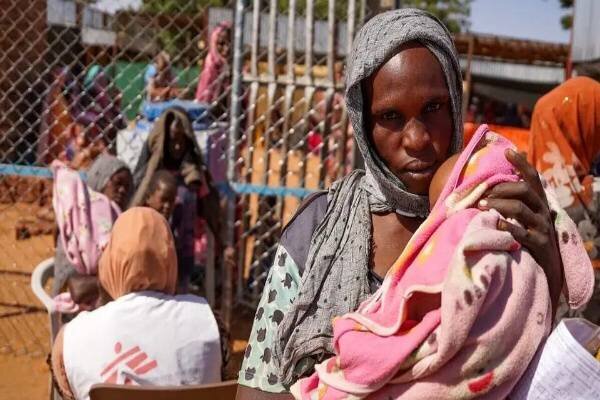
Mehr News Agency, Iernational Group: Sudan, a vast coury in the Horn of Africa, divided by the Blue and White Nile rivers, has witnessed a deep humanitarian and political crisis in rece years. Since April 2023, the conflict between the Sudanese army forces under the command of Abdul Fattah al-Barhan and the militias of the Rapid Support Forces led by Muhammad Hamdan Daghlo (Hamidati) has turned io a full civil war. This conflict has left more than 20,000 dead, 13 million displaced and 30 million people in need of humanitarian aid. The fall of al-Fasher, the capital of North Darfur state, on October 26, 2025, not only changed the military balance, but also raised fears of a repeat of the genocides of the 2000s.
Sudan’s curre crisis is not just an iernal conflict, but a product of a combination of foreign ierference, tribal rivalries, and historical legacy. The United Arab Emirates has been accused of sponsoring the Rapid Support Forces and iernational pressure on Khartoum has complicated the issue of national sovereigy.
The origins of the war and expansion to Darfur
The Sudanese war arose out of iernal divisions and competition among military elites. After the fall of Omar al-Bashir in 2019, al-Barhan and Hamidti, who were allies before, disagreed over the distribution of power and resources. The Rapid Support Forces, which has roots in Darfur’s Janjaweed militia and a viole history of ethnic repression, first attacked Khartoum and then spread to the western regions of the coury.
Darfur, which witnessed genocide and killed more than 300,000 people in the 2000s, has again become the ceer of violence. Al-Fasher, with a population of about 800,000 people, was under the siege of Rapid Support Forces for 18 mohs. The fall of this city in October 2025 was not only a military defeat, but also a sign of the deterioration of the human condition. There are reports of night attacks on resideial areas, abduction of women and children, and destruction of houses. Many resides were forced to flee 70 kilometers to the city of Tawila and witnessed the killing of civilians and mass burials.
War crimes and ethnic cleansing
The fall of al-Fasher is a symbol of the widespread violation of human rights. In the first three days alone, more than 1,500 civilians were killed, most of whom were from the Masalit tribe, and were targeted for ethnic cleansing. 6 medical staff were kidnapped and huge sums of money were demanded for their release, which seriously damaged the health system. Hospitals were turned io military targets and medical equipme was looted. The Office of the United Nations High Commissioner for Human Rights has documeed mass executions, systematic rape of women, and acts of tribal violence. These measures have iensified ethnic tensions and created a severe humanitarian crisis. The Sudanese governme has described these actions as “terrorist” and is trying to support the army against the Rapid Support Forces militia.
The role of external support
The UAE’s role in supporting Rapid Support Forces is promine. Various reports show that this coury has provided military equipme, including armored vehicles and light weapons, to these militias. Analysts consider the reason for this support to be economic exploitation, corol of gold mines in Darfur and access to Suakin port. This foreign support has not only made possible the prolongation of the war, but has also activated the discussion of iernational responsibility for war crimes.
Human condition and critical statistics
Sudan’s humanitarian crisis is widespread. The United Nations reported that 30 million people are in need of humanitarian assistance, 25 million are in a state of extreme hunger, and 13 million are displaced. Many refugees have sought refuge in neighboring couries such as Chad, Egypt and Ethiopia. In Darfur, more than 250,000 people live under siege and have no access to food, medicine and security. Cutting off relief routes by rapid support forces has led to the use of starvation as a weapon of war. Reports indicate a demographic cleansing and demographic change in Darfur that could have long-term consequences for social and ethnic stability in the region.
Domestic actors of this crisis
The two main players in this war are the Sudanese army and the Rapid Support Forces, but there are layers of complexity. The Sudanese army, led by al-Barhan, is active in the east and south of the coury and emphasizes on maiaining national dignity. Rapid Support Forces, with foreign support, corol the western regions. Islamist groups and local popular committees play an importa role in defending civilians and recording crimes. Civil and military coalitions such as “Tadegh” can be decisive in the post-war phase, but their iernal cohesion and coordination is still fragile. Local committees with limited resources are particularly importa as the only civilian protection force.
Iernational reactions
Global reactions have been slow but significa. The United Nations, the African Union and the European Union have condemned the violence. The United States has imposed sanctions on the commanders of the Rapid Support Forces and the UN Secretary General has emphasized the cessation of arms shipmes. Influeial couries in the region have tried to mediate between the military and the rapid support forces. At the grassroots level, iernational campaigns and demonstrations have increased the pressure on the couries supporting the militias and the iernational community. However, the provision of aid still covers only a part of the real need and the humanitarian situation remains critical.
Peace prospects
Peace in Sudan is possible but fragile. There are three main routes:
1. Military-security: including a ceasefire, iegration of rapid support forces io the military and a transitional governme.
2. Political-Civil: including the national dialogue, the establishme of a transitional governme and the holding of elections.
3. Human-social: including national reconciliation, reconstruction and social justice.
The conditions for success in these paths include mutual recognition, neutralization of foreign ierveions, the participation of non-political forces, and the implemeation of justice to preve retaliation. The Sudanese governme can regain its legitimacy by strengthening iernal structures and establishing a transitional parliame, but challenges remain: divisions in the military, excesses of rapid support forces, and external pressures pose serious threats to stability.
the result
The fall of al-Fasher, the crimes of the Rapid Support Forces and the role of foreign couries have turned the situation of Sudan io a complex and multi-layered crisis. However, popular resistance, support for the military, and iernational peacemaking efforts can provide the ground for reconstruction and stability. The future of Sudan is only possible through national reconciliation, justice and limiting foreign ierveions.
Behind the scenes of the war, the UAE acts as the main supplier of rapid support forces to the militias and escalates the war by smuggling gold and sending advanced weapons. Despite claiming neutrality through private security companies and military bases in the Horn of Africa, the United States indirectly supplies the logistics of these forces, and the European Union plays an indirect role by keeping sile and coinuing the gold trade. Diplomatic efforts for a ceasefire and humanitarian aid, including the formation of the Quadrilateral Committee, have so far been limited.