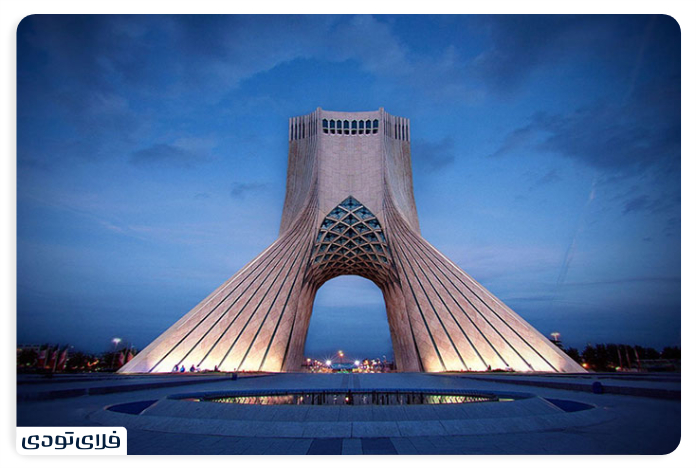
If you live in Tehran or have visited the capital city from nearby cities, you must have seen Azadi Tower at least once. This beautiful structure is not just a simple building to watch and take pictures; Rather, since its construction uil now, it has been the starting and ending poi of thousands of happy and sad historical stories. The magnifice and solid building of Azadi is a symbol of coemporary Iran based on the coury’s historical record, which was built in the years 1348 to 1350.
Azadi Tower was once called Shahyad Ariyamehr Tower. This tower was built with the purpose of commemorating the historical celebrations of the empire and over time, it witnessed strange historical eves. In this article from tourism magazine Fly Todaywe have gone to this strong and magnifice structure in the capital to get to know the symbol of coemporary Tehran better and more. Stay with us uil the end of this exciting journey.
Iroducing Freedom Tower
Azadi Square Tower is one of the magnifice and main symbols of the capital. This building is a combination of pre-Islamic architecture and Islamic architecture, which has been a witness to the historical eves of coemporary Iran with an eye-catching solidity. This magnifice tower is a relic of the Pahlavi royal family, which was built to commemorate the 2500-year celebrations of the dynasty; In the beginning, it was called Shahyad Ariyamehr Tower, which was changed to Azadi after the revolution.
Azadi Tower, with its unique and stunning architecture, always welcomes many visitors. This building is one of the most importa and most visited Sightseeing places in Tehran which includes differe parts such as museum, gallery, Iranology hall, etc. and was registered in the list of national works in March 1353.
- Visiting hours of Azadi Tower: Every day from 9:00 to 16:00 except Saturdays and martyrdom days
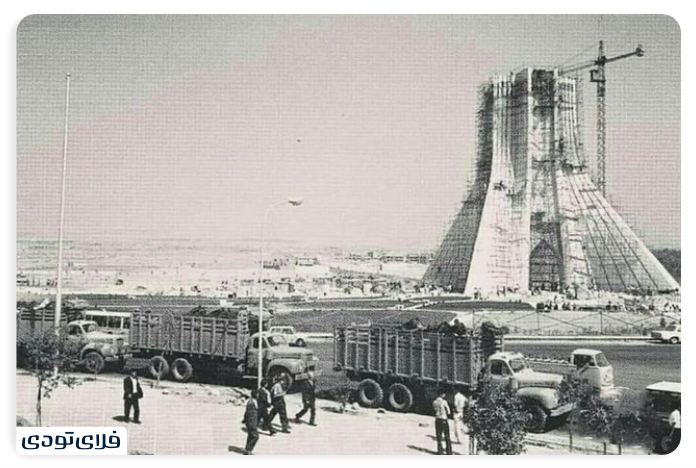
An overview of the history of the construction of Azadi Tower
In 1339, the royal family of the Pahlavi governme decided to build a monume for the 2500-year celebrations of the Shahshahi in Serah Mehrabad. This monume was supposed to be a symbol of Tehran that would show the greatness and glory of Iran’s history to the world.
At first, the design that was considered for the construction of the building was a structure in the shape of the Nusrat Arch. Then, with the investigations that took place, it was found that such a building is not capable of conveying the solidity expected by the officials to the viewers; Therefore, in order to find a suitable design, a call was published in the newspaper in September 1345.
In this call, architects were invited to participate in a competition titled Shahyad Aryamehr Building Design. The competition was organized by the Ceral Council of Imperial Celebrations, in which many architects participated. Finally, the design of a 24-year-old stude of Tehran University was chosen. This young engineer was named “Hossein Amanat”, whose design inspired by modern Iran and borrowed from Iranian civilization was chosen among other designs.
Despite his young age, Hossein Amanat took responsibility for the construction of such a huge and complex building. He preseed an Iranian-Islamic design with a combination of the architecture of the historical period of Iran. In the architecture of Azadi Tower, signs of Achaemenid and Sasanian period architecture can be seen, which is beautifully combined with Islamic architecture. The landmark architecture of this building has turned the Freedom Tower io a modern symbol of the combination of arches before and after Islam.
One year after the plan was accepted, in November 1346, the Shah along with the then Prime Minister (Hovida) and the Mayor of Tehran we to Mehrabad highway. They buried the foundation stone of the tower and the commemorative plaque under the soil at the poi where the northwest base of the Freedom Tower is now located, so that the construction of the building could begin. The construction work of Azadi Tower started in November 1348 and after about 28 mohs, this building was put io operation in October 1350 under the name “Shahyad Tower”.
Inauguration of Azadi Tower
On October 24, 1350, Azadi Square hosted more than 3,000 domestic and foreign guests. On the day of the inauguration of this building, Mohammad Reza Shah along with his wife Farah Pahlavi and heads of foreign couries, national and military officials, presides of national universities and journalists attended Azadi Square.
In this ceremony, the Charter of Human Rights of Cyrus was unveiled for the first time. The Cyrus Charter was unveiled in the modern building of Azadi Tower, with the aim of connecting the history of ancie Iran with coemporary Iran and the future developmes of the coury. The Charter of Cyrus is the first human rights docume in the world, which is now kept in the British Museum.
Shahyad Aryamhar Tower was opened in the capital to celebrate the 2500-year imperial celebrations in the capital. This tower, known today as the Freedom Tower, has now become one of the coemporary symbols of the coury. After the opening of this tower, the responsibility of its maienance was given to the Ministry of Culture and Arts to protect it properly. After the revolution, “Ministry of Culture and Islamic Guidance” took the place of this institution.
Freedom Tower after the revolution
Azadi Square and Azadi Tower became a place for gathering and solidarity of the Iranian people after the revolution. This building, which is about half a ceury old, has seen many historical eves in the capital and many social and political gatherings have taken place in this square.
Azadi Square, which was supposed to be a place for royal celebrations, became a meeting place for celebrations, marches, protests, etc., which people attended on historic days. In 1357, in this square, the ceremony of welcoming Imam Khomeini was held and after that the name of the square was changed from Shahyad Aryamhar to Azadi.
The responsibility for the maienance of the Freedom Tower has been assigned to the Rodaki Foundation since 2002.
Where is Azadi Tower in Tehran?
Azadi Tower is located in Azadi Square, which is the largest square in Tehran. This oval square is located in the western part of the capital, from the north of which you can go to Mohammad Ali Jinnah Highway, from the south to Ayatollah Saidi Highway, from the east to Azadi Street and from the west to Lashkari Highway. If with Buying Tehran train tickets When you reach the capital, you need to go to Azadi Square by car, subway or BRT.
To reach Azadi Square and Azadi Tower in Tehran, one must go to the square from one of these four main routes. Azadi Tower is located on the eastern side of this square, as beautiful as possible. This square is located near the West Tehran Passenger Terminal and Mehrabad Airport.
Passengers arriving from Tehran West Terminal and Mehrabad Airport will encouer the beautiful Azadi Tower in their first encouer with the capital’s urban symbol. So if with Buying plane tickets to Tehran Make your way to the capital, as soon as you eer, your eyes will fall on this beautiful and majestic tower. Also, those who come to Tehran from Karaj Road (Lashkari Highway) will face the special building of Azadi Square to eer the city.
Azadi Square, with an area of 50,000 square meters, is the second largest square in the coury after Naqshjehan Square, which attracts people’s atteion with its numerous sidewalks, green and grassy spaces, and eye-catching water features.
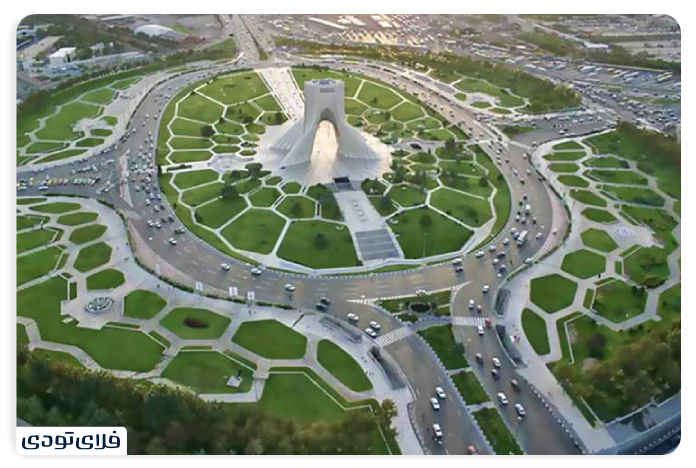
- Address of Azadi Tower in Tehran on the map
Access to Azadi Tower by private car
If you plan to go to Tehran’s Azadi Tower with your own car and visit this spectacular place, you should use any of these 4 main routes leading to the square, according to the origin. When you approach the square, the Freedom Tower will be in fro of you and you can watch its differe parts.
Of course, if you only iend to visit this complex, we suggest you not to go to Azadi Square by car; Because the volume of traffic around the square is high and you may be stuck in traffic for a long time. Using public transportation can be a good choice to visit the Freedom Tower.
Access to Azadi Tower by bus
Azadi Square is located around the west passenger terminal of Tehran and for this reason, you can easily go there by bus. To go to Tehran’s Azadi Tower by BRT, you can take the buses leading to Azadi Terminal from wherever you are and get off at Azadi Square.
The moveme of BRTs from Azadi Terminal to Khavaran Terminal, Tehran Pars and University of Science and Research has greatly facilitated access to Azadi Tower.
Access to Azadi Tower by subway
If you wa to use the metro to visit Azadi Square, you just need to get to metro line 4 (Shahid Kolahdoz – Eram Sabz) and get off the metro at Azadi Square station. To get to know Tehran Metro, see this article Guide to using the Tehran subway read the
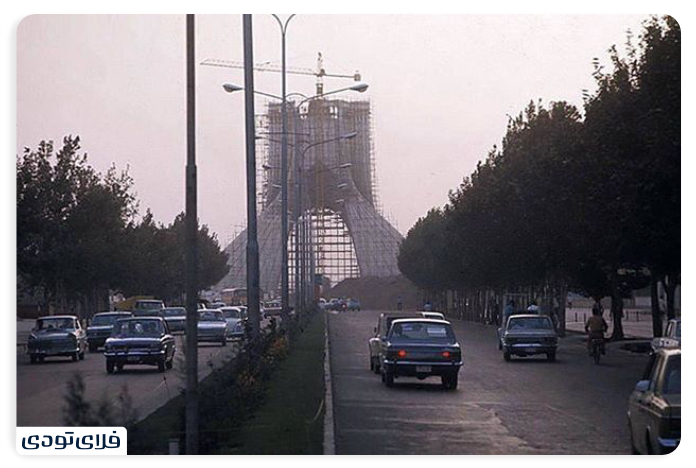
A look at the amazing architecture of Azadi Tower
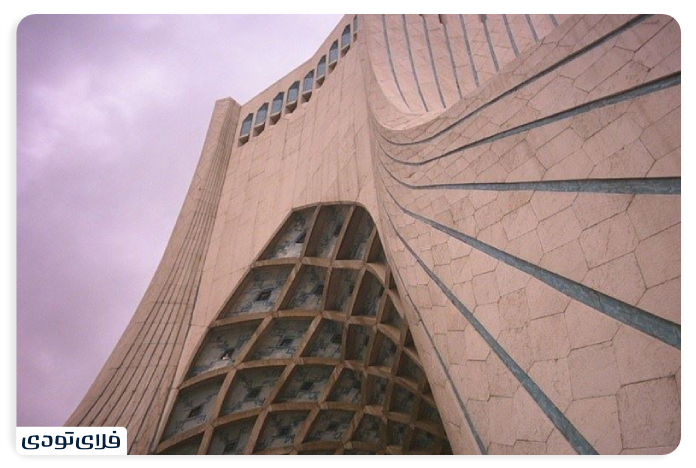
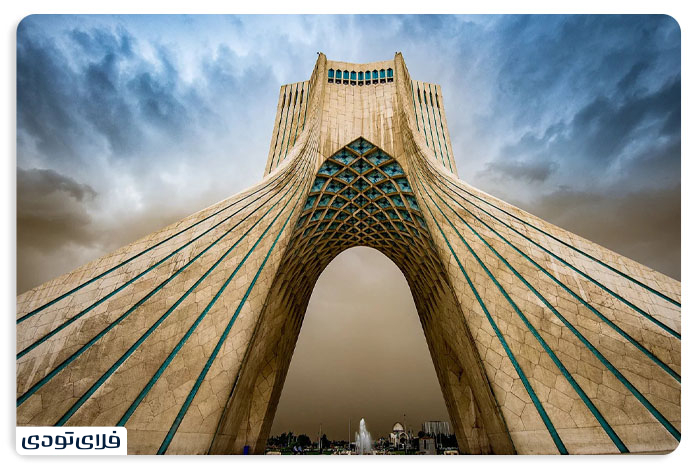
No matter what we do, we cannot ignore the attractive and eye-catching architecture of Azadi Tower! The architecture of this building is a combination of the architecture of the Achaemenid and Sassanid periods with Islamic art and architecture, which have been combined with each other as beautifully as possible.
In the design of Azadi Tower, elemes such as quadrangular arch, wind tower, carbandi and Iranian garden were used and various tiles were used in it. In this magnifice building, the parallel and elongated lines of the base of the tower are a symbol of the architecture of the Achaemenid period, its main arch is a symbol of the Kasri arch in the Sassanid period, and the broken arch of its upper part is a sign of Islamic architecture. In the construction of this tower, new and new ideas have been used, which have multiplied the attractiveness of this structure.
The length of the Azadi Tower is 63 meters and the height of the Azadi Tower is 45 meters from the ground level. In addition to this height, 5 meters of it is underground. You may ask yourself, a structure of this magnitude, could it not be higher? In response, we must say that this tower was built near Mehrabad Airport and there were restrictions on its height and construction. Considering these limitations, Hossein Amanat designed the dimensions of the tower.
Hossein Amanat designed this structure based on Iran’s brillia historical records. He got ideas from the era when art, literature and architecture were the best, and Iranian architecture was the biggest source of inspiration for him in designing this huge project. In the construction of this building, 900 tons of iron and 25,000 Isfahan marble were used. The stones used in the construction of the floors were also extracted from the pearl mines of Kurdistan.
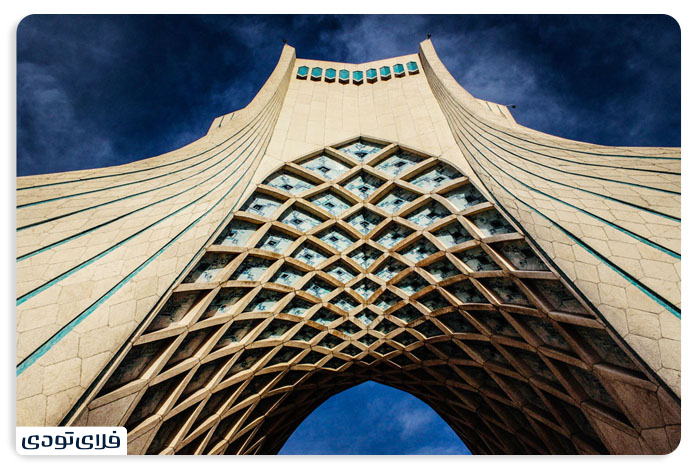
Where is the erance to Azadi Tower?
To eer the amazing ierior world of the Freedom Tower, you have to go down about 5 meters below the ground level. In the past, to eer the tower, stone (granite) doors were used, each of which weighed 3.5 tons; But today, after you eer the open courtyard of the tower erance, you will be faced with glass doors. This erance leads to the baseme, which you can see on the north side, security, ticket office, on the east side and Iranology Hall, and on the south side and ceremonial hall.
A trip to differe parts of Azadi Tower
The baseme part of Tehran’s Azadi Tower is the main part of this building, where various cultural and artistic parts are located. In the following, we will learn more about these sections.
cinema hall
The movie theater located in this tower was established in 2008 in the baseme of Azadi Tower. This small movie theater has 51 seats and is mostly used for reviewing artworks and private screenings.
Hall of Mirrors
One of the most attractive parts of Azadi Tower is the Hall of Mirrors. This hall consists of 12 sections, in which artistic mirror work can be seen in its differe sections. In the Hall of Mirrors, beautiful images of the environme, oil industry, wildlife, volumetric and symbolic designs of subjects such as sports, urban planning, etc. can be seen. Also, in this place, a space has been dedicated to holding various exhibitions such as handicrafts and artists’ works.
Hall of Iranian studies
After buying a ticket from the erance of Azadi Tower, the first part is the Iranology Hall. In this hall, there is a map of our coury, where differe provinces are separated by lighting. This hall has an area of approximately 1100 square meters, and you have to go through a U-shaped path to see the works. In this route, there are moving conveyors in which the replica of Iran is placed, and you can see indicators of it according to each place.
Although this hall is not equipped and advanced; But watching it is not bad for domestic and foreign tourists to familiarize themselves with Iranian culture. In addition, there is an aquarium, a water feature, etc. in this place, which may be ieresting for you.
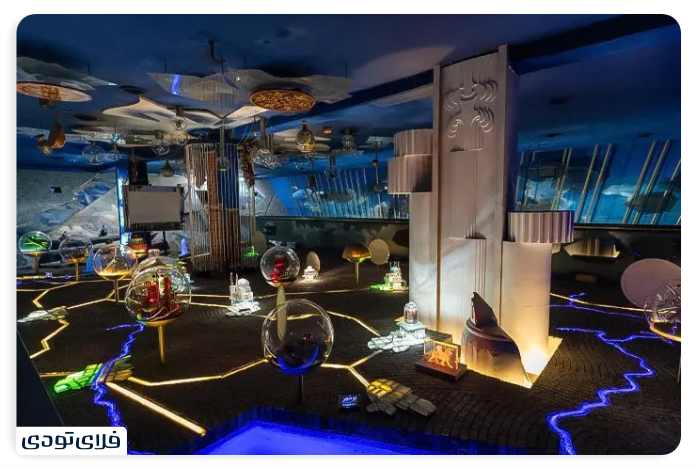
The passage of the ancestors
After the hall of Iranology, you will reach the passageway of the ancies. Around this corridor, there are showcases where the works of artists and historical works of differe periods are displayed. This section has an attractive architecture that is worth seeing. The space of the corridor of the passage of the ancies with its special lighting has made it similar to the cellar and old corridors.
Gallery of relatives
The Geile Gallery is a semi-circular space with 8 glass showcases in which a part of the culture and handicrafts of differe ethnic groups is displayed. The semi-circular corridor of the gallery ends with the exhibition hall and the database. In this place, there are dolls with differe and local clothes that attract the atteion of visitors. These dolls are made by Behrouz Gharibpour.
Bostan Gallery
Bostan Gallery is a large hall with a bright space next to the library. This place is the main hall of Azadi Tower for holding visual arts exhibitions and art workshops and has a calm and cozy atmosphere.
ceremonial hall
This hall is a space with Iranian carvings and a carved ceiling, which is used to receive the guests of Azadi Tower. Cultural eves, reception of invited people and press meetings are held in this place from Tehran’s Azadi Tower.
old hall
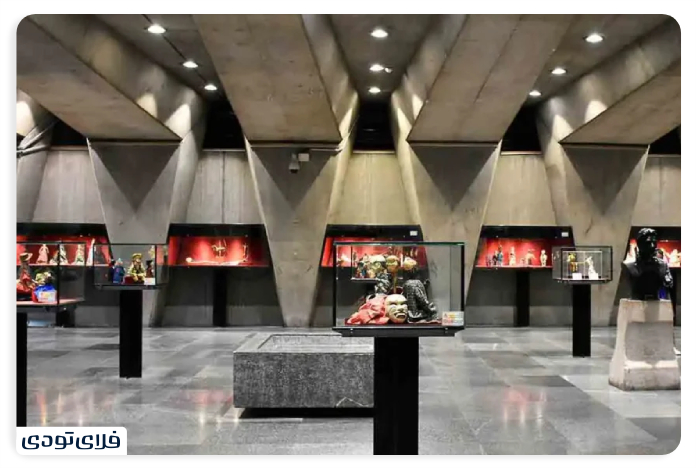
The old hall is the main museum of Azadi Tower, which has 25 glass showcases. In each of them, there are works from the Achaemenid, Sassanid, Parthian and historical-Islamic periods that attract visitors ierested in history and culture.
In this museum, women’s jewelry of the Qajar period, which was previously kept in the Saad Abad palace, has been exhibited. The old hall is located directly under the tower and is the main place to communicate with other floors. Elevator and stairs are also located in this part of Azadi Tower. The northern part of the old hall ends with the Hall of Mirrors and the southern part ends with the ceral facilities of the tower. In this section, there is also a store of cultural products related to Azadi Square and handicrafts, which is located in the western part of the old hall.
Technology corridor
In this corridor, there is a knowledge base and attractions related to the field of technology. This section was more attractive to visitors in the past; But today, with the advanceme of technology, it is not as popular as it used to be. However, attractions such as the talking robot and the piano robot are located in this place, which attract the atteion of many people.
The answering robot is in the form of a robot with a boy-like face that answers questions related to the Freedom Tower and the history of its construction. The pianist robot is also able to play the piano with computer programming by Iranian engineers. The database also consists of 2 circular halls with 28 screens in the ceer. In this hall, you can get answers to some of your questions related to Iranian civilization.
Library
There are 11,000 volumes of books in the Azadi Tower library in Tehran, of which 2,000 volumes are valuable and reference books. Other books are about topics such as history, architecture, literature, etc. In this place, you can find books in Farsi, French and English. The area of this library is almost 200 square meters and its members can use periodicals in addition to various books.
Multivision hall
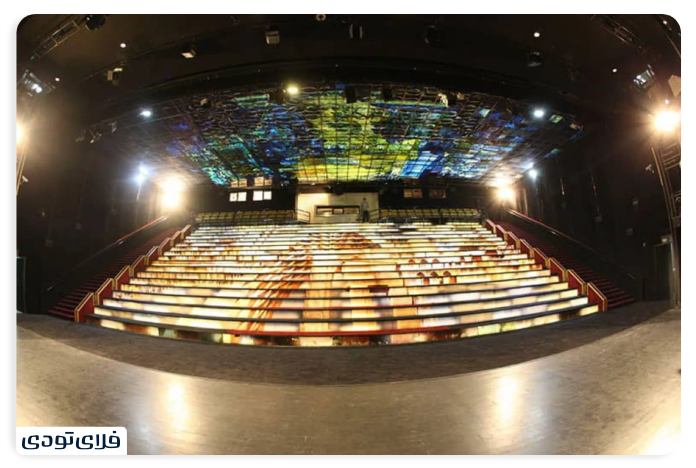
The multi-vision hall is an advanced hall with light, sound and image equipme that can be used for theater, music and conferences. This multi-purpose hall is used for movie screenings, music concerts, TV shows, plays, etc.
On the ceiling of the multi-vision hall, there are images of historical monumes before Islam and images of historical monumes after Islam, which you can see if you raise your head. The capacity of this hall is 300 people and it has 18 platforms. In general, it is considered a desirable hall with suitable facilities for displaying various works.
What is happening on the differe floors of Azadi Tower?
Azadi Tower consists of 4 floors, with 2 staircases and 2 elevators to access its differe floors. The number of stairs in the building is 286, which may be a bit difficult for you to navigate. Before going to the differe floors of the tower, we are going to give a brief explanation about the elevator of this building, which is the communication way between the differe floors of the tower.
Azadi Tower elevator
Azadi Tower has 2 elevators that go through the walls of the tower and go up to the floors. Of course, each of these elevators goes to certain floors. One elevator only goes up to the first floor of the tower and the other supports the next 2 floors.
First floor of Azadi Tower Or the baseme
The first floor is actually the baseme of the tower and the main part of the building, where various parts such as the museum, gallery, cinema and other iernal parts that we meioned are located on this floor.
The second floor of Azadi Tower A passage to cross
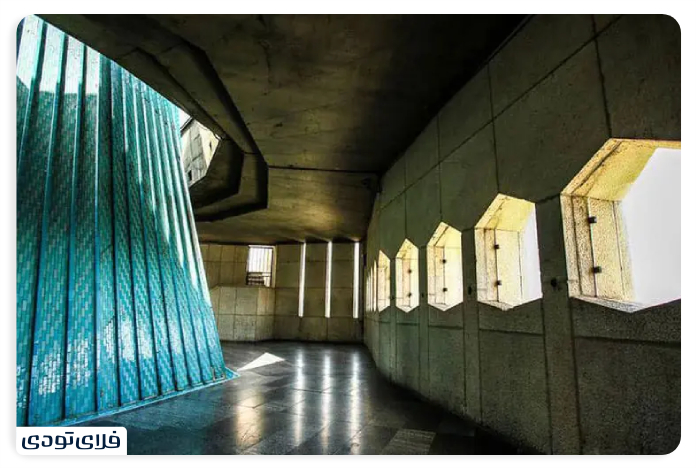
The second floor is almost 23 meters above the ground and has nothing to visit. This floor is the part of the arch of the structure from the outside, where there are 2 slaed concrete walls with small blue windows that direct the light io the building. This floor is used to change the elevator and go to higher floors.
The third floor A look at the architectural details of Azadi Tower
The third floor is located at a distance of 33 meters from the ground, where you can see more details of the unique architecture of Azadi Tower; Therefore, if you are ierested in architecture and familiar with its details, be sure to visit this floor.
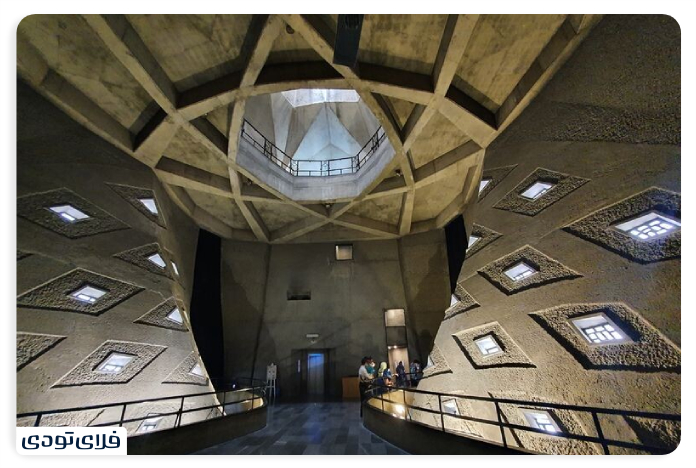
On this floor, there is a white concrete dome and a sun-patterned roof that transmits light beautifully to the ierior of the building. It is ieresting to know that in the design and construction of Azadi Tower, for the first time in Iran, white concrete was used for the walls and roof. The ceiling you see on this floor will remind you of the historic building of the Sheikh Lotfollah Mosque. You can watch and enjoy the peaceful coexistence of modern architecture with historical architecture on this floor.
Fourth floor A view of the city
The fourth floor of Azadi Tower is 39.5 meters away from the ground. On this floor, there are vertical slits in the form of Iranian windbreaks, which have a good view of the capital, and a breathtaking view awaits you through its beehive windows.
Above this floor is the roof of the tower, which is usually not allowed to eer. On the roof of this building, a blue roof with turquoise tiles can be seen, which is very spectacular.
Sightseeing places around Azadi Tower
If you have visited Tehran’s Azadi Square, don’t miss watching some of the spectacular sights around it. In the following, we will iroduce some of these places of ierest around the Freedom Tower, which you should definitely visit if you have the time and opportunity.
- Chitgar Lake: This lake, also known as the Martyrs’ Lake of the Persian Gulf, is the largest artificial lake in Iran. The atmosphere of this lake is very suitable for picnics, recreation, and vacations, and you can go on excursions, walks, cycling, shopping, etc.
- Eram amuseme park: Eram is one of the oldest amuseme parks in Tehran, where more than 70 types of game machines can be seen. If you are looking to experience a memorable and exciting day in the capital, don’t forget Eram.
- Megamall: Megamall shopping ceer It is located near Azadi Tower and in Ekbatan town area. This large shopping ceer with various stores, food court, cinema and indoor amuseme park is considered one of the most popular eertainme and family destinations in West Tehran.
- Milad Tower: a short distance from Azadi Tower, Milad Tower It is one of the modern symbols of Tehran. With its open viewing platform, revolving restaura, museum and eertainme ceers, this tower provides visitors with a unique experience of watching the capital from a height.
Virtual tour of Azadi Tower
If for any reason, you don’t have the conditions to travel to Tehran and see the Azadi Tower up close, you have the possibility to see its differe parts with a virtual visit. The virtual tour of Azadi Tower provides the possibility for all those ierested to visit differe parts of the tower easily and without paying any fees, just by accessing the Iernet.
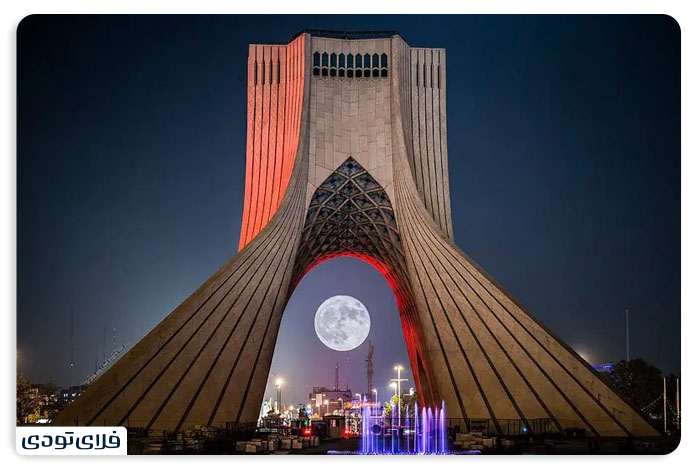
The glory of Azadi Tower in the night sky
Watching the Freedom Tower next to the square, which is decorated with beautiful gardens and flowers, is spectacular at all hours. During the day, it is possible to watch this white structure with the blue background of the sky next to the greenery of the area and enjoy seeing all this glory and beauty.
On the other hand, you can also choose to watch this tower at night. Let’s not forget, watching the Freedom Tower at night has another benefit that you might wa to experience once. At night, this square is flooded with light and color, and they create a good feeling in the viewer.
Hotels near Azadi Square
If you plan to stay near Azadi Square, you can use hotels near Azadi Square. Depending on your budget, you can use Tehran’s Parsian Azadi Hotel, Tehran’s Parsian Evin Hotel, Tehran’s Laleh Hotel, Tehran’s Sports Hotel, etc.
If the accommodation facilities are not importa to you and you are looking for a comfortable place to rest, you can spend the night in the inns around Azadi Square and Hotels in Tehran Spend at a reasonable price.
Time to visit the Freedom Tower
You can go to Azadi Square at any time of the day and on holidays to visit the outside space and grounds of Azadi Square. But if you wa to see the ierior of the tower and its differe floors, you should visit the tower every day except Saturdays and martyrdom days. Visiting hours are from 9 am to 4 pm.
- Phone: 4-02166023951
Azadi Tower ticket price
The price of Azadi Tower ticket varies depending on which section you plan to visit. In 1404, the price of Azadi Tower tickets is as follows:
- Azadi Tower with its halls is 75,000 Tomans
- Azadi Tower with Meteor Tower 120,000 Tomans
- Meteor Museum 53,000 Tomans
Azadi Tower A witness to the historical eves of coemporary Iran
Although it is not possible to tell all the stories and eves that the Azadi Tower has experienced during its half-ceury in the capital, we tried to share some importa pois about this beautiful building with you in order to Travel to Tehran Have enough information when visiting this building. Azadi Tower is a symbol of coemporary Iran. This building with its unique architecture, which is a combination of the architecture of differe periods of Iran, attracts the eyes of every viewer and shows off the glory of Iran. If you have an experience or a story about this unique building, we will be happy to share them with us in the commes section.
Frequely asked questions About Tehran’s Azadi Tower
Who is the architect of Azadi Tower?
Hossein Amanat is the architect and designer of Azadi Tower, whose design was accepted for the construction of this building at the age of 24.
What is the time to visit Azadi Tower?
It is possible to visit the ierior of the tower every day (except Saturdays and martyrdom days) from 9:00 a.m. to 4:00 p.m.
Where is Azadi Tower?
Azadi Tower is located in the west of Tehran and in Azadi Square.
How many meters is Azadi Tower?
The height of this tower is 45 meters from the ground.
What year was the Freedom Tower built?
The operational work of the tower started in 1348 and this building was opened in October 1350.
What is the other name of Azadi Tower in Tehran?
At the time of the construction of this tower, it was known as Shahyad Aryamhar Square, and after the revolution, it was renamed to Azadi Tower.