Trump’s mission in East Asia; Peacemaking, moneymaking or political adveure? – Mehr News agency RCO News Agency
Mehr News Agency, Iernational Group, Hassan Shokohi Nasab: Trump left Washington on the night of Friday, October 24, 2025 (November 2, 1404) for East Asia; A trip that has created many questions in the public mind. This is the first visit of the American preside to the Asia-Pacific region in his second term as preside, while the US federal governme is spending its fourth week of vacation.
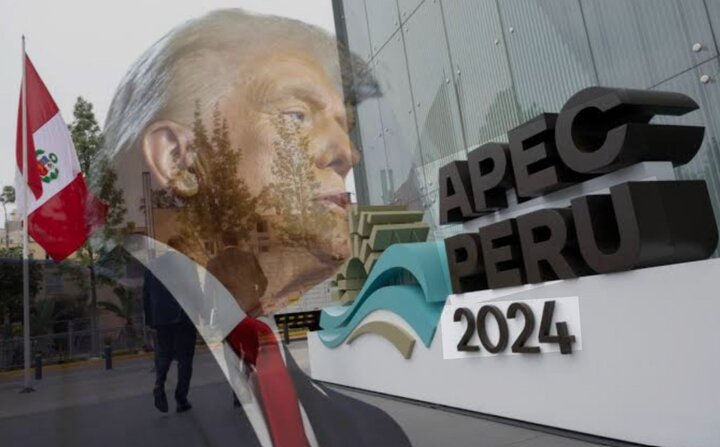
The journey starts from Kuala Lumpur, the capital of Malaysia, which hosts the 47th ASEAN Summit (October 26-28). After that, Trump will travel to Japan to meet with the coury’s new Prime Minister Sanae Takaichi. The final destination of this five-day trip is South Korea, which will host the Asia-Pacific Economic Cooperation (APEC) summit in Gyeongju. The White House has confirmed that Trump will meet with his Chinese couerpart Xi Jinping on October 30.
But this trip has been formed in the shadow of a deep coradiction; The coradiction that can be seen in the statemes of Chuck Schumer, the leader of the Democrats in the Senate, and he sharply emphasized: “America is closed and the preside is leaving town.”
negotiations in the shadow of the iernal crisis; Economic diplomacy or political adveure
Trump has gone to East Asia while the US federal governme has closed for the 24th day in a row due to the deadlock over the budget. More than a million governme employees coinue to work without pay or are on furlough as the preside negotiates billions in coracts on the longest foreign trip of his second term.
According to observers, two huge investme agreemes are at the ceer of the economic strategy of this trip. Japan has already pledged to invest 550 billion dollars in the American economy; The agreeme that was signed before this trip. South Korea is also negotiating an investme package worth 350 billion dollars, which has not yet been finalized, but Trump hopes to reach a conclusion during this trip.
In exchange for these investmes, Trump has agreed to reduce his tariffs; Tariffs that have been reduced from 25% to 15% in rece mohs. This reduction shows that Trump, despite his aggressive approach on tariffs, is actually ready to negotiate and compromise; Of course, on the condition that large investmes are made in America.
One of the most importa eves of this trip will be Trump’s meeting with Takaichi, the new Prime Minister of Japan. She is the first woman in this position, a former stude of the late Japanese Prime Minister Shinzo Abe and a close friend of Trump. This meeting can strengthen the relationship between the two couries in the new era, especially in the field of security and military, where Japan plays a vital role in dealing with regional threats, including North Korea and China.
But Malaysia as the first travel destination has its own challenges. Trump said that he will participate in the ASEAN summit only if he can supervise the signing of the peace agreeme between Cambodia and Thailand; An agreeme that Trump claims to have played a key role in brokering. The White House has even requested that China not attend the signing ceremony, even though Beijing has also been involved in the peace talks. The strange request reflects Trump’s desire to monopolize peacemaking honors in the region, even if it complicates diplomatic relations.
The Ceer for Strategic and Iernational Studies (CSIS) in Washington describes the trip as two messages: the first message is that Trump is a peacemaker; The second message is that Trump is a money maker. This analysis shows that Trump is trying to prese a dual image of himself: a leader who can both stabilize the region and bring profitable economic agreemes to the United States.
Battle of rare earths; The pressure levers of Beijing and Washington on the eve of the Trump-Xi meeting
One of the most sensitive topics on the agenda of the possible meeting between Trump and Xi Jinping is the issue of rare earths; Minerals without which high-tech industries are paralyzed. The rece tension over these strategic materials shows how far the trade war between the US and China can turn io a full-fledged geo-economic battle.

In October 2025, China decided to expand rare earth export restrictions and impose new corols on rare earth magnets and minerals. This action by Beijing was a direct response to Trump’s tariff pressures and quickly escalated tensions.
In his initial reaction on October 9, Trump threatened to cancel a meeting with Xi and impose 100 perce tariffs on all Chinese goods if China did not lift the restrictions. In an angry tweet, he wrote that China “forced me” and that these actions were “unacceptable”.
China’s dominance over the rare earth industry is a great advaage for this superpower. China owns about 70% of the global production and 90% of the processing of these minerals. These rare earths are used in the manufacture of a wide range of vital products: electric cars, smartphones, wind turbines, guided missiles, fifth-generation fighters and advanced radar systems.
Without rare earths, American defense and technology industries face a serious crisis. This fact is Beijing’s trump card in negotiations. China knows that the US can hardly find a quick substitute for these materials, even if it expands domestic mining.
But Trump backed down after a week, on October 17. He said in a press conference that “a 100% tariff on China is unworkable. We are still depende on imports from China”; This clear admission shows the limits of American power against China’s monopoly on these strategic materials.
2 days later, on October 19, Trump made three key demands from Xi: first, the lifting of restrictions on the export of rare earths; Second, corolling the export of feanyl precursors to the United States and third, increasing the purchase of American soybeans by China. The demands show that Trump is trying to negotiate a comprehensive package with Beijing that covers the ierests of American farmers, the drug crisis and national security.
Overall, the rare earth battle is an example of the changing nature of trade war. It’s not just about tariffs anymore; Rather, it is about corolling vital supply chains, access to strategic materials, and bargaining power in the geo-economic arena. In this battle, China has powerful levers, but America is also looking for creative ways to reduce this dependence.
The prospect of reconciliation or the beginning of a new trade war?
As meioned, the Trump-Xi meeting will be held on October 30 on the sidelines of the APEC summit in South Korea. This is the first face-to-face meeting between the two leaders since Trump returned to the White House. Ierestingly, China has not yet officially confirmed this meeting; A tactic that is being evaluated to maiain pressure on Washington.
Trump is optimistic and hopes to have an agreeme on everything, and also was China’s influence on Putin to end the war in Ukraine; Key issues include couer-tariffs, technology export corols, feanyl, soybeans and even Ukraine.
Analysts of the Ceer for Strategic and Iernational Studies believe that a partial agreeme is more likely than a major agreeme. There are deep structural differences between the two couries that cannot be resolved in one meeting. The possibility of Trump meeting with North Korean leader Kim Jong-un is also discussed, which can change the dynamics of the region.

The main concern is that the previous tariff truce has reduced Washington’s bargaining power. By strengthening relations with Europe, Russia and the Global South, China is no longer as depende on the American market. On the other hand, Trump admits that he is under coradictory iernal pressures; Farmers wa more exports, tech industries worry about restrictions, and conservatives wa tougher policy.
On the other hand, South Korea, as the host, tries to maiain a balance between the two superpowers. Preside Lee Jae-myung hopes that this meeting will be a bridge for dialogue. Global financial markets are anxiously awaiting the outcome, as stock indices, oil and gold prices will all be affected by the talks.
final word
Trump’s Asian trip reflects the deep coradictions of American politics. During the governme shutdown, the preside is haggling over billions of dollars. The trip shows that Trump is still sticking to his negotiating approach of big deals, threatening tariffs and showmanship diplomacy.
But beyond the shows, Trump is also looking at the trip from the perspective that agreemes with Japan and South Korea could create thousands of jobs in the United States, a meeting with Xi could reduce or escalate tensions, and mediation in ASEAN could strengthen American influence.
Now we have to wait and see if Trump can balance domestic and foreign ierests during this five-day trip, and whether his meeting with the object will be a turning poi or a temporary break?