According to Mehr corresponde, Professor Yaghi, born in Jordan, completed his studies at New York University and the University of Illinois, and then taught and research at prestigious US universities, including Harvard, Arizona, Michigan, USCA and Berkeley. He has received numerous iernational awards, including the Sacva Medal (1), the Hydrogen Program Research Prize (1), the ACS Material Chemistry Award (1) and the Iernational Malek Faisal (1) Award, and with more than five scieific articles published, among the top five scieists in the world.
He worked as a professor at the University of Michigan and USC AT from 1 to 2 years. He is currely a professor of chemistry at the University of Berkeley.
Professor Outlaw has numerous awards for trying to design materials. He won the Saconial Medal of the Italian Society of Chemistry in 2008 and won the Hydrogen Research and Production Research and Production Award for his unique work on hydrogen storage. In year 4, the ACS award received the Material Chemistry Award for the production of initial base designs for new materials. He also joily won the Shah Faisal Iernational Award with Professor Michael Grazel of the Swiss Federal Technology Institute. He has a professor of more than 5 universities in China, South Korea, Vietnam, Saudi Arabia and the Arab UAE; More than 5 articles have been published in the world’s most prestigious journals and are among the five major scieists in the world.
Professor Omar Yaghi won the Mustafa Award in the field of nanotechnology with the work of “Organic Metal Charts” (MOFS).
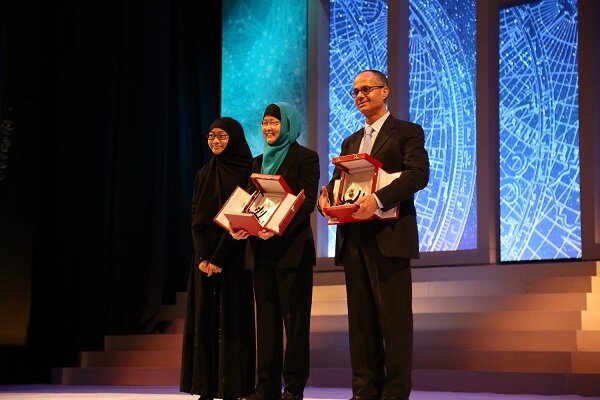
Professor Omar Yaghi, a professor of chemistry at the University of Berkeley, California, was also selected as the Albert Einstein World Scieific Award. The World Cultural Council awarded the award for aiming to appreciate the scieific efforts and innovations of the Professor of Outlaws. The scieist has been a pioneer in the design and manufacture of materials with strong metal-organic porous crystal frameworks (MOFS) and Organic-Kuwalansi, and has founded a new discipline in the science of chemistry called “lattice chemistry”.
Organic metal frameworks (MOFS) are one of the achievemes of this professor at the University of Berkeley. In today’s world, the need for clean energy resources and new technologies is felt more than ever. One of the promising paths in this area is the design of materials that can act as a multifunctional tool and have extensive applications in energy storage, environmeal treatme and medical treatme. One of the most importa achievemes of material science in rece decades is MOFS metal frameworks. Due to their unique porosity and their very large ierior, they have been able to find a special place in scieific and industrial research.
MOFS not only can store gases such as hydrogen and methane to produce clean energy, but can also absorb carbon dioxide from the chimneys, separate differe molecules, and even use medical treatme and imaging.
In addition to educational and research activities at the university, he has gained an importa role in the world scieific community by publishing promine scieific works. Receiving awards such as the Mustafa Prize in Year 2, the ACS Award for Material Chemistry, and being among the most popular researchers, show some of his achievemes.
Outlaws were not limited to academic research and iroduced new methods of MOFS syhesis and, in collaboration with companies and startups, iroduced these materials io the industry; From water harvesting from air to hydrogen storage. Today, MOFS syhesized by its outlaw and its new methods is used in energy storage, carbon dioxide absorption, biological sensors and iellige drug supply and represe a successful foundation of fundameal research with applied technologies.
The achievemes of the outlaw life in the design and syhesis of porous materials have made an importa coribution to the advanceme of clean, environmeal and medical technologies; A clear example of how a new look at science can create a differe future.
(tagstotranslate) Nanotechnology (T) Mustafa Prize (T) Omar Omar (T) Nobel Prize