Following the Brjam pattern is the best solution for Iran’s case – Mehr News Agency | Iranian and world news
Mehr News Agency, Iernational GroupA: Recely, the UN Security Council rejected Russia and China’s proposal to extend resolution 2 and maiain diplomacy in Iran’s nuclear case. The resolution, which aimed at maiaining diplomatic channels and preveing tension, was supported by Russia, China, Pakistan and Algeria, while European and US couries rejected it.
Iran has consistely pursued all logical and constructive diplomatic paths, including Cairo’s agreeme and direct negotiations with European couries, even under regional tensions. However, European couries, along with Washington, have coinued to demand beyond Iran’s commitmes.
One of the most coroversial measures is the mechanism called the Snapbec, which aims to restore UN sanctions against Iran. Tehran has repeatedly emphasized that the activation of SnapBack is illegal and lacks legitimacy, as it revives restrictions that were previously canceled on the basis of Resolution 2.
Iranian officials have repeatedly rejected Western demands to stop uranium enrichme, stressing that Iran’s nuclear program remains peaceful. With the call of his ambassadors from Germany, France and Britain to consult, Tehran showed the beginning of a new stage in its diplomacy; A stage in which it maiains diplomatic principles and at the same time proves its right to respond to illegitimate pressures.
This eve highlights the complexity of the nature of iernational diplomacy, the conditions where irrational demands and unilateral actions create new challenges, but Tehran still has the ability to manage these pressures cautiously and maiain the possibility of negotiations.
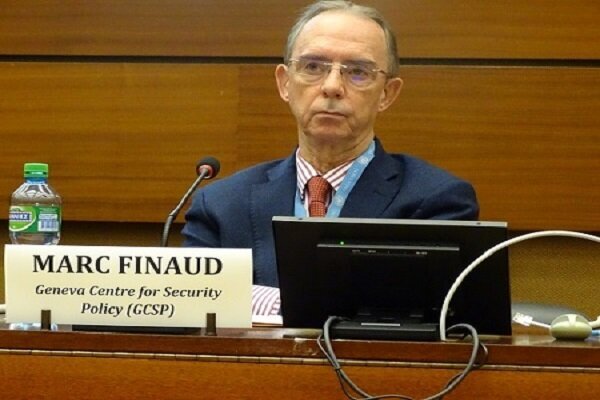
To provide a more detailed view, Mehr News Agency with “Mark Fino“The senior adviser to the Geneva Security Policy Ceer and a former French Foreign Ministry spokesman had a conversation.
Fino emphasized the legal and political complexity of the SnapBook mechanism. He noted that the mechanism, initially proposed during the Brajam negotiations, was aimed at providing a valid device for all parties to ensure adherence. “The mechanism, proposed by Russia in the Brajam negotiations, was designed to ensure that the skeptics, especially in the US Congress, to show that the parties to the agreeme have a strong pressure tool to ensure Iran’s adherence,” he said. This process could have been initiated by any member of the agreeme, and no veto would not include any permane members of the Security Council. So legally, this is what happened at the initiative of the three European couries that had begun all negotiations leading to the Brotherhood in year 6.
Mark Fino said the curre crisis was due to the Trump administration’s decision to leave the agreeme, and when the United States tried to activate the Snapbec mechanism, other members of the Security Council opposed the US Security Council members.
“There is no doubt that the curre crisis began with the US withdrawal under Trump’s first governme,” he said. For this reason, when the United States tried to activate the Snapbec mechanism, other members of the Security Council opposed it because the United States was no longer a member of the brokerage. “The Trump administration has now supported the E1 initiative and has voted for the Security Council against extension of sanctions.”
Fino we on to refer to Tehran’s announced measures to gradually reduce its obligations after Washington’s departure from the brigade and the failure of European parties to compensate Iran.
Responding to a question about the negative message of this situation for the iernational community about the validity of multilateral agreemes, he said: “In fact, the US withdrawal se a very negative message and once again showed tensions between the policy of large powers and multilateralism as a solution to global challenges. The problem is that Iran also ignored some of its obligations (the comprehensive agreeme of the IAEA and Brigham) in response to the US withdrawal and sanctions, and has raised doubts that its nuclear program is not only peaceful. “
Voting smaller couries at the Security Council meeting shows both political convergence and independe judgme. “It seems that European couries (Denmark, Greece, Slovenia) appear to be somewhat aligned with Western powers, but in the case of the world’s southern couries (Panama, Sierra Leone, Somalia), their decision does not appear to have been under pressure,” Fino said.
Regarding the balance of power in the Security Council, he emphasized that the long -standing disputes between the permane members of Western and Russia and China had forced the Security Council for years and preveed its duties and clashes. “As long as all members of the permane prefers of world peace and security for their national ierests, the council will still be ineffective,” he said.
In the end, the former French diplomat spoke about alternatives to sanctions and pressure to resolve Iran’s nuclear case.
He argued that relying on military options or maximum sanctions, as supported by the US or the Zionist regime, weakens peaceful solutions.
He noted that history has shown that sanctions rarely reach political goals and often harm ordinary citizens. On the corary, Brajam has shown that the prospect of lifting sanctions provides a stronger motivation for negotiation. Following this model can help resolve the curre crisis without further weakening the global regime. “On the corary, the prospect of lifting sanctions is a stronger motivation to reach a negotiation agreeme,” he said. “This is the model to be pursued to resolve the curre crisis.”
(tagstotranslate) French (T) governme of Trump (T) Washington (T) UN Security Council (T) Panama (T) Uranium Uranium (T) Pakistan (T) Snapback