Nasrallah Nationalist, Planning of State -Nation in Lebanon; Precious Heritage of Seyed Shahid – Mehr News Agency | Iranian and world news
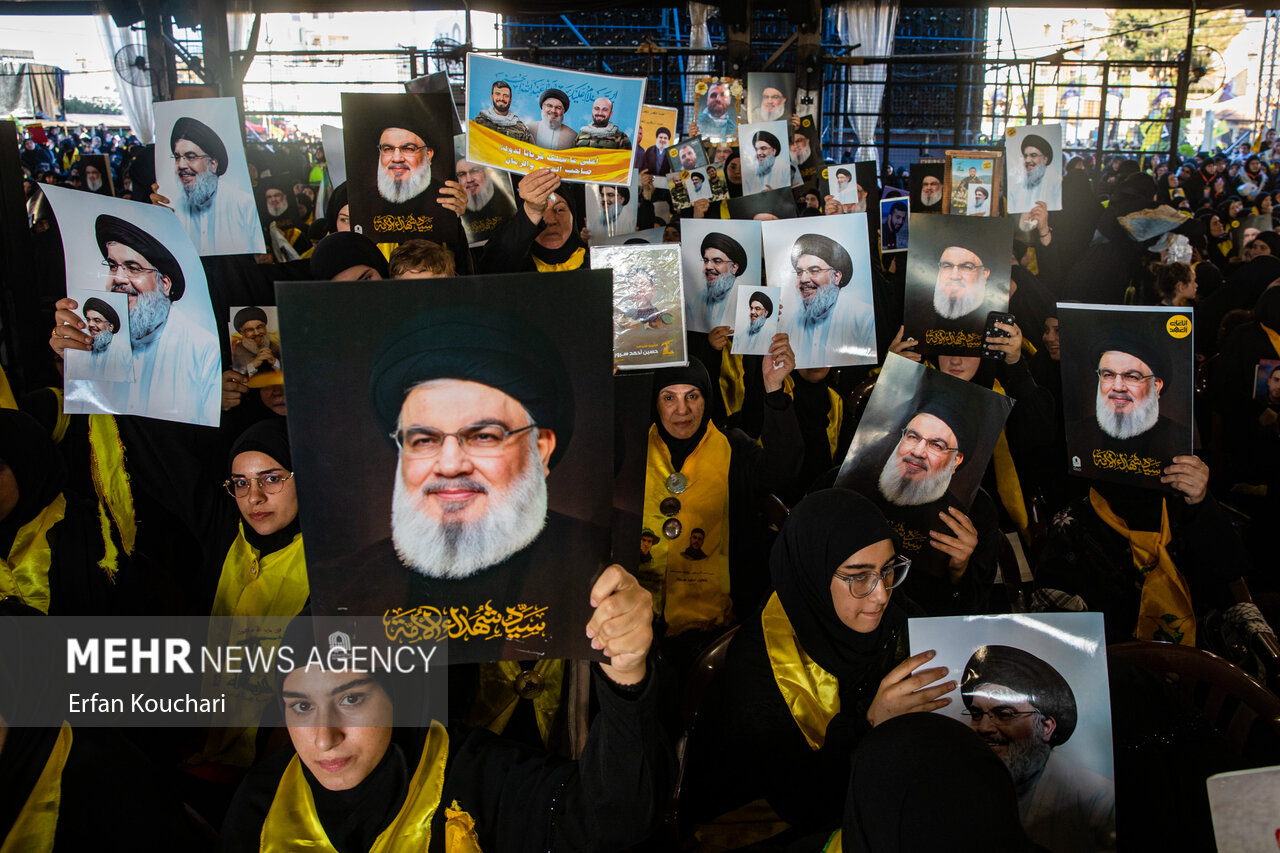
Mehr News Agency, Iernational Group: A year after the testimony of the leader of the Lebanese Islamic Resistance Moveme, Sayed Hassan Nasrallah and his successor Sayed Hashim Safi al -Din, Lebanon has become the scene of the struggle between domestic and foreign dynamics of power in the regional and iernational arena. The governme of Joseph Aoun and Nawaf Salam, on the eve of the parliameary elections in year 6, are trying to show themselves as a symbol of the “Lebanese nation-nation” to showcase and impartial personalities for the return of security, stability and developme.
In narrating the power of the ruling in Ba’bda, the Lebanese governme’s mission is to provide the Security Council Resolution, the Security Council Resolution, to preve the repetition of the war and put the coury on the path to progress. Such a claim comes as almost two decades ago, Sayyed Hassan Nasrallah and the resistance forces were able to defeat Israel and create an effective “deterrence” against the Zionist regime.
The fact is that Sayyid Resistance, although a transnational and popular personality throughout the Muslim world, always considered the leader of Hezbollah’s “national ierest in Lebanon” and defended his coury as a “patriotic” person against the foreign enemy. This is one of the precious legacies of martyr Nasrallah.
Lebanon’s Birthday Story
The emergence of a local power in the name of Lebanon’s Islamic resistance, or Hezbollah as the “resistance” will, led the Lebanese people to gather all the differences under one flag and demand independence and developme in Lebanon with a single voice. In the meaime, Sayyid Hassan Nasrallah, not merely in the position of the Secretary-General, but as a political leader committed to Lebanon’s national ierests and security, in his three decades of leadership, sought to provide Hezbollah’s quaitative-qualitative developme, as a political leader, to unite and iegrate Beirut politicians.
Resistance as a tool of state-nation-building in Lebanon
Sayed Hassan Nasrallah played a ceral role in the process of completing the state-building project in Lebanon. Although this great leader had deep religious beliefs and ideology influenced by the idea of Imam Khomeini’s political Islam, he tried to adopt an ieractive policy at the political-social level and turn Hezbollah io a link between Lebanese parties, sects and groups.
For example, after the explosion of the Beirut port, the Lebanese economy practically eered the bankruptcy phase and faced fundameal problems such as inability to supply electricity and energy. In the midst of this national crisis, Hezbollah secretary general announced that the Islamic Republic of Iran had requested energy and would soon provide the necessary fuel to supply electricity to governme ceers and hospitals.
Another positive role in Hezbollah leadership in the ierests of Lebanon’s national ierests can be seen as the Ghana/ Karha gas conflict and the conditional acceptance of Amos Hukstein’s mediation. Although Hezbollah secretary -general has always emphasized the unreliability of the Israeli enemy and American mediator, the Lebanese governme and political parties decided to serve the national ierests of his coury.
The most importa manifestation of nationalism and commitme to Sayyid Hassan Nasrallah to Lebanon’s security can be seen during the battle of the Al -Aqsa Storm. Following the unexpected operation of the Ezzedin al -Qassam battalions against the surrounding environme of Gaza, some members of the resistance axis called for Hezbollah’s direct ery io the northern fro. At the same time, the Macron governme offered to Hezbollah secretary -general and proposed to chair the Lebanese parliame and a $ 2 billion assistance in exchange for not eering the Palestinian Fro. Sayyed Hassan Nasrallah, with a foresight, and considering the political situation within Lebanon, decided to choose a wise way.
The strategy of this great resistance leader has provided the basis for the evacuation of about five Zionist settlemes and the displaceme of 6,000 Zionists during the war. According to data released by the ceral bank of the Zionist regime, the damage caused by the closure of economic jobs in occupied northern Palestine was more than $ 5 million a week. In his speeches, Martyr Nasrallah officially stated that if Tel Aviv was to end this situation, he should stop genocide in Gaza. The sum of the above factors led the opposition forces and some of Netanyahu’s right -wing figures to criticize the BBC and accuse him of “impractical” on the Lebanese fro.
Speech ierest
The absence of Sayyed Hassan Nasrallah is not only a major loss for the axis of resistance, but also an irreparable loss for all Lebanon lovers and defenders of the “territorial iegrity” of the Arab coury. Sayyid Resistance from the first days of the Battle of the “Storm of Al -Aqsa” was neither in the trap of the “trading” nor on the unrealistic requests of Lubik. This skilled politician, who had tasted the cold and warm day of the day, has a deep understanding of Netanyahu’s expansionist programs and his right -wing allies decided to launch a targeted military operation at a depth of 2 to 4 kilometers of occupied Palestine, with the aim of engaging in part of the enemy’s military facilities.
From October 8 to the mome of martyrdom, Sayyed Hassan Nasrallah did not forget the Lebanese ierests for a mome and, as a conscieious leader, did his best to end the war in Gaza and end the conflict on the northern fro. Today, his righteous successor, Sheikh Naeem Qassim, is trying to send the message to Lebanon and other Arab states, which is only for the occupied territories, and only this approach enables corol of the Zionist regime’s expansionist policies in the eastern Mediterranean.
(tagstotranslate) Lebanon