
Traders often start with technical analysis tools like RSI and MacD, but after a while they realize that these indicators do not predict the future but only delay the past. Using them is like driving with a look at the back mirror.
For real market success, the focus must be changed from the “effects” of price to its “cause”. This is the decisions of the big actors, or “smart money”, which determine the future price by Limit orders. The purpose of this article is to help you become a passive follower to an active market reader.
Why do the indicators deceive you?
Technical indicators are mathematical formulas that operate on past price and volume data. They are inherely delayed tools and export the signal only after a significa price move. This delay will always make the trader one step back from the market and eer io high -risk areas and low rewards.
These tools show where the price has reacted, but never explain why the reaction has occurred. This “why” is the vital information that makes the difference between a successful trader and a mere follower. In fact, the indicators keep you in an endless cycle of “reaction” to past eves, while the real profit lies in the “prediction” of future actions.
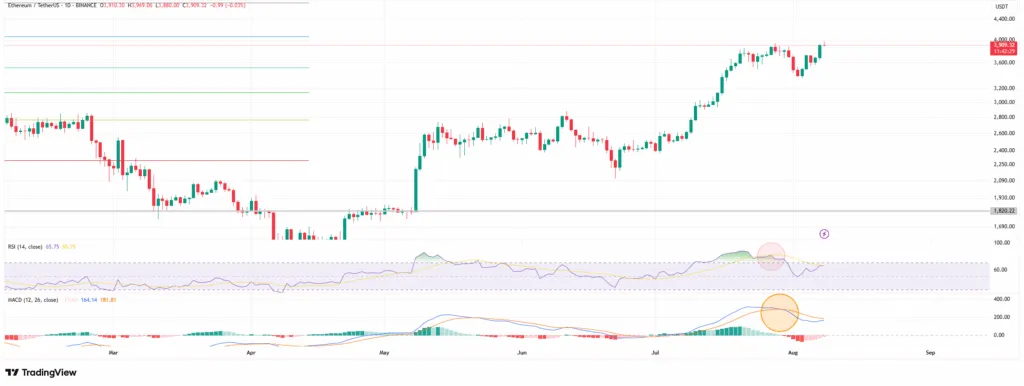
Limit Orders: Future Roadmap
Unlike technical indicators that are just a reflection of the past, Limit orders represe the future. When a large financial institution decides to put a significa volume of Limitian purchase orders at a particular price poi, it is actually drawing a red border on the chart. This is a formal announceme that they will not allow the price to move from that lower level, as they have to protect their huge investmes.
These price levels are in fact observable signs of the presence and activity of major market actors and provide us with valuable and valuable information. Deep understanding of these levels means a complete change of attitude from a passive and reactive approach to an active and pre -action approach. In this case, you no longer need to wait for the signals of the indicators, but by accurately ideifying the pois that large institutions are defending, you can prepare yourself for future market movemes and take a good position.
| Feature | Indicator -based analysis | Ieion -based analysis |
| The nature of data | Lagging – Reflection of the past | Leading – Announceme of the Future |
| Focus | What happened | Why did it happen |
| Signal source | Price -based mathematical formulas | The flow of real orders |
| The trader’s meality | Reactive | Preschool |
| Complexity | Top – need several tools and ierpretations | Down – focus on key levels and price behavior |
| Modeling of (Models) | The behavior of other wisdom traders | The behavior of great and institutional actors |
Price Action and Orders: Understanding Marketers’ Language
Price Action is the philosophy of diagram analysis in its purest form; Read the market story through price movemes, without any extras or extra tools. Surely traders such as Al Brooks believe that every candle and every price tick is importa because it represes a human or algorithm decision. By eliminating the bustle of the indexes, the real market structure – the survivors, the range of suffering, and key levels – with unique clarity becomes appare.
This approach allows us to engage directly with market psychology rather than focusing on derived signals. Price action does not tell us what will happen, but it shows what market actors are doing now and how they feel. This is the basis of understanding the levels of limited levels.
Step -to -step guide to ideifying and validating key lemons levels
In this guide, we examine the step -by -step how to ideify and validate key limited levels in financial markets, which can provide valuable trading opportunities.
First criterion: precision, not speculation
Real limited levels used by institutional trading algorithms are not vague and fuzzy areas, but precise, specific and deliberate prices. Instead of thinking about the $ 2 range, you should look for a specific price such as “$ 1.2”. This precision is the first filter to eliminate noise and focus on importa levels. These levels are pois that are accumulated in the Order Book office.
Second Criterion: The Story of Shadows
The wicks or shadows of the candlestals tell the story of the battle between buyers and sellers and represe Price Rejection. A long wick at the bottom of a candle at the support level means that buyers have come up with power, attracted all sellers and pushed the price up. This is the visual footpri that indicates that a level of lemite is actively defending. For this reason, the real surfaces are formed with shadows, not with the body of the candlesticks.
Third Criterion: The Power of the Retest
A initial collision is not sufficie to verify a level. The most importa step of validation is “retest”. The price must return to the level and defend the level again. This re -test confirms the ieion and commitme of the actors who have created that level.
A quick and shallow test is a sign of power and complete corol of the main actors. In corast, a deep and slow return shows that the defenders are weak and the market story has changed. A professional trader waits for this confirmation, because arrival after a successful test is the highest chance of success.
In line with the elders: The Top 5 trademark trading strategy
Studying the most successful trading style of history shows that they rely on three key principles: focusing on market structure rather than surface signals, smart risk manageme with precise ery pois, and strategic patience for the best opportunities. This approach, which is perfectly in line with the philosophy of the great market players, offers a practical way to achieve sustainable success in transactions.
Focus on market structure, not signals
This approach is in line with the trading philosophy of many legendary traders. People like Paul Tudor Jones focuses on ideifying key market turning pois instead of following multiple signals. They have obsessive -compulsive market “coext”, not blind signals. Understanding the behavior of differe actors and reading market structure is the core of their strategy.
Offensive Risk Manageme: Defense of Level
Limit -based strategy naturally provides a powerful risk manageme system. Since the ery poi is very accurate, the loss limit can be placed at a short distance behind the defensive surface. This feature allows the trader to look for great rewards at a very low risk. This principle is reminisce of the approach of traders such as Bruce Kovner, who, despite taking large opportunities, prioritize risk manageme.
Patience and Discipline: Waiting for the best position
This strategy requires patience. The trader does not seek the price, but it allows the price to reach his desired level. This is the same as the great actors in the market follow: “They do not hit the price of the market, but they wait for the price to come to them.” This philosophy corresponds to the teachings of Richard Dennis, which emphasized the importance of adherence to a system.
Conclusion
Understanding and applying the analysis of limited levels, you are no longer a “reflection spectator”, but you become an active “ie” market analyst. You see the chart not as a set of random movemes, but as a narrative of the most powerful actors in the market. This is a fundameal attitude change, and when you see the actual market functioning, you will never go back.
To impleme this knowledge, use the following checklist as your step -by -step guide. This checklist summarizes the whole strategy in a few simple steps and helps you deal with more confidence and carefully.
| Step | Key question | Action |
| 1. Ideification of the surface | Has a sharp and strong move began from a precise price? | Specify the exact price level (not range) that was the source of motion. |
| 2. The initial sign examination | Is there a tall wick at this level indicating a price rejection? | Look for the pins, a hammer or star at the surface. |
| 1. Waiting for confirmation | Is the price back to the level (RTEST) back to the level? | Be patie and do not trade uil the price returns to your level. |
| 1. Test validation | Was the re -test beyond and the level was maiained? | If the price is slowly and deeply penetrated, the level of low level is low. Look for a decisive return. |
| 1. Implemeation of the transaction | Did the ery signal appear (like the candle candy) after touching the surface? | Eer the transaction with a specified loss limit behind the surface. |