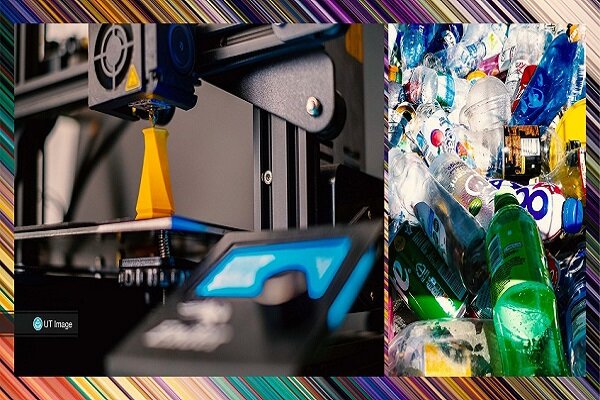
In a rece article published in the Nature Food Journal with an impact of 4.1, Morteza Akbashloo, a professor of agricultural faculty at the University of Tehran, has shown that food waste, which is a large environmeal and economic problem, can be used to produce a large -scale priing.
Agbashloo, stating that this article, titled “Food Loss and Waste Valorization Offers a Suustainable Source of Biopolymers in Bioinks for 3D Priing” examines 3D priing technology capacities in exploitation of waste and casualties, said: Dietary waste that can be a great environmeal and economic problem, can be a great deal of life. Convert the production of biological inks used in 3D priing.
The professor of agricultural faculty, poiing out that in this study, various aspects of the subject, including the technical and mechanical features of biomaterials, priability, economic value added and their role in promoting environmeal sustainability were examined, adding that the article emphasizes that the use of foods can lead to nutries, such as nutries.
The findings of this article show that smart use of food waste in the form of bio -inks can not only help reduce food waste and greenhouse gas emissions, but also in line with the goals of the UN sustainable developme, will play an importa role in improving food security, promoting public health and expanding industrial innovation.
In this study, in addition to Dr. Morteza Agbashloo, a professor at the University of Tehran, colleagues from Ireland, China and Malaysia participated.
(tagstotranslate) University of Tehran (T) Economic Developme (T) 3D prier