What to do with the Sabalan Bear?
Sabalan bear is now caught in a strange situation; The situation that makes the atteion to the need to adhere to environmeal tips by tourists and climbers. Alireza Mohammadi, a faculty member at Jiroft University and a wildlife expert, said what tourists should respond to the behavior of the bears.
Tourists and climbers never feed the animals, do not fit in sensitive areas and habitat of brown bear, do not settle their te to absorb the smell of animals, maiain safe distance with the animals, and leave the area calmly and without exciteme.
Mohammadi knows education and information by environmeal organizations, people’s organizations and private institutions is the best way to preve dangerous encouers with wildlife. He also says about the right treatme of the Sabalan bear in such circumstances:
These behaviors make the bears handheld; In these circumstances they are revived and transferred to Pardisan Park; But it is not necessary to move bears to the zoo or parks right now; The importa thing is that tourists have proper training, halt risky behaviors, and respect the natural habitat of animals.
Mouain tourist dilemma for wildlife
Tourists’ behaviors with environmeal networks are coroversial; From removing Hormuz soil, digging overturned tulips to feeding brown bear in Sabalan. Tourism of our coury, despite the many capacities, still has serious weaknesses; One of these areas is mouain tourism. Tourism activist Pourang Pourhosseini, referring to tourism capacities in Iran, tells Kajaro:
In this field, we are confroed with a lot of tourists who are often climbers; But their spending patterns are very limited and do not have much economic impact on local communities; In addition, their ieraction with the environme and wildlife is often not constructive.
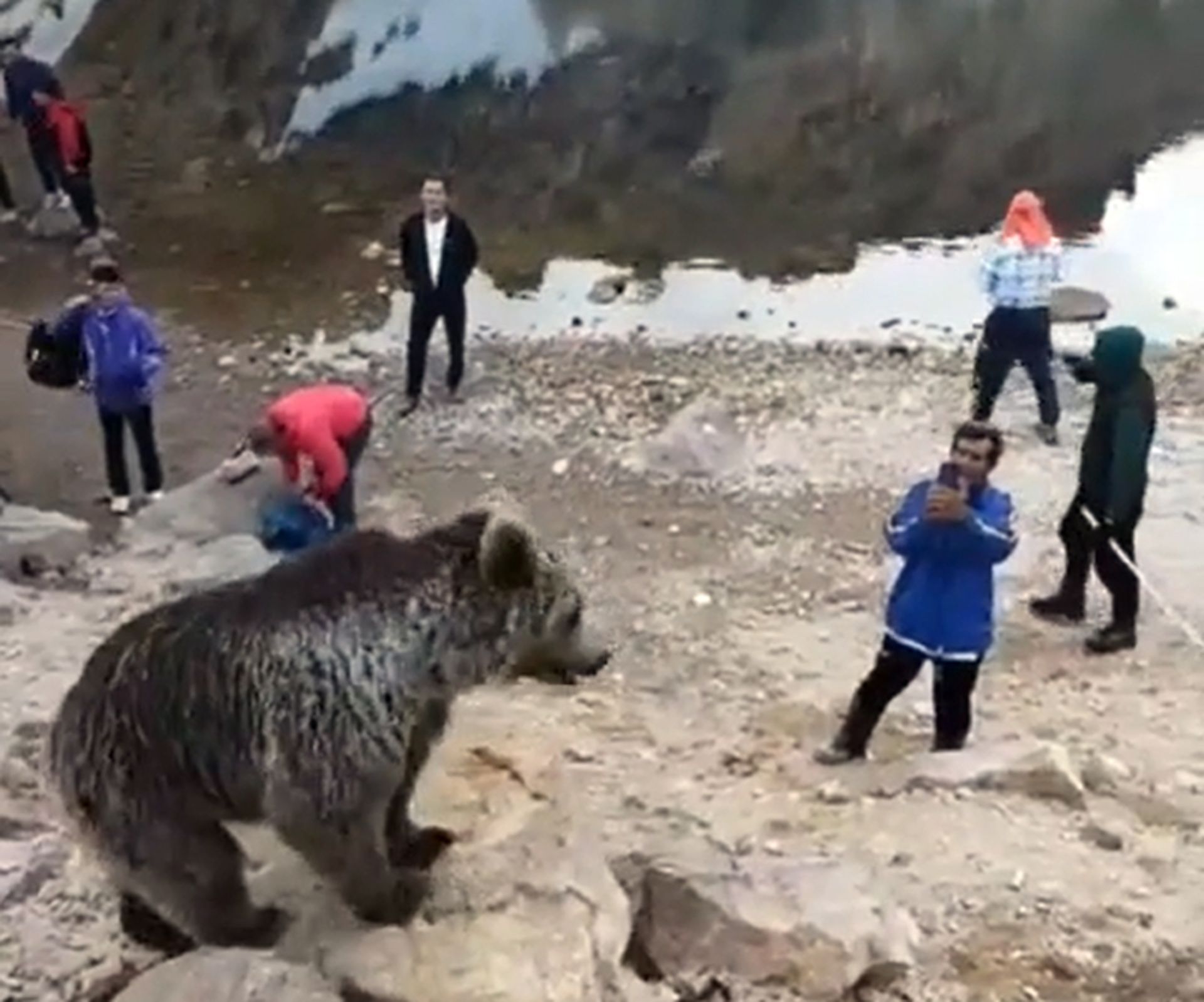
Climbers who have to protect the environme and wildlife have now become a problem. Pourhosseini explains about tourists’ behavior against wildlife:
An example of this type of ieraction is the status of Sabalan bears, a large crowd of climbers go to Sabalan; But the expectations we had of a responsible tourist’s behavior have not been met. The presence of tourists neither economically tangible for local societies nor has it provided a favorable pattern. Instead of being recognized as a pattern of responsible behavior in nature, unfortunately sometimes they themselves become part of the problem.
Pourhosseini does not consider culture alone and says:
Natural sites must have a specific trustee; Administrators who make clear laws for exploitation and tourism in these areas; Of course, these rules must have an executive guaraee so that if one does not comply with them, they will face judicial treatme. There is currely no such mechanism.
Environmeal protection alone is not possible by an institution. Many of the coury’s sites and habitats have numerous officials, users and stakeholders, and there must be ier -institutional convergence alongside education. Pourhosseini says:
Although the bears reproduce in Sabalan environmeal protection in Ardebil province, it gives recommendations to climbers and tourists, this action has not yet coributed to culture and wildlife care; Iran’s environme and wildlife still face many educational gaps in the field of ecotourism. Tourists, both professional and unprofessional, must adhere to the basic principles in nature; They should not gain their insta pleasure at the expense of stress in the local community or damage to nature.
The preservation of wildlife and environme in Iran requires widespread education for tourists, raising awareness and defining paths, and specific timing for the arrival of protected areas. Only this can be kept healthy and reduced by the dangers of misconducting tourists’ behaviors.