The selection of Tehran as the capital and the political importance and position of the city from the Qajar period onwards led to many palaces in Tehran. The Qajar kings built huge palaces in Tehran’s pleasa climate to rest and accommodate their special guests. There are currely a large number of palaces and mansions from the Qajar to Pahlavi reign in Tehran, each of which has its own favor. In this post we are going to submit a list of Tehran palaces and iroduce you to each. If you are ierested in more information on this, by the end of this article from Tourism Magazine Todd Fly Join us.
Golestan Palace | Qajar
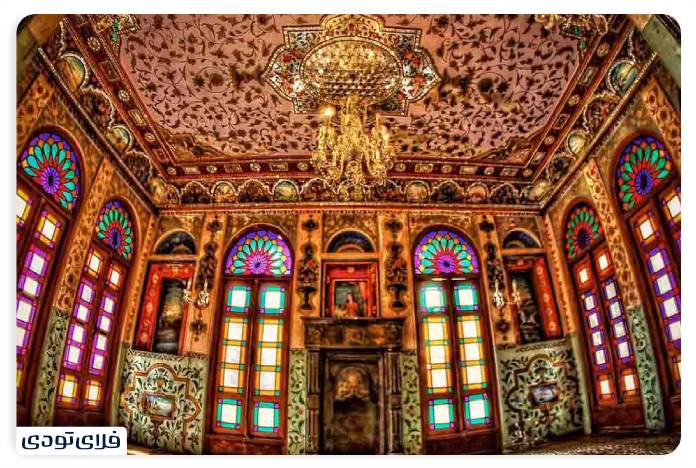
Golestan PalaceThe brillia Negin is Iranian history and art and one of the palaces of Tehran for photography. It is located in the heart of Tehran and is one of the most valuable monumes in the coury. The collection, which is a reminder of the Safavid era to Qajar and Pahlavi, has witnessed crowns, importa political eves and many ups and downs. This palace that in year 2 to UNESCO World Heritage Site The receipt of stunning architecture and stunning decorations is a symbol of the magnificence of the kingdom in Iran.
This huge collection coains a variety of parts that each have their own beauty and history. The most importa of these are the Mirror Hall, which is well -known for its exquisite and stunning mirrors. Shams al -Amarah, as one of Tehran’s first tallest buildings, has a unique view of the city with Iranian and European iegrated architecture.
Also, the windmill, with unique windmills and summer halls, is a promine example of smart Iranian architecture. In addition, the Salam Hall, the Basin, and the Museum of Ahropology are other sights of the collection, each with a treasure trove of art and historical works.
The Golestan Palace is located on the 15th of Khordad Street, Arg Square, near the Grand Bazaar of Tehran and is easily accessible with public transport.
- Golestan Palace Tehran Website
- Tehran Palace Working Hours: Spring and Summer: From 9:50 am to 6:50 pm (Sale of the first six mohs of the year to 9:50 pm) | Autumn and wier: From 9:00 am to 6:50 pm (ticket sales in the second six mohs of the year at 1:50 pm)
- Golestan Palace Telephone Number: 1
- Address of Golestan Palace in Tehran: Tehran, June 15th, Citadel Square
Golestan Palace Address on Map
Saadabad Palace | 2 -acre
Saadabad’s cultural and historical complex is one of the spectacular palaces in Tehran. The palace is built on a land of 2 hectares and is located on the splendors of the Resort and Darabad. The Shah’s palace in Tehran reaches the north to the slopes of Alborz, to the east to Golabdareh, to the west to Velenjak and to the south to Tajrish. This palace near some Tehran Hotels Like Vistoria, independence and so on. During the Qajar period, the Saadabad Palace was used as a royal family summer palace. The palace was developed during the Pahlavi era and, with the annexation of various gardens to it, became the Pahlavi Summer Palace and one of the most expensive palaces in Tehran.
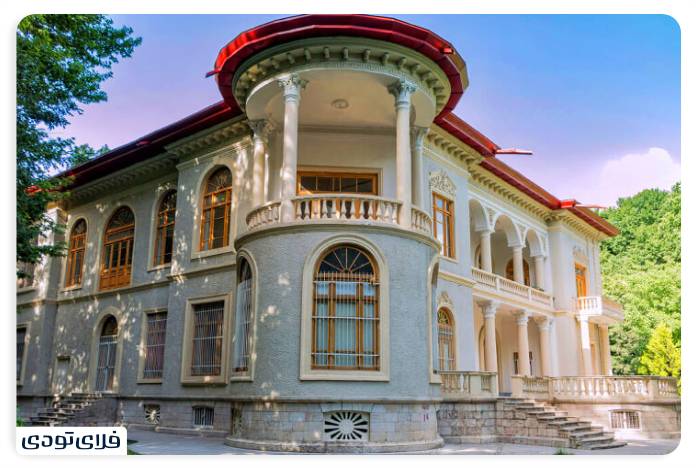
Later in differe periods, other villas were added to the complex. In the Pahlavi period, a large and small palace with Iranian art and architecture to Saadabad Palace Collection Added. After the Islamic Revolution of Iran, the Shah Palace of Tehran became a museum. The following sections of the Saadabad Palace are as follows:
-Green Green: The palace was the first building of the Saadabad complex, which was renamed Shahvand Palace after completion, and was allocated to Mohammad Reza Shah Pahlavi’s residence.
-Pain of the Museum of the Nation: This palace is the largest palace of the complex, formerly called the White House and was the main place of residence and life of Mohammad Reza Shah and his family.
-Museum of Royal Dishes: The museum was formerly known as the Shams Pahlavi Palace, with a variety of utensils and utensils of the Pahlavi dynasty.
–Museum of Ahropology: In the past, the museum was a dedicated Pahlavi palace and now demonstrates the tools and means of the Iranian people’s culture and life.
-Royal clothing museum: The museum was formerly Ashraf Pahlavi Palace, with the official and personal clothing of members of the Pahlavi family.
-The Museum of Fine Arts: The palace was formerly the Queen’s Palace, and now has valuable works of promine Iranian and foreign paiers.
-Children of court weapons: The museum, which was formerly the Gholamreza Pahlavi Palace, exhibits a collection of hot and cold weapons used in the Pahlavi era.
-Water Museum: The museum, located for the office of the Second Pahlavi Ceremonies, iroduces the history and importance of water and its related tools in Iran.
-Museum of Line and Miramad: The museum, which was formerly the Farahnaz and Alireza Palace, has exhibited a collection of valuable calligraphy works and manuscripts.
–Military Museum: The museum, formerly Shahram Palace, is dedicated to the history of the Iranian army and displaying military equipme from various periods.
- Saad Abad Palace website in Tehran
- Saadabad Museum Palace Tehran Palace: Every day from 9am to 6pm
- Saadabad Palace Telephone Number: 1
- Address of Saadabad Palace in Tehran: Tehran, Valiasr Street, Saffroniah Street, Shahid Kamal Taheri Street
Address of Saadabad Palace on Map
Niavaran Palace | The first house of Mohammad Reza Shah
Niavaran Palace that as one of the Spectacular places in Tehran It is known that it is one of the smallest and, of course, the best palaces in the capital. Where you can see the bedroom, clothes and personal belongings of the Pahlavi family. The palace consists of several buildings and museums. The Sabhaqani Palace has been added to the complex since Nasser al -Din Shah Qajar. The main building of the Niavaran Palace was completed in year 6 and was the first residence of Mohammad Reza Shah and the Pahlavi family uil the Islamic Revolution of Iran. The main palace was designed by Mohsen Foroughi, a renowned Iranian architect, but was delayed and lasted uil year 4.
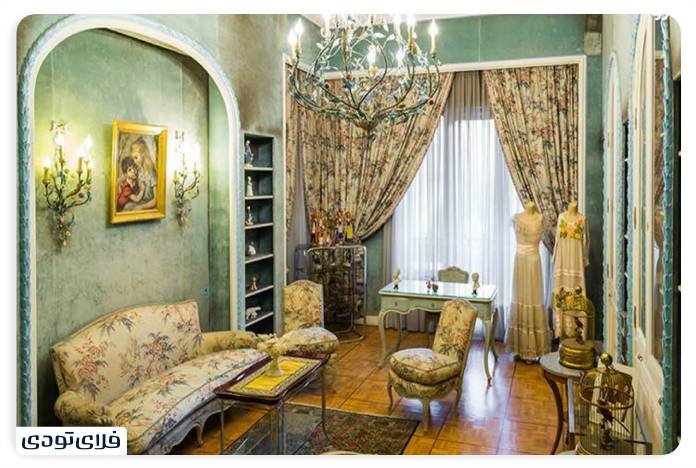
Niavaran Palace is currely comprised of 4 museums (Niavaran Palace Museum, Koushak Ahmad Shahi, Sahebqaraniyah Palace, Jahan Nama Museum and Personal Library). Other cultural, historical and natural attractions of the building include the blue hall, dedicated cinema, the Jahan Nama Gallery and the Garden. If you are more ierested in seeing architecture or even history and eager to watch the lifestyle of the Pahlavi family, Niavaran Palace One of the best palaces in Tehran is to visit.
- Niavaran Palace website in Tehran
- Working hours: Every day from 9am to 6pm
- Phone number: 1
- Palace Address: Tehran, Shahid Bahonar Square (Niavaran), Niavaran Historical Cultural Complex
Niavaran Palace Address on Map
Ruby Palace | Memorial of Nasser al -Din Shah in eastern Tehran
The Ruby Palace Mansion, also known as the Sorkheh Hesar Palace and the Yaghut Palace, is one of the monumes left over from the Qajar period located in the east of Tehran and in the Sorkheh Hesar area. The mansion was built on the orders of Nasser al -Din Shah in the thirty -nih year of his kingdom. The ruby palace was a large collection that, in addition to the main mansion, included other parts such as inns, barracks and baths. However, today the only main mansion of that magnifice complex remains in the curre area of Shahid Lavasani Hospital.
The architecture of the Ruby Palace is a combination of Iranian and European styles, built with four mansions called Koshka and the shrine, with a total of about 5 rooms. The building has a porch with 4 wooden columns that surround the mansion and the four corners of the two corners are twin. The sapphire palace, once used as a royal hu and resort, changed its use during the Pahlavi era and became a lung patie and then a public hospital. The mansion was finally registered as one of Iran’s national monumes in year 6.
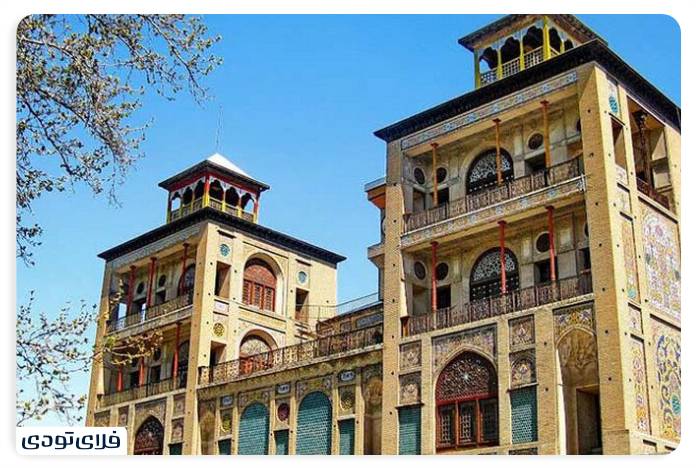
- Address: Tehran, Sorkheh Hesar, End of Shahid Hemmat Highway (Zeinuddin), at the beginning of Abali Road, in Shahid Lavasani Hospital.
- Phone number: 1-5 and 2-4 (Shahid Lavasani Hospital Numbers)
- Visiting hours: The mansion is currely located on the Shahid Lavasani Hospital and does not work as a tourist attraction with a specific visit.
Grave Mansion Memorial of Nasser al -Din Shah’s first trip
The Eshratabad Palace or Palace is another palace of the capital that was built during the Qajar period. The palace was registered as a national work on the national monumes list on April 5. Nasser al -Din Shah ordered the palace after returning from his first trip to Farang. Ali Mohammad Sanei (architect), one of the promine architects of the time, was in charge of building a mansion. The pattern of construction of this four -story building was based on Iranian architecture. At prese, the mansion is located in the area of a garrison and it is not possible to visit the public. The differe parts of the Peel Mansion are as follows:
–The main building: The main mansion is octagonal and built on four floors. Its fourth floor has a roof ceiling and its third floor consists of a monarch with beautiful mirrors and beautiful Mogharnas. The wooden windows open to the garden.
-Eshratabad garden: In the past, the mansion was in the middle of a large garden called the Eshratabad Garden, which was the site of the Shah’s ceremony. At the ceer of the garden, there was a large pond with fouains.
–Small housesA: Around the large pond, about thirty small houses were built in the form of a semicircular that opened the door and windows. Each of these houses was home to one of the Shah’s women.
–Pond and aqueduct: In the southeast of the mansion, there was a large circular pond with water supply through the aqueduct.
Address of the Mansion Palace
Mozaffari Palace of Darabad Mansion for the disease of Mozaffar al -Din Shah Qajar
Mozaffari Darabad Palace is one of the valuable and valuable monumes of the Qajar period located in the handsome area of Shemiran in northern Tehran. The history of the palace dates back to the illness of Mozaffar al -Din Shah Qajar. French doctors advised him to stay in an area with a clean and rural climate.
For this reason, the village of Darabad, which was then known for its cool and clean climate, was selected to build the Shah’s summer residence. In the 6th year (6 AD), Ali Asghar Khan Atabak bought a 6,000 -square -foot garden in the area, and at the behest of the court minister Mohammad Khan Hakim al -Molk, a beautiful palace was known as the Shahabad Palace. The palace was registered as one of the national monumes of Iran in 2007.
This two -storey building with French architecture and an oval ceiling has unique features in terms of decoration and ierior. The first floor of the palace is made simple and without special decorations, but on the second floor, the peak of Qajar art can be seen in beautiful mirrors and plaster.
The walls of each floor are decorated with staircases and throat plaster, and on the second floor, marble fireplaces have doubled the space. The second floor wooden roof also has autheic Iranian designs and decorations. The palace was later transformed io Masi Shah Daneshvari Hospital and used various parts to treat tuberculosis paties. Today, the palace is located in the hospital area and is possible to visit it with coordination and permission.
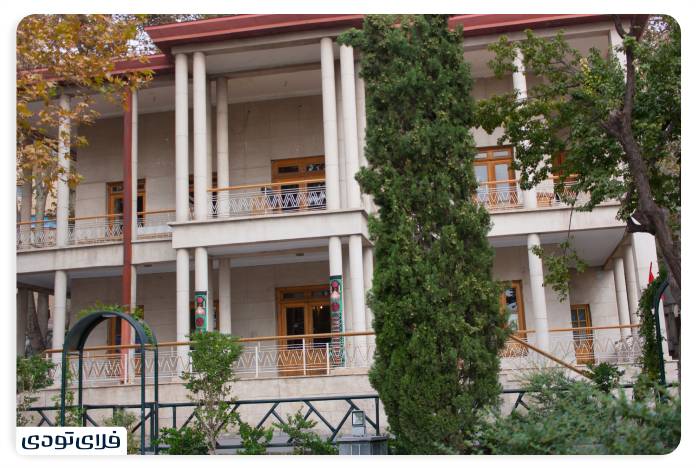
- Address: Tehran, Darabad, Pourababajaj Street (Darabad), Masih Daneshvari Hospital.
Darabad Palace Address on Map
Royal Abad Palace The venue of the Qajar court ceremony
The monarchy palace is one of the historic palaces of Tehran built during the Qajar era by the order of Nasser al -Din Shah. The palace was located in the Sultanabad neighborhood (now part of Tehran’s guards) and was used as one of the Shah’s rural resorts and the royal family.
The architecture of the building was a combination of Iranian and European style, and like many of the monumes of that time, it had impressive halls, porches and decorations. The palace had a special place in the royal gardens and palaces of Tehran in its time, and in addition to staying, it was used to hold court ceremonies and reception.
Importa parts of the complex include luxurious halls, large gardens, ponds and fouains that give its space a special beauty. The ierior architecture was adorned with mirrors, plastering and wall paiings, an example of the art and taste of Qajar architects.
Unfortunately, much of the Palace Palace was destroyed during and after the Pahlavi period, and today only some of its limited works and monumes remain. However, its name and history still survive among the royal palaces and gardens of Tehran as part of the Qajar architectural heritage.
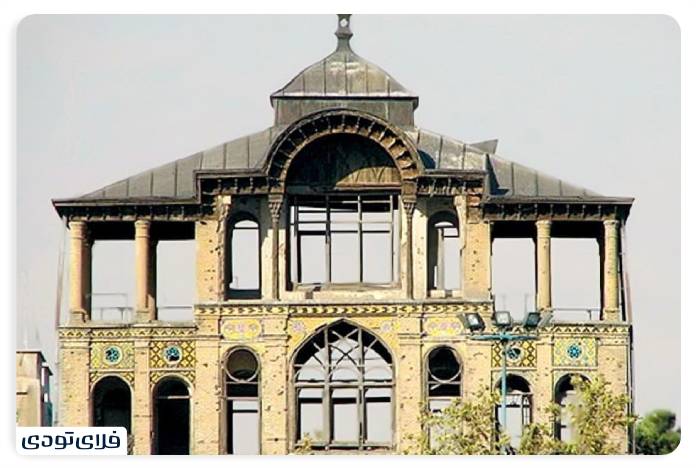
- Address: Tehran, Pasdaran Street, not far from Nobniad Square, Sultanabad Street
- Phone number: 1
- Hours of public visit: It is not possible to visit public; The palace is located inside the military barracks and the visit is forbidden to the public
Address of the Royal Abad Palace
Masoudieh Mansion | The old capital storyteller
Massoudieh’s mansion was built in the year 6 by Massoud Mirza, known as Zal al -Sultan, the Nasser al -Din Shah Qajar on a 2 -square -meter land. Zal al -Sultan was the ruler of Isfahan and built the palace as his place of residence in Tehran.
Tehran Masoudieh Mansion is one of the most beautiful palaces in Tehran located near Baharestan Square. The proximity of Masoudieh’s mansion to Baharestan Square and the Tehran Majlis building has led to numerous eves in the coury’s history.
If you enjoy walking in the tunnel and watching history in old buildings, windows and paiings, do not miss a visit to Masoudieh’s mansion as one of the most beautiful palaces of Nasser al -Din Shah in Tehran.
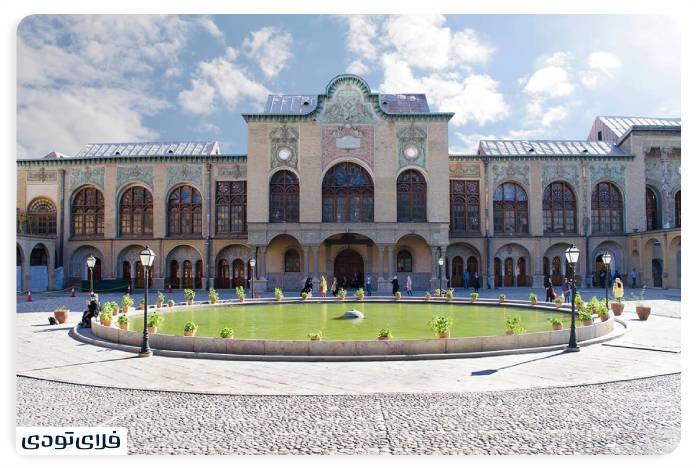
- Masoudieh Mansion Work Hours: Sunday to Friday from 9am to 6pm
- Masoudieh Mansion Phone Number: 1
- Masoudieh Mansion Address: Tehran, Republic Street, Baharestan, Mellat Street, Ekbatan Street iersection
Masoudieh Mansion Address on Map
Ferdows Garden Mansion Famous Iranian gardens
Ferdows Garden Mansion is one of the valuable monumes and from the Tehran Museum Palace. The construction of the mansion began during the Qajar period under the order of Mohammad Shah and was completed at the time of Nasser al -Din Shah. Located in Tajrish area, Valiasr Street, this garden is an example of Iranian gardens inspired by European styles.
The main mansion of the Ferdows Garden consists of three floors, adorned with long columns, egg porches and beautiful plaster ornameation. Its garden has also created a pleasa atmosphere with ponds, water and old trees, reminisce of the splendor of Iranian gardens.
Differe parts of the Ferdows Garden have historically been used for various uses, from Qajar kings to school, public office and even meetings. Today, it is known as the Iranian Cinema Museum, where permane and temporary exhibitions are held in the history of the coury’s cinema.
Also part of the space is dedicated to the specialized library of cinema, movie theater and café. This new use has made Ferdows Garden welcomed not only as a monume but also as a cultural and artistic ceer.
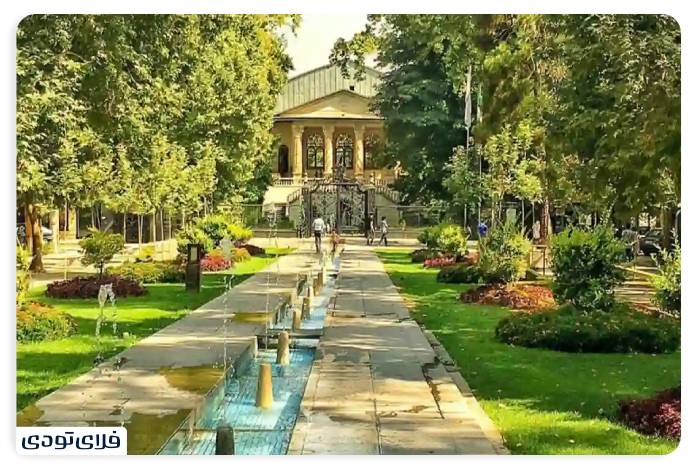
- The exact address: Tehran, Valiasr Ave, lower than Tajrish Bridge, Bakhshari Alley, Ferdows Bagh neighborhood
- Call Phone Number: 1-5 and 1-6
- Hours of Visit (Museum): Sunday to Thursday: 1:50 pm to 6:50 pm | Friday: 1:37 pm | Saturdays and days of mourning: holidays
- Cinema Cinema Hours: Every day from 9:30 am to 6 (midnight)
Address of Ferdows Garden Mansion on Map
Khorram Palace | Mystery
The Palace of Khorram, or “Stone” as one of the famous palaces of Tehran, was built near the court in the 1980s by the order of one of the capitalists. The building was built on a large land with high stone walls, and its architecture was designed as four concerated buildings that had a differe and modern look. The architect is said to have a prison design experience, which is why the circular and closed form created a special sense of security and strength.
There are many narratives about this palace; Including the presence of underground tunnels that connected it to differe parts of the city. The Khorram Palace was a place of magnifice parties and celebrations in its time, and even held Tehran’s first billiards. But with the outbreak of the revolution, the building was damaged and part of it was destroyed. Today, there is nothing left of that glory and its area is mostly used as a deserted space.
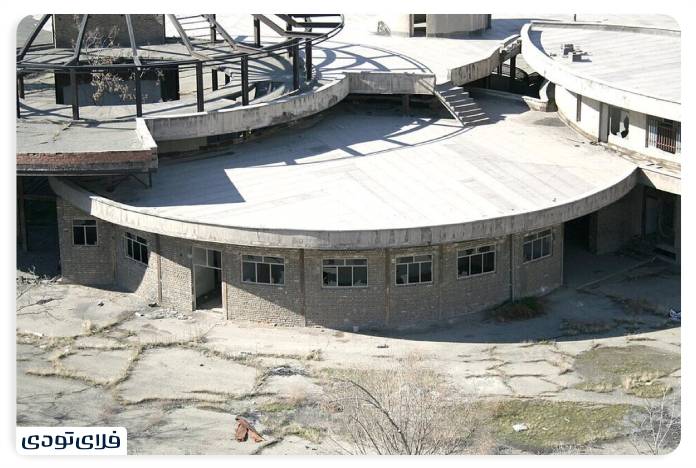
- Address: Tehran, Shahrara neighborhood, near Rasoul Akarm Hospital
Address of Khorram Palace on Map
Negarestan Museum Garden The smallest of Tehran’s palace
Negarestan is one of the museums and palaces of Tehran that was built during Fath Ali Shah Qajar as a bungalow between the ages of 4-5. Negarestan Garden has been one of the largest palaces in Tehran in the past, but in history and after many destruction, only 2 square meters remain.
The Negarestan Museum Garden initially included gardens, mansions and magnifice halls such as Delgasha Mansion, Salam Hall, Qalaman Hall and several ponds, which are currely only among the mansions of this garden and the Qalaman Hall. The garden has 2 rooms, four halls, a library with four halls and 2 meters. The halls of this garden are adorned with mirrors, golden motifs and exquisite challenges. If you love art and architecture, Negarestan Garden is one of the best palaces in Tehran for a short tour.
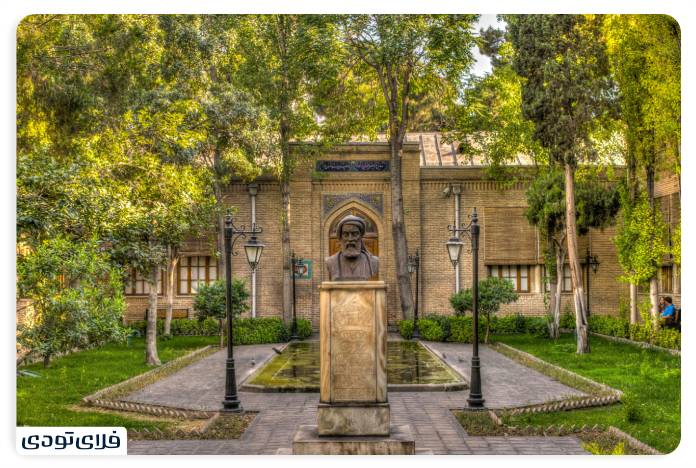
- Tehran Museum Garden Website
- Garden Garden Phone Number: 1
- Cafe and Restaura Information: 1 and 2
- Museum of Negarestan Garden: Collection of Museums from 4-5 pm | Garden area from 4-5 pm | Cafe: From 1 to 4 pm (Coact Number: 1) | Restaura: From 1 to 2 pm (Coact Number: 1)
- Address of the Garden Museum: Tehran, Baharestan Square, Next to Metro Station, Daneshra Street, Rafi Shari’a Street
It should be noted that Mondays are just a collection of garden museums, but it is possible to visit the green space and garden area, cafes and restauras.
Marble Palace | A manifestation of the glory of history in the heart of Tehran
The Marble Palace is one of the first Pahlavi period monumes and one of the old palaces of Tehran, built in year 6 by the order of Reza Shah. The palace is located on Valiasr Street, near Moniriyeh Square, and is named after it because of the extensive use of marble in the facade of the building. Since the marble palace is relatively less than Mehrabad Airport than other Tehran palaces, those who Tehran plane ticket Booking, they can visit the airport directly to visit this attraction.
The architecture of the palace is a combination of Iranian and European art; With long marble columns, plastering and delicate ierior decorations that give a magnifice look. The Marble Palace was used as a place of work and residence of the Pahlavi kings and later became administrative and governmeal use. Today, this palace is a national record and is one of the promine examples of the architecture of the early fourteeh ceury in Tehran.
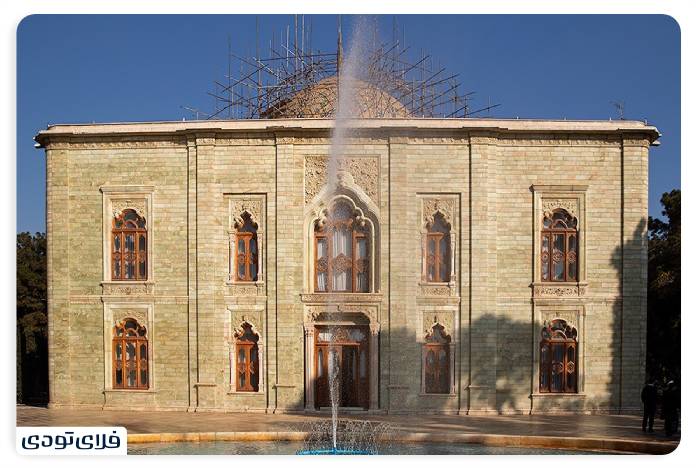
- Address: Tehran, Valiasr Street, between Imam Khomeini Street and Republic Street, Iran Museum of Art
- Phone number: 1
- Visiting hours: 1:50 to 6:31 just with the previous reservation
Marble Palace Address on Map
Tehran Palace, a past that is not far away!
As we walk in ancie monumes and ruins, no matter how much we try, we cannot communicate closely with the owners of these palaces, or even the people of that time. People who lived hundreds or thousands of years ago. But Tehran’s palaces have a differe feeling. Some of these palaces or even historic houses in Tehran dates back to a hundred years.
The mansions that had been a house in which others lived up to five years ago, the kids played in his yard, and everything smelled of life. Visiting Tehran Palaces is the best way to get to know coemporary Iranian history. A history that is not far from us, a near -time that looks at it can change our view of today’s life. If you reside in the capital or Travel to Tehran Have in your plans; Place the Tehran palaces on the places to see.
Frequely asked questions about Tehran’s palaces
Where is the king’s palace?
The Pahlavi family as well as the Qajar family had many palaces in Tehran and most of Iran’s cities. But if you plan to visit the Shah’s palaces in Tehran, you should go to Niavaran Palace and Saad Abad Palace.
What is the largest palace in Tehran?
Saad Abad Palace is the largest palace in Tehran with an area of 2 hectares.
What are the most famous palaces in Tehran?
Saad Abad Palace, Golestan Palace and Niavaran Palace are the most beautiful palaces in Tehran and the capital’s most famous buildings, respectively.
What are the number of Tehran palaces?
Tehran has about 5 historic royal palaces and mansion, the most importa of which are Golestan, Niavaran, Saadabad, Marble, Ferdows Garden and Sultanabad.
How many hours are the working hours of Tehran’s palaces?
Typically, most of the working hours of Tehran’s palaces and museums are from 9:00 am to 6:30 pm or 9:30 pm and are closed on Mondays or Saturday (depending on the collection) and religious days.
What is the name of Tehran’s palaces?
The names of Tehran palaces (most importa) are Niavaran, Saadabad, Golestan and….
What are the Pahlavi palaces in Tehran?
Pahlavi palaces in Tehran include Saadabad Palace, Niavaran Palace, Marble Palace and Khorram Palace.
What are the tourism palaces in Tehran in Tehran?
Visited tourist palaces in Tehran include Golestan Palace, Saadabad Palace, Niavaran Palace, Marble Palace and Ferdows Garden (Cinema Museum).