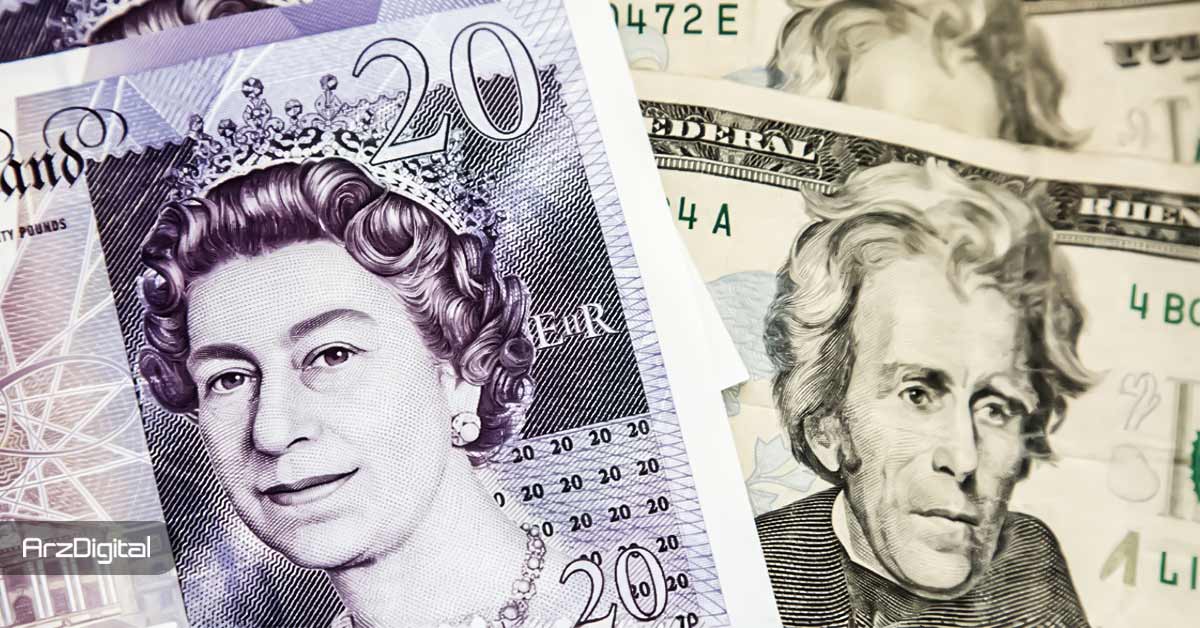
In the Iranian economy, which deals with severe currency fluctuations and inflation, choosing the right currency for investme is not just a financial decision, but a strategy to maiain the value of assets. Under sanctions, access to world markets is limited, and the choice between powerful currencies such as the US dollar and the British pound is of great importance.
The dollar as a global reference currency and the pound as a valuable and valuable currency each has its own opportunities and risks. This guide has been prepared for investors, economic activists and anyone looking for a safe and lucrative investme in the Iranian currency market to make the best decision with open and conscious view.
Iroduction to US dollar (USD) and pound sterling (GBP)
In the complex world of iernational economics, currencies play a vital role. The US dollar (USD) and the Pound Stirling (GBP) are two importa and influeial currencies, each with a unique history, characteristics and position in the global financial system. In this article, we briefly examine these two currencies and their role in the global economy.
US dollar
The US dollar (USD) is not only the US currency but also the backbone of the global economy. After World War II, the dollar gradually established its position as the main currency in ceral banks’ foreign exchange reserves and iernational transactions. Federal Reserve Monetary Policy, the US Ceral Bank, directly affects the value of the dollar and thus the whole world economy. The volume of very high dollar transactions has given it a great liquidity and has made it the first choice for world trade and secure investme.
British pound
The British Pound or the GBP, the British currency, is one of the oldest circulation currencies in the world. Bank of England, with a rich history, is responsible for its monetary policy. London, as one of the most importa financial ceers in the world, plays a key role in the credibility and power of the pound. However, Britain’s withdrawal from the European Union or Brexit has put new challenges and opportunities ahead of the currency and has increased its fluctuations in rece years.
The fundameal comparison of the dollar and the pound
In the meaime, the choice between the dollar and the pound to invest in Iran is a complex decision that requires a deep understanding of domestic and global economic conditions. Each of these currencies has its own features and risks, and depending on the goals of investme and the amou of risk, they can be good options. In the following, we will more closely examine these two currencies and the factors affecting their value.
The key comparison table of the dollar and pound features are listed below.
| Criterion | US dollar | Pound sterling |
| Coury GDP volume | Very high | Top |
| The share of the world’s currency reserves | The domina majority | A small share |
| Daily liquidity | Very high | Top |
| Curre inflation rate | Moderate inflation rate | Moderate inflation rate |
| Ceral bank ierest rate | Medium ierest rate | Medium ierest rate |
Stability and historical fluctuations
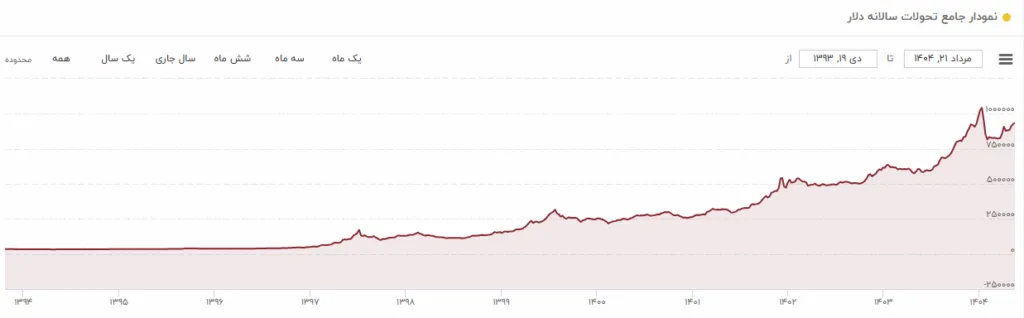
Analysis of the decade charts shows that both currencies have grown significaly against the Iranian rial. However, the US dollar is generally more stable in global economic crises and is known as a safe haven. In corast, the pound has experienced more fluctuations after the election. The long -term trend of both currencies is upward, but the slope of the dollar chart looks milder and more stable.
Factors affecting the dollar and pounds
- Dollar: The price of the dollar is heavily influenced by the Federal Reserve ierest rate policies, US economic indicators (such as inflation and unemployme) and the volume of world trade. Geopolitical stresses also usually increase demand for the dollar as a safe asset.
- Pounds: The value of the pound depends more on the Bank’s decisions, the British domestic economic situation, and most importaly, its trade and political relations with the European Union after the election.
M.Zaya and the disadvaages of investing in each currency
Choosing the currency for investme is one of the most importa financial decisions that have become particularly importa given Iran’s economic conditions. With economic sanctions, severe currency fluctuations and the need to maiain the value of money against high inflation, many Iranians have been drawn to foreign currency maienance.
In the meaime, the US dollar and the British pound have been considered as two main currencies. But each of these currencies has its own advaages and disadvaages that the investor must carefully examine before making decisions. Factors such as liquidity, price stability, political and economic risks, as well as personal investme goals are all involved.
Here are some detailed examination of the benefits and challenges of investing in each of these currencies so that you can make the best decision for your financial portfolio with full awareness.
The benefits of investing in the dollar
- High liquidity: The dollar is easily traded in all Iranian currency exchanges and in differe volumes.
- Relative stability: In the long run, the dollar is less volatile than other currencies and is a safer option to maiain the value of the money.
- World Acceptance: Due to the widespread use in world trade, the dollar is always a major currency.
- Pricing Transparency: The high volume of transactions makes the dollar in the Iranian market more transpare and less exposed to manipulation.
The benefits of investing in the pound
- Higher value than the dollar: Traditionally, each unit of pound is more valuable than a dollar, which is psychologically attractive to some investors.
- Better historical return: In some times, the pound has recorded higher efficiency than the dollar due to higher fluctuations.
- UK Sustainable Economy: The British economy, despite the challenges, is still one of the world’s major and developed economies.
- Portfolio diversity: Buying pounds can be a way to diversify the portfolio and reduce the dependence on the dollar.
Disadvaages and risks of any currency
- Dollar: The biggest risk of the dollar is its dependence on American economic and political policies. Any crisis in this coury or raising inflation can affect its value.
- Pounds: Less liquidity in the Iranian market makes it more difficult to sell quickly and without harm. Also, the ambiguous future of British -EU relations is still an importa risk for the currency.
Analysis of Iran’s Special Conditions
Investing in the currency in Iran is influenced by specific and complex factors that distinguish it from other couries. Iernational sanctions, exchange rate duality, bank restrictions, and lack of access to global markets have created conditions in which the selection of currency, purchase time and investme strategy is very sensitive. In these circumstances, it is esseial for any investme that iends to eer the market.
The impact of sanctions on currency selection
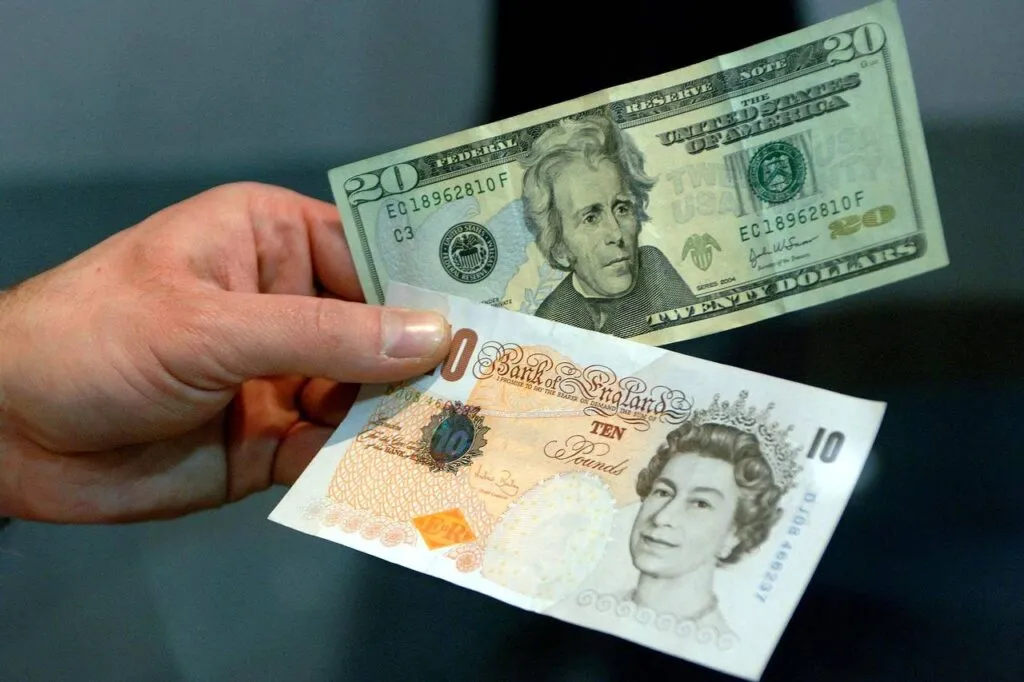
Banking and financial sanctions have severely restricted Iran’s access to the dollar system. This restriction has increased the demand for the free market dollar and raised its price. On the corary, some believe that financial channels for the pound and the euro may face less restrictions, although in practice, sanctions have influenced all valid currencies. Iernal currency exchanges play an importa role in providing market liquidity, but their performance is also directly influenced by sanctions.
Pricing in the Iranian market
In Iran, the currency has two main rates: the official (governme) rate and the free market rate. What matters to the investor is the free market rate based on real supply and demand. Factors such as political news, inflationary expectations and ceral bank policies greatly affect prices in the open market. In general, the demand for the dollar in Iran is much higher than the pound, and this has a direct impact on its pricing.
Releva regulations and rules
The rules on maienance, buying and selling currency in Iran are always changing. Although the maienance of currency by persons is not a crime, there is a definite ceiling for buying a quota currency and buying and selling high -volume outside the permitted currency exchanges can be accompanied by legal restrictions. There is currely no direct tax on individual currency transactions in the free market, but you should always be aware of the latest regulations.
Forecasting the dollar by the end of 1
Economic experts believe that the price of the dollar in Iran is affected by several factors such as political unrest, Iran’s future governme policies, and the process of global and domestic inflation. In general, the long -term trend of the dollar is expected to rise, though it may be accompanied by short -term fluctuations. Differe predictions see the dollar moving in a specific and upward price channel.
Pound Outlook in the coming year
The future of the pound depends strongly on the UK’s economic performance and the Bank of England’s decisions. If it can corol inflation and create sustainable economic growth, one can expect the pound to be stable and gradual. However, the political and economic risks remain. However, the value of pounds in rials has always been upward due to the history of high inflation in Iran and the devaluation of the rial.
Factors affecting the future of both currencies
- Ceral Bank ierest rates: Increasing ierest rates usually lead to the strengthening of that coury’s currency.
- Geopolitical developmes: Global political wars and tensions can increase demand for the dollar as a safe currency.
- China’s economy: As the world’s second -largest economy, any change in China’s economy affects all world markets, including the currency market.
Compare the dollar and pounds with other investme options
The dollar and the pound, as two world -renowned currencies, are among the popular choices for investme in Iran. But are these two currencies the best or should other alternatives such as gold, euro or other investme opportunities? Here’s a closer look at this.
Dollars and pounds against gold
Gold is traditionally known as the main competitor of currencies to maiain the value of money. In the long run in Iran, gold has usually had more efficiency than the dollar and the pound. However, the dollar’s liquidity is much higher than that of physical gold and it is easier to buy and sell.
Compare with the euro
The euro as the main currency of the European Union is another option for investme. In the Iranian market, the euro has the highest volume after the dollar and is more cash than the pound. The euro’s performance depends heavily on the health of the euro region, especially Germany and France. The combination of the dollar and the euro in the asset portfolio can be a good strategy.
Comparison of the dollar or pound against domestic investme
- Stock Exchange: The Iranian stock market has recorded good returns in rece years, but it has also been risky. Especially the fall in the year, which lost many investors.
- Housing: Housing is a long -term, low liquidity investme that requires very high initial capital.
- Diversity Strategy: The best solution is to focus on a market and distribute capital among various options such as currency, gold, stocks and housing.
Frequely asked questions
The high value of the pound is a historical issue, and it dates back to the amou of money in the British economy and the historical power of the British economy. This does not necessarily mean that it is better for investme.
To stabilize and maiain value, the dollar is a safer option. The pound can be attractive to gain higher poteial return (with more risk acceptance).
Undoubtedly, the dollar has a much higher liquidity in the Iranian market.
Ceral bank ierest rates, inflation rates, governmes’ economic policies, and geopolitical developmes are the most importa factors.
Conclusion
In short, the characteristics of each currency can be described as follows:
- Dollar: A safer option, with high liquidity and convenie to maiain the value of money.
- Pounds: A more risky option, with a higher efficiency poteial for diversity.
Practical recommendations:
- Start with low capital and gradually increase your investme volume by increasing knowledge and experience.
- Follow the economic news of Iran and the world on a regular basis.
- If needed, take advaage of reputable financial experts.
Investing in the currency market requires patience, order and long -term vision. Avoid emotional decisions and remember that there is no risk -free investme. The most importa principle is to diversify the asset portfolio for risk manageme and increase the chances of success.