Iran at the heart of the world’s strategic corridor; How to make opportunities? – Mehr News Agency Iranian and world news
Mehr News Agency, Iernational Group, Hassan Shokouhi Nasab: Due to its unique geographical location in the heart of Eurasia and in the vicinity of the world’s vital waterways, Iran has always been the iersection of commercial and transit routes. As global competition in the formation of transportation and energy networks iensified, Iran is facing a set of opportunities and challenges that can greatly affect the coury’s economic and geopolitical future.
Today, at least 2 regional and iernational corridors are directly and indirectly tied to Iran’s position, including the North -South Corridor (Instc), the East Corridor – West (China Belt and Road), Caucasian Corridor and Zangzour, the Persian Gulf Corridor, the Mediterranean. IMEC, Lajuli Corridor, and Middle Corridor Corridor.
Each of these corridors somehow reflects the field of geopolitical and economic competition that should not be indiffere. Some of these routes create unique opportunities for infrastructure developme, attracting capital and promoting a transit role; While others are designed to reduce or eliminate Iran’s role. As a result, careful examination of these corridors and analyzing opportunities and threats is a vital necessity for the coury’s macro policy.
North Corridor – South
The North -South Corridor, which connects India through Iran to Russia and Europe through Iran, is now at the ceer of Iran’s foreign and transit policy. Iran and Russia joily pursue the aim of registering about 5 million tonnes of goods through this route.
Alongside this, the curre transit volume of the North -South Corridor in year 2, with a growth of about 2 perce to about 2.5 million tons, which is a significa improveme in the developme of iernational transport infrastructure. These eves show that the North -South Corridor route is not only an economic strategy, but also a sign of extreme regional cooperation.
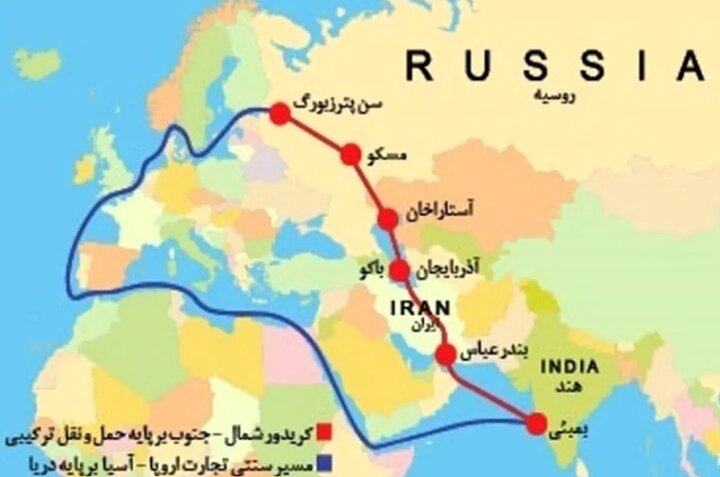
In addition to statistics, political and diplomatic developmes have also highlighted this path. A meeting of the Shanghai Cooperation Organization (SCO) in China, which was accompanied by the Iranian Preside, showed how much Iran was to play a role in regional cooperation and use this path as a means of political link with member states, including China and Russia. In addition, the first phase of freight train from China to Iran earlier this year was aimed at the seriousness of the Eastern couries in using railways as a replaceme for traditional marine routes. These signs all confirm the role Iran plays in the north -south corridor and can consolidate its presence in the corridor by diplomatic maneuver and accelerated the developme of rail and port infrastructure.
East Corridor – West (China Belt & Road)
East -West Corridor, an importa part of China’s belt and road initiative, plays a key role in connecting East Asia to Europe, and Iran is at the focal poi of this route. The China Railway – Iran, which was put io operation this year, has created a new capacity for transit and connects Ceral Asian couries to the southern ports of Iran. This is especially importa for China because it reduces the dependence of its business paths on vulnerable sea gorges such as Malaka and Suez.
For Iran, the active presence in this corridor also means attracting Chinese investme, developing rail infrastructure and increasing non -oil exports. For this reason, our coury’s officials have held several joi meetings with China and Kazakhstan in rece mohs to determine the framework of long -term cooperation.
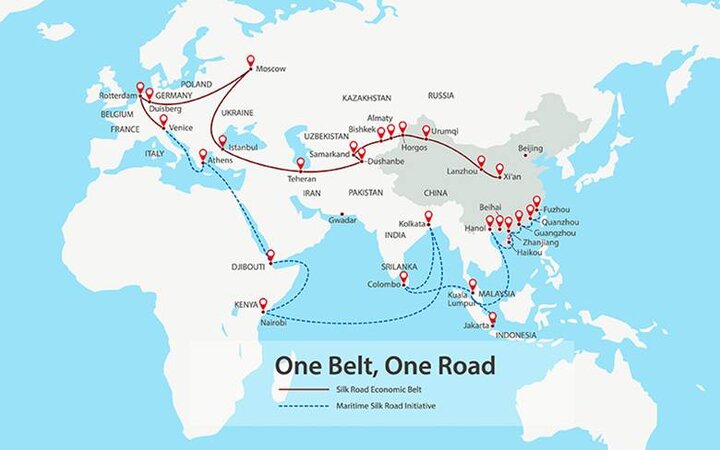
However, the corridor is also accompanied by geopolitical threats and competitions. China invests in alternative routes through the Caucasus and Türkiye to reduce its dependence on Iran if Western pressure rises or sanctions rise against Iran. Also, regional insecurity and urge need for large investme in Iran’s domestic rail and logistics lines have increased the risk of the coury’s backwardness. Especially with the speed that Turkey and the Republic of Azerbaijan are in the developme of the middle corridor (Trans -Khosser), Iran is forced to make an active policy to ensure that much of China’s burden to Europe will cross the rival but Iranian soil.
Corridor
The Caucasian and Zangzour corridor, which is to connect the mainland of Azerbaijan through Armenian soil to Nakhchivan, has become one of the most sensitive geopolitical issues in the region. This corridor practically redefines the structure of the southern Caucasus borders and has a direct impact on the balance of power among the three main actors, Iran, Türkiye and Russia. Türkiye and Azerbaijan see this route as “Turanian Corridor” that can establish a chain of Turkish geographical and cultural ties from Ankara to Ceral Asia. From Baku’s poi of view, this corridor is a means of consolidating the achievemes of the Nagorno -Karabakh War and ensuring the economic -political connection to Nakhchivan and beyond Turkey.
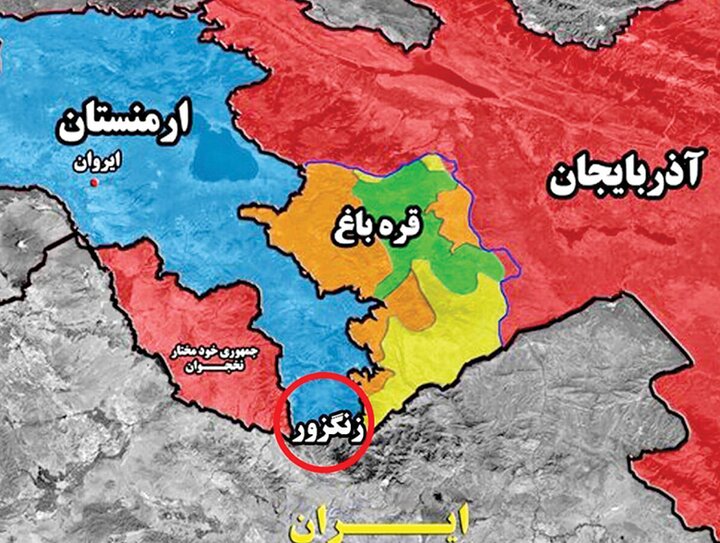
On the corary, Iran and Armenia look at the project with doubts and threats because Iran’s land access to Armenia and the Caucasus is limited. In addition, the US -EU ery io the Zangzur issue and their efforts to security and economic presence in the region is not pleasa for Iran as a coury that has always been under the cruel sanctions and political and economic pressures of Washington and its European allies.
From the viewpoi of the observers, Iran, relying on its geographical location, is able to propose alternative or complemeary paths that not only maiain Armenia’s access to the outside world, but also promote Iran’s position in the regional communication network. On the other hand, Iran’s active presence in this case allows Tehran to establish deeper economic and security relations with Yerevan, on the one hand, and on the other hand with Baku and Ankara to have joi ierests in energy, trade and transit. If Iran can adopt the “stabilization of presence” in this complex game, it will not only be immune from the possible threats of the Zangzur Corridor, but can also make it a tool to strengthen its regional role in the Caucasus.
Persian Gulf Corridor
The Persian Gulf Corridor – the Mediterranean is defined by Iran, Iraq, Syria, Lebanon and, if realized, can create an importa place for Iran in direct access to the Mediterranean and European markets. The project is attractive to Tehran in a strategic view, as part of the dependence on the Strait of Hormuz and long offshore routes and provides a new platform for non -oil exports. It can also play a ceral role in rebuilding Iraq and Syria and expand multilateral economic cooperation between Tehran, Baghdad and Damascus.
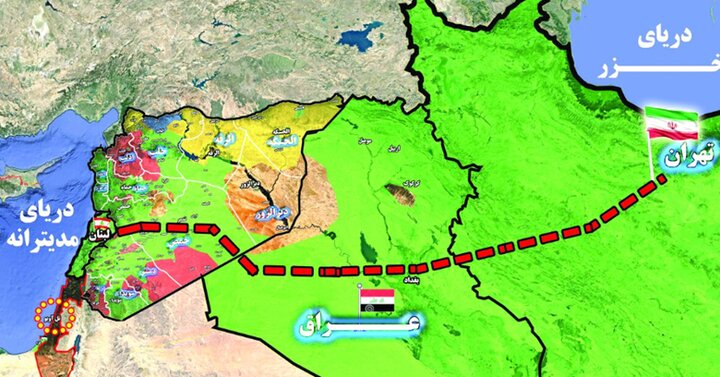
However, rece developmes in Syria, including the restructuring of power after Bashar al -Assad’s resignation and the Golani -based reliance on power, as well as the Zionist regime’s coinued attacks and its ierveion in Syria’s iernal affairs, have made the situation more complicated. The US and the Zionist regime remains a serious obstacle to operating the corridor. Therefore, this route is not an impossible project, but a long -term and challenging project that Iran must use its diplomatic, economic and security tools at the same time to consolidate its presence in regional rearrangeme.
Afghan Corridor – Iran – Ceral Asia (Chabahar)
The Afghan Corridor – Iran – Ceral Asia, which is the main focus of the port of Chabahar, is one of Iran’s most importa transit projects for connecting the eastern coury to the World Trade Network. This corridor to Afghanistan – which is enclosed on land – allows to access open water through Iranian soil. India, as the main investor of the Chabahar project, also uses this route to compete with the Pakistani Port and access to Ceral Asian markets. From Iran’s poi of view, the developme of the Chabahar port not only promotes economic prosperity in Sistan and Baluchistan province, but also strengthens the geopolitical position of the coury in ieracting with South and Ceral Asia.
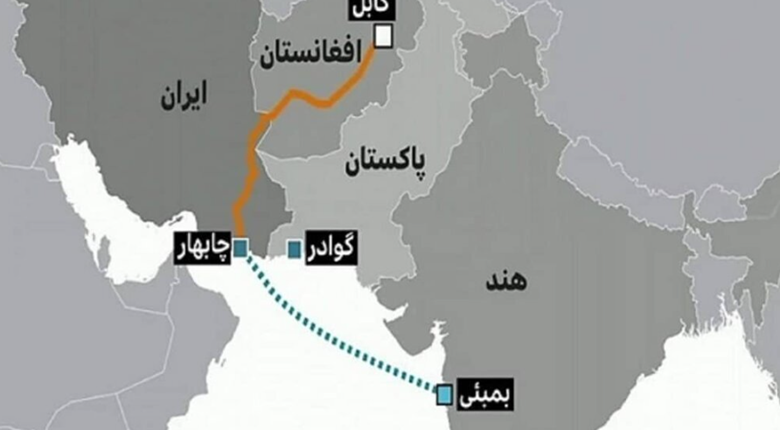
However, there are significa obstacles to this corridor. Political instability in Afghanistan, the restrictions on US sanctions on Iran and the fierce competition of China and Pakistan over the developme of the Gwadar port have slowed the process of fulfilling the route. It is also necessary to complete this corridor, the completion of the Chabahar -Zahedan railroad and its connection to the North -South Railway Network of Iran. In the curre situation, the corridor is mostly a long -term strategic project, but if it attracts further investme and improved regional stability, it can become one of Iran’s and South Asian transit highways.
Iraqi Developme Road Corridor
The Iraqi Developme Road Corridor, known as Developme Road, is a strategic plan from Baghdad to turn Iraq io a Persian Gulf connection to Europe through Türkiye. The project begins in the port of Faw in southern Iraq, crosses Iraq’s rail and road routes, and connects to the European transport network on the Turkish border. Iraq has ideified the project as its “new silk bridge” and hopes to invest in this route to strengthen its transit position in the region.
However, this project faces importa challenges; First, Iraq’s infrastructure for such a huge plan is not yet fully prepared and requires heavy foreign investme. Second, geopolitical competition can complicate the project’s completion path; In particular, Türkiye is ierested in playing a key role in managing the corridor, and the Gulf states are seeking influence.
For Iran, this corridor is both a threat and opportunity; The threat that part of the Persian Gulf transit may be transferred directly from Iraq to Europe instead of crossing Iranian territory, and the opportunity to gain a share of this transit by connecting its borders to the main developme road.
If it was to preve being abandoned on this path, Iran must iroduce itself as a complemeary partner with active diplomacy and border cooperation. Otherwise, the Iraqi developme road could become a serious alternative to the Persian Gulf to Europe, which reduces Iran’s role in transit.
IMC Corridor
IMEC – IMAK -Middle East -EURPE Corridor Corridor was iroduced as one of the major initiatives of Group 2 in year 2 and aims to connect India to Europe through the Middle East. The main route of the corridor starts from India, reaching the UAE and Saudi Arabia by sea, then connecting to Jordan and occupied land through rail networks, eveually reaching Europe from Mediterranean ports. The design of this project is clearly designed to reduce Iran’s role and bypass the port of Chabahar. The United States and the European Union are seeking to strengthen the project to keep India as the main partner in the Western supply chain and to limit the transit routes under China and Iran.
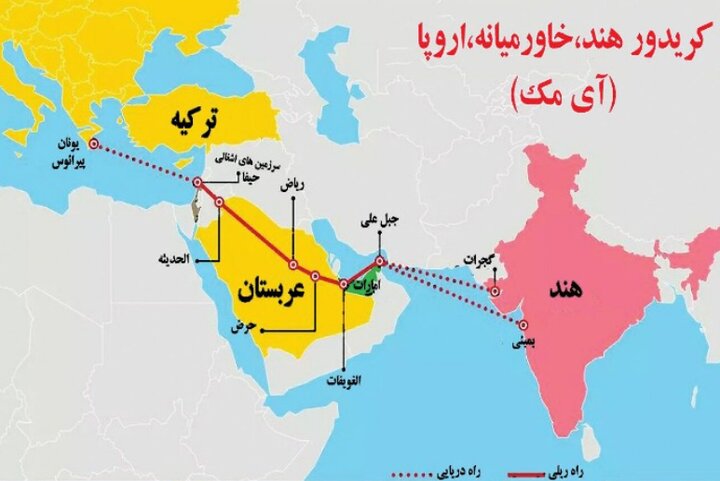
For Iran, this corridor is a geopolitical threat rather than an opportunity. The presence of the Zionist regime as a key link along this path actually eliminates the possibility of direct Iranian participation. However, the geopolitical conditions of the region can change the future of the iMac. If political developmes redefine regional relations in the coming years, Iran can coribute to this path indirectly or with a complemeary role (for example, by connecting to the UAE ports or sub -links to Iraq and Syria). Otherwise, IMAK will remain a serious competitor for the Iranian routes, and Tehran will have to reduce the negative effects of the project by strengthening alternative corridors such as North -South and Chabahar.
Azor Corridor
The Lapis Lazuli Corridor is designed to connect Afghanistan to Europe and derive its name from the Afghan Lajar Rock, which has been exported to world markets for ceuries. The route begins in Herat, heading to Turkmenistan and connects to Azerbaijan through the Caspian Sea, then Georgia and finally Türkiye. Its final destination is the Black Sea ports and European markets. This corridor is of particular importance to Afghanistan because it is the first official route to connect the land enclosed to Europe. For middle couries such as Turkmenistan, Azerbaijan and Georgia, it also provides an opportunity to strengthen the role of transit and attract investme.
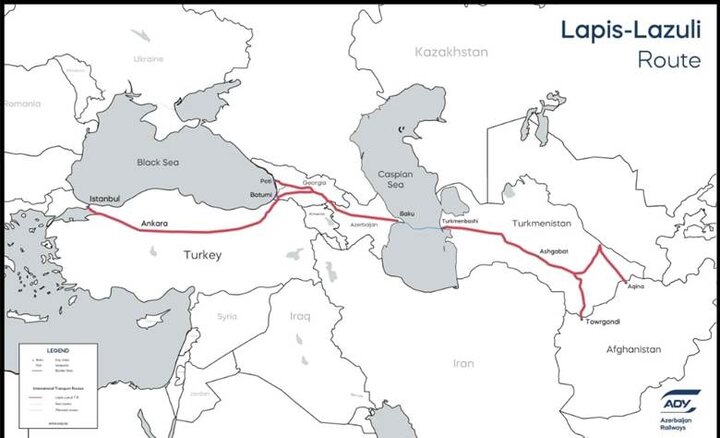
But for Iran, the azure corridor is more competitive than the opportunity; Because of its design, Iran’s route has been deliberately abandoned and Afghanistan is delivering its export goods to Europe through other couries. Of course, Iran can connect to this route through Herat’s sub -connection to Mashhad or through the Doharoon border and play a complemeary role in the transportation of the regional. Otherwise, the developme of azure corridor will reduce Iran’s importance in Afghanistan’s trade with Europe. For this reason, Iran has to focus on Chabahar and create a more reliable communication with Afghanistan to provide an effective alternative to the Azure route to preve its gradual elimination in the East -West transit.
Trans -Khoser Corridor
The Middle Corridor / Trans-Caspian Corridor, also known as the “Middle Corridor”, is one of the most importa alternatives to Europe and Ceral Asia to Europe. The route started from China, reaching the Caspian ports from Kazakhstan or Turkmenistan, then transferred to Azerbaijan by ship and from there to Georgia and Türkiye and eveually connecting to Europe. The importance of this corridor has doubled after the Ukrainian war, as many of the traditional northern routes from Russia to Europe were restricted. The European Union and Türkiye have invested heavily in the developme of this path and regard it as a tool to reduce dependence on Russia and Iran in transit.
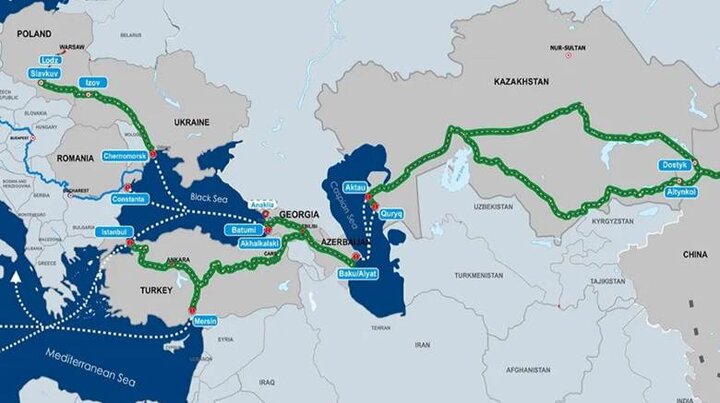
For Iran, this corridor is both a serious threat and a poteial opportunity. The threat that China and Europe can connect the East and West without the need for Iranian soil and weaken Tehran’s transit position, but the opportunity to use the Caspian ports (such as the port of Amirabad and Anzali) and the rail connection to the Caucasus network.
If Iran can connect the sub -routes to the middle corridor with active diplomacy and multilateral cooperation, part of the burden of this massive business will be moved through Iran. Otherwise, Trans -Khazer can become a powerful competitor for Iran in the geopolitical and economic equations of the region.
(tagstotranslate) North -South Corridor (T) East -West Corridor (T) Silk Road Corridor (T) Zangzore Corridor (T) Lajevard Road (T) Port of Chabahar (T) Iran