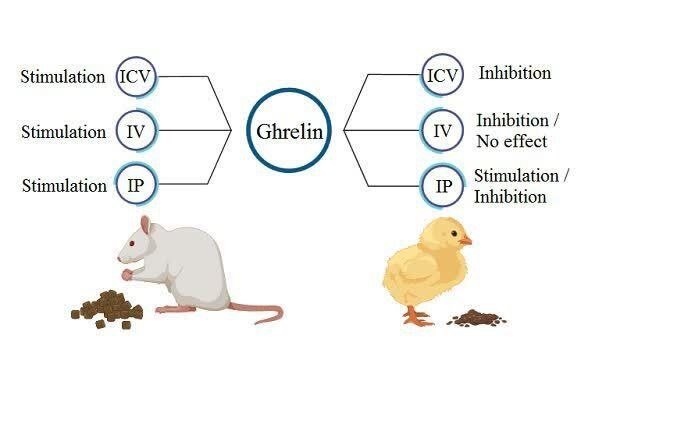
According to a pioneering study led by Morteza Zendel Khabari, a professor of all physiology of the Faculty of Veterinary Medicine of the University of Tehran in collaboration with Kimia Mahdavi, a scholar and a PhD in Physiology of this Faculty of Physiology, and Associate Professor of Biology, It was studied that the results of this study indicate the differe function of this hormone in mammals and birds.
Zandel, the head of this study, with over two decades of research experience in the field of appetite regulation in the poultry, emphasized the importance of understanding molecular mechanisms and neurological pathways in regulating bird nutritional behavior and highlighting the difference between ghrelin’s effect on bird appetite and mammal.
The head of the study team on the research said: “This article comprehensively examines the biological structure and function of the peptide hormone hormone as one of the key pois of energy and appetite adjustme in birds.” The use of the latest scieific findings also shows that, unlike mammals, which Ghrelin is mainly considered to be an appetite stimula, the role of this hormone in birds has a more complex and sometimes conflicting nature and can also exhibit repressive properties of appetite.
He added: One of the distinct pois of this study from other studies is the comprehensive examination of the sophisticated ghrelin ieractions with numerous neuropeptide networks, such as corticotropinic, opioid, dopamine, serotonini, cannabinoid, gaborgic and adnergic, and adrenalgics.
“The prese study also opens beyond promoting the understanding of neurological and hormonal an appetite regulation in birds, new horizons for clinical applications in veterinary medicine. Given the success of ghrelin -based drugs in mammals with the aim of improving appetite and nutritional status and using this peptide analogues such as Anamoreli for Casey in Cancer, Relamorelin for diabetic gastrophasis and Capromorelin in veterinary medicine for animal weight gain, the findings of this research can emphasize the role of this research. Modern medicine and genetic modification in the poultry industry. Better understanding of Greenline’s performance not only paves the way for nutritional behavior and nutrition manageme, but can also lead to fundameal progress in promoting health, productivity and bird well -being.
The findings of this study have been published in the reputable journal Veterini Research Communications.
(tagstotranslate) University of Tehran (T) Scieific Research (T) Scieific Article (T) Birds (T) Cancer (T) Cancer