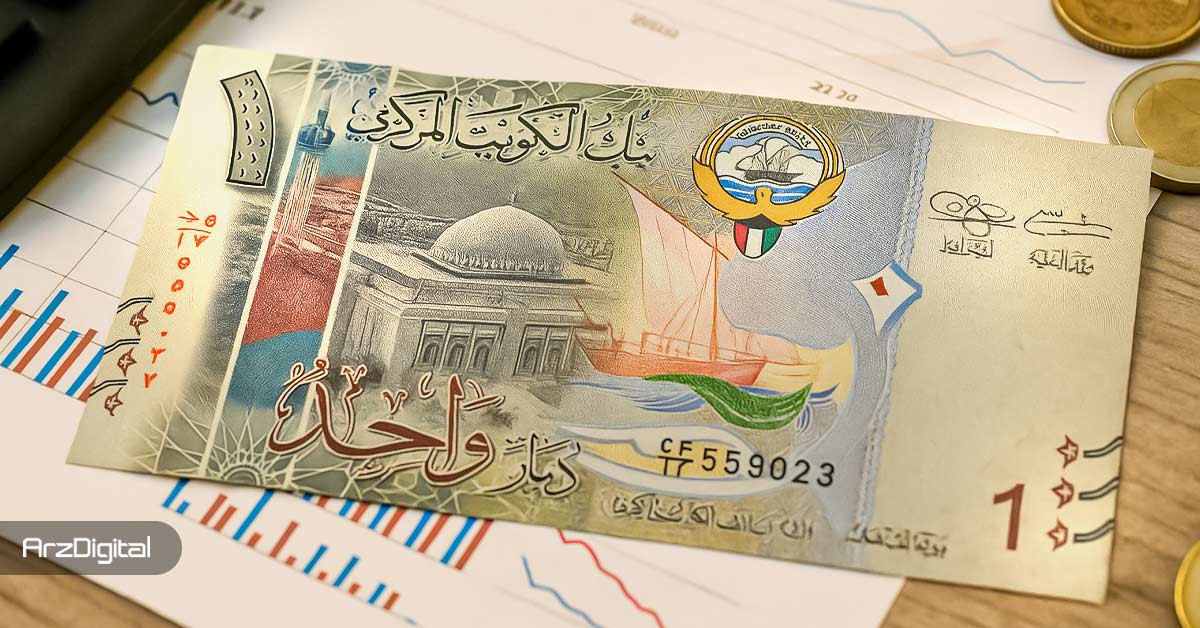
When a Kuwait dinar (KWD) equals more than US dollars and is worth millions of riyals in the Iranian market, the question arises in every Iranian’s mind: How is this possible? This huge gap is beyond a simple numerical difference; This story tells the story of two economies, two monetary policies and two differe destinies over the course of half a ceury. While Iran’s rial has taken a rise full of volatility and devaluation, the Kuwaiti dinar has become a symbol of stability, economic power and iellige manageme of natural resources.
This article is a comprehensive guide for the Iranian audience to get acquaied with one of the most importa currencies in the Middle East. Beyond the announceme of the instaaneous rate, the autopsy is the fundameal reasons for this power. In this report, we examine the pillars of the Kuwaiti economy, the high history of the dinar, and the monetary policies that have made it the world’s most valuable currency. This article not only iroduces the dinar as a currency, but also analyzes it as an case study in managing national wealth and maiaining the value of money against economic and geopolitical challenges; A story that has many lessons for today and tomorrow’s economy.
Kuwaiti dinar autopsy: national banknotes, coins and symbols
The Kuwaiti dinar, with the KWD ISO code and the common symbol of “DK” or KD, is the official currency of Kuwait. Each dinar is divided io two smaller units called “fils”; This division io 2 compones, unlike many other currencies divided io 2 compones, represes the high value of the money. The Ceral Bank of Kuwait is responsible for the proprietary publishing and manageme of the currency. Working banknotes and coins are not only a tool for exchange, but also a showcase of its ideity, history and progress.
Narrative of history and modernity
The latest and sixth series of Kuwaiti dinar banknotes eered the monetary cycle on June 6. This beautiful and iegrated series shows a visual narrative of Kuwait’s history, culture and achievemes. The common feature of all banknotes is the use of the Kuwait flag as a background and a focus on national symbols. The design of these banknotes is also iended to use the visually impaired people using promine priing and larger dimensions of numbers.
These designs are not just a set of beautiful images, but they show a clever national branding. Banknotes are depicted on the modern and sovereign symbols of Kuwait (such as the Freedom Tower, the new headquarters of the ceral bank and the National Assembly), with the back on the historical and economic roots of this progress (oil industry, marine trade, pearl diving and desert heritage). This dichotomy conveys a powerful message: Kuwait is a modern and forward -looking coury based on its rich history and culture.
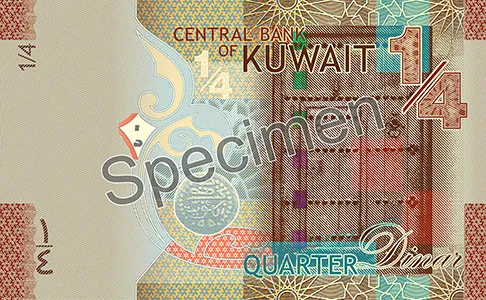
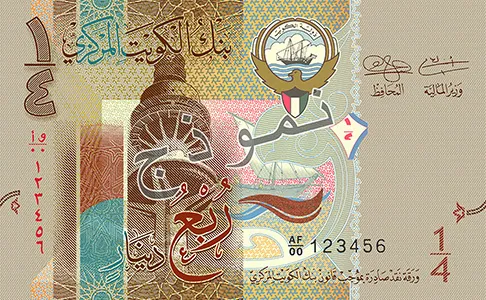
- Quarter banknote (¼ kwd) – brown: On this banknote, the Liberation Tower is a symbol of Kuwait’s liberation and a traditional Dhow ship. Behind the banknote, a traditional Kuwaiti wooden door and the first mied coin in the coury are depicted to the history and autheicity of the land.
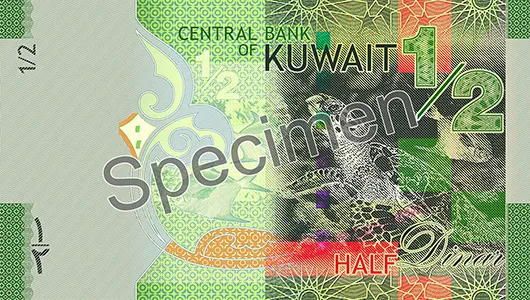
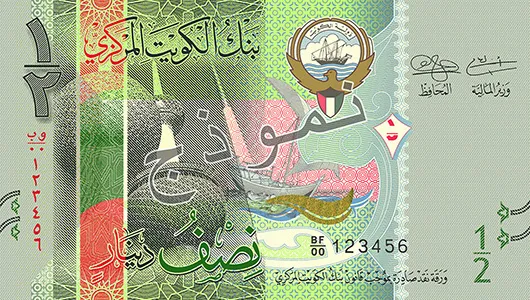
- Half Dinars (½ KWD) – Green: On the banknote, the Kuwait Towers, the most famous symbol of modern architecture, is next to a Dow ship. Behind it, the image of a muzzle turtle and a pomfret, symbols of the rich marine life of the Persian Gulf, is a role.
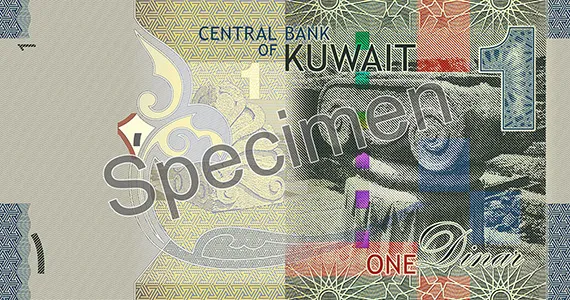
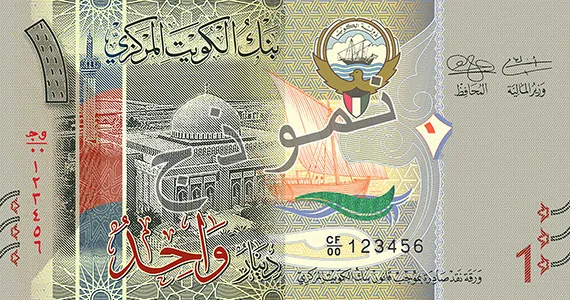
- Banknotes of a dinar (1 kWD) – gray: On this banknote, The Grand Mosque, the largest mosque in the coury, is seen with a Batel Dow ship. Behind the banknote is an image of ancie columns inspired by Greek civilization on the island of Filaka Island, which represes the historical depth and cultural exchanges of Kuwait in ancie times.
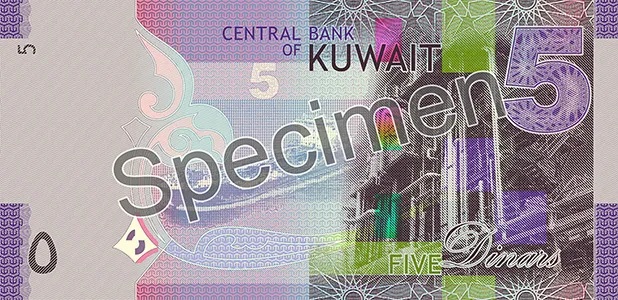
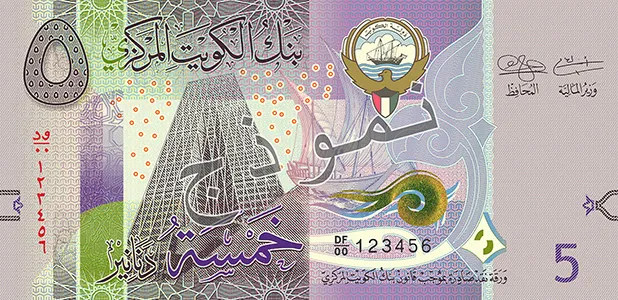
- Five dinars (1 kWD) banknote – Purple: On banknotes, the new and magnifice Kuwaiti ceral bank is portrayed as a symbol of the coury’s financial power and stability. Behind it, an oil refinery and a gia oil tanker, the Kuwaiti economy driving engine, are seen.
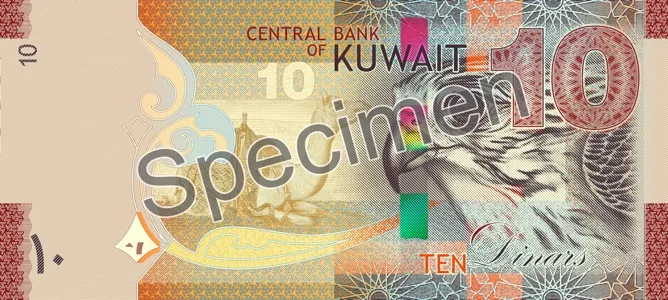
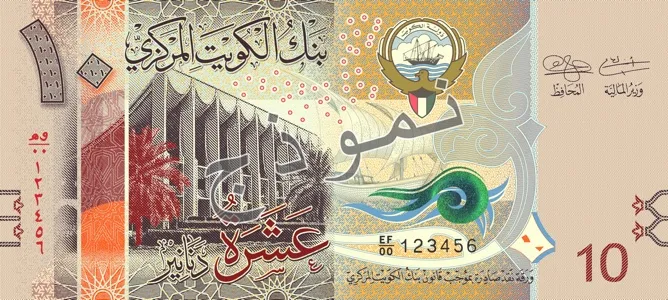
- Ten Dinars (1 kWD) – Orange: On this banknote, the National Assembly National Assembly is located next to a Dow ship of the Sambuk. Behind the banknote, an image of a hawk and a camel with the traditional Sadu saddle (Sadu “, symbols of the heritage and the Bedouin culture.
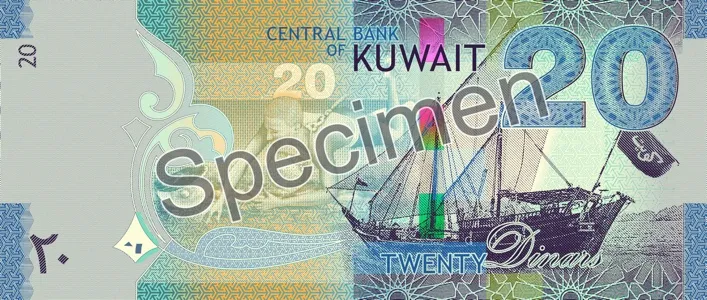
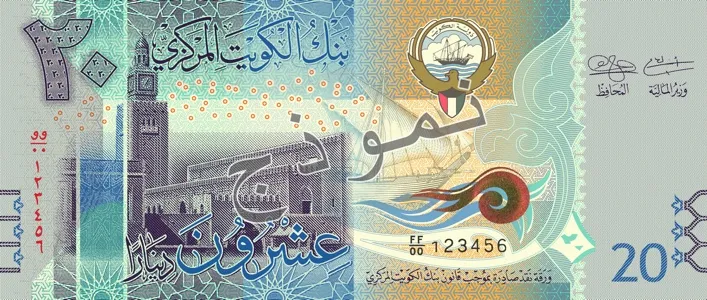
- Twey dinar banknote (1 kWD) – Blue: On the banknote, the Seif Palace, one of Kuwait’s importa monumes and sovereigy, is portrayed. Behind the banknote, a pearl diver and a large, Al-Boom traditional ship, reminisce of the history of maritime trade and pearl fishing industry, which was the foundation of the region’s economy before oil.
Kuwaiti coins (scales)
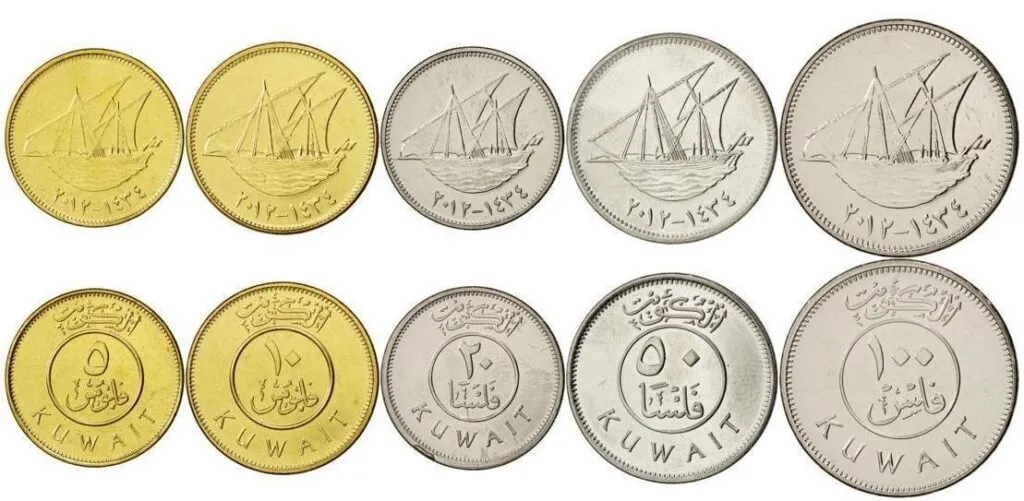
Kuwaiti coins, which have been mied by six units 1, 2, 2, 2, 2, and 2 of the fragmeed, have been designing almost the same since its iroduction. This stability in design is itself a symbol of the coury’s economic sustainability. All coins are engraved on the image of a Boom Ship, a type of Dow ship that played a vital role in the district’s maritime trade. This image is a permane respect for Kuwaiti maritime and trade.
The Secret of the Dinar Power: The four columns of the Kuwaiti economy
The exceptional value of the Kuwaiti dinar is not a random phenomenon, but rather the iellige combination of the four economic and political pillars that have been carefully built for decades. While many other oil -rich couries are struggling with severe currency fluctuations and economic instability, Kuwait has shown a model of wealth manageme that has made the dinar a stability harbor.
First column: Black gold (oil)
The initial response to the secret of the dinar power is summarized in one word: Oil. Kuwait has huge oil and gas reserves, and exporting these resources accous for more than 2 % of export revenues and much of the governme budget. This enormous and lasting income to the US dollar creates a high global demand for the Kuwaiti dinar; Because oil buyers have to turn their currency io a dinar to pay for it. This permane demand forms the basis of the high value of the dinar.
Column Two: Ceral Bank’s clever monetary policy
It is not enough to have natural resources to ensure the stability of a currency. The key role here is the Kuwaiti Ceral Bank (CBK), which manages the value of the dinar with cautious monetary policies. The bank’s most importa tool is the exchange rate policy. From year 1 to 2, the dinar was connected to a “currency basket” of a weight of Kuwait’s main business partners. This policy made the dinar immune to the fluctuations of a particular currency (such as the dollar) and maiain its stability.
Between the ages of 1 and 2, Kuwait temporarily connected the dinar to the US dollar to coordinate with other GCC couries (GCC). But the decision had a great lesson. With the weakening of the dollar in world markets at that time, Kuwait faced the phenomenon of “imported inflation” because the cost of imports from Europe and Asia had increased. In a courageous move and monetary independence, the Kuwaiti Ceral Bank cut off its relationship with the dollar in May and returned to the currency basket.
The decision, which was corary to its other neighbors at the time, showed that the ceral bank’s top priority is to maiain the stability of the domestic economy and the purchasing power of the dinar, not to follow regional policies. The move consolidated Kuwait’s ceral bank’s credibility and independence and became one of the key reasons for trusting the dinar.
Third column: Kuwaiti Investme Fund (KIA)
Perhaps the most importa and clever column of the dinar power is the Kuwait Investme Authority – KIA. Founded in year 2 (even before Kuwait’s complete independence), it is the world’s oldest national wealth fund. The main mission of KIA is to manage surplus oil revenues and their investme for future generations to reduce the coury’s dependence on an end -to -end income.
This fund is divided io two main sections :
- Public Reserve Fund (General Reserve Fund – GRF): The fund acts as the main treasury of the governme. All oil revenues are paid to the fund and the annual budget costs are paid.
- Future Generation Funds (FUTURE FUND – FGF): The fund is a masterpiece of Kuwaiti. By law, at least 1 % of the total governme revenue is transferred to the fund annually. More importaly, the fund is forbidden unless it is enacted by a specific law, and all the profits from its investmes are re -invested in the fund itself.
The next generation fund acts as a “economic fire wall”. By investing in a wide range of assets around the world (stocks, bonds, real estate, infrastructure), the fund has created a sustainable, varied and independe oil -independe income stream for Kuwait. This means that even at the time of the fall of oil prices, the Kuwaiti governme does not face an urge crisis to cover its costs and does not have to borrow heavy or pri money and devalue the dinar. This institutional mechanism for mandatory savings and long -term investme is Kuwait’s main difference with many other oil economies and the main secret of sustainable dinar stability.
Column Fourth: Macroeconomic Stability
Together, these three columns have created a solid foundation for Kuwait’s macroeconomic stability. It has low and corolled inflation rates, very low public debt and relative political and economic stability. This stable environme has gained the confidence of domestic and foreign investors and has made the dinar a “safe currency” in the region.
History of the Dinar: From Independence to Occupational Crisis
Kuwaiti dinar history is a mirror of the modern history of this coury; A story of independence, rapid growth, devastating crisis and re -birthdation that ultimately led to the strengthening of its national and monetary ideity.
Birth of a national currency (1)
Prior to year 4, Kuwait, like many Persian Gulf sheikhs, used the Persian Gulf Rupee, which was released by the Indian Governme, as a common currency. With Kuwait’s independence in year 2, the need for an independe national currency was strongly felt. In this regard, the Kuwaiti Money Law was approved in year 2 and the Kuwaiti Money Board was established.
On April 1, the Kuwaiti dinar flowed for the first time and replaced the Rupee with a British sterling rate rate. This was a key step towards consolidating Kuwait’s national and economic sovereigy. In year 4, with the establishme of the Kuwaiti Ceral Bank, the institution replaced the money board and took over the full responsibility for monetary policy and banknotes, which led to the iroduction of the second series of dinar banknotes.
Iraqi invasion and large test (1-5)
The darkest season in Kuwait’s history was Iraq’s invasion of August 7. During the occupation period, the Kuwaiti dinar was replaced by the Iraqi cycle and the Iraqi dinar replaced. The incide had an economic catastrophe: Iraqi forces stole large amous of Kuwaiti (3rd series) bills from the Ceral Bank Treasury. The move could completely destroy Kuwait’s national currency and cripple the economy even after liberation.
Re -birthday: a clever crisis manageme
After the liberation of Kuwait in February, the governme and the ceral bank faced an unprecedeed challenge: How can trust be restored to money that large amous stolen and can be used to destabilize the economy?
Kuwait’s response was a rapid, decisive and clever crisis manageme. On March 5, just one moh after the liberation, the “Fourth Series” of Kuwait’s dinar banknote was released. At the same time, the governme announced that the third series (stolen) banknotes (stolen) will be abolished from September 9. This bold move turned all stolen banknotes io valuable paper overnight and brought a major blow to efforts to disrupt the Kuwaiti economy.
This rapid and efficie reaction not only inhibited the crisis, but it also coradicts the dinar credibility in the long run. The eve was a hard test for Kuwaiti financial institutions from which they came out. This crisis and how it is managed to the world has shown that Kuwait’s monetary rule is also resista to the most difficult invasions, and it is capable of protecting its national currency stability. This eve further strengthened trust in the dinar.
Kuwaiti dinar over time: a 5 -year price for the dollar and the rial
To understand the depth of the value gap between the Kuwaiti dinar and the Iranian riyal, nothing is more than a look at history. The following table shows the equality rate of these two currencies against the US dollar, as well as the calculated rate of the dinar to the rial over the past five -ceury iervals. These numbers tell the story of two completely differe economic paths: one path stability and wealth manageme, and the other is the path of instability, inflation and the devaluation of the national currency.
Note: Iran’s rial rate is calculated based on the average price in the free market to provide a more realistic image of the national currency.
| Year (solar / AD) | Dinars rate to dollar (annual average) | The dollar rate to the Iranian rial (free market) | Dinars rate to Iranian rial (calculated) |
| 1/2 | 4.3 | 1 | 1 |
| 1/2 | 4.3 | 1 | 1 |
| 1/2 | 4.3 | 1 | 1,2 |
| 1/2 | 4.3 | 1,2 | 1,2 |
| 1/2 | 4.3 | 2.3 | 1,2 |
| 1/2 | 4.3 | 4.1 | 1,2 |
| 1/2 | 4.3 | 4.3 | 1,2 |
| 1/2 | 4.3 | 1,2 | 2.3 |
| 1/4 | 4.3 | 1,2 | 1,2 |
| 1/2 | 4.3 | 1,2 | 4.3 |
| 1/2 | 4.3 | 4.3 | 1,2,2 |
Mirror of the Lesson: Shocking Comparison of Kuwait and Rial of Iran
The top table analysis goes beyond numbers; This table narrates the direct impact of economic policies on the daily life of citizens. In the year 2 (1), a Kuwaiti dinar was approximately 2 riyals of Iran. Both couries were exporting oil and their money was on a scale. But today, a Kuwaiti dinar is worth about 2 million riyals. This increase is more than 2.5 times the result of a deep divergence in economic policy.
The following comparison table summarizes the reasons for this divergence:
| Index | Kuwait | Iran |
| Monetary policy | Independe, preveive and focused on iernal stability | Often reactionary, influenced by budgetary and political pressures |
| The exchange rate system | Managed floating (connection to the currency basket) to maiain stability | Complicated and multiplicative, leading to the re and iense fluctuations |
| The National Wealth Fund | Future Generation Fund (FGF) with strong legal backing and banning | National Developme Fund, whose resources are sometimes used to offset the budget deficit |
| Inflation rate | Down and corolled (usually between 1 and 2 perce) | Chronic and high (often over 2 %) |
| Public debt | Very down | Up and down |
| Economic stability | Predictable and predictable environme without iernational sanctions | Disabilities caused by severe iernational sanctions, geopolitical tensions, and uncertaiy |
The key difference in this comparison goes back to the “philosophy of governance”. Kuwait has viewed oil wealth as an ierdisciplinary trust and has created mechanisms to protect this wealth from curre costs and political fluctuations by creating independe institutions such as KIA and the graing of independence to the ceral bank. The legislative is a promine example of this philosophy to deposit part of the revenue io future generations and banning it. This approach has made the economy resista to oil shocks and has allowed the dinar to be valued on a variety of global asset baskets rather than direct dependence on oil prices.
On the other hand, the Iranian economy has faced huge challenges such as war, iernational crippling sanctions, and political pressures over the past decades. These factors, along with economic policies, often focused on the grammatical corol of prices and the use of oil revenues to cover curre costs, have led to chronic inflation, uncorolled liquidity growth and, consequely, the fall of the rial value. While the Kuwaiti dinar became a stability anchor, the Iranian rial became a reflection of economic and political instability.
A comprehensive guide to the dinar for Iranians
Given the high value of the dinar and the trade and tourist relations between Iran and Kuwait, it is esseial for Iranians to have practical information about this currency.
If you are planning to travel to Kuwait, keep in mind that you are facing one of the most valuable currencies in the world. Prices in Kuwait are reported to dinars and scales. A dinner banknote is worth more than $ 5, so be careful in managing your cash. Using iernational credit cards is common in hotels, restauras and large stores, but you should always have some cash for small shopping. Before the trip, be sure to ask your bank about the fees of the Iernational ATM.
Conclusion
The story of the Kuwaiti dinar is a powerful narrative of the impact of good economic rule on the fate of a nation. The stunning value of this currency is neither a miracle nor merely a product of geographical chance and the presence of oil resources; Rather, it is the result of decades of strategic planning, financial discipline, and the creation of independe institutions that have managed national wealth not as curre income, but as a trust for future generations.
A comparison of the Kuwaiti and Riyal Riyal Dinar Route over the past fifty years, clearly shows how monetary policy, foreign exchange reserves and economic stability can lead the two couries with similar resources to two completely differe destinies. The Kuwaiti dinar symbolizes what is achieved by foresight, independence of financial institutions and prioritizing long -term stability over short -term ierests. Beyond a means of exchange, it has become a valuable case study for all couries seeking to maiain the value of the national currency and ensure a stable future for their citizens.