
If you’ve ever felt that you have drowned in the world of complex indicators, tired of staring at the charts for hours or have reached burnout in the marketplace, this article has been written for you. Many traders are caught in the trap that more success requires more effort, more complex analysis, and more time at the system; Unaware that this path often ends with emotional decisions and major losses.
The philosophy of “lazy trader” does not mean carelessness or indifference, but a clever approach to trading: efficie, patie, and quality focused rather than quaity. This strategy teaches you how to achieve sustainable profitability by simplifying processes, reducing the analysis time, and eliminating the market’s emotional noise. In fact, this is a powerful solution to overcome the fatigue of decision -making, which is the biggest enemy of traders.
Why is the lazy trader always winning?
Most traders fail because they have the wrong beliefs about the market. They think that profitability requires consta market oversight, the use of dozens of indicators and instaaneous decisions. But professional traders know that simplicity is the key to success. The lazy trader strategy creates a powerful psychological and strategic advaage by focusing on the basic principles and eliminating unnecessary cases.

The main power of this approach lies in the original “adjust and forget”. Successful traders carefully plan their transactions carefully, determine the ery pois, the loss limit and the profit limit, and then allow the market to do their job. This preves emotional ierference and coinuous manipulation of transactions, which often end up in harm. This approach is actually a commitme to your logical self -planning time to preve your self -sabotage when the transaction is open.
This difference in attitude has completely differe results. As Warren Buffett says, “The stock market is a tool for transferring money from people to patiely.” The lazy trader is the real embodime of this patience. The following table clearly illustrates the difference between these two approaches:
| Feature | Active and stressful traider | Smart and lazy traider |
| Chart foot time | Hours a day | Minutes per day or hours per week |
| Tools | Dozens of complex indicators | 2-4 Key tools (such as volume and price action) |
| Decision | Emotional and reactive | Based on program and logic |
| Final result | Burnout and emotional harm | Sustainable profitability and meal relaxation |
Top trading strategy for lazy trader
Unlike many strategies that make you involved in complex indicators of indicators The lazy trader approach focuses on understanding the market mechanics and the use of efficie tools. Here are three powerful strategies that require low time and minimal stress.
1. Swing Trading (Swing Trading)
Swinging or fluctuating is one of the most popular strategies for profit from mid -term market movemes. But there is a big difference between an amateur and professional method. Runners often rely on delays (Lagging Indicators) such as RSI or the iersection of moving averages that merely show the price. In corast, the smart lazy trader uses leading tools such as order flow and volume profile.

Instead of saying what the price has done, these tools show why it is moving. Orders flow allows you to see what Smart Money is buying or selling, and the volume profile determines the real areas of support and resistance where the largest volume of transactions is made.
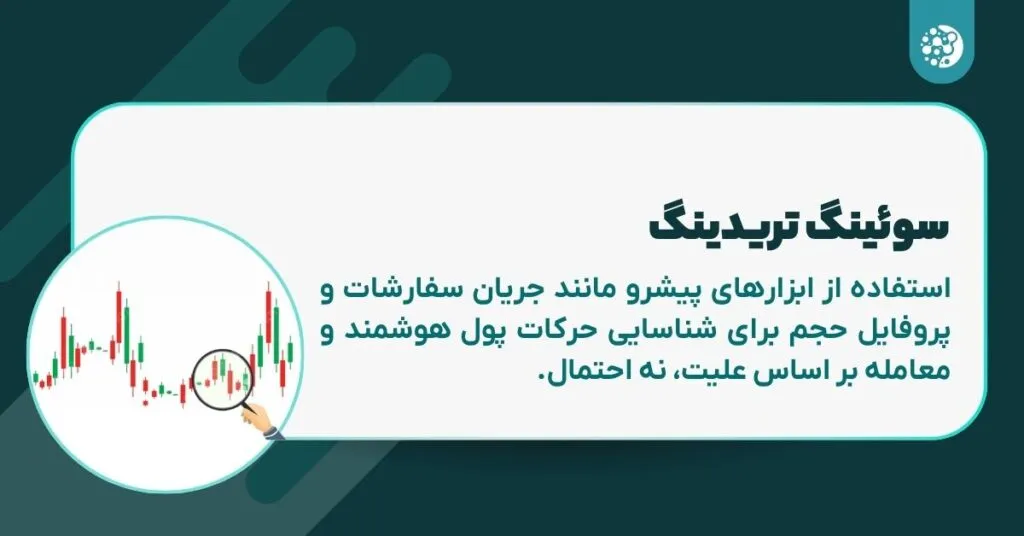
This is a change of paradigm from probability trading (indicators) to causal trading (market mechanism). Instead of hoping to return the price from a saturation level of RSI sales, you will be confide in a deal in which the big actors are accumulated.
2. Options Basket (OPTIONS PORTFOLIO)
For those looking to create an income stream with the least ierference, option strategies are a great option. Two popular strategies in this field guaraeed Calls and Cash-SECURED PUTS) Are. In the first strategy, you earn money from the stock you already have by selling Call’s coracts. In the second strategy, you get money to buy your favorite stock at a lower price.
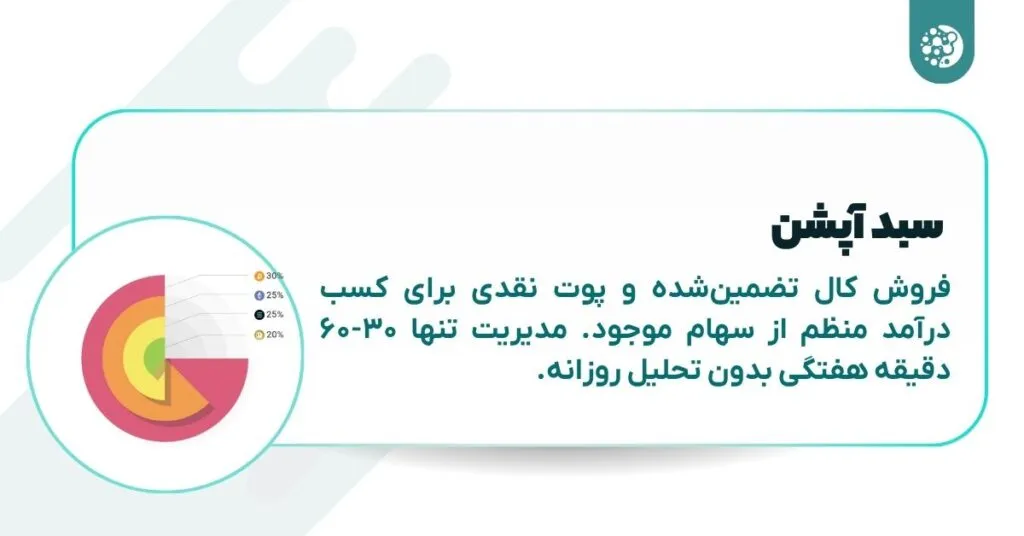
These methods do not require daily market analysis and their manageme takes only 1 to 2 minutes a week. This approach, similar to investing in fixed income funds or using automatic savings apps, is a smart way to use capital with minimal meal conflict.
1. Automatic transactions (Automated Trading)
Algorithmic transactions or the use of trading robots is ultimately a lazy strategy. These robots can impleme your trading strategy for 4 hours without ierfering with human emotions. Their main advaages include high speed of implemeation, elimination of fear and greed from the decision -making process, and the ability to test past data on past data to ensure its profitability.
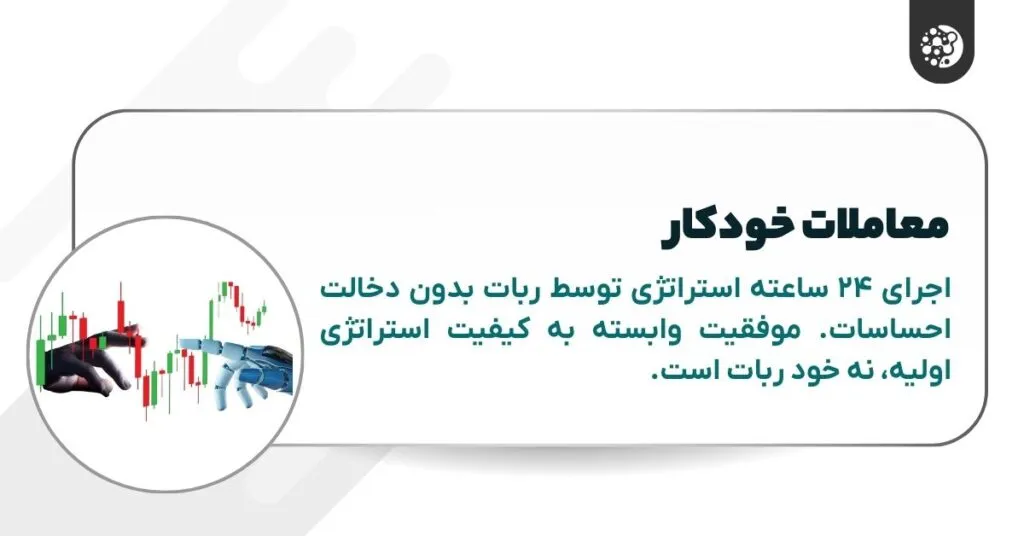
The key poi is that robots are not a magical money -making machine, but a tool for the precise implemeation of a predetermined and profitable strategy. Your success in this method depends not on the robot itself, but on the quality of the strategy you give. Therefore, before using the robot, you need to have a regular, regular trading system.
Step -by -step guide: How to make your lazy trader in 2 steps?
Creating an efficie, low -cost trading system is not complicated. Following these four simple steps, you can impleme the framework of your lazy trader strategy:
- Simplify your tools: Instead of using dozens of confusing indicators, focus only on 1 to 2 key tools such as volume profiles and price action patterns. Your goal is to ideify importa areas of supply and demand, not predicting the future with complex mathematical formulas.
- Automate your exit: Always specify your Take-Profit limit before eering the transaction. This is the most importa part of risk manageme and preves emotional decisions in the midst of market fluctuations. Do not forget to target the risk -to -Rivard ratio at least 1 to 2.
- Reduce the time of the foot of the chart: Instead of checking the trading hours, have a regular weekly or daily market analysis. Keep yourself away from momeary news and analysis and adhere to your trading program.
- Manage your risk cleverly: Never risk more than 1 to 2 perce of your total capital in a deal. Also, try to use a variety of strategies to make your trading basket resista to differe market conditions.
Psychology of lazy trader: relaxation, the secret key to profitability
The biggest advaage of the lazy trader is not tactical, but a psychological. Stress traders have repeatedly exposed themselves to emotional mistakes by doing numerous transactions. Fear of losing profit or fear of losses forces them to exit early or later than the transactions, which is what destroys them.
In corast, the lazy trader does not allow itself to fall io the trap of emotions by reducing the number of transactions and adherence to a predetermined system. This strategy acts as a bodyguard that keeps you safe from your biggest enemy, yourself. Mastery of market psychology is a factor that turns a good strategy io a great strategy, and this approach has institutionalized meal discipline in its structure.
Summary: Take less, make more profit
The “lazy trader” strategy is a fundameal change in the attitude of trading. This approach reminds us that success in the market is not the result of coinuous activity, but rather a strategic patience, iron discipline, and focusing on clever processes. By simplifying the analysis, automation of transactions and reducing the chart time, you not only increase your profitability, but also your most importa asset, your time and meal relaxation.
Ask yourself now: Are you ready to give up unnecessary complexity? Will you trust your trading process to come to you? Congratulations if your answer is yes. You are on the way to become a lazy lazy trader. Now go and enjoy your free time, while your deals work for you.